Fifth Ward Brewing Co. raises a glass to growing business
 Roundtable: Recovery, rebuilding and what comes next



April 6, 2026
WISCONSIN – A recently released statewide study shows golf is driving $3.37 billion in direct economic impact in Wisconsin, fueling cross-industry growth and supporting both the sport’s rising popularity and the communities courses call home.
Rob Jansen and Joe Stadler – executive directors of the Wisconsin State Golf Association (WSGA) and the Wisconsin Professional Golf Association (WPGA), respectively – said their organizations commissioned the study to provide a clearer view of the current state of Wisconsin’s golf industry.
“It’s huge,” Stadler said. “We haven’t done [a study like] this since we released the last one… in 2010, and I think that [used] 2008 data. So, 15 years later, everything basically doubled.”
Both Stadler and Jansen said the sport’s popularity has soared, especially since the COVID-19 pandemic – a phenomenon Brown County Golf Course General Manager Jim (Jimmy’O) Ostrowski said he’s witnessed firsthand.
“I never thought I’d see the courses as full as they are [and] have been in the last five years,” he said.
However, Jansen said “the real economic impact” of golf’s rising popularity is experienced off the green.
“Golf courses certainly benefit, but I think the bigger benefit [is felt] by the community as a whole,” he said. “People are staying in hotels, going to restaurants, flying into our airports, renting our cars, stopping at our gas stations, [etc.].”
Surpassing the monetary contributions of Green Bay Packers home games and Wisconsin’s craft beer, wine and local spirit industries combined, the study states golf has produced $6.44 billion in total economic impact.
In 2023, per the study – conducted by Radius Sports Group (RSG), a Nevada-based sustainability consulting, data analytics and community engagement firm – golfers played 11.24 million rounds across the Badger State’s 528 courses, 87% of which are public.

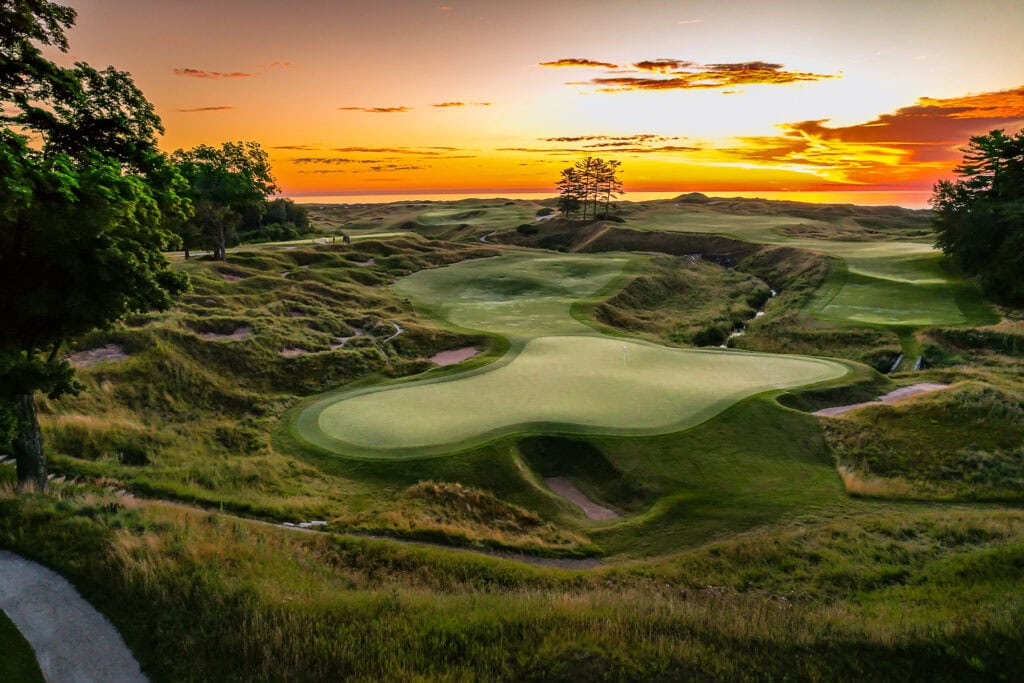
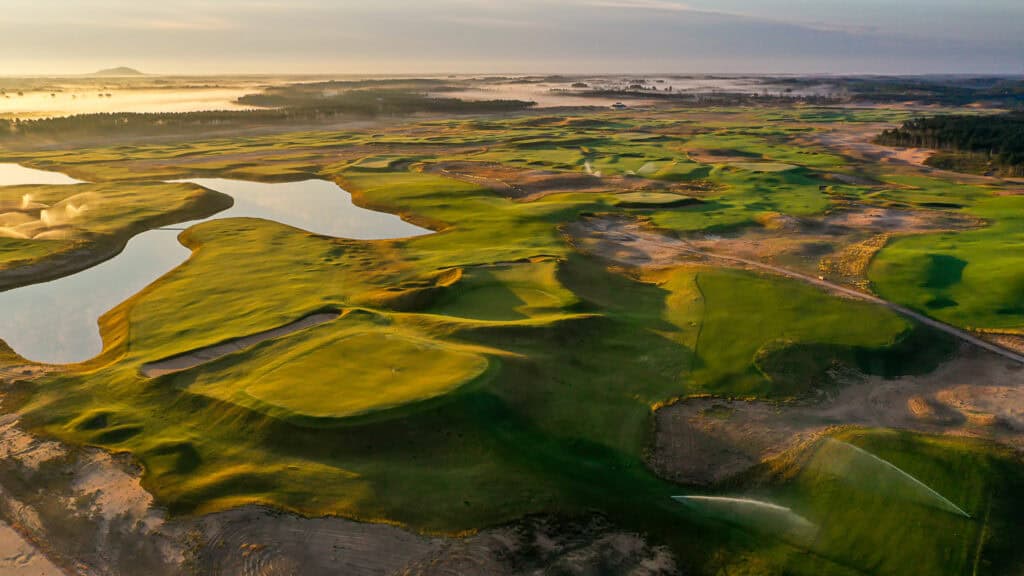
RSG President Gina Rizzi said Wisconsin – home to 11 of the country’s top 100 public courses, such as Whistling Straits, Sand Valley and Blackwolf Run – has been identified as one of the United States’ “premier golf destinations.”
“One of the most unique findings in this report is the strength of tourism and destination golf in Wisconsin,” she said. “It has grown significantly and continues to strengthen.”
Disseminating the survey with the help of five Wisconsin-based organizations – the WSGA, WPGA, CMAA Wisconsin Badger Chapter and Golf Club Owners of Wisconsin – Rizzi said RSG gathered responses from 117 golf courses statewide.
“We had strong participation and a high level of confidence in the data,” she said. “The thoughtful and comprehensive responses reflect how seriously facilities take this work, and we’re very pleased with the results.”
Tourism, employment
Per RSG, 1.8 million golf trips produced $902.7 million in direct visitor spending in 2023 – which Jansen said helps the WPGA and WSGA demonstrate the importance of golf to Wisconsin’s tourism economy.
“It’s always great to have up-to-date information to see the impact we’re having as an organization – fulfilling our mission to promote the game in the state,” he said. “We work closely with the [Wisconsin] Department of Tourism on golf, and it has been a growing part of their efforts to promote the state and drive tourism to Wisconsin.”
In hosting notable tournaments such as the 2025 U.S. Women’s Open, 2020 Ryder Cup and the 2017 U.S. Open, Stadler said “a major spotlight” has turned on Wisconsin’s golf industry.
“Now, there are a ton of national amateur tournaments coming here, another senior open down the road and probably more,” he said.
Visit Rome Wisconsin Executive Director Lisa Kubis said in 2016, the Alexander Field-South Wood County Airport (ISW) in Wisconsin Rapids – roughly 20 miles south from the course – received $4 million in state and federal funding to nearly triple its apron to accommodate the nearly 600% increase in jet traffic as travelers fly in to play at Sand Valley.
“The private jet traffic in 2016 was about 100 per year,” she said. “Since Sand Valley has come along, in 2024, it was close to 700… Now, they’re remodeling their terminal, and that’s all because of Sand Valley.”
Stadler said the professional golf job market is likewise booming as in- and out-of-state players look to tee off in Wisconsin.
“There was a stretch in the 2010s where it was getting very difficult to find employees in golf,” he said. “With the growth in golf, that has become much less of an issue.”
Now supporting 56,595 jobs that pay $2 billion in wages across the state, Ostrowski – a tenured professional with 36 years of course management experience – said golf can be both a lifetime game and a career.
“I knew I was going to be a golf pro when I was probably 14 years old – that’s all I wanted to do,” he said.
Though turnover has remained a slight challenge at the Brown County Golf Course due to the seasonality of Wisconsin’s outdoor golf industry, Ostrowski said he’s regularly onboarding eight to 10 staff a year – most of whom are young, first-time employees.
“It’s a lot of younger kids,” he said. “A lot of my kids work for two or three years outside – picking the range, gassing the cars, cleaning cars. Then they gravitate inside the pro shop, start working in a pro shop for me for a couple of years and then they are old enough to do their own thing.”
The opportunity to gain early work experience, Jansen said, is a “neat” aspect of Wisconsin’s local golf industry.
“[There are] a lot of great ways that golf helps get kids’ careers started,” he said. “Obviously, there are other jobs at golf courses, too…, providing a great source of employment in these communities at all levels.”
Profit, philanthropy
Though tourists often visit Wisconsin’s destination courses, Stadler said local businesses and smaller courses benefit indirectly from the draw.
“It benefits all the hotels, all the restaurants, [and] it also benefits the smaller courses,” he said. “Lake Arrowhead, [for example], is right next to Sand Valley, [and it has] never done better since Sand Valley came in.”
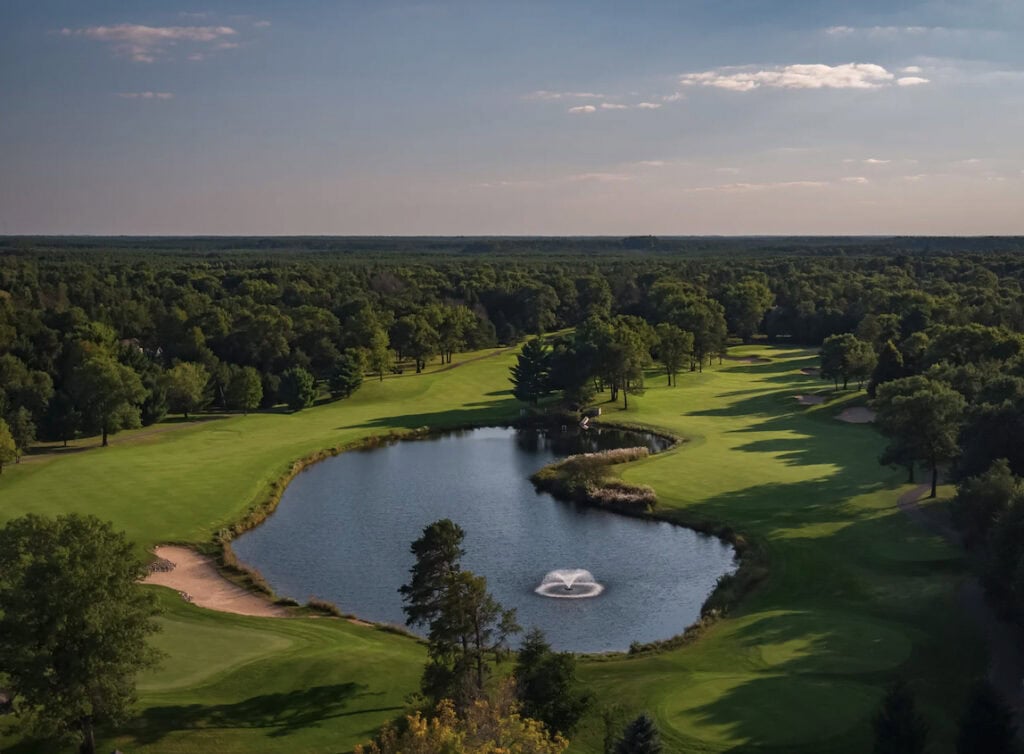
In the municipality of roughly 3,500 people, Kubis said public golf courses, such as Lake Arrowhead and Sand Valley, create rippling economic opportunities for area businesses in Rome.
“Both Lake Arrowhead and Sand Valley bring more than golf to the area,” she said. “Visitors to these golf courses do leave the site…, so all the bars, the restaurants [and the] brewery in town, I think they’ve all benefited from these golf courses being here.”
Kubis said Sand Valley’s presence in Rome also benefits local contractors and service providers.
“[Sand Valley’s] sixth course is opening this summer at Sand Valley, so along with the courses comes housing – so, there’s a lot of contractor demand,” she said. “I had someone wallpaper our office, [and] it took months to get him because he has so much work out at Sand Valley, for example.”
The area’s short-term rental market, Kubis said, has also grown significantly as its local courses evolve into travel destinations.
“Rome is pretty small, [but] short-term rentals here have increased dramatically,” she said. “There are 137 short-term rentals in Rome, and most of them were [established] to accommodate the lodging demand.”
Visit Rome Wisconsin, Kubis said, is funded by the municipality’s lodging tax revenue – which, in 2025, was $1.5 million.
“We get 70% of that, and then the town gets 30%,” she said. “What we do with that is further promote tourism, even beyond golf. We’re promoting fishing, ATVing, UTVing, we have a trap-shooting facility here – so those other aspects of tourism in Rome have benefited from the golf industry here as well.”
Beyond Rome, Rizzi said the sport’s economic spillover is felt across Wisconsin – making studies, such as RSG’s, important to educate those on the industry’s relevant and measurable contributions.
“I hope this helps communities better understand how important golf is to the state’s economic infrastructure,” she said. “Golf drives jobs, tourism and meaningful tax revenue, and I hope it continues to build awareness and understanding of the remarkable impact the industry has on the state’s economy.”
According to RSG, in 2023, golf courses played host to more than 9,000 fundraising events – raising $166 million for local causes.
The Brown County Golf Course, Ostrowski said, regularly hosts charitable outings that benefit Northeast-area organizations, such as the Children’s Museum of Green Bay and the Green Bay Packers Foundation.
“It’s an opportunity to have a lot of people in one spot…, when they’re at their most generous,” he said.
Beyond hosting philanthropic efforts, Kubis said courses also directly support community events and initiatives.
“Both Sand Valley and Lake Arrowhead contribute a lot to the community,” she said. “In November, we finished a tunnel under Highway 13 and then a trail that leads to our town center, and both Sand Valley and Lake Arrowhead were major business sponsors for that initiative.”
Stewarding accessibility
With many viewing golf courses as “pillars of the community,” Jansen said owner-operators have a foundational responsibility to maintain the 73,000 acres of green space encompassed by Wisconsin’s golf courses.
“I think a lot of people would be surprised if they spent a day with a golf course maintenance operation,” he said. “The care and thought that goes into maintaining the green space and being good stewards of the environment [has] certainly been something the industry takes seriously.”
With the state increasingly labeled as a destination for golf, Rizzi said she’s impressed with how Wisconsin maintains accessibility in the sport.
“Wisconsin is growing in a way that balances world-class destination golf with strong public access,” she said. “That’s a remarkable combination – it drives tourism and major events while still maintaining a welcoming feel and making people feel like the course in your neighborhood is part of your community.”
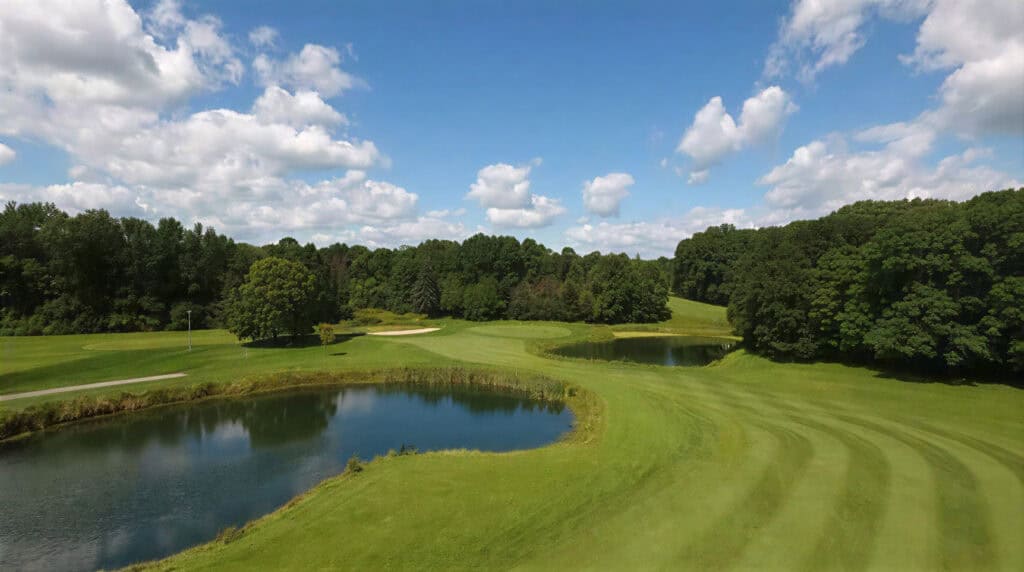
For instance, Stadler said Wisconsin’s local courses offer sites for youth tournaments and player development without a lofty tee-time price tag.
“I think the courses around still provide that opportunity for people to learn,” he said. “For example, our foundation runs about 160 junior golf tournaments, so kids who are active in the game can take it up and see if they like the competitive side… We get kids involved at a younger age, playing courses they can handle – and it’s affordable.”
The notable rise of indoor simulated golf, Stadler said, further speaks to the sport’s increasing popularity and accessibility – offering spaces for people of all abilities to enjoy the game year round.
“[There’s] certainly a lot more indoor golf activity than there was 15 years ago,” he said, “but even if I look back five years, there are way more people participating in the game of golf in one fashion or another.”
That type of accessibility, Jansen said, is a point of difference in Wisconsin as the state’s owner-operators work to provide quality experiences at a value.
“Wisconsin has affordable public golf all throughout the state,” he said. “There’s a stat in the report that 55% of public golf courses have a greens fee of less than $50. So, you don’t have to go too far to find a really quality, affordable public golf course, no matter where you live in Wisconsin.”
For more information on the economic impact of Wisconsin’s golf industry, view RSG’s full report at radiussportsgroup.com/wisconsin-golf-economic-impact-report.