 Iconic Sturgeon Bay structure gets a second life
  Mad Dog & Merrill: Fired up for 15th season


April 13, 2026
MARSHFIELD – Marshfield Clinic is using new technology to treat dangerous heart arrhythmias – conditions that can lead to sudden cardiac death.
Earlier this year, Electrophysiologist Weijia Wang said the health system completed Wisconsin’s first implant of the Medtronic OmniaSecure™, an implantable cardioverter-defibrillator (ICD) lead used in cardiac resynchronization therapy, at Marshfield Medical Center.
Defibrillators, Wang said, treat life-threatening arrhythmias by monitoring the heart’s rhythm and delivering an electrical shock when needed to restore a normal heartbeat.
A lead placed in the heart, he said, continuously monitors rhythm and delivers an electrical shock when needed to restore a normal heartbeat.
Wang, who performed the procedure, said the biggest challenge with defibrillators often comes down to the lead itself.
“A typical lead would be the size of two or three [strands of] spaghetti, and veins are not all that big – they’re like a small tube,” he said. “So, when you put a lead into a vein, it can be pretty crowded. If you have too much stuff there and it’s too crowded, it really can affect the blood flow.”
Wang said the lead’s size and length inside the heart also make it prone to breaking.
“Once that lead breaks, it’s difficult to get out, and the tissue can grow onto and around the lead,” he said. “This new lead is much smaller, maybe the size of angel-hair spaghetti.”
In Marshfield Clinic’s recent milestone procedure, Wang said he used the new lead for left bundle branch area pacing, successfully correcting a patient’s left bundle branch block (LBBB) and delivering single‑lead cardiac resynchronization to treat heart failure.

Traditional cardiac resynchronization therapy, he said, typically requires two or three leads.
This new approach with fewer components, Wang said, means less trauma to vessels during implantation, a quicker post-procedure recovery and reduced long‑term maintenance issues.
He said what’s unique about the new lead is that it functions not only as a defibrillator but also restores normal electrical conduction.
Wang said this technology helps return patients’ heart rhythms to their natural patterns while being less invasive.
“After that lead was put in, the heart was beating in sync, was beating stronger and more efficiently and was pumping blood the way it should,” he said. “It’s like a rowing team where everyone is rowing in sync at the same time.”
Wang said the engineering work that went into this lead was “remarkable.”
“Our job is to find the best and most state-of-the-art technology and to provide it to the right patients,” he said. “We’re grateful we were able to partner with a vendor who could help us do that.”
Procedure marks a milestone for cardiac care in Wisconsin
Wang said this procedure marks a significant milestone for cardiac care in the state of Wisconsin and positions Marshfield Clinic to be among the earliest adopters of this new, cutting-edge technology nationwide.
“Performing a first‑in‑state, launch‑day implant requires precision, coordination and a team ready to rise to the moment,” he said. “I’m incredibly proud of the expertise and readiness our staff demonstrated – and most importantly, we delivered an excellent outcome for our patient.”
Wang said performing the procedure the same day the lead became commercially available is rare for most hospitals, but it was relatively straightforward at Marshfield Clinic.
As a high-volume heart center, he said the clinic can often rely on vendors to accommodate urgent patient needs.
“Because we are a high-volume clinic, and we’re implanting devices fairly frequently, we have a good relationship with the vendor, and they know we do a great job,” he said.
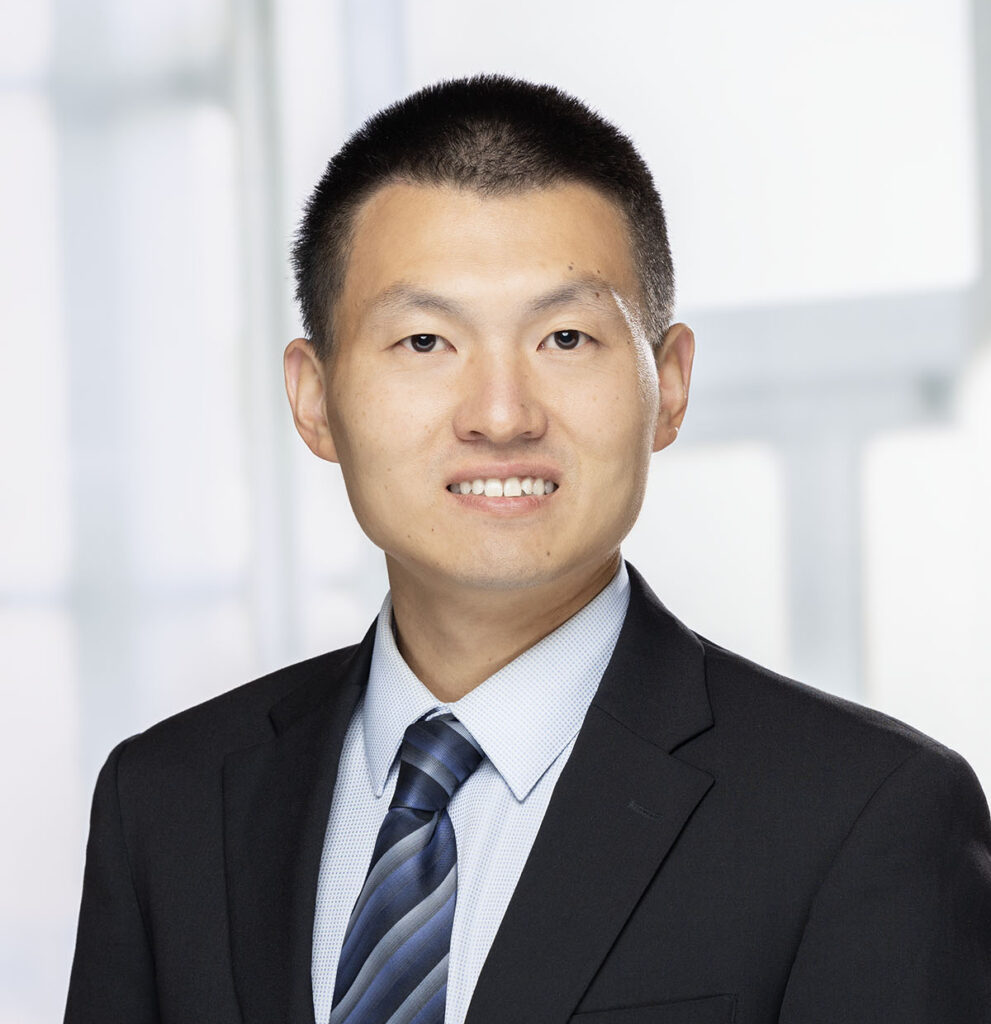
That morning, while working on a different case, Wang said he noticed another patient needed a specific procedure and checked whether the new lead was available.
“We’d been talking about it for several months, because it had been approved by the FDA in 2025, but wasn’t available commercially, yet,” he said. “But on that particular morning, they said that it was now available.”
When the vendor didn’t have the lead on hand, Wang said a colleague retrieved it from the factory and delivered it – highlighting the strong trust between Marshfield Clinic and its vendors.
“They want their products to be used properly and ideally, with no complications,” he said. “They know they can get that from us. We were lucky to be able to provide this to our patient.”
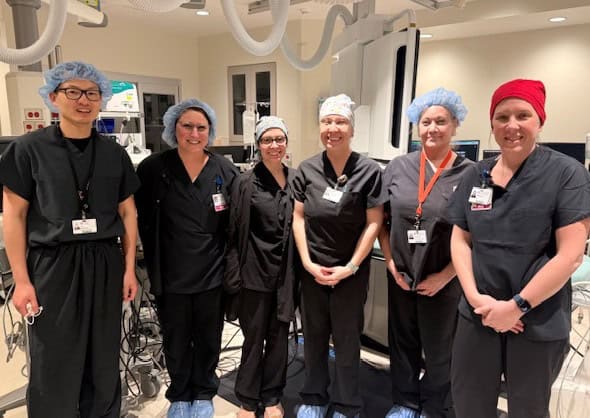
Wang said the procedure’s success was made possible by Marshfield Clinic’s staff, whose support ensured seamless care throughout.
“We are very grateful that we had all the staff to be able to perform and support the procedure and provide care to the patient during and afterward,” he said. “We’re also grateful we’re able to provide this procedure to people in our community.”
Wang said the first patient is “doing excellent,” and her energy level has improved since the procedure.
At the time of his interview with The Business News, Wang said Marshfield Clinic has performed this procedure on a total of nine patients.
And Wang said the procedure’s impact extends beyond Marshfield, attracting cardiac patients from other areas who learned about the treatment.
“It’s not uncommon for patients to be referred to Marshfield Clinic for heart procedures, sometimes from many miles away, including from Ladysmith, Rice Lake, Eau Claire or from nearby communities like Wisconsin Rapids, Stevens Point or up to the Upper Peninsula,” he said.
Innovative cardiac care
Correcting conduction problems, Wang said, can give patients more energy, improve daily functioning and reduce heart failure-related hospitalizations.
The procedure, he said, is performed using a local anesthetic to numb the skin and minimal sedation, allowing the patient to remain awake and fully communicate with the medical team throughout.
“The patient is very comfortable during the procedure,” he said. “Another benefit of this is that the recovery is very quick. We’re able to talk with the patient immediately and show them how the device looked on the X-ray. The patient can sit up within an hour after the procedure.”
Wang said all nine patients who have undergone the procedure continue to do very well, with no major complications.
“Sometimes it takes months for the lead to restore the heart function or for it to improve and for it to beat in sync,” he said. “It’s a little too early to tell, but we saw a few patients in the clinic already for a follow-up, and they’re doing beautifully.”
As with all heart procedures at Marshfield Clinic, Wang said patients’ outcomes will be monitored over time.
“But, we also want to get involved in the research part of this and try to refine this even more in the future,” he said. “Performing this procedure is just the start.”
Ideal candidates for the procedure, Wang said, are patients at higher risk of sudden cardiac death or those whose hearts are weak and out of sync, causing fatigue or shortness of breath.
“If a patient has low heart function and is at risk for sudden cardiac death, this procedure might be a good option for them,” he said.
Head to marshfieldclinic.org for more details.