Connecting newcomers to the community, one link at a time
 Waupaca Foundry nears finish line on its $100-plus million investment


April 13, 2026
WAUPACA – North Central Wisconsin aviation enthusiasts have a new runway to success: Celestial Kinetics Flight Academy, teaching aspiring pilots since 2022.
Principal Owner Kent Sykes said he opened his sky-meets-science school following a career in the U.S. Air Force, then as a corporate pilot and civilian contractor flying reconnaissance missions in Iraq and Afghanistan – “probably the most meaningful thing I’ve done in aviation” – and as a charter pilot.
“As I was getting later in my flying career, I kept coming up with this idea of maybe doing some flight training after retirement, and the demand for pilots was growing,” he said, adding that at the time, the area lacked formalized flight training.
After he’d soared through more than four decades of experience, engine work and excitement, Sykes said he opened Celestial Kinetics to share the skills and thrills of aviation with disciplined learners eager to fly.
Operating out of the Waupaca Municipal Airport, he said it’s his sky-high passion for planes and piloting – not profits – that keeps his head and heart in the clouds.
“I’m not doing it because I’m in this business to make a lot of money,” he said. “I really haven’t made a lot of money at it – I don’t really think I will – but I’m as passionate about aviation as I was almost 50 years ago.”
Sykes said he and the academy’s other instructors teach anywhere from 30-45 students at a time – filling a regional gap, while also drawing students from across the country.
Florida and Arizona, he said, are among the states most “saturated with flight training,” making the lower cost and the higher availability of instructors and aircraft at the Waupaca academy all the more attractive.
“There have been different reasons [for out-of-state pilots to attend Celestial Kinetics], but a lot of it has had to do with cost and the more relaxed training environment we have here in Wisconsin,” he said.

Per its website (flycelestialkinetics.com), the academy offers a variety of programs, including:
- Private pilot license (PPL) – for recreational flying or career foundation
- Instrument pilot rating (IR) – for flying in instrument conditions
- Commercial pilot license (CPL) – to fly professionally
- Instructor training – to become a certified flight instructor
- Tailwheel training – dual instruction for tailwheel endorsement
- Technically advanced airplane (TAA) training
- Flight reviews/instrument proficiency checks (IPC)
- Custom training – including rusty pilot training, refresher courses, IFR practice and time-building
Discovering the desire
Sykes said Celestial Kinetics also offers “discovery flights” for people who have their untrained eyes on the skies.
Though these flights are piloted by academy instructors, he said passengers are guided through operating the plane themselves, even assisting during takeoff.
“Once you’re in the air, we’re letting them do the majority of flying,” he said. “Then, [after] 30-45 minutes of flying, we bring it back to the airport. Then the instructor does the landing, but talks through what they’re doing, so the prospective student understands what that’s all about.”
From first-time fliers to lifelong professionals, Sykes said the academy welcomes anyone interested in aviation – including those inspired by one of the free Young Eagles flights offered at EAA in Oshkosh.
“Quite a few of the people who come in wanting to pursue some sort of pilot training with us, I hear it quite often that they took a Young Eagle, and that’s what got them interested,” he said.
Sykes said he credits his own discovery to his father, who not only bought a plane and learned to fly in Sykes’ early teens, but also offered to pay for his children’s pilot lessons once they turned 16.
Of the three siblings, Sykes said for whatever reason, he was “the only one who really stuck with it.”
“Sometimes, Dad’s instructor would then take me for a ride after his lesson, so I’d come along with the hope that I’d get an airplane ride out of it,” he said. “That’s what really got me hooked.”
The sky is the limit
Whatever it is that attracts people to aviation, Sykes said pilots-in-training generally land in two camps: hobbyists and professionals.
He said he can relate to the former, as he’s owned airplanes of his own “pretty much my whole adult life.”
However, Sykes said the latter comprises the slight majority of Celestial Kinetics’ students, and he relishes the chance to provide career guidance.
“When I was in high school looking at the possibility of being a professional pilot, there was no one around who I could talk to who was a mentor or somebody who could get me going in the right direction,” he said.
Though he had originally aimed for a career as an airline pilot, Sykes said he ultimately chose his aforementioned career paths within aviation.
He said his work as a civilian contractor – “flying military aircraft and military combat missions” – particularly surprised him.
“I didn’t even realize jobs like that existed until I first found out about it,” he said. “Next thing you know, I was over there doing it.”
A pilot’s professional options are vast, Sykes said, including working for private charter, air ambulances or even missionary work.
He said airlines used to require pilots to have earned bachelor’s degrees, but with the increased demand for pilots, “they’ve pretty much suspended that requirement.”
Though he does recommend attending college, Sykes said serious aviators may want to consider completing flight school – and its significant requirements of flying hours – first.
Not only do some universities award credit equivalencies for flight school, but he said it’s a great way to start earning serious income at a young age.
“When I talk to high school kids, especially, I tell them…, ‘Once you’re done with that – building your hours – then maybe enroll in some online courses, and you can be completing your college education while you’re working,’” he said.
Federal regulations for a CPL – per faa.gov – require aeronautical experience of at least 250 flight hours; a minimum of 50 hours cross-county time; 20 hours of flight training; and 10 hours in a complex or TAA airplane.
Sykes said particularly ambitious pilots can earn a CPL “in a year or less,” and start earning significant salaries – driven by the demand for pilots – as soon as they’re certified.
“These people can be out flying jets and making more than $100,000 a year when they go through a training program like ours,” he said.
About the academy
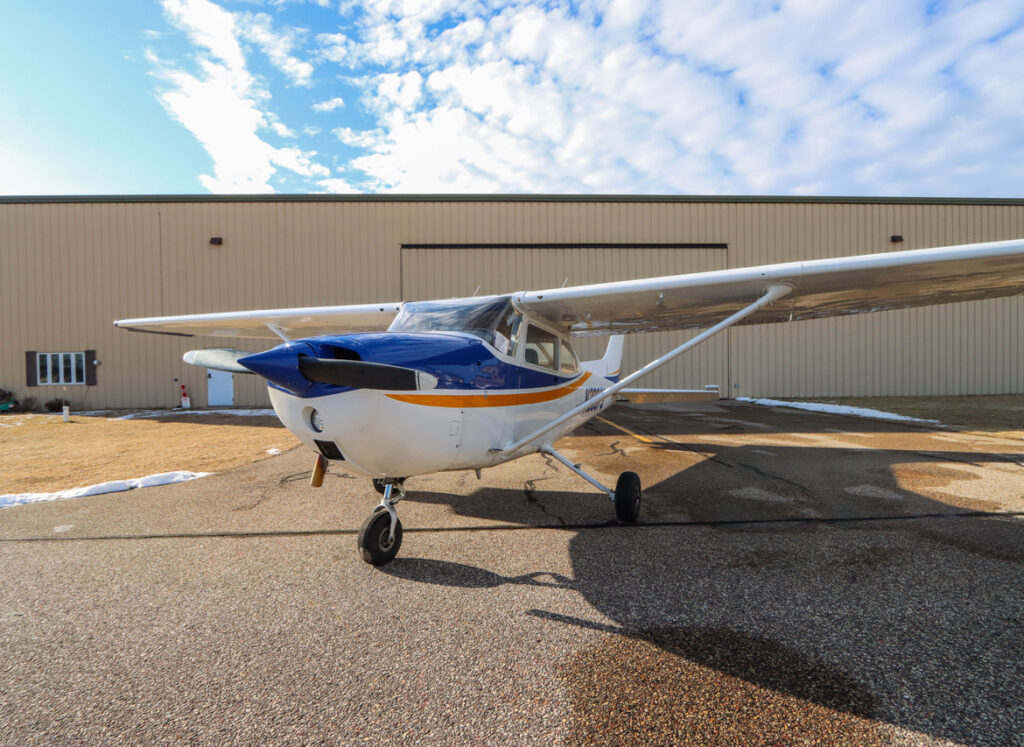
Sykes said Celestial Kinetics started with a single airplane in August 2022 and now operates six aircraft for different training purposes, housed in the academy’s own hangar at Waupaca Municipal Airport.
He said the hangar – purchased in 2023 – has enough space to accommodate another five or six planes.
Renovations to add more classroom space, Sykes said, are set to begin this August.
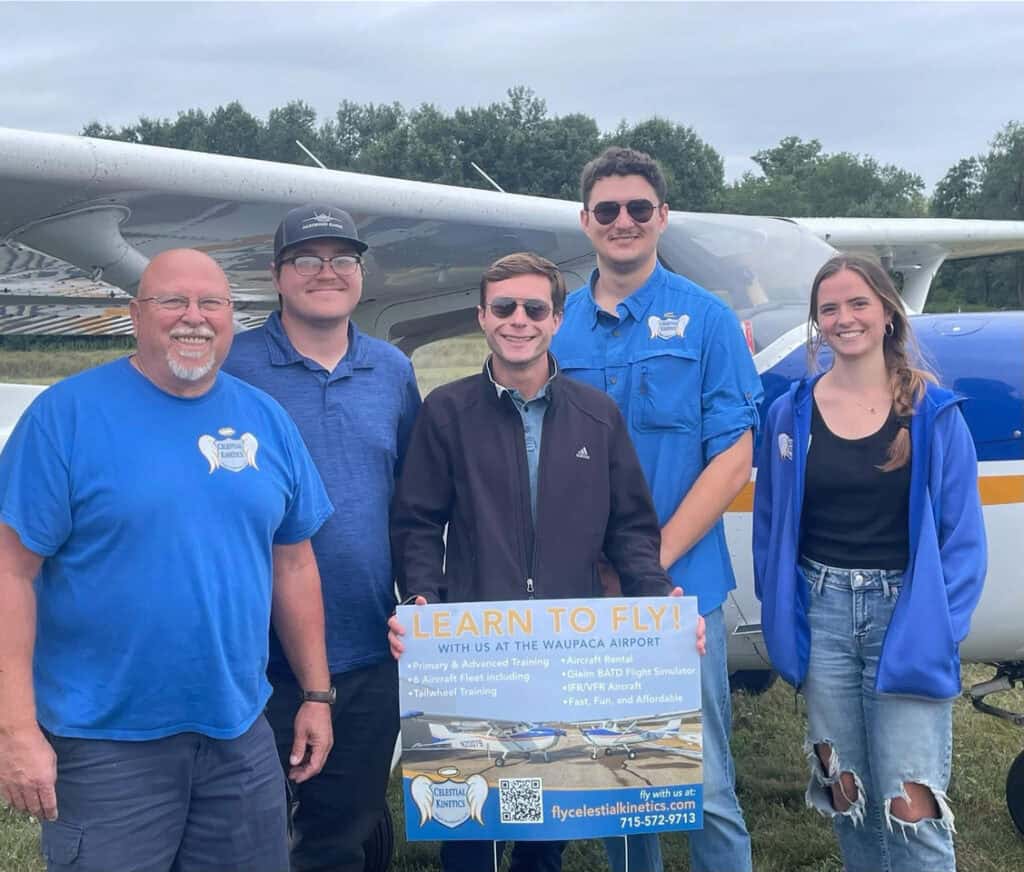
Sykes said his first instructor, Noah Lencki, is now buying in as a co-owner of Celestial Kinetics.
Several other instructors have since bolstered the program, he said, with another set to join after he completes the academy’s training.
“That’ll be our first homegrown instructor who’s gone through our program completely, and we’re excited by that,” he said.
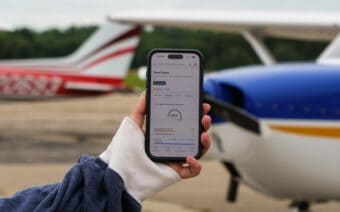
Sykes said the programs are completed on a “pay-as-you-go” basis, with students using an online portal to schedule training and rent aircraft.
“We tailor our training to the student,” he said.
Unlike other schools with mandatory benchmarks, Sykes said, Celestial Kinetics doesn’t kick students out for falling behind.
“We don’t do that,” he said. “We take people at their pace.”
Sykes said this approach lets students spend extra time on certain topics or accelerate their training if ready.
He said the forthcoming renovations will allow the academy to expand into additional specialized trainings.
Though Celestial Kinetics covers all the latest aviation advancements, Sykes – who started flying before GPS – said he also trains on “processes that are back to the basics,” such as dead reckoning and pilotage.
Sykes said the academy continues teaching fundamentals to primary students to ensure they can handle situations like equipment failures.
“If they have an electrical failure in the airplane and their equipment is not available, they have to still be able to find themselves a place to land,” he said. “So, we teach the technology, but we also teach the fundamentals.”
Realistic yet fun
Amid the inherent risks of aviation, Sykes said Celestial Kinetics instructors “focus on keeping it fun.”
“There’s certainly a serious aspect to it,” he said, “but we all get into this because it’s a fun thing to do, so we don’t want to take that away.”
When it comes to curricula, Sykes said the key is to “make it realistic, [but] fun.”
He also said it’s “very focused, very driven, disciplined,” detail-oriented people who tend to make the best pilots.
“In the industry, they say it’s around 80% of the people who start their flight training but never get a pilot’s license,” he said. “I believe it’s because most of the time, people get into it and they find out it’s a lot more work than they thought it was going to be.”
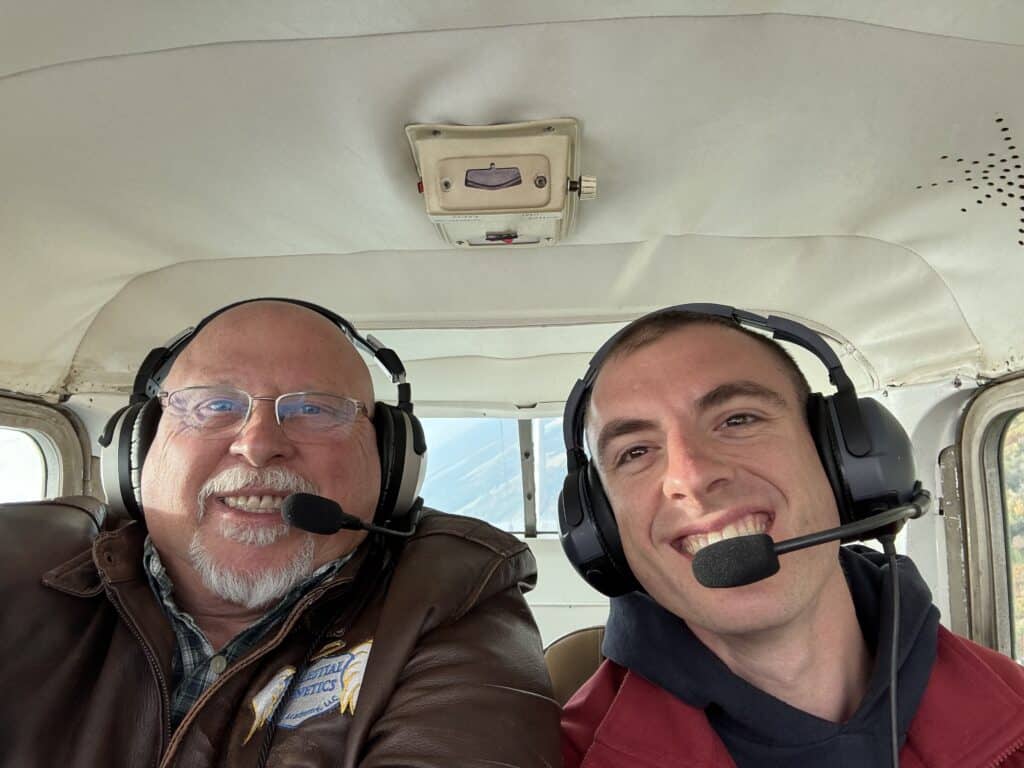
The time and effort, Sykes said, truly pay off, with a pilot’s first solo flight being “a day that people will never forget.”
“When that instructor gets out of the airplane and [the pilots] make that first takeoff, and once those wheels leave the ground, they realize, ‘It’s all me – I don’t have that instructor next to me to rely on,” he said. “Then, they have to bring that airplane back and land. It’s thrilling, exciting and scary all at once.”
Sykes said students’ first cross-country flights – wherein they “fly to an airport at least 50 miles away, and then find their way back” – are as thrilling for them as they were for him during his early solo experiences.
“[It brings me back to] 50 years ago, when I was hanging out here with Dad,” he said.
As Celestial Kinetics’ enrollment grows each year, Sykes said he gets to vicariously relive his cherished memories all the more often, while imparting his wisdom upon the new generations taking flight.
“I’m excited to be at this point in my life and helping these new people coming in, knowing they have such promising careers ahead of them, and being a part of that process and getting them well on their way,” he said.