Touchmark on West Prospect: 25 years of care, community
 Miron helps 17 graduates launch construction careers



November 9, 2026
RHINELANDER – For Jason Neilitz, the success of a broadband project in Wisconsin’s Northwoods will be measured in more than miles of fiber installed or homes connected.
It also will be measured in the opportunities that become available to people who live and work in the region.
The need for reliable internet access is especially apparent in parts of Forest and Florence counties, where Neilitz – Chief Information Officer for the Sokaogon Chippewa Community – said some areas remain underserved.
He said the Sokaogon Chippewa Community is taking the lead on a project to bring high-speed internet to the region, and not just for tribal members.
Through NibiLink – a tribally owned organization that will own and maintain the network – Neilitz said the project calls for approximately 900 miles of fiber to reach more than 4,600 homes, businesses, and public entities.
The project received a $56.6-million award through the federal Broadband Equity, Access and Deployment (BEAD) program.
With matching and in-kind contributions, NibiLink officials reported the total project funding exceeds $72 million.
For Neilitz, the need is about more than infrastructure.
During the COVID-19 pandemic, he said some families in the region struggled to participate in remote learning because they lacked reliable internet or the equipment needed to get online.

“One of the biggest issues we’ve had, and I’ve been in technology most of my life, is people assume everyone has connectivity because they do.”
That gap, Neilitz said, reinforced the importance of expanding access to education, healthcare, and economic opportunities.
But for him, it also raised a practical question as the community pursued its broadband project: Who would install, maintain, and repair the network once it was in place?
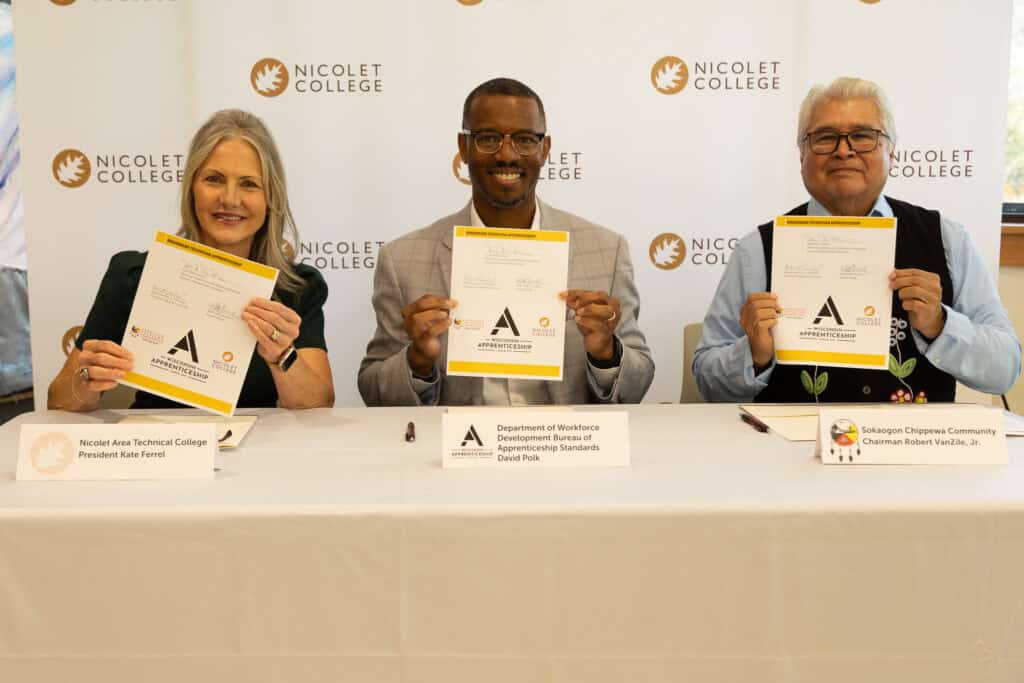
The answer is taking shape through a new Broadband Service Technician Registered Apprenticeship Program developed in partnership with Nicolet College and the Wisconsin Bureau of Apprenticeship Standards.
Per the program’s announcement, it is expected to welcome its first cohort in spring 2027, preparing apprentices for the work involved in installing and maintaining fiber infrastructure and keeping broadband service operating.
For Neilitz, the workforce opportunity is an important part of the larger undertaking.
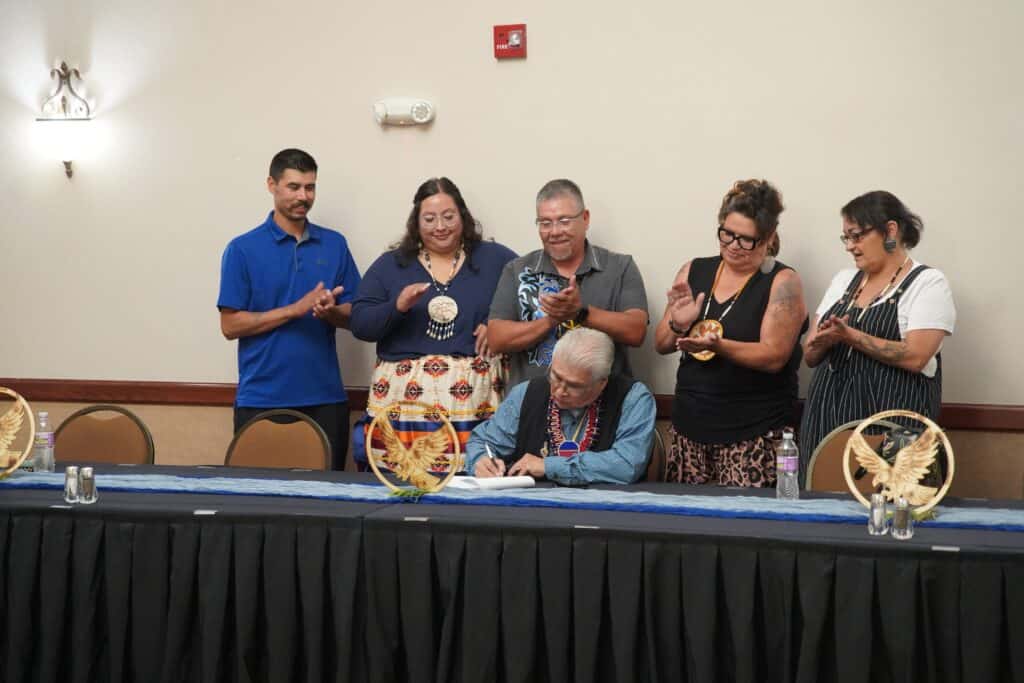
“The apprenticeship program is a fine example of two years of work and effort, and the culmination is having the program available,” he said, “but the greater win is that when a person gets a full-time job and can support their family on the wages they earn from this job – that’s a win.”
Building a workforce alongside the network
Neilitz said the apprenticeship grew out of conversations that began roughly two and one-half years ago, when the Sokaogon Chippewa Community was exploring the possibility of securing broadband funding.
He said the community recognized early that building a network of this size would require planning for the people who would support it long after the initial construction.
The idea, Neilitz explained, was to develop a local workforce rather than wait until the infrastructure was in place to start thinking about maintenance and repairs.
“It’s really no different than needing a car shop to maintain cars in a remote area where you start building houses,” he said. “We’re in a similar situation that needs local representation to maintain and support that infrastructure.”
Nicolet College, Neilitz said, was a natural partner, having an established relationship with the community and an ability to help navigate the educational and administrative steps involved in establishing the apprenticeship.
“At the end of the day, it’s all about relationships,” Neilitz said. “It took a lot of time, effort, meetings, adjustments, and communication, and we’re proud there were a lot of people involved in the apprenticeship program. Now, something is being offered that didn’t exist before.”
The partnership also brought together organizations with different roles to play.
Neilitz said Nicolet College provides classroom instruction and educational support, while the Wisconsin Bureau of Apprenticeship Standards provides the framework for the registered apprenticeship.
Further, employers sponsor apprentices, he said, as well as provide the on-the-job training that makes up most of the program.
Jeff Labs – Associate Vice President of Academic Affairs at Nicolet College, and Apprenticeship Coordinator with the Wisconsin Technical College System – said the program made sense as the partners considered how to prepare workers for both the installation and long-term maintenance of the network.
Initially, Labs said, there had been an opportunity to pursue separate BEAD funding for technical colleges, but that opportunity was canceled.
However, he said the partners continued their conversations and found that an existing registered apprenticeship framework for broadband service technicians offered a way forward.
Labs stated the federal BEAD award supports the broadband infrastructure project; the apprenticeship is a separate workforce-development effort.
For Labs, the work ahead extends well beyond laying fiber in the ground.
Technicians will need to troubleshoot problems, diagnose and repair service issues, respond when lines are damaged, and help customers when something goes wrong, he said.
“Think of the workforce it will take not only to install, but even more so, the maintenance and repair side of the house on close to 900 miles of fiber,” Labs said. “If [someone] has an employer sponsor, they are welcome to be enrolled in the program.”
The program is open to eligible participants across the region, not just tribal members or people who will work exclusively on the tribe’s network.
That is important, Labs said, given the size of the project and the number of workers it will take to maintain the infrastructure over time.
Because Nicolet is an open-enrollment institution, tribal membership is not a requirement.
The essential step for prospective apprentices is finding an employer willing to sponsor them and provide the required on-the-job training.
A career that combines technical with durable
Per the Wisconsin Department of Workforce Development, the Broadband Service Technician Registered Apprenticeship is a one-year program that combines paid, on-the-job learning with classroom instruction.
Apprentices complete 2,000 hours of on-the-job training and 144 hours of classroom instruction over two terms, followed by an eight-hour transition-to-trainer class.
About 90% of the apprenticeship takes place on the job, with the remaining 10% devoted to classroom and theoretical instruction.
The work requires technical knowledge, but Labs said the program also emphasizes the durable skills technicians need when working with customers and addressing unexpected problems.
Apprentices will learn to use technology in the field, he said, including digital tools for work orders, troubleshooting, and accessing technical information.
Labs said the goal is to prepare people for the practical demands of the job while giving them a foundation they can continue building on as technology changes.
Those skills, he noted, are particularly important on the maintenance and repair side of the work.
For example, fiber can be cut or damaged, and restoring service can involve tedious work and a timely response.
Labs also said technicians need to be able to explain problems to customers and work through possible solutions.
“The idea is to develop a really well-rounded apprentice [with the technical skills] but also customer service, critical thinking, and troubleshooting skills before the repair.”
The broadband program expands Nicolet College’s existing apprenticeship offerings, Labs explained, which include plumbing, carpentry, and heavy equipment operation.
The college also recently added an Early Childhood Education Apprentice program, he said, as it looks to provide training options that respond to workforce needs.
Labs said registered apprenticeships can give people a practical route into a new field or help them build on skills they already have.
Participants earn wages as they learn, and he said the credential can provide a foundation for additional education or career opportunities.
“As far as laying a foundation, it comes from looking at what people need to meet them where they are today…,” he said. “How can we upskill a career path or find a new career path most efficiently, and with a credential that has a lot of meaning to it?”
Labs noted the credential is portable, meaning workers can take their experience to other employers and locations.
He said apprenticeship coursework can also serve as a stepping stone for people who later want to pursue additional credentials or a degree.
In a field where tools and technology continue to change, Labs said learning will not stop when the apprenticeship ends; workers will need to keep updating their skills as networks, equipment, and service needs evolve.
For Nicolet College, getting the program ready for its first cohort has involved coordinating college leadership, curriculum, student services, and the state’s apprenticeship partners.
Labs expects the initial cohort will include 12–15 apprentices – a size he described as a good starting point for instruction and support.
Enrollment closes one week before the term begins.
Because employer sponsorship is required, Labs encourages prospective participants to begin by identifying an employer willing to support their apprenticeship.
Local interest, regional opportunity
The formal program builds on interest the Sokaogon Chippewa Community has already seen locally.
About two years ago, while anticipating a possible BEAD award, Neilitz said the tribal government sponsored an introductory fiber class to help people understand the technology and the work involved.
He said the session covered what fiber is, how it is used, and the basics of splicing and maintenance.
Twenty-eight people attended – a turnout Neilitz said demonstrated that people were interested in learning more about the field, even before a formal apprenticeship pathway was available.
“We do have tribal members interested,” he said. “That was phenomenal, and the instructor was overwhelmed in a good way by the amount of excitement of that program.”
Where the introductory class offered a first look at the work, Neilitz said the registered apprenticeship creates a more formal path for people who want to pursue it as a career, with paid on-the-job experience and classroom instruction built into the program.
He further clarified that the apprenticeship opportunity is not limited to those who attended the introductory class or to people who are tribal members.
Employers can sponsor eligible apprentices from across the region, which Neilitz said creates a broader pool of people who can develop the skills needed to install and maintain broadband infrastructure.
Why local knowledge matters
For Neilitz, developing a local workforce is about more than having enough people available to perform the work; it is also about the relationships between technicians and the communities they serve.
Broadband service technicians may enter customers’ homes, work around personal devices, and troubleshoot problems involving private information.
In smaller communities, Neilitz said, having someone local who understands the area and is recognized by residents can make a difference.
“When you talk about people coming into your home, having someone local – who you see at a baseball game or a graduation party – those are important factors for small communities.”
Further, Neilitz said such familiarity reinforces the value of developing a workforce drawn from the communities the network will serve.
He said the community’s decision to pursue a network serving tribal and nontribal residents alike reflects a broader view of the connectivity problem.
Neilitz suggested the same approach informs the apprenticeship: a regional infrastructure project requires a regional workforce.
He credited tribal leadership for taking that long view and recognizing how reliable connectivity is a human problem, not one limited to tribal membership or a reservation.
“I give a lot of credit to the tribal council as their vision and leadership really is a wonderful thing to see in action.”
Connecting the workforce to long-term opportunity
Neilitz said the network is expected to take several years to build out, and workforce needs will evolve as construction advances and service becomes available to more households.
Planning, permitting, and engineering are underway, with contractors performing much of the specialized build-out.
The Sokaogon Chippewa Community is working with outside partners on the construction, including TD&I – the subcontractor performing the fiber-laying work.
Apprentices can gain experience through their sponsoring employers while learning from people already working in the field, Neilitz said.
As the network develops, NibiLink anticipates needing its own crews and installation teams over time, and Neilitz said the organization wants to build that capacity gradually – working with experienced partners while developing the people and infrastructure needed to support the network.
However, he said, that does not mean every apprentice will automatically become a NibiLink employee.
The broader aim is to develop qualified technicians, Neilitz clarified, who can work in the broadband sector and help meet regional demand.
For Neilitz, the connection between infrastructure and workforce development is deliberate.
He said building the network without considering who will maintain it would leave an important part of the long-term challenge unanswered.
“It goes hand in hand; you have to grow the talent sometimes, and we had the foresight to grow the workforce, grow the BEAD, and they’ll eventually meet.”
The apprenticeship is one part of that longer-term effort, Neilitz said.
It gives people a way to enter a technical field, he said, while also helping employers build the workforce they need and supporting the infrastructure the region is counting on.
Neilitz said the effort has shown what can happen when organizations with different responsibilities work toward a shared goal.
“It’s a unique program, and it’s an example of what can be accomplished when people work together.”