 Local hair stylist finds ‘Niche’ in downtown Manitowoc
 Talent is the floor, but your character is the ceiling’



November 16, 2026
GREEN BAY – Regional business, government, and community leaders gathered Oct. 15 at the Green Bay Business & Community Sustainability Showcase to celebrate local sustainability achievements, explore opportunities for regional collaboration, and reflect on
lessons learned through the 2026 Green Bay Sustainable Business Accelerator.
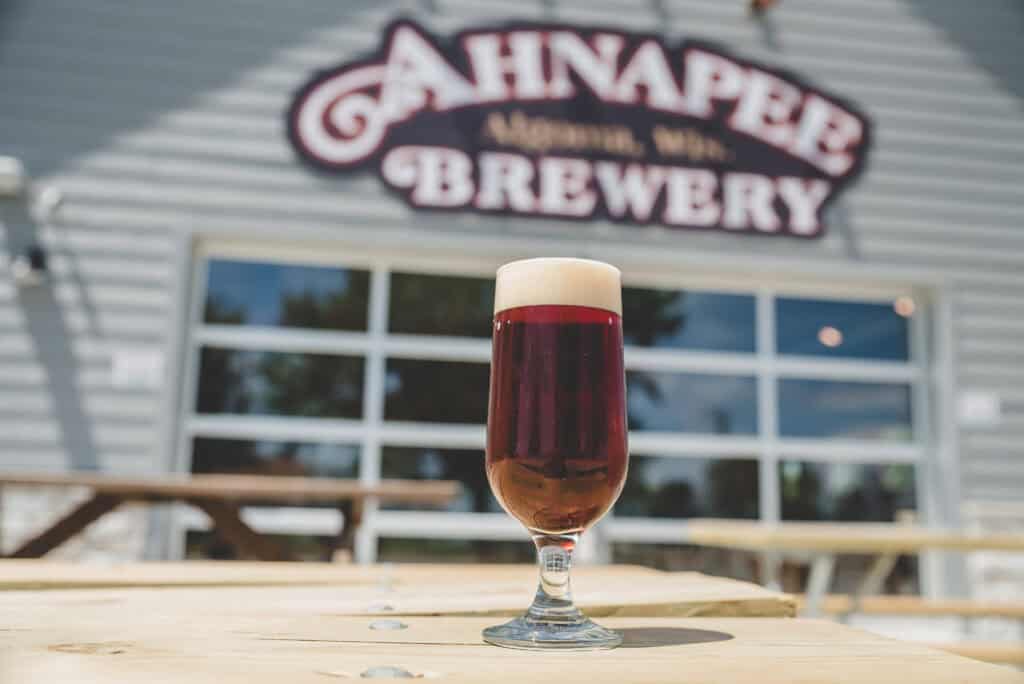
A highlight of the event was the recognition of Ahnapee Brewery for its commitment to sustainability and its leadership in implementing nature-based solutions that deliver environmental, economic, and community benefits.
Through investments in environmental stewardship and community resilience, Christa Kananen, the Sustainable Business Council’s (SBC) Director of Strategic Initiatives, said Ahnapee is demonstrating how local businesses can play an important role in building a more resilient Northeast Wisconsin.
“The way Ahnapee connects its personal value for sustainability and then finds creative ways to integrate that into its business model is what sets them apart,” she said. “I really appreciate that about Ahnapee – even when [Owner Nick Calaway] knows his actions aren’t going to have an immediate return on investment, if there was some way he could justify the investment, he does it.”
Kananen said Calaway strikes her as having a good balance of being values-oriented and a “really smart business leader.”
“I think that’s vital to making sustainability successful in the environment we have in this region.”
The recognition for Ahnapee was presented during the showcase, which brought together members of the community who recognize the benefit of preserving natural systems to build community resilience.
Kananen said the event highlighted key findings from the 2026 Green Bay Sustainable Business Accelerator, unveiled a new Nature-Based Solutions Toolkit for local businesses, and announced a community-wide Cool Choices game in May 2027.

More on the SBC
Kananen said the SBC is a resource for businesses and sustainability professionals, much like an industry group for sustainability.
The nonprofit, she said, is member-based, with members from across Wisconsin’s business sectors.
“Not surprisingly, there is heavy representation in manufacturing,” Kananen said. “We also have finance, healthcare, and professional services – everything from companies with one employee up to ones with 10,000 employees. Primarily, our members are folks who value sustainability for personal or professional reasons. We want to make sure companies have everything they need to achieve what they set out to achieve in sustainability.”
Report reveals momentum
Following the event, the SBC released a new report, Building a More Resilient Green Bay: Lessons from the 2026 Sustainable Business Accelerator.
The report summarizes key insights gathered through the program and outlines recommendations for increasing community awareness, supporting small businesses, and creating local conditions that better reward sustainable business practices.
Further, the report found that while many local businesses recognize the value of sustainability, small and mid-sized organizations often face significant capacity constraints and need stronger community support, practical resources, and clearer business incentives to inform their efforts.
“The momentum we are seeing across Northeast Wisconsin is encouraging,” Jessy Servi Ortiz, Executive and Managing Director of the SBC, said. “Organizations like Ahnapee Brewery are helping show that sustainability is not only good for the environment, but also a powerful way to strengthen businesses and communities alike.”
Accelerating sustainability
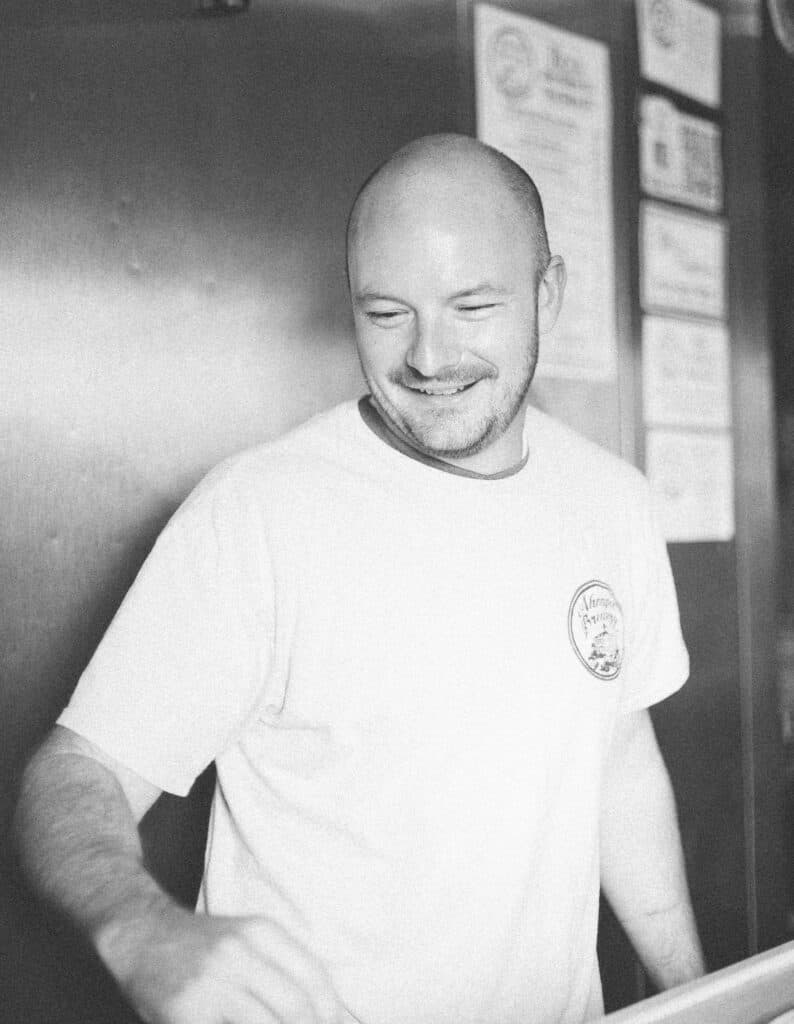
The 2026 Green Bay Sustainable Business Accelerator, Calaway said, brought awareness to small business owners about sustainability efforts.
He said Ahnapee has always tried to do what’s right with sustainability, but after enrolling in the class, it helped round everything out and helped him realize they were already doing a good job.
“Some of the things we’ve done in the past were also aligned with saving us money, but I definitely learned a lot,” he said. “It focused on more of the nature-based solutions, but it also brought awareness to some of the smaller things we can do to help with sustainability. It covered a little bit of everything.”
Kananen said the accelerator sessions not only taught participants some of the basics of sustainability, but also connected them to tools like Focus on Energy resources, online impact calculators, and free tools they could plug into to measure and manage their environmental impacts.
In working with manufacturing companies, Kananen said she consistently sees businesses doing a lot of the things the SBC would consider sustainable, but they’re not necessarily measuring them.
Because they’re not measuring them, she said they have trouble taking credit for them, particularly in supply chains.
“Empowering smaller and mid-sized businesses to measure their environmental impacts and tell their story with data can help them be a lot more competitive,” Kananen said. “It’s challenging for a lot of companies who just don’t have the time to invest in measuring something they’re going to do no matter what: ‘I’m going to do this anyway, so do I really have to measure it?’”
Kananen said companies don’t have to install a million dollars’ worth of solar panels on their facilities to make an impact.
“There are a lot of ways to engage,” she said, “so helping companies figure out what the highest-impact priorities are, and then giving them the tools to measure it, is really what’s going to help them make wise and prudent investments that move our community forward.”
Ahnapee’s efforts
Like many businesses at the showcase and throughout Wisconsin, Ahnapee is doing its part to make its sustainability efforts a part of its daily operations.
A small but mighty sustainability effort, Calaway said, regards Ahnapee’s bottling.
“We are getting bottles from a more local source,” he said. “That might not seem like much, but when your source is local, it cuts down on emissions from cars or trucks dropping the product off.”
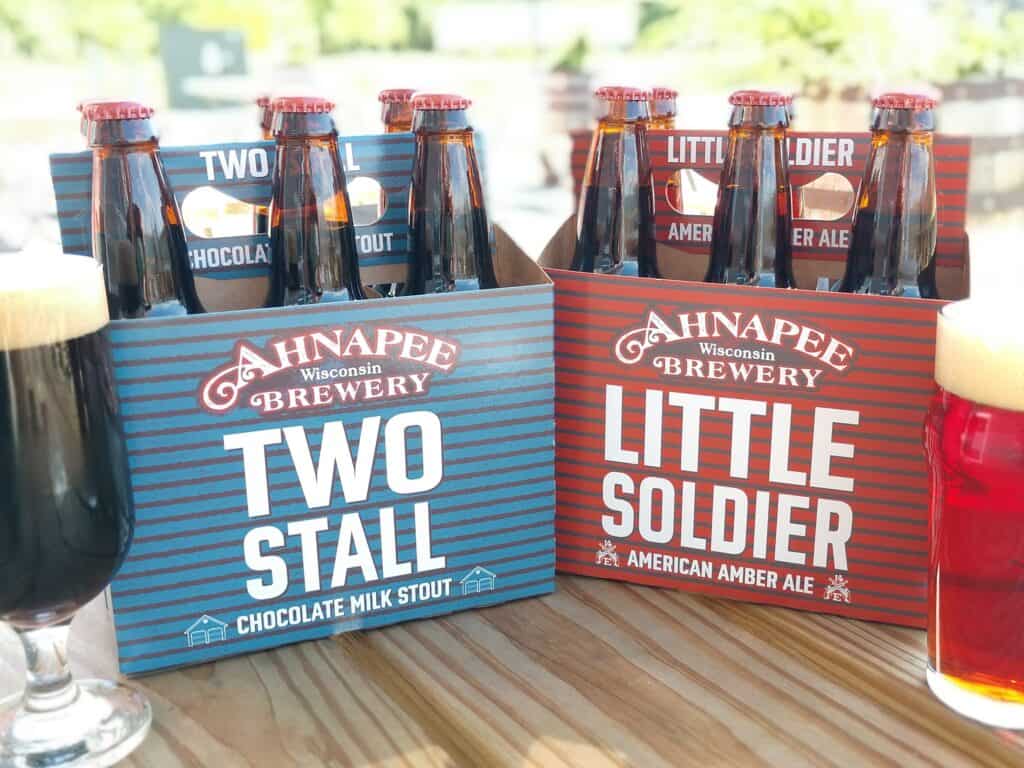
Ahnapee – which began operations in 2013 in Algoma and opened another location in Suamico in 2020 – also implemented some native pollinators to help with sustainability, Calaway said.
“We planted some native plants, so they don’t need to be watered as much,” he said. “You’re not only saving on water, but you’re helping native bugs, etc.”
Calaway said many breweries – including Ahnapee – have long recycled their spent grains that make the beer.
He said in Ahnapee’s case, the brewery’s spent grains are given to a local farmer, where they’ll be fed to their cows and pigs.
“That’s definitely not unique to Ahnapee,” Calaway said. “It helps keep cows hydrated because they don’t drink a lot of water, and the spent grain has a lot of water in it. On our end, it’s also diverting it from the landfill. Instead of throwing it into the trash, it’s going to a place where somebody can actually use it. That’s one of our bigger sustainability efforts.”
Containing carbon dioxide, a byproduct of fermenting beer, is another area Calaway said Ahnapee excels at.
“We trap the carbon dioxide inside of the beer, which makes us less reliant on the man-made stuff,” he said. “Again, it’s a cost savings as well because we don’t have to use the carbon dioxide we buy as much. We still have to use some [of the stuff we buy], but it also improves the beer. On top of it, the carbon dioxide is not just blowing off into the air.”
Although Ahnapee is doing “quite a bit” in its sustainability efforts, Calaway said there is always more the brewery can do.
“We are looking at potentially doing some rain gardens and trying to reclaim some water for watering the patio plants,” he said. “We have plenty of ideas we’ll work on as time and money become available.”