Wausau Oral Surgery offers top-tier care from a ‘top-floor’ office
 Suick Lure Company continues to land the lunkers



November 9, 2026
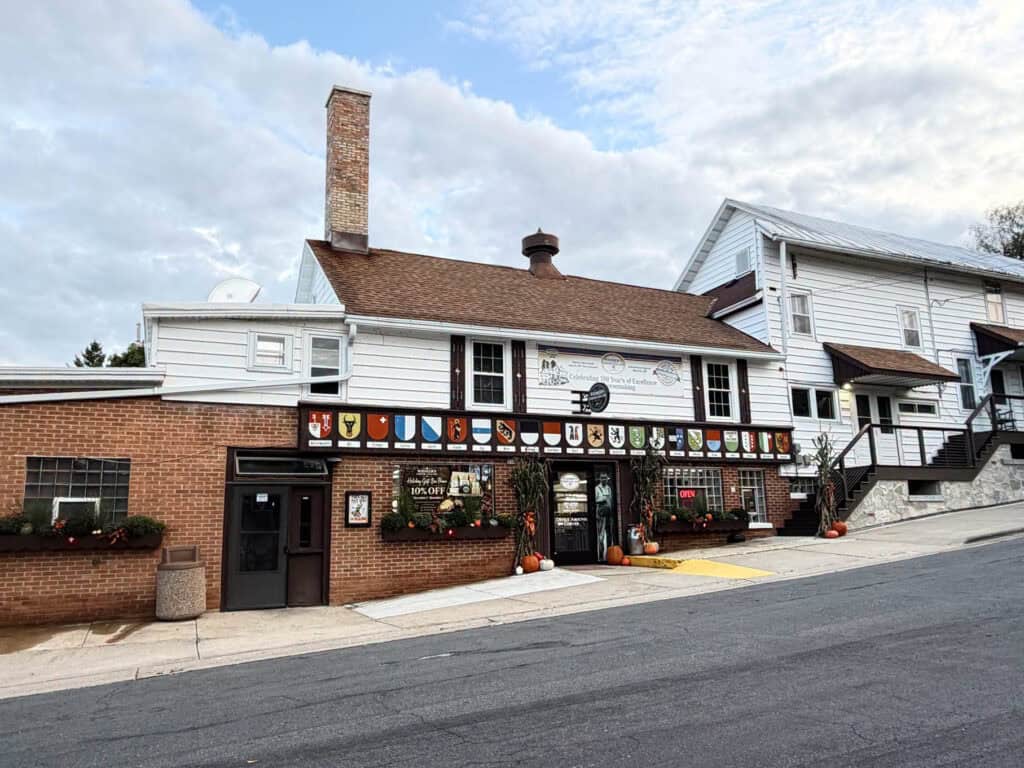
THERESA – For more than a century, Widmer’s Cheese Cellars, Inc. has turned milk into cheese – a product that has long been its heritage.
Per widmerscheese.com, the company crafts cheese today the same way John Widmer did when he immigrated to Wisconsin from Switzerland in 1905 – using bricks, open vats, and wooden curing racks to produce its award-winning cheeses, such as its jalapeño cheddar cheese curds that won 3rd place at this year’s World Dairy Expo.
Yet, in an industry dominated by large processors and razor‑thin margins, Widmer’s Cheese Cellars’ survival hasn’t come from nostalgia and producing great cheese alone, according to 4th-generation Owner and Vice President of Operations, Joey Widmer.
While many small dairy processors and cheese-making facilities have shuttered, Joey said Widmer’s has stayed afloat by combining its history of craftsmanship with modern-day support – leaning on state and federal grants whenever possible to help preserve rural cheese production, update or replace aging equipment, expand operations where necessary, and keep local jobs rooted in the community of Theresa.
He said such grants – of which Widmer’s has received several in recent years – enable an artisan cheese producer to compete with large-scale operations, while maintaining traditional methods.
“These grants are very important for small dairies like ours, and they make [business] sustainable,” he said. “A lot of this equipment is just so expensive. Without the grants, only big companies would be able to afford it. I feel like the grants are giving smaller companies, like ours, the opportunity to stay in business.”
Widmer’s Cheese Cellars was recently awarded a $100,000 federally funded grant from the Dairy Business Innovation Initiatives (DBII) and the Wisconsin Cheese Makers Association (WCMA).
“The WCMA acts as a ‘pass-through’ organization, re-granting federal or state funds to dairy businesses,” Rebekah Sweeney, Senior Director of Programs and Policies for the WCMA, said. “The USDA’s DBII grant program supports small and mid-sized dairy businesses with the development, production, marketing, and distribution of dairy products.”
Per the Dairy Business Innovation Alliance (DBIA) announcement, this particular award helped Widmer’s purchase packaging equipment such as a cheese sealer and cheese-packaging machine, enabling the business to modernize and increase the efficiency of its cut-and-wrap operation.

Funding for fromage
Joey said the trend today is leaning more toward smaller, seven-ounce, retail-sized pieces of cheese, as opposed to the larger bowls and blocks he’s accustomed to making, so Widmer’s is not getting as many orders for bulk products.
He said he’s been able to utilize grant money to install a new “action machine…, called a thermalformer or a form and film machine.”
This machine uses rolls of film rather than cryovac bags, Joey explained, which allows Widmer’s to produce “a lot more volume of smaller pieces in a shorter period of time, and with fewer people.”
“I also got an automatic labeler with that grant money,” he said, adding that they were hand-labeling both sides of the packages prior to that.
While the $100,000 covered a little less than one-third of the cost for these upgrades, Joey said it helps Widmer’s remain relevant in a very competitive marketplace.
Additionally, with the modernization of those processes, he said the company is able to reach additional markets, especially artisan specialty cheese shops.
Besides its own retail shop, Joey said Widmer’s currently has eight to 10 large distributors who distribute their cheese all over the United States, though it is most heavily marketed and distributed in the Midwest, with multiple retailers and grocery stores carrying the cheeses in the state of Wisconsin.
He said other grants in recent years have helped Widmer’s pay for cold storage insulation and to replace its cheddar mill – the equipment used to mill the cheese into little pieces.
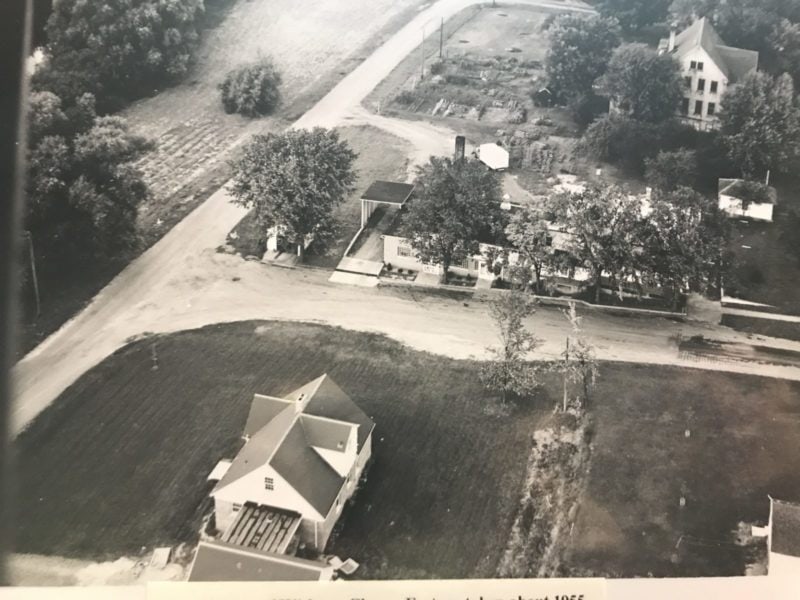
Widmer’s also recently received a $50,000 Dairy Processor Grant through the Wisconsin Department of Agriculture, Trade and Consumer Protection (DATCP), Joey said, designated for the design, engineering, and architectural plans for a new, modernized milk intake as well as a whey cream separator and loadout facility, with the latter having been more than 50 years old.
“Equipment ages out and then you have to replace it,” he said. “Equipment in the dairy industry is very expensive, plus, it all has to be manufactured in a [way that meets various health, safety, and sanitary standards], and that increases the cost.”
Never taken for ‘grant’-ed
Sweeney said grants are essential for small businesses, especially when facing challenging times.
“We know that these grants – while the amounts are relatively small in a corporate context – are essential stabilization tools for small businesses when they weather difficult times,” she said. “Certainly, that’s true right now, and farmers and processors across the state are faced with soaring fuel costs, increased labor costs, a labor shortage, increased input costs, low milk prices, and very volatile international markets whether or not you’re exporting.”
Sweeney said that every one of those factors affects the amount of products being sold, creating a ripple effect throughout the marketplace.
“We find that these grants allow dairy producers like Widmer’s to grow and innovate despite headwinds when they face them,” she explained. “So, even though these grants are small amounts in the grand scheme of things, they make a world of difference to a small business that is motivated to maximize every penny. And that, in turn, makes for much stronger world economies and a strong national food supply chain.”
Though Joey considers the company’s commitment to quality over quantity to be its primary differentiator, Widmer’s has chosen to leave its viewing area as it has been since the beginning, so that customers can continue to see the authentic cheese-making process with its time-honored techniques – something they likely can’t see elsewhere.
“There are a few things that make us unique and set us apart from others: we’ve been in business for over 100 years; we focus on quality rather than quantity; and we are also about keeping our cheese-making in the original process it was when we started,” he noted, adding that they are still making cheese in the same building as when they were in their infancy and under the same roof as where his great-grandparents once worked.
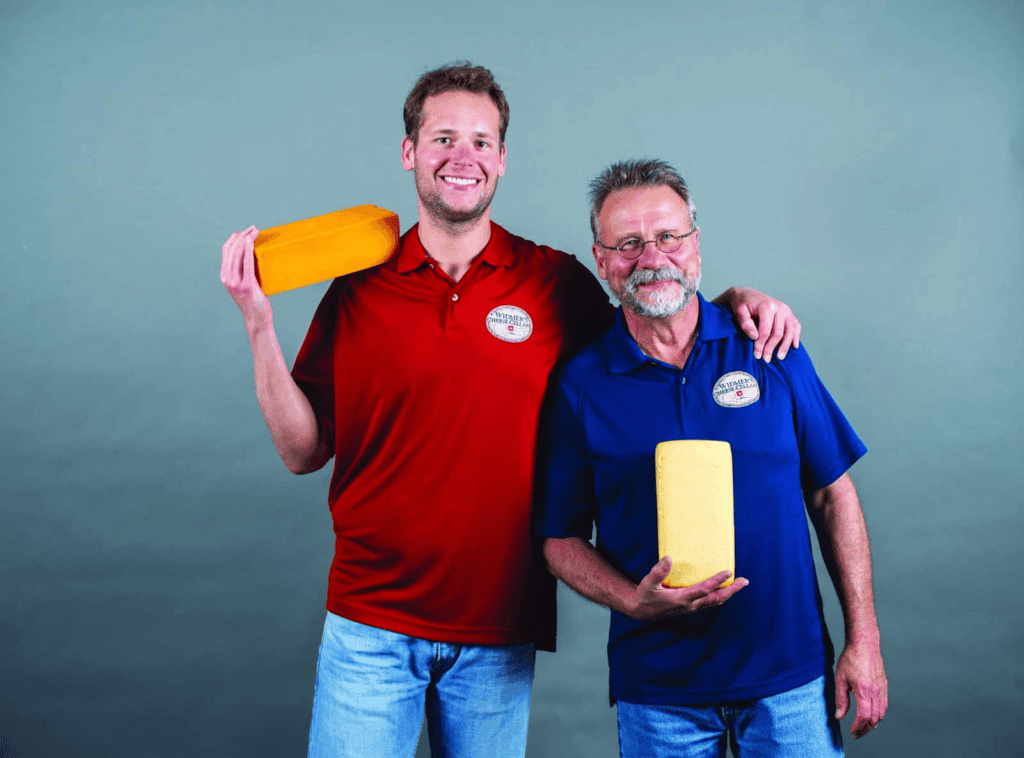
Today, Joey said Widmer’s Cheese Cellars not only stands as a testament to resilience, but serves as a living reminder that tradition can endure – not by resisting change, but by partnering with it.
Widmer’s Cheese Cellars’ plant is located at 214 W. Henni St. in Theresa, offering retail store hours from 7 a.m. to 5 p.m. Monday through Saturday.