Pips ’n Chicks inspires a digital age of farming
 Facility dog comes to Marshfield Children’s Hospital


April 6, 2026
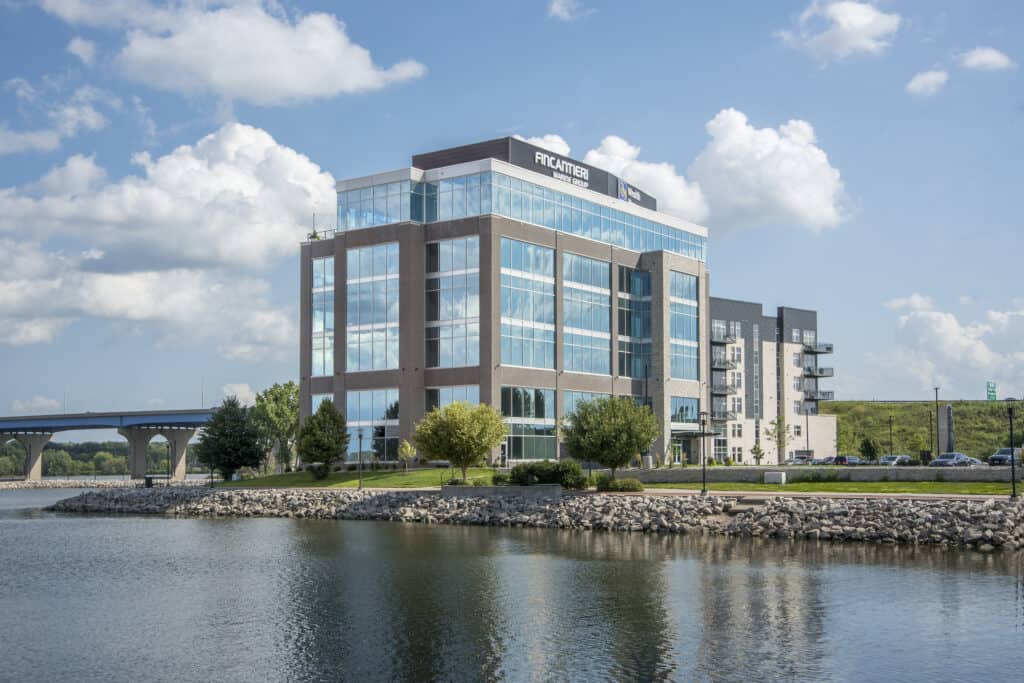
GREEN BAY – CEO Chad Calmes said Bayland Buildings, Inc. was built around the design-build model long before it gained wider traction across the industry.
Calmes said Founder Steven Ambrosius structured the company 35 years ago as a single-source builder, handling projects from start to finish – a decision that helped define its early direction.
“Design-build was something not all commercial or industrial builders did back then,” he said. “When Bayland came on the scene, we were one of the only ones that were offering that kind of turn-key design-build solution, at least in the Northeast Wisconsin region.”
Calmes said the model quickly gained traction and proved to be a strong value for new construction projects.
“Today, we have in-house architects and engineers and a team of draftsmen that all work on, basically, the full package for the design part,” he said. “Bayland design-build model was built on providing customers with a seamless experience, from concept to completion, without compromising overall quality.”
When Bayland’s sales staff first meets with a client, Calmes said the conversation focuses on understanding the client’s budget, vision and overall needs.
“Everybody has different needs, and we’re able to design something to those criteria,” he said. “We think that’s where the value really comes in. We’re designing things that are going to match somebody’s budget, vision or expectations, as far as aesthetics go. So, there are a lot of advantages to getting the right team on board right up front.”
Expanding into agricultural construction
Calmes said a 2001 acquisition of a local agricultural construction company marked Bayland’s entry into the ag sector.

The company, he said, went on to establish its own agricultural division, taking on projects for large-scale farms, including robotics-related builds.
“We ended up serving the agricultural industry in the entire State of Wisconsin and throughout the Midwest,” he said.
At the same time, Calmes said Bayland started a fabrication division, which focuses primarily on doing structural steel fabrication for those agricultural projects.
“We’ve since branched out and now do a lot of fabrication on our commercial construction projects as well,” he said.
Consistent growth, repeat business
When Bayland Buildings first began, Calmes said it had just two employees – Ambrosius and one other – requiring much of the work to be subcontracted.
Thirty-five years later, he said the company has grown to approximately 250 employees.
“It’s been steady growth through the years,” he said. “We just keep adding to our capabilities and our numbers, and we’ve been responsive to what our clients are requesting of us.”
Having the necessary expertise in-house, Calmes said, allows the company to manage the full design-build process, offering clients a single-source approach to complex projects.
Bayland’s staff, he said, includes a full design department, along with a licensed structural engineer, licensed architect, architectural designers and interior design services.
He said the company also employs a full-time permit coordinator who works with municipalities to secure site plan approvals and building permits.
Calmes said total project integration allows Bayland to better manage its projects, helping keep work on schedule and protect clients’ investments.
Bayland, he said, operates out of two locations: Green Bay and Oshkosh.
Calmes said its main office is in Green Bay, where most operations are based, while its fabrication division operates in Oshkosh under the names AgriSteel and AGS Fabrication.
“AgriSteel primarily focuses on agricultural buildings that we ship all over the United States and Canada to a dealer network,” he said. “The dealer network is made up of AgriSteel dealers who order buildings from us. We then fabricate and ship them to them… Our reach is pretty far with those.”
Calmes said Bayland’s approach has contributed to customer satisfaction and repeat business.
“We pride ourselves on the fact that our repeat customers make up more than 70% of our regular workload,” he said. “They help drive our growth to some extent.”
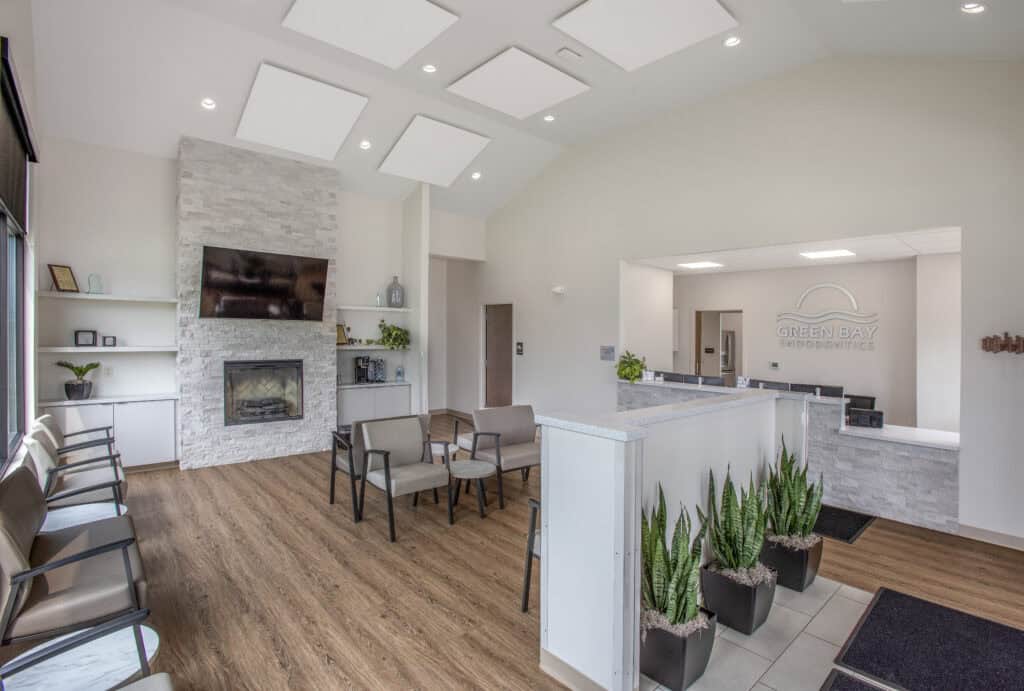
Calmes said growth in project volume has led the company to expand its crews and capabilities.
“We’re hiring right now because we’ve got a decent backlog of work,” he said. “We try to take advantage of times when maybe the market isn’t as strong as it could be, and during those times, we hire up quality people to join our team.”
Challenges then, now
Calmes said Bayland has had relatively strong hiring success in recent years, which he attributes in part to the company’s growth compared to others in the industry.
“Sometimes that provides opportunities to pick up new future leaders in our staff members,” he said. “But hiring has been a challenge at times, just as the growth of our own numbers has been a challenge over the years.”
Calmes said the labor market was particularly challenging five years ago and has been tight industry-wide, but is starting to loosen, giving the company room to add staff and increase capacity.
Though the COVID-19 pandemic affected many businesses, Calmes said Bayland was not directly impacted and actually saw business increase shortly after.
However, inflation and rising prices in the aftermath, he said, proved more challenging.
“Staying ahead of inflationary pressures and trying to educate our clients on what those pressures were was somewhat of a challenge, but at the same time, something that we easily navigated,” he said. “It’s a matter of keeping everyone abreast of increases that were coming down the pipeline as far as building materials go. But there was definitely some surprise from some of our clients on how fast the cost of new construction increased following the pandemic.”
Calmes said the company hasn’t seen significant impacts from tariffs so far, though some building material costs have begun to rise this spring by about 3-5%.
Prior to that – “in the last 24 months” – he said prices had been relatively stable.
“We kind of stabilized on inflation, [but] now tariffs seem to be wanting to push that up again,” he said. “So, we’re just watching that closely.”
Calmes said the ongoing conflict with Iran could drive up construction costs, though the full impact has yet to be seen.
“We certainly will see increases,” he said. “We haven’t necessarily seen that yet, but I think everybody’s probably waiting to see if it’s going to be something short-lived or if it’s going to be a long-term issue.”
Calmes said the ripple effects could extend beyond materials, particularly in transportation and fuel costs.
“From a trucking standpoint, we’ll start seeing fuel surcharges again,” he said. “Obviously, with a company with our kind of reach, we go through a lot of fuel, so it’s definitely a driver of costs in our industry. So, we’re watching it closely to see where it goes.”
Calmes said maintaining company culture has been one of the biggest challenges as Bayland has grown, particularly in ensuring employees take pride in their work and represent the company as intended.
“Going through growth, we’re huge believers in continuing education and cultural training, regularly and periodically, so that everybody’s always on the same page,” he said, “because we do add numbers pretty significantly, especially if you look at it in five-year increments.”
Calmes said Bayland’s culture centers on high expectations for performance and integrity, with a focus on building trust among employees, clients and subcontractor partners.
“We also expect our people to have a plan and understand how they’re going to get to their goals,” he said. “Teamwork is huge here, so we are huge proponents of working effectively in a team setting, so everybody knows their part and understands how to communicate and achieve goals in a team.”
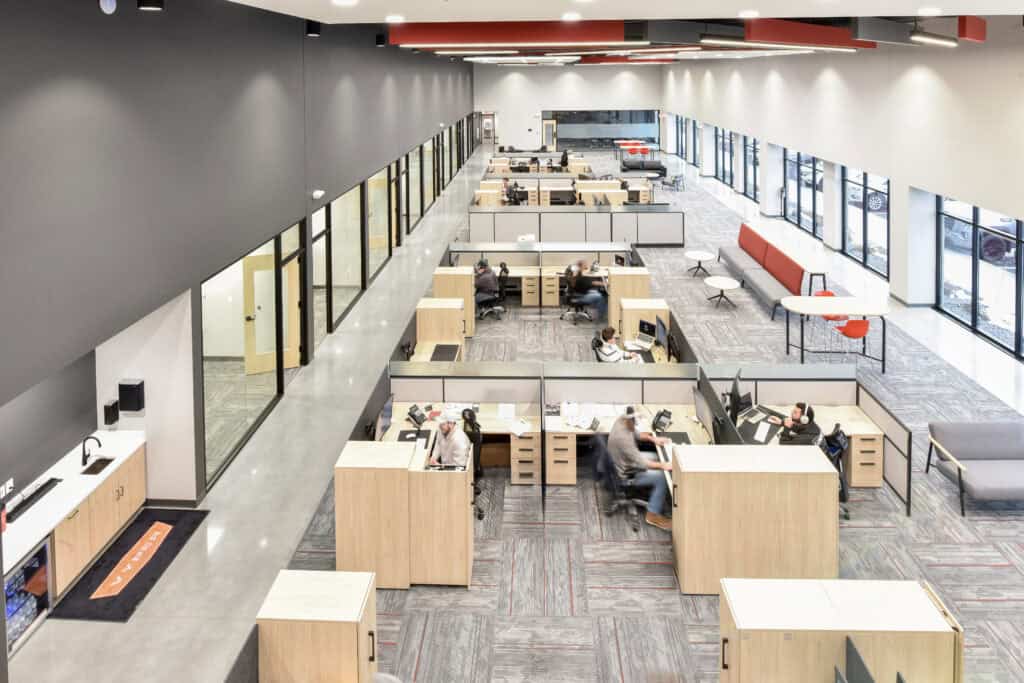
Calmes said mistakes are inevitable in construction, but the goal is to understand what went wrong and learn from it.
“It’s not about pointing out flaws, [it’s] about learning from mistakes and improving as a group going forward,” he said.
Ownership in the company
As the company grew, Calmes said Ambrosius looked for ways to keep employees engaged and reward their work, ultimately selling a 30% stake in the company to employees.
Then in 2017, Bayland Buildings became 100% employee-owned – a shift Calmes said has been significant for its ownership culture.
“Everybody understands that the tools they use, the vehicles they drive and so on, these are all company assets and they see that reflected on their ESOP (employee stock ownership program) statements they get every year,” he said. “Everybody knows they have skin in the game as far as our success goes, and it’s helped tremendously. It provides some succession for Steven, who remains chairman of the company’s advisory board, and also rewards the people who help build the company.”
Calmes said Bayland’s motto – “Think Smart. Build Smart” – speaks to a focus on smarter, more efficient building practices.
“If someone has a building need and they’re looking to build it with a team that starts at the very beginning and works through completion – that’s the smarter way to build,” he said. “We also pride ourselves on bringing a lot of value to our clients in that we’re always looking out for the bottom line, making sure we hit schedules and budgets.”
Looking ahead, Calmes said the company plans to continue investing in its people and capabilities, while always putting quality ahead of volume.
“We never want to sacrifice what we can deliver to our clients for volume…,” he said.
On the construction side, Calmes said the company has been expanding its crews and adopting new technology to build more efficiently.
“It’s about efficiency, quality and value, while making sure we’re always on the forefront of that as we grow,” he said.
From a value perspective, Calmes said Bayland believes its experience sets it apart from competitors.
“We always make sure that clients are getting the most bang for their buck,” he said.
Head to baylandbuildings.com for more on Bayland Buildings, Inc.