Multi-generational tree farm kicks off holiday season
 ‘This recognition a testament to hard work and dedication’


April 6, 2026
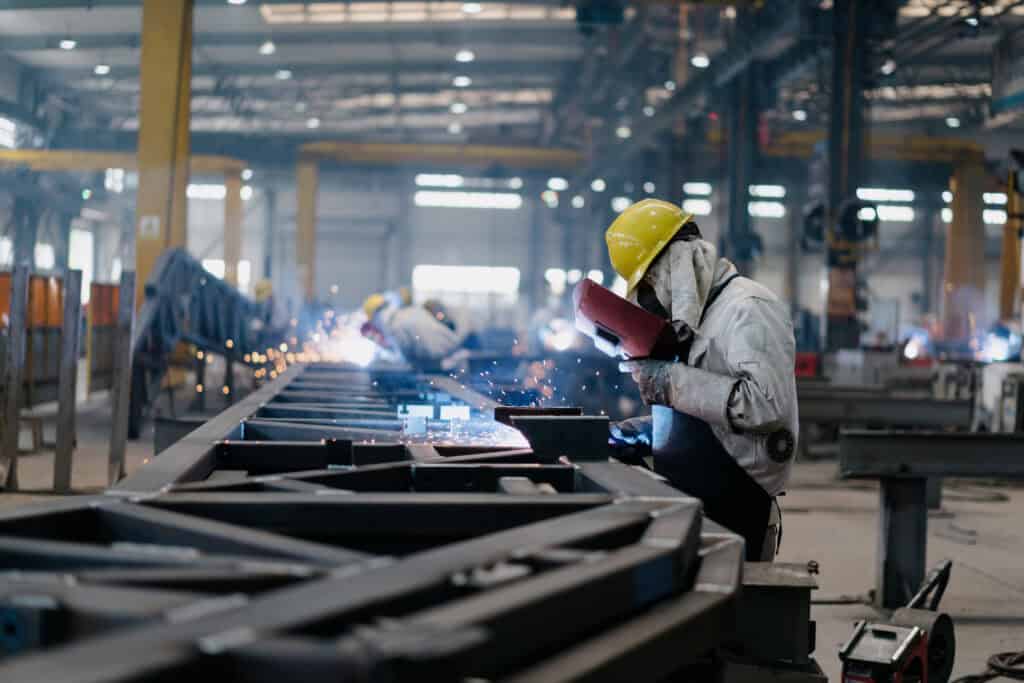
NORTHEAST WISCONSIN – Despite a backdrop of modest economic growth and ongoing cost pressures, many businesses across Northeast Wisconsin are starting 2026 with a notable sense of optimism.
A recent forecast from the Wisconsin Department of Revenue (DOR) – available at revenue.wi.gov – projects the state’s economy will grow 2.7% in 2026, supported by solid consumer spending, improved trade balances and higher equipment investment.
At the same time, unemployment is expected to hover near 3.3%, with job growth slowing to just 0.2% and core PCE inflation projected at 2.8%.
That combination – steady demand but limited workforce growth – Aaron Faulkner, region president with Bank First, said, is already being felt by businesses on the ground.
“It’s still kind of a race for labor,” he said. “There is a little bit of a gap as far as the skill set.”
Statewide, Michael Gregory – deputy chief economist with BMO Capital Markets – said Wisconsin’s economic growth continues to lag behind the national average – a trend his colleague Dave Anderson, BMO’s Wisconsin head of commercial banking, said has persisted for more than a decade.
“If you look at the last decade of gross domestic product at the state level, Wisconsin has lagged the national average for a little more than 10 years,” Anderson said.
Gregory said this trend continues as real GDP expanded 1.5% year-over-year in the third quarter of 2025, compared with 2.3% nationally, ranking Wisconsin 39th among states.
However, even with slower statewide growth, Anderson said for the most part, 2025 was a “pretty good year for most of our manufacturing clients.”

“Despite headwinds from tariffs, geopolitical risk and even domestic politics, most companies are continuing to execute on long-term plans,” he said. “What we’re seeing is more small adjustments, not major shifts.”
In many ways, Anderson said 2025 marked a return to a more stable operating environment after years of volatility tied to supply chain disruptions and inventory swings following the COVID-19 pandemic.
“Think about it,” he said. “In a post-COVID-19 world, we had the inventory disruption, supply chain disruption and then we had the huge pendulum swing where everybody had huge amounts of inventory. Then we blew through the inventory, and all of a sudden, we were constrained again on the supply side. And we’ve been going back and forth over the last three or four years.”
That pattern began to stabilize in 2025, Anderson said, and the momentum is carrying into 2026, with client sentiment across the state “constructive and forward-looking.”
“Business leaders consistently describe a positive operating climate and an ability to navigate economic cycles through creativity and flexibility,” he said. “Many companies have spent the past several years strengthening balance sheets and reducing leverage, positioning themselves well to operate effectively despite limited labor availability.”
Labor constraints continue to shape growth
Gregory said the state ended 2025 with a 3.1% unemployment rate – among the lowest nationally – though it’s a figure that reflects a tightening labor pool more than strong job creation.
Anderson said Wisconsin’s labor force participation rate reinforces that dynamic, falling to a record low of 62.1% amid an aging workforce and ongoing demographic challenges.
“It’s a supply issue, not a demand issue,” he said. “We’ve been talking about this for 10-20 years. The workforce is getting older, and we just don’t have enough people coming in behind them.”
Anderson said this reality is even more pronounced in Northeast Wisconsin, where manufacturing and agriculture dominate the economy – a point reinforced by local and regional data.
According to the Wisconsin Manufacturers & Commerce (WMC) recent survey, 60% of businesses report difficulty finding workers, up from 52% six months earlier.
Similarly, the Fox Cities Chamber’s 2025 Economic Outlook Survey shows workforce shortages remain a top concern, even as 22% of businesses plan expansions.
However, despite labor and workforce constraints, performance remains strong.
The WMC survey found 90% of manufacturing businesses were profitable in late 2025, and 96% expect to be profitable in early 2026.
The Door County Economic Development Corporation’s (DCEDC) 2026-28 Strategic Plan reflects similar conditions, with 57% of survey respondents expressing a positive outlook, even as workforce availability and housing constraints remain persistent challenges.
“That’s the interesting dynamic,” Anderson said. “We have slower growth, but companies are still performing. It’s just not being driven by labor expansion.”
Productivity, automation fill the gap
Operationally, Anderson and Faulkner said businesses are prioritizing efficiency and productivity to sustain growth.
“We’re seeing organizations looking at, ‘How do we do more with less?’” Faulkner said.
Echoing that point, Anderson said companies are increasing investment in automation, equipment and technology – a trend playing out statewide.
“With labor markets tight, companies are optimizing their existing workforce through process improvement and technology adoption,” he said. “Automation isn’t replacing people – it’s extending capacity.”
Anderson said this shift has been building for years but has accelerated within the last couple of years as labor availability has tightened.
“Companies would love to hire more people if they could,” he said. “But in the absence of that supply, they’re investing in robotics and automation to augment their workforce.”
The DOR forecast supports that trend, noting that advances in artificial intelligence and capital investment are expected to drive productivity gains, helping boost output without significantly increasing employment.
“At least the way we’re looking at it – we’re not looking at robotics and automation as a wholesale replacement for labor,” he said. “We’re saying you can use both. [Manufacturers] have really good people who might be able to set and forget one machine, while they use their core skills to program another machine. It frees up those people who have accelerated skill sets to actually do more.”
Manufacturing remains resilient
Even with ongoing pressures from tariffs and global uncertainty, Faulkner and Anderson said manufacturing continues to anchor the regional economy.
“A lot of our manufacturing customers are picking up work,” Faulkner said.
That aligns with Gregory’s analysis in BMO’s 2026 Business Outlook, which shows durable goods manufacturing grew roughly 4% year-over-year.
Anderson said the sector’s resilience is supported by its ability to adapt.
“You don’t have to go very far in Northeast Wisconsin to see manufacturers that have figured out how to operate through economic cycles,” he said. “That’s why they’ve been around for decades.”
In Door County alone – per the DCEDC – manufacturing employs more than 2,200 workers and contributes roughly $284 million to the local economy, underscoring its role as a key regional driver.
Furthermore, Anderson said the interconnected nature of Northeast Wisconsin’s economy means that success at major manufacturers often supports a chain of smaller businesses.
Large manufacturers, he said, rely heavily on smaller suppliers, meaning growth often ripples across dozens of companies.
“When a big defense contract lands at Oshkosh Defense, it’s not just one company that benefits,” he said. “That probably impacts 20-30 manufacturers.”
Anderson said the same can be said in Marinette or Sturgeon Bay when Fincantieri lands a U.S. Navy Littoral Combat Ship build contract.
“It’s not just Fincantieri, the company that is the builder of the ship, that will benefit,” he said. “It’s the 20-30 manufacturers that are supporting them, and all the welders and all the construction guys.”
Faulkner said manufacturing backlogs – a key indicator of demand – which slowed in certain areas last year, have since strengthened, supported by a resurgence in quoting activity.
Backlogs that once stood at about two months of work in 2025, he said, have expanded to roughly four months heading into 2026, pointing to solid demand across multiple customers.
“Overall – though it does depend on what industry you’re in – businesses are still performing really, really well,” he said.
Mergers and acquisitions: A strength heading into 2026
Faulkner said the mergers and acquisitions (M&A) space has been particularly active heading into 2026, with no slowdown expected.
Bank First’s acquisition of Centre 1 Bancorp, Inc., earlier this year, he said, is a clear example of that momentum in action.
Bank First Chairman and CEO Mike Molepske described the deal as the most transformational in the bank’s 131-year history, expanding its footprint into new markets while enhancing its service capabilities.
Faulkner said Bank First’s acquisition demonstrates the scale and strategic importance of M&A in the region – highlighting that companies are actively using it as a tool to grow, gain market share and build long-term capabilities.
Anderson said that aligns with what he’s hearing from clients across the state.
“In the absence of labor supply, some companies are looking at acquisitions as a way to add workforce and capabilities,” he said. “It’s not about cutting labor – it’s about gaining access to it.”

Geography, Anderson said, also plays a role.
“If you can’t find labor in one region, you might acquire a company in another region that has access to the workforce you need,” he said.
In addition to Bank First’s acquisition of Centre 1 Bancorp, Inc., other notable mergers or acquisitions in the Northeast Wisconsin region already in 2026 include:
- American National Bank-Fox Cities being acquired by Landmark Credit Union
- Keller Inc.’s acquisition of Hoffman Planning, Design & Construction, Inc.
- Associated Banc-Corp receiving regulatory approvals for the acquisition of American National Corporation
- Nicolet National Bank completing its merger with Iowa-based MidWestOne Financial Group, Inc.
- Dobbs Tire’s acquisition of Matthews Tire
Part of the momentum in M&A, Faulkner said, stems from favorable regulatory conditions.
“Some of the regulations are a little bit more friendly with the administration politically than what has been in the prior administration – so, quote ‘maybe a little less red tape’ unquote than there has been in the past, friendlier to get through an acquisition,” he said.
Demographics and succession, Faulkner said, are also major drivers of deal activity.
“You’re seeing some of the older legacy companies… may not have succession in the midst,” he said. “It’s a great organization, great company, but who’s going to be the next person to pick up the baton and run with the organization? So, if there isn’t that person identified, a natural fit is for someone to acquire the company and carry that baton on.”
Many business owners in their late 50s or 60s, Faulkner said, are reaching that point of reflection.
They’ve been running their organizations for decades, he said, but lack a strong second-in-command or a fully developed management team capable of taking over and carrying the business forward.
This gap, Faulkner said, can make succession planning and long-term stability especially challenging.
“The next [best] fit is to be acquired,” he said. “So, you have a strong percentage of businesses that are getting to that point. That’s what we see – it is a big driver.”
Faulkner said M&A is also a growth strategy for many companies.
Typically, he said the rationale behind a merger or acquisition comes down to clear strategic or operational benefits – why it makes sense for two organizations to combine forces or for one to acquire another.
“It’s vertical integration,” he said. “It’s, ‘Hey, one plus one might equal more than two.’”
Agreeing, Anderson said acquisitions can provide access to labor, technology and geographic diversification all at once.
“You’re not just buying a company,” he said. “You’re often acquiring talent, new capabilities and a broader footprint.”
Sometimes, Faulkner said the reasoning is more practical: there are overlapping functions or opportunities to streamline operations.
For companies focused on growth, he said one of the most straightforward ways to expand is to acquire another organization – often on the manufacturing side – tapping into “low-hanging fruit” to accelerate their strategy.
The combination of favorable regulations, demographic pressures and strategic growth needs, he said, means that M&A is likely to remain a central element of the region’s business landscape in 2026.
“I think you’ll continue to see a lot of acquisitions and mergers – due to a number of those factors,” he said.
Long-term planning reinforces regional strategy
Regional initiatives are also aligning with how businesses are adapting.
Envision Greater Fond du Lac’s Strategic Plan 2025-30 highlights workforce development, innovation and entrepreneurship as central pillars for sustained economic growth, with an emphasis on “developing, building and retaining a future-ready workforce that meets the evolving needs of employers.”
Faulkner said these strategies are essential for maintaining momentum in the region, especially amid labor constraints.
“A lot of the things that were outsourced… are coming back domestically,” he said, noting that companies are increasingly building local capacity and relying on a skilled workforce.
Anderson said Wisconsin’s economy anchors – manufacturing and construction – are holding up reasonably well, navigating labor shortages, tariff exposure and their resulting margin pressures.
And though Wisconsin continues to lag the national average in labor availability, he said the state is still performing, albeit unevenly.
Manufacturing, in particular, Anderson said, remains cyclical with some companies benefiting from tariffs or geopolitical disruptions, while others are negatively affected, making growth far from linear.
All that being said, Wisconsin’s labor shortage, Anderson said, cannot be overstated, noting the state has faced workforce challenges for more than a decade – possibly two – as Baby Boomers retire in a demographic shift that was long foreseeable.
The DCEDC’s 2026-28 Strategic Plan echoes that concern.
In a county anchored by major manufacturers such as Fincantieri Bay Shipbuilding, Marine Travelift, Therma-Tron-X and Hatco Corporation, the report notes that nearly half its population – 49.7% – is age 55 or older.
DCEDC’s strategic plan identifies workforce shortages and an aging population as core structural challenges, with future retirements and population decline expected to further tighten labor availability.
This is why, Anderson said, efforts like partnerships with technical colleges and high schools are becoming increasingly important for businesses.
“We’re seeing more collaboration with education systems to create pipelines directly into the workforce,” he said.
Efforts to strengthen that pipeline are also a priority at the local level.
DCEDC’s strategic plan emphasizes partnerships with K-12 schools, youth apprenticeship programs and workforce training initiatives aimed at connecting students directly to career pathways in the region.
“We have to figure out a better and more sustainable system that helps to deliver students from high school directly into the [trades],” he said. “And the quicker we do that, the more robust our Wisconsin economy will be.”
Optimism grounded in execution
Despite slower overall growth, Anderson said many business leaders remain optimistic.
“Wisconsin businesses are entering 2026 from a position of resilience rather than acceleration,” he said.
That optimism, Anderson said, is rooted in discipline and long-term focus.
“Companies are tuning out short-term noise and focusing on execution,” he said.
Echoing that sentiment, Faulkner said many businesses are “forecasting this will probably be their best year yet.”
Ultimately, the data and on-the-ground insights Anderson and Faulkner said point to a stable economy, if not booming.
That growth, however, is being driven less by hiring, they said, and more by productivity, investment and strategic adaptation – whether through automation, workforce development or mergers and acquisitions.
And despite ongoing challenges, Anderson said Northeast Wisconsin remains particularly well positioned.
“We’re incredibly optimistic about this region,” he said. “The fundamentals are strong – and the companies here know how to adapt.”