 EmPATH unit to bridge behavioral healthcare gap in region
 How powerful is paper in NE Wisconsin?



December 1, 2025
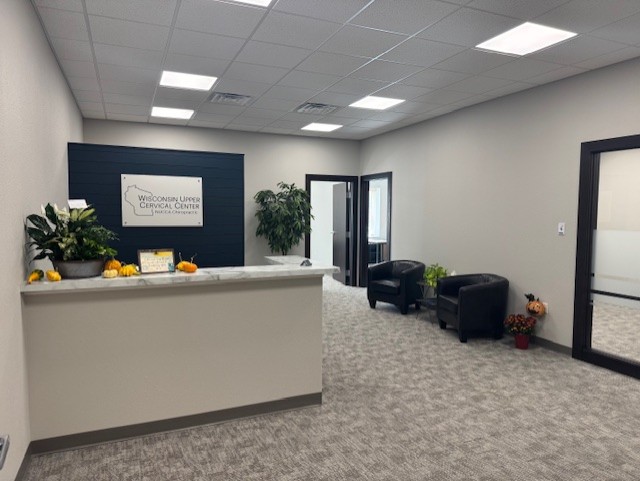
PLYMOUTH – An alternative approach to chiropractic care – focused on “gentle, no-guesswork” adjustments – is now available in Plymouth at the newly opened Wisconsin Upper Cervical Center, Owner/Chiropractor Sarah Gamoke said.
Gamoke said the NUCCA technique – “it stands for National Upper Cervical Chiropractic Association” – uses imaging to provide chiropractors with more information about a patient before and after adjusting, specifically, the upper-neck vertebrae.
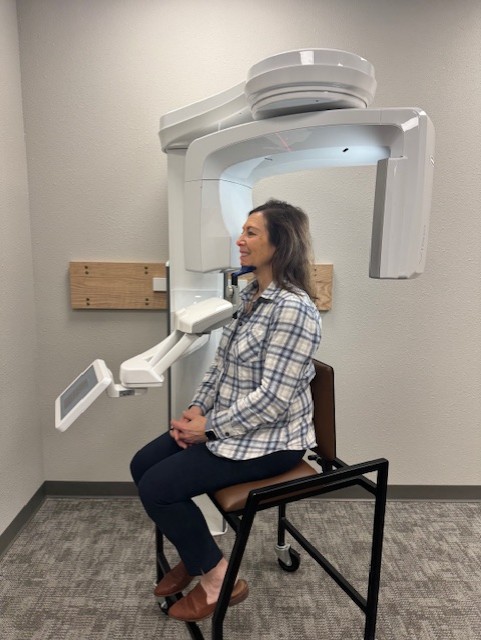
“I actually have a CT machine in my office – it’s called a Cone Beam CT,” she said. “With every patient, I [start by taking] a 3D image of their head and neck, and that allows me to calculate down to the decimal point what those relationships are in the upper neck. So, there’s no guesswork to it, which is why we’re able to be very gentle and very specific.”
Gamoke said the upper-neck adjustments she makes don’t involve “any sort of twisting, snapping or popping.”
“In fact, you hardly notice we’re doing anything,” she said. “It’s a great alternative, especially for people who maybe don’t like that type of chiropractic adjustment or need something that’s really specific, because they have complex issues going on.”
Gamoke said the practice she worked at after graduating from Northwestern Health Sciences University – Johnson Spinal Care out of Minnesota – “[offers] the same specialty as Wisconsin Upper Cervical Center.”
Though her expertise is in the NUCCA technique, Gamoke said the Wisconsin Upper Cervical Center provides a range of chiropractic care beyond upper-neck adjustments.
“We always start with the upper neck, because that area of our spine is so packed with neurology – it’s like the control center for our posture underneath,” she said. “So, we start there, and after we give the body some time in good alignment and [to heal], if I need to go in and adjust the mid-back or a pelvis or a lower back, I certainly can do that. I have gentle ways of also adjusting those areas.”
A Plymouth native, Gamoke said moving back home to provide the NUCCA technique in Northeast Wisconsin was an easy adjustment.

“I have always wanted to move back and practice in Wisconsin, because Wisconsin’s home to me – I love it here,” she said. “I just needed the time under a different company and with other doctors to get the training, [practice] the technique and get myself to the level I wanted to be at in order to confidently come back and offer a really good service to people.”
Now seeing patients at her office at 515 E. Mill St., Gamoke said she looks forward to welcoming members of the community to experience NUCCA chiropractic care.
How it differs
Because the NUCCA technique is a chiropractic specialty, Gamoke said it wasn’t covered in the curriculum at Northwestern Health Sciences University, and she wasn’t exposed to it until her time at Johnson Spinal Care in Minnesota.
“It’s not something I learned in school, so it was something I had to learn after [graduation],” she said. “It’s really more of a secondary specialty versus something that’s within the core curriculum of chiropractic school.”
Gamoke said the NUCCA technique differs from conventional chiropractic corrections, using a side-lying adjustment on a specialized table.
“It’s either going to be [on] your left or right side – depending on the person and the specific misalignment,” she said. “Then, we use that image or the CT scan to calculate what’s called a correction vector.”

Gamoke said the correction vector is produced using a formula, which, after measuring the patient’s range of motion, allows chiropractors to pinpoint the exact angle “corrective force has to come from to bio-mechanically get the movement we need to see.”
“In inches, I’ll measure either up or down, then forward or back and I mark that point… [and] my center of gravity delivering this adjustment has to be focused right on that point,” she said.
Gamoke said a NUCCA correction is a hand adjustment – meaning the chiropractor is delivering the necessary force to a patient’s atlas.
“That’s the very top bone in the neck – C1 – [where I apply] a really gentle, very-light force in a repetitive way,” she said. “I’ll usually do anywhere from eight to 10 [movements that] are called tricep pulls, and that’s the actual force that’s going into the atlas.”
Though some force is involved in NUCCA corrections, Gamoke said she uses the term lightly as it doesn’t accurately represent how the adjustment is performed.
“I think it’s misleading because of how gentle it is – it doesn’t really feel like a whole lot,” she said. “The NUCCA protocol is really a gentle leverage system, so we’re contacting that atlas, and we’re using that as our lever. Then, [with] the weight of the head and the position of the neck underneath, we’re leveraging the head and neck back to a neutral position.”
Gamoke said the C1 and C2 bones of a person’s spine are shaped and move in a completely different way than the vertebrae below.
“The rest of the vertebrae underneath those top two don’t move nearly as much,” she said. “They have these bony, stopping points on the back, so they don’t have all that much motion individually. However, those top two really do, because that’s where we get over half of our head and neck rotation from.”
Gamoke said NUCCA chiropractors “pay special attention” to the C1 and C2 vertebrae and treat them differently because they have a much higher range of motion.
“It also means that joint is not very stable and prone to injury,” she said. “So, we’re focusing on correcting that, because I have never seen two misalignments that are the same. In fact, it’s as unique as your fingerprint, so you really can’t guess at it and get it completely right. Which is why we image it and calculate it.”
The level of detail that goes into a NUUCA correction, Gamoke said, is what makes the treatment particularly useful for those suffering from more complex issues.
“I think, reliably, NUCCA does very well with patients who suffer from headaches, migraines, vertigo, balance, dizziness issues, certainly neck pain and then history of trauma like whiplash, concussion issues, TBI and things like that,” she said. “They just tend to be complicated issues that we can unwind really well when we’re looking at it in 3D.”
Gamoke said the NUCCA technique also involves post imaging to ensure misalignment correction.
“So, when a patient comes in, we take that 3D picture of their head and neck, we calculate the adjustment, we deliver the adjustment and then we take one more of those images so we can measure the change,” she said. “The post image is really important, because it tells me [if] the body is responding the way we anticipated it to. If not, it gives us information about what we have to do differently.”
Gamoke said NUCCA – which according to the association’s website, nucca.org, was established in 1941 by chiropractors Ralph Gregory and John Francis Grostic – has a “stringent” board-certification program.
“That’s something I believe is unique to NUCCA within the chiropractic industry,” she said. “Basically, we’re making sure the work is being done really well and at a really high quality. The result of that is, over the years, the technique has been refined to keep the [care] standards very high.”
Because NUCCA board certification requires chiropractors to already be licensed, Gamoke said they can practice the technique without first being certified.
“I am actually just starting that process,” she said. “It involves coaching, mentoring and rigorous analysis of your pre- and post-images.”
A new journey
Though eager to offer the NUCCA technique and pursue her board certification in Northeast Wisconsin, Gamoke said she wasn’t entirely sure what to expect when it came to running her own business.
“In my previous role at the company I worked for, I was, of course, a NUCCA doctor for them, but it wasn’t under my purview to do any marketing,” she said. “So, I didn’t really know how [to] best connect with people and make it known that I’m here and different.”
However, because she chose to set up shop and practice in her hometown, Gamoke said she’s been able to utilize her local connections and social media to promote the Wisconsin Upper Cervical Center.
“[That] worked better than I probably anticipated it to,” she said. “Also, the internet in general has been a really good [marketing tool]. I had two patients last week who told me they just Google searched ‘chiropractor that helps with dizziness,’ and my website popped up because I have things on [there] about how NUCCA can help with dizziness or headaches.”
Gamoke said she has also developed “really good” professional relationships with other local chiropractors who understand her practice is not competition, but complementary.
“I am hoping to have a synergistic relationship with them,” she said. “If they have patients with certain symptoms that aren’t resolving or aren’t totally unwinding because it’s a really complex issue, we can work together on those cases – and vice versa if I have a patient who has more of an extremity problem or something that isn’t totally my focus.”
Her “ultimate hope” for practicing in Plymouth, Gamoke said, is to work with healthcare providers across disciplines to bring the most effective and comprehensive care to patients in her hometown and beyond.
“I’ve had this dream for many, many years now, and multiple times I’ve been standing in my office just realizing, ‘This is what I’ve been praying for,’ and all of a sudden, here we are,” she said. “It’s been fun to be with my family, connect with friends again and be back in town… It’s just a really special place.”
For more on the Wisconsin Upper Cervical Center, visit wiuppercervical.com or find it on Facebook.