 Sargento builds its own road to CDL talent
 10-4, good buddy: Schneider is celebrating 90 years


April 6, 2026
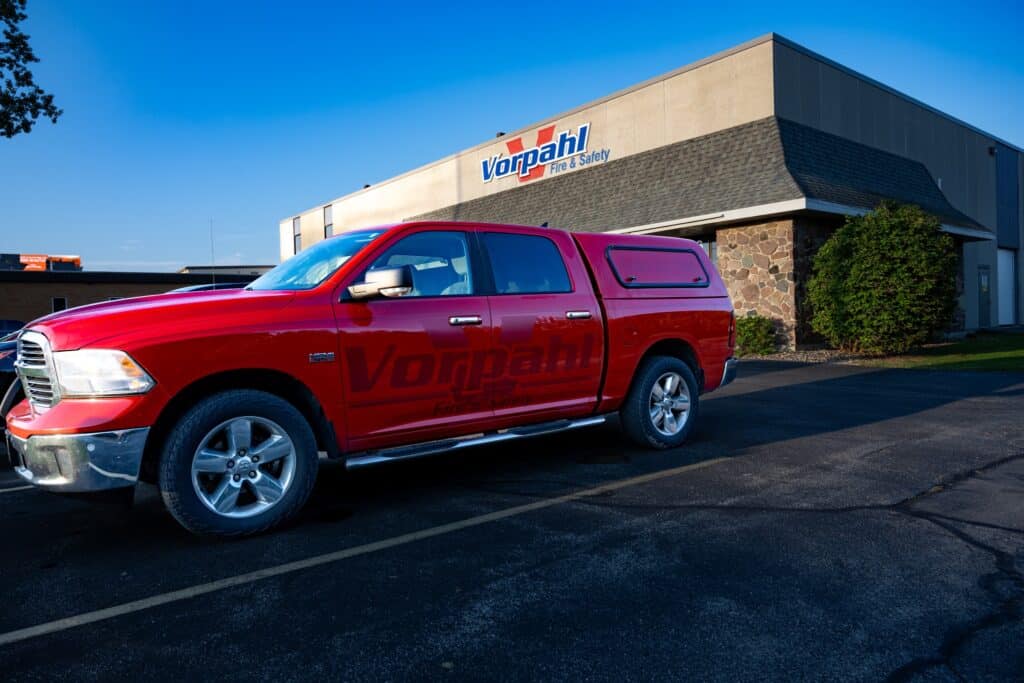
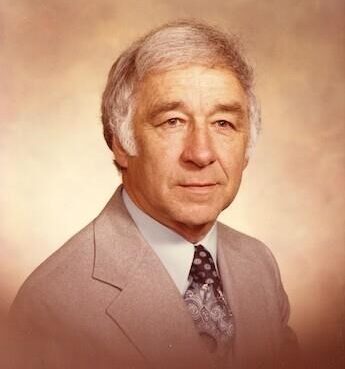
GREEN BAY – Seventy-five years ago, Kent Vorpahl – Vorpahl Fire & Safety’s second-generation owner – said his father, Wayne, turned a simple conversation with a friend into a business – one that still protects companies across Wisconsin and the U.P. today.
“Back in 1951, my father was talking with a friend in Madison who had just gotten into the fire extinguisher and inspection business,” Kent said. “Back then, it was in the infancy of people even thinking about having fire extinguishers on premises, so it was a fairly new market.”
Kent said his dad – who he describes as “somewhat of a salesman and entrepreneur” – decided he would give it a try.
“He basically started the first such business in this part of the state,” he said.
75 years of changes, pivots, growth
Kent said the business began when his father started selling fire extinguishers from home, with his brother, Marv, joining early on.
The company, Kent said, has since grown to include a wider range of safety products and now serves more than 5,000 customers.
“Back then, if people wanted these items, they bought them, and that was about it,” he said.
That began to change, Kent said, in 1971 with the creation of the Occupational Safety and Health Administration (OSHA), which introduced federal safety standards for employers.

“Until 1971, there was no OSHA, and therefore, there were no standards that would require an employer to provide safety equipment for the employees,” he said. “But due to public outcry related to employees getting injured or killed on the job, the government created the agency.”
Kent said OSHA subsequently started mandating the use of fire extinguishers and personal safety equipment, “and that’s when the market really took off.”
He said his father quickly expanded the company’s reach, serving paper mills and meatpacking companies across Northeast Wisconsin.
As the business grew, Kent said its product line expanded into four primary PPE categories: respiratory (masks/respirators), eye and face (goggles/shields), hand and skin (gloves/gowns) and foot protection (boots/covers).
Beyond these core categories, Kent said Vorpahl Fire & Safety also offers products focused on ergonomics, hazardous storage, heat and cold stress, gas detection and other workplace safety needs.
He said the industry continues to evolve to protect workers better.
“Companies are sprouting up that make the latest and greatest safety helmet that is either combined with hearing protection or eye protection or all in one – that type of stuff,” he said. “The glove category has gotten to a point where there is a glove for almost every conceivable need.”
Kent said Vorpahl Fire & Safety has witnessed decades of industry change, including the introduction of the first disposable earplugs.
“It was sort of a fluke for a company that was creating noise barrier materials when they realized smaller pieces would work as earplugs,” he said. “And we were the first supplier they started working with in the safety industry. Some of these manufacturers had something totally unique, and they often didn’t know what to do with it or who to sell it to.”
Shifting demand, Kent said, has reshaped the company’s business mix, with personal protective equipment now accounting for roughly 75% of its portfolio and fire extinguishers and suppression systems making up the rest.
The company, he said, has also expanded into safety consulting services.
For example, Kent said a company may approach them with a specific manufacturing concern and ask how to reduce or eliminate the risk of injury.
“We assess the situation and provide suggestions on what they can do to help their employees and ensure they don’t have any downtime,” he said. “Also, when they buy a product, we have training for all the products.”
Kent said the company also offers training on the proper use of automated external defibrillators (AEDs).
“They’re in businesses, they’re in schools and other places and can save a life, but people often buy it, put it on the shelf and never look at it again,” he said. “People are looking for assistance in how to use the AEDs. We’ll find dead batteries and monitors not working. We also provide CPR training for employers.”
Kent said the company’s client base has evolved alongside industry consolidation and technological advances.
Though the number of paper mills has declined, he said Vorpahl continues to serve major customers such as Georgia-Pacific and Procter & Gamble.
Construction firms, Kent said, have also become a significant segment of Vorpahl’s business.
With the internet enabling almost any business to grow into a global one, he said it has definitely benefited the region as well.
“Pretty soon, they’re providing products throughout the Midwest or across the United States, where before that just wasn’t possible,” he said.
Kent said his father’s foresight extended beyond safety equipment, as he also saw early potential in Gatorade, becoming one of the first to bring the product to market.
Developed in 1965 for the Florida Gators football team, Kent said the drink soon expanded into retail stores, with a powdered version gaining popularity among sports teams.
“We approached them about selling the powder to industry for use in high-temperature environments like the foundries and paper mills we have here,” he said. “We were actually the first Gatorade distributor in the United States for the non-sports market.”
Kent said the company still supplies Gatorade Thirst Quenchers today, offering both ready-to-drink and instant-mix options.
A three-generation family affair
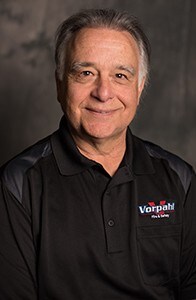
Kent said Vorpahl Fire & Safety has grown from a two-person operation led by his father and uncle to a team of 35 employees today.
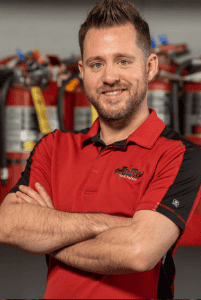
He said his son, Chris, now represents the third generation of leadership.
“I’m kind of semi-retired, but I wish I were 20 years younger,” he said. “I love this business.”
Over the decades, Kent said Vorpahl Fire & Safety has embraced change, overcome challenges and celebrated countless successes.
“And through it all, our mission has remained the same: delivering quality, trust and care in everything we do,” he said.
Though the company receives frequent interest from potential buyers – “there is barely a week that goes by that someone doesn’t want to buy the business” – Kent said he has seen too many downsides to selling a family-owned business to a larger competitor to consider those offers.
“I guess I look back, and maybe I could have taken the money and run, but in all honesty, companies that are bought out are often eliminated,” he said. “It happens all the time. Then all your local jobs go away. It makes me happy that we can continue. And I think [that] would also make my dad happy.”