Farm to School benefits students, local businesses
 Sway Brewing + Blending: Chemistry, creativity, love of beer


October 12, 2026
WAUSAU – For Jeny Nieuwenhuis Hardel, recruiting an experienced engineer or geologist to North Central Wisconsin can require considerably more than advertising an open position.
It also means selling an entire community.
Nieuwenhuis Hardel, president and owner of REI Engineering, Inc., in Wausau, said the small business employs about 50 people and needs professionals in highly technical fields such as civil and environmental engineering, hydrogeology and professional geology.
Successfully finding the right candidates, she said, requires an ever-changing mix of methods REI Engineering uses to develop its own talent pipeline.
“We have a lot of highly technical positions, and our strategy has shifted over the years with the different platforms available and [not having] a large recruiting budget,” she said.
Those efforts range from connecting with students through career fairs, classroom presentations, job shadows and other opportunities to recruiting experienced professionals from well outside the region.
Finding mid-level candidates – those with five to seven years of experience – can be particularly challenging because developing local talent takes time, Nieuwenhuis Hardel said, while recruiting an established professional requires convincing that person that Central Wisconsin offers not only the right career opportunity but also the right place to build a life.
“There is a lot of sales and marketing in education when we’re trying to get someone to move from a larger metro [area] to Central Wisconsin,” she said.
Now, a new regional workforce initiative could add another tool, Renae Krings, senior director of Greater Wausau Prosperity Partnership (GWPP), said – not only to recruit someone to a job, but to relocate an entire household, connect its members to the community and ultimately give them reasons to stay.
Launched in September, she said Basecamp Greater Wausau offers eligible out-of-state professionals a $10,000 relocation grant along with personalized guidance, employer and housing connections, an ambassador network, community experiences, professional development and other resources intended to help newcomers establish roots in the region.
Nieuwenhuis Hardel said that combination could provide what she described as the “tipping point” for some candidates contemplating a move.
She said she sees the value proposition as broader: help the household make the move, then help its members discover what their lives could look like once they get there.
“We’re always looking for what is the tipping point,” she said.
Recruit: Expanding the talent pool
That is just the kind of gap Krings said Basecamp Greater Wausau is intended to address.
Facilitated in collaboration with Visit Wausau and a network of community partners, she said the GWPP received a $500,000 Talent Recruitment Grant from the Wisconsin Economic Development Corporation – part of $5 million awarded to 17 Wisconsin communities and organizations to attract out-of-state workers and their families.
Visit Wausau and the Dwight and Linda Davis Foundation helped to provide the required 20% local match, Krings said, with other organizations contributing in-kind support, community experiences and programming.
Krings said she personally learned about the opportunity through her involvement as a local volunteer with WEDC’s Look Forward Wisconsin talent-attraction program.
When the WEDC subsequently offered communities an opportunity to develop their own programs, Krings said she saw a strong fit for the GWPP – becoming one of 17 organizations selected statewide and tying for the largest grant award.
“This award is truly a reflection of what is possible when communities and partners come together around a shared vision,” she said.
Krings said the initiative addresses a workforce challenge Greater Wausau employers have confronted for years: jobs are available, but the existing regional labor pool cannot necessarily supply all the workers they need.
Basecamp’s recruitment strategy is particularly focused on advanced manufacturing, specialized health care and professional services such as financial services, accounting and insurance, she said.
Rather than simply moving employees among existing area businesses, Krings said the strategy is to reach outside the region for additional talent.
“Local employers often tell us they have strong career opportunities; however, they need more people to fill the positions that will help their organizations grow,” she said. “Basecamp Greater Wausau gives us a more intentional way to introduce people outside Wisconsin to our region and support them as they make the move.”
The model could be particularly useful, Krings said, for smaller employers that cannot independently offer extensive relocation packages or employ dedicated recruiting teams.
REI, Nieuwenhuis Hardel said, is one example.
She said developing a student into an experienced engineer or geologist takes years and does not solve an employer’s need for a midcareer professional today.
A candidate living elsewhere also may already have a home, community, a spouse with a career and children established in schools.
That is where Nieuwenhuis Hardel said she sees Basecamp complementing, rather than replacing, what REI already does: the company can sell the career opportunity while Basecamp and its partners can help make the case for the community.
Tim White, executive director of Visit Wausau, said the $10,000 incentive gets attention, but Basecamp was deliberately designed to go well beyond a check.
“Basecamp Greater Wausau is much broader than the incentive, connecting people to careers, housing and community resources, outdoor recreation and ultimately, a sense of belonging,” he said. “The goal is not simply to get somebody to move here but to build a life here.”
White said Visit Wausau has spent years marketing the area as a destination, and sees workforce attraction as a logical extension of those efforts.
GWPP and employers bring the workforce-development component, he said, while Visit Wausau brings experience reaching audiences who might be receptive to what Greater Wausau offers.
That partnership is increasingly important because recruiting someone from outside the region often means recruiting an entire household, he said – as candidates evaluate a job, but also housing, schools, recreation, a spouse or partner and what life outside work will look like.
“People more than ever before can choose where they want to live, and communities increasingly have to participate in talent recruitment instead of leaving it just up to the employers,” he said. “It’s a partnership that has to happen at the community level.”
Relocate: Lowering barriers to moving
White said Visit Wausau researched other talent-attraction programs as Basecamp Greater Wausau was developed, including Tulsa Remote, ultimately deciding to pursue a different model that connects participants with local employers as well as eligible remote-work opportunities, emphasizing what happens during and after relocation.
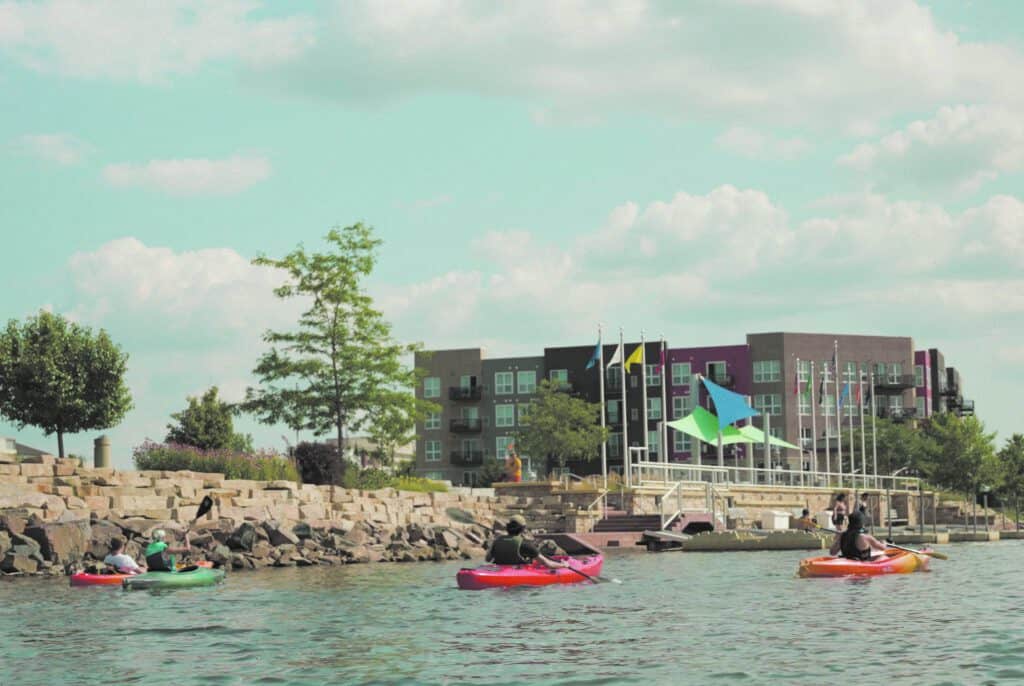
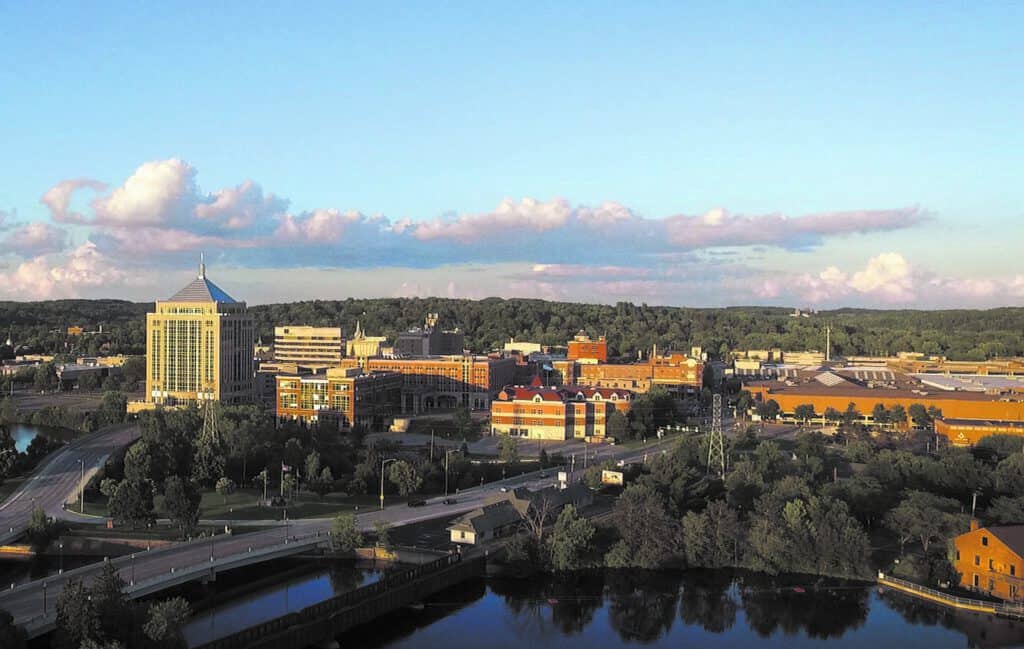
White said he sees the region’s advantage as a combination of career opportunities, attainable housing, short commutes and community amenities with access to outdoor recreation.
“We’re not trying to pretend to be Minneapolis or Chicago, and that’s the point,” he said.
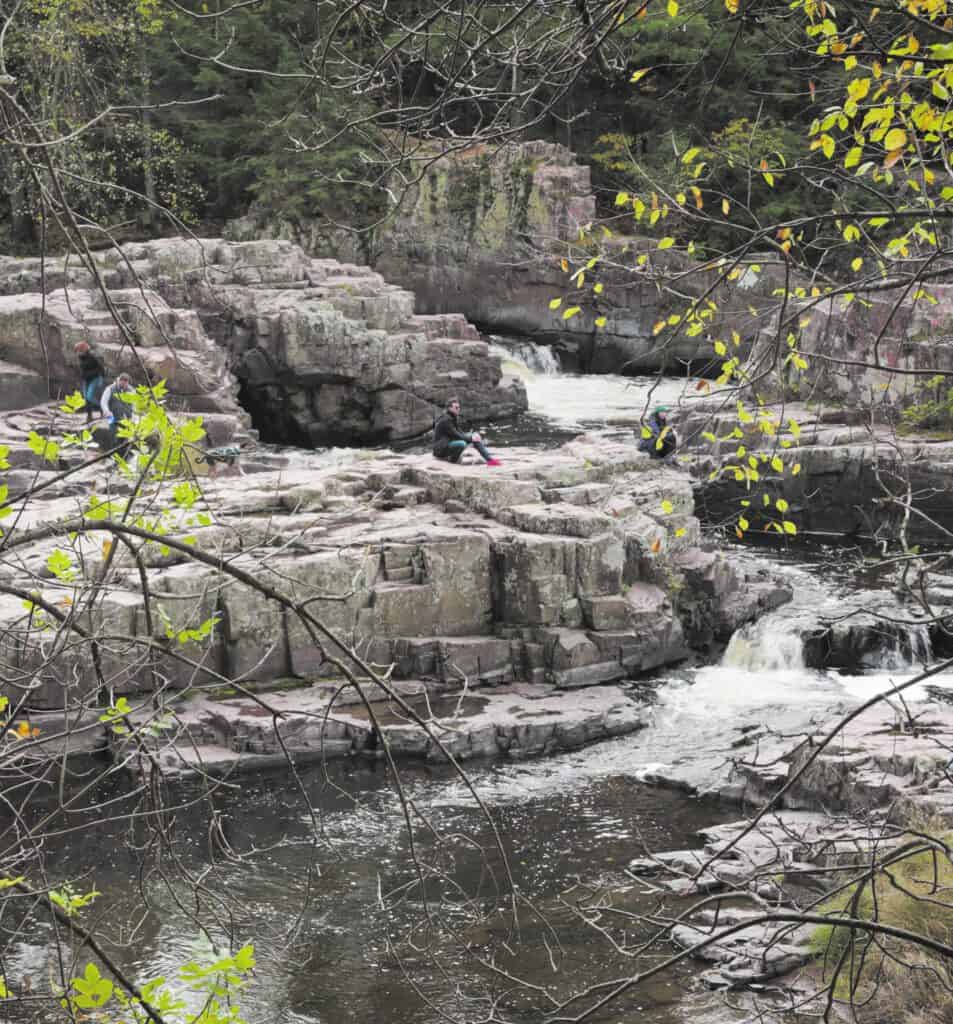
White said Greater Wausau can offer potential residents an opportunity to “spend less of their lives commuting and more of it living.”
The challenge, he said, lies in making sure people elsewhere know those opportunities exist.
“Our biggest challenge isn’t what we have to offer but awareness of it,” he said.
That experience is familiar to Nieuwenhuis Hardel.
She said when an out-of-area candidate visits REI, the company often uses the opportunity to showcase both its work and the community.
“We literally drive them around to try to showcase the community,” she said.
Some candidates are surprised to learn they can downhill ski or mountain bike in the area, Nieuwenhuis Hardel said, while others emphasize Wausau’s central location, often saying it is “two hours from anywhere.”
Krings said Basecamp Greater Wausau organizers initially considered tying some financial support to homeownership, but reconsidered after recognizing that newcomers may not be ready to buy immediately.
“We didn’t want to penalize somebody who [wasn’t ready] to buy a house right away,” she said.
The funds instead are provided upfront to help with relocation, but Krings said getting someone physically to Greater Wausau is only one part of the strategy.
Connect: From moving here to belonging here
White said Visit Wausau has mapped the prospective resident’s journey that he described as “Discover → Explore → Compare → Connect → Relocate → Belong.”
A prospective resident might first encounter Greater Wausau through advertising, social media, an employer or a previous visit, he said.
But once someone is selected for the program, White said, the community’s role changes.
“The community’s responsibility shifts from marketing the community to helping them navigate the move and become connected after they arrive,” he said.
Selected participants begin with a community orientation introducing them to partners and available resources, Krings said, followed by concierge-style assistance tailored to the household.
That could include help navigating housing or child care, career connections for a spouse or partner, or introductions to mentoring, professional development, networking, volunteering and civic organizations, she said.
Monthly events could range from a day at Granite Peak or a hike along the Ice Age Trail to volunteering and networking, and Krings said applicants already are providing clues about the kinds of lives and connections they want to build.
“You don’t know how many times I’ve seen the words ‘a breath of fresh air’ or ‘fresh start’ or ‘quality of life’ resonating with what they’re looking for,” she said.
GWPP is also developing a community ambassador program to help newcomers make introductions and navigate the region, Krings said, rather than expecting them to make connections independently.
“If you recruit but they can’t make meaningful connections, it’s painful,” she said. “On the flip side, when someone can build those connections, they tend to love it here.”
Krings said the Children’s Imaginarium provides one example of how community partners can help.
She said an out-of-area candidate visiting Greater Wausau for an interview brought a young child, and the STEM-based children’s museum provided the family with a free pass.
“They went and loved it,” she said.
The Imaginarium also has committed in-kind passes for households accepted into Basecamp Greater Wausau, Krings said, and – for a parent contemplating a move – an experience like that provides a glimpse of what the family could actually do if they lived there.
Other partners are considering their own contributions, as Krings said Northcentral Technical College has offered the possibility of cooking classes, while Marathon County Development Corporation could provide professional-development opportunities.
Outdoor recreation organizations and other partners, she said, can connect participants with experiences and activities.
“Sometimes it takes, ‘I’ll do that with you and introduce you to somebody,’ and that makes such a difference,” she said.
The result is intended to be resources tailored to individual households, whether they need child care, employment assistance for a spouse, outdoor recreation, networking, leadership opportunities or activities for children.
Retain: Making connections stick
For Nieuwenhuis Hardel, the community-integration piece has direct relevance to employers.
She said recruiting someone from outside the region requires time and resources, and if that employee relocates but never develops relationships beyond the workplace, the employer may have solved its workforce problem only temporarily.
“I read something that within six months, [a new hire] is going to stay or going to go, so what are you doing as an employer in those six months to make connections for them,” she said.
For a smaller company, Nieuwenhuis Hardel said those connections can be as simple as learning about an employee’s interests.
For example, she said someone who likes pickleball can be connected with a colleague who does, too, or someone interested in volunteering or leadership can be introduced to community organizations.
Nieuwenhuis Hardel said employers need to think about those connections from the beginning rather than expecting someone who has relocated to find a community independently.
She said she considers herself an example of what can happen when a young professional becomes involved locally.
“I’m a poster child because I started as a young professional in my job, and I’ve had such amazing opportunities in Central Wisconsin with the boards I’ve been on and leadership positions I’ve been in,” she said. “In Wausau, you can join the Rotary Club and in a few years, be on the board if you want to.”
Nieuwenhuis Hardel said the Basecamp initiative could give smaller employers additional capacity to help newcomers make those connections.
And, by involving employers, economic-development organizations, tourism professionals, nonprofits, educational institutions and community groups, Krings said Basecamp Greater Wausau is built around the idea that workforce retention and community connection are intertwined.
That becomes particularly important, she said, when an employee is not moving alone.
Krings said a household may need two professional opportunities; parents may need child care or school information; or a spouse may want to find people who share a favorite hobby or interest.
That’s why Nieuwenhuis Hardel said REI encourages out-of-area candidates to visit with their families so everyone can experience the community, and Krings said Basecamp Greater Wausau formalizes some of that process on a communitywide level.
One goal of the initiative is to help “the entire household build a future,” Krings said, adding that early applicants appear to be thinking in those terms.
She said applicants have shared thoughts such as “where our family can establish some roots,” and “a community where people know their neighbors.”
Another, she said, discussed seeking “a new fresh breath of air and start.”
Beyond newcomers, Krings said the program is intended to reach early-career professionals as well as families, alumni and potential “boomerangs” – people with Wisconsin or Greater Wausau connections who moved away but may be interested in returning – as well.
Finding the right prospects
Basecamp’s outreach will not be limited to simply telling people Greater Wausau is a good place to live, Krings said, as the initiative’s partners have used labor-market and economic data to identify where the region has job demand and where other geographic areas may have workers with corresponding skills.
She said they also have examined cost-of-living and quality-of-life factors to identify places where Greater Wausau may have a competitive advantage.
White said marketing will initially concentrate heavily on the Midwest, including the Twin Cities, Chicagoland, Rockford, Illinois, Rochester, Minnesota, and Duluth, Minnesota.
He said the emphasis is less on a specific age than on a life stage; people advancing their careers, raising families or questioning whether the congestion and expense of a larger metropolitan area are delivering the lifestyle they want.
Visit Wausau already had a potential audience before Basecamp launched, White said, and the organization accumulated 454 leads over the past several years from people who indicated an interest in relocation.
He said employers also can incorporate Basecamp Greater Wausau into their recruiting, with an initial goal of supporting roughly 30 households during the pilot program.
And, because Basecamp Greater Wausau is a pilot, Krings said GWPP wants to learn from the first group and determine what works, what participants need and how the effort could be sustained and potentially scaled.
She said measures can include leads, relocations, employment outcomes and continued residency.
“Success is recruiting eligible out-of-state households to move here and helping local employers gain talent and fill some of those hard-to-fill positions,” she said.
But the broader impact, Krings said, can be seen in what those households contribute after arriving.
“The households who come here become our neighbors, buy houses, support our businesses and contribute on a larger scale,” she said.
For REI, Nieuwenhuis Hardel said Basecamp can complement both ends of its workforce strategy.
For White, however, he said the longer-term measure extends beyond whether Greater Wausau distributes 30 relocation grants.
“Five years from now, the best-case scenario isn’t that people remember Basecamp because we gave away relocation incentives,” he said, “but have established Greater Wausau [as a place] professionals across the Midwest considered when building the next chapter of their lives.”