 Strongwood custom indoor golf enclosures – built to a ‘tee’
 FVTC, Children’s Wisconsin partnership supports Go Baby Go in the Fox Valley


October 5, 2026
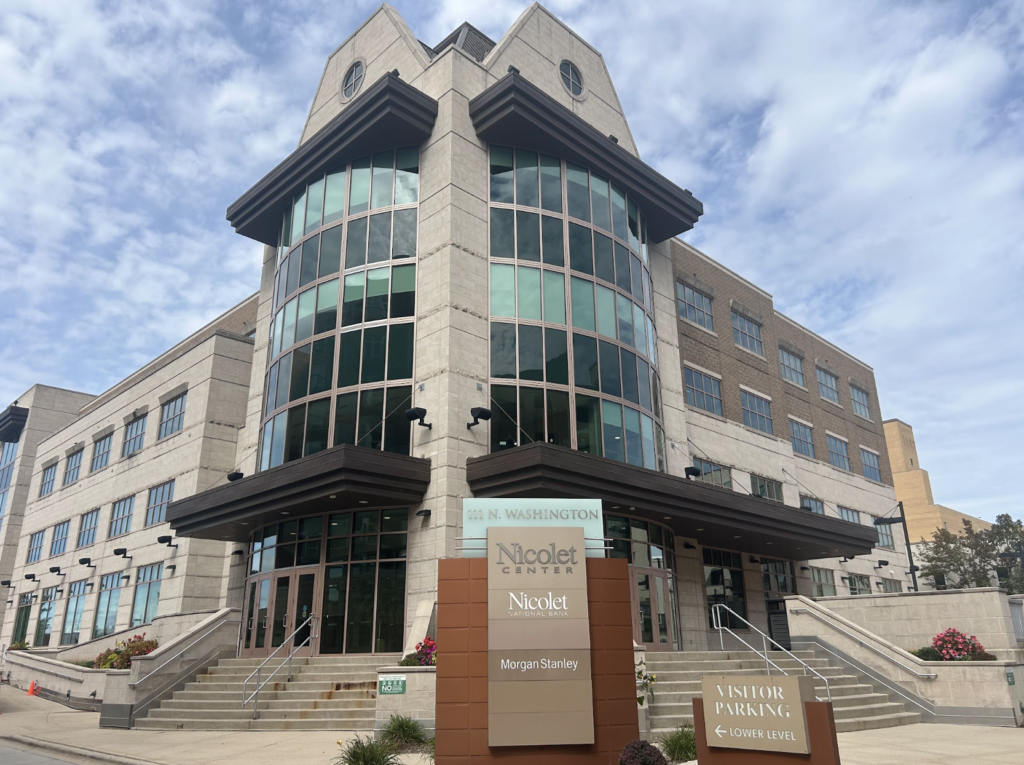
GREEN BAY – “Now, we’ve got to execute.”
That’s what Mike Daniels of Nicolet National Bank said to The Business News in a Nov. 17, 2025 report on the bank’s acquisition of Iowa City-based MidWestOne.
Daniels – Nicolet’s chairman, president and CEO – said after the acquisition was announced Oct. 23, 2025, the deal officially closed Feb. 13 of this year.
The MidWestOne acquisition – a $864 million investment – has added $6 billion to Nicolet’s assets, bringing the publicly traded company’s total assets to approximately $15 billion.
Further, Nicolet’s loans now total roughly $11 billion, and its deposits total about $13 billion.
With the merger’s completion in February – officially extending Nicolet services to 115 branches across Wisconsin, Iowa, eastern Minnesota, northern Michigan and Denver, Colorado – the bank announced its intention for a planned system conversion to take place in August.
Daniels said as of Aug. 10, the 50-plus now-former locations of MidWestOne had adopted Nicolet signage and branding, as customers began using newly issued Nicolet banking cards and digitally accessing accounts through nicoletbank.com or the Nicolet Bank Digital app.
With nearly 10 months between the announcement and the system conversion – during which the acquired bank operated as “MidWestOne: A Division of Nicolet Bank” – Daniels said the duration allowed Nicolet to make “a soft entrance” as the Green Bay-based bank expanded its footprint into the new markets.
“Unlike other deals where, sometimes, we’ve closed and converted and the signs changed all the same weekend – and then people are thinking, ‘Who the hell’s Nicolet Bank?’ – we got that ramp-up introduction,” he said.

Daniels said updating the branding and processes for employees and customers represented the “final step of the business side of the conversion.”
He said the culture side of the conversion, conversely, has no end in sight.
“I don’t think cultural integration ever stops…,” he said. “We get that those conversations can never stop happening.”
Getting ‘it’ done
Daniels said Nicolet – founded “in my basement, 26 years ago” – continues to grow upon reliability and relationships.
“This whole company is built on promises,” he said.
Daniels said it’s a pleasure to keep promises like protecting customers’ savings, facilitating loans, giving employees the tools and trust to take care of customers, upholding Nicolet’s core values, etc.
He said other promises – like abiding by Wall Street’s quarterly reporting requirements – may not be his favorite part of the job, but it’s all part of keeping the bank viable for its communities for years to come.
To motivate the Nicolet team – himself included – and to encourage customers to leverage the bank’s resources, Daniels said he’s popularized a certain slogan among those familiar with Nicolet.
In accordance with The Business News’ brand standards, this slogan – “Get $–t Done” – cannot be published in full.
However unprintable, Daniels – who assured he has no interest in “fluff” media coverage – said the authenticity of the phrase is integral to Nicolet’s drive to achieve.
“We’re trying right now to trademark it,” he said, adding that the company has already commissioned “G$D” medallions and merchandise for distribution, and has the logo emblazoned on the wall of its operations center.
After the acquisition, Daniels, as well as Jeff Gahnz, Nicolet’s SVP of marketing & public relations, said this slogan/mindset was introduced to the nearly 600-strong staff of MidWestOne “early on.”
“Mike invited him to join in the mentality, because it’s a mentality that’s somewhat unique to Nicolet,” Gahnz said. “You invite people to go get s–t done, which means you give them a level of autonomy.”
Daniels said when he first addressed the MidWestOne team – essentially as a stranger who had just bought their company – in a town hall setting, he sought to break the ice with transparency.
“I stood up in front of them and said, ‘I know four people in your company,’” he said. “So, I also turned the tables on them, and I sat there and said, ‘I know everyone’s a little uncomfortable. Let me talk to you about me being uncomfortable. I just made (at the time) an $864 million bet that you guys matter across your footprint – and I only know four people. So, how about we be uncomfortable together, and figure this out?’”
Daniels said the messaging was largely well received, as Nicolet’s team grew to more than 1,600 workers.
However, he said, experience has taught him “not everything goes perfectly” in a merger – which can be compounded all the more with a merger of this scale.
Fairness, transparency, opportunity
From the outset of the acquisition, Daniels said he directly addressed how Nicolet’s plans and policies could affect now-former MidWestOne workers’ employment.
That task, he said, requires a respectful approach – “we’re going to treat everybody extremely fairly and transparently.”
For one, he said, whereas MidWestOne had a number of remote employees, with Nicolet, “we don’t do that here.”
“I just said, ‘Guys, that’s not how we do business, that’s not our culture; you can be the best person at what you do, [but] unless you’re going to move to where we have a location and show up for work, [we cannot retain you],’” he said. “We’re not apologizing for who we are and what we are for anybody.”
Where the sympathy comes in, Daniels said, is when the acquiring bank finds itself with duplicated operational staff.
“The hard part, when you do a deal, is that it means good people are going to lose their job, because I’m not going to run two finance areas, I’m not going to run two operations areas, etc.,” he said. “Doesn’t mean we’re not going to have people there who support it. But I don’t need all the people.”
The majority of the “keeps” from MidWestOne, then, are those who Daniels said have formed close relationships with customers.
“They’re the ones who have to matter; I can’t do anything from [Green Bay] to matter in Iowa City or Muscatine, [Iowa], or White Bear Lake, Minnesota, or Pella, Iowa, or Des Moines, Iowa,” he said. “It’s the people in those markets, with those relationships, who have to lean into the customers and show why it’s going to be better, going forward, than it was.”
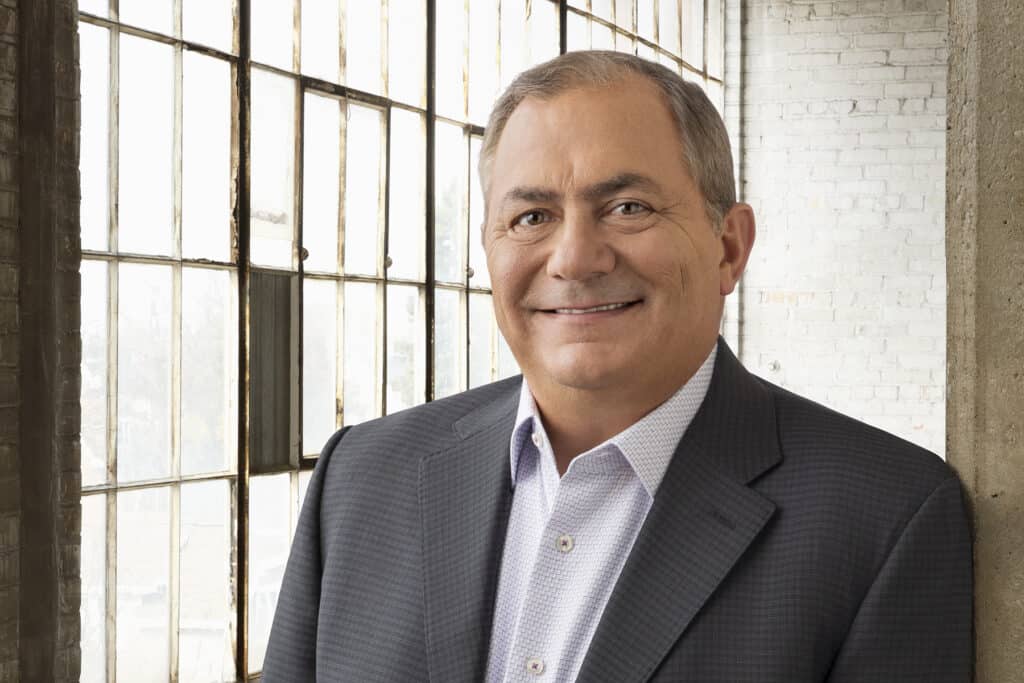
When positions are eliminated due to an acquisition, Daniels said some staff choose to pursue new roles with the acquiring bank.
“Those opportunities exist,” he said. “Our very first [acquisition], the head of operations – I eliminated her job… She has at least eight branches that report to her now. She just chose not to listen to me when I said, ‘You don’t have a job anymore.’ That was 13 years ago. She just looked for an opportunity where she could add value, and [now] she’s here 13 years.”
That employee, Daniels said, now shares her story at will, helping quell anxieties when Nicolet makes an acquisition.
“[She’ll say], ‘I sat there, the same as you sit here today, and said, “Is this guy full of [nonsense]?”’” he said.
When an acquisition significantly increases a bank’s assets and footprint, Daniels said certain operations staff must be retained to handle the greater responsibility.
He said – in the words of the aforementioned employee – “when Mike Daniels comes up and says, ‘I have no idea how this is going to look,’ he’s telling you the truth, because he hasn’t met any of you yet.”
“I ask everybody, at the start of a deal, to trust the process, because if you’re willing to trust the process and look where the opportunity is and are willing to think about things differently, there are support [positions] in Iowa City, in Dubuque, in Osceola, Des Moines, [etc.], that don’t have to be in Green Bay,” he said.
For example, with so much new ground to cover following the MidWestOne acquisition, and after meeting its full team, Daniels said the man who had headed MidWestOne’s “anti-money laundering” operations in Des Moines is playing a vital new role with Nicolet.
“This guy trusted the process, and now he runs the group reporting to our [head of] compliance…, because he was willing to look at more cards and see how it played out,” he said. “Those opportunities exist.”
What matters most
Throughout any merger, Daniels said the most important transition is always that of the customer.
“[The acquisition/conversion] was a big lift, but it’s gone well,” he said. “There are always glitches, and things happen, but the ones that bother me are always customer friction ones.”
Some of the friction, Daniels said, is Nicolet’s fault, and some of it isn’t.
He said the bank can work to mitigate many internal issues, as it did for this merger, when 120-plus Nicolet staff were sent to work at former MidWestOne branches, serving as on-site resources throughout the conversion.
Externally, though, Daniels said much is beyond the bank’s control – such as whether or not customers throw away mail containing their newly issued Nicolet debit cards.
While understanding some customers simply choose to not transition to an acquiring bank, Daniels said Nicolet’s efforts to alleviate customer friction have been predominantly effective.
“It’s gone well, and we pay attention to attrition,” he said. “Our attrition in every deal we’ve ever done runs close to 10%. This one’s underneath half of that right now. So, for the lift that it was, I’m extremely proud of the work that the group and the team did.”
‘Pennies on the floor’
As with any of Nicolet’s undertakings, Daniels said the bank will perform a “postmortem” assessment of the MidWestOne acquisition.
“There are always pennies on the floor, cleaning up some efficiencies,” he said. “You work from the big items down to the littler items, but that was a lot of hard work by a lot of people across the entire footprint to get us where we are today.”
The “G$D” mentality, Daniels said, is about getting a little bit better each day.
“And if 1,600 people come with that mindset, the financial term ‘compounding’ – that works for people, too,” he said.
Daniels, for his part, said he deserves the opposite of credit for the team’s accomplishments with the conversion.
“If you think about it, I’m the one who creates the chaos,” he said, “and then those 1,600 make it work.”
New promises to keep
In addition to MidWestOne itself, Daniels said Nicolet acquired a valuable piece of knowledge.
“I learned that it doesn’t appear there’s any challenge too big [for us],” he said.
But even as the bank has now surpassed the $10-billion threshold – a significant figure “where certain things happen and you lose some of your debit interchange” – Daniels said the bank will only responsibly wield its new level of self-assurance.
“We don’t have sights on another deal right now,” he said. “Our focus right now is delivering.”
Daniels said his perspective for mergers/acquisitions is essentially the same as ever.
“I don’t go [to other institutions] and say ‘sell me your bank,’” he said. “I say, ‘Hey, would you consider looking at investing your company into our company, and [considering] what power that could be across your communities, your customer base and, just as importantly, to your shareholders?’”
Daniels said for now, it’s more important for the Nicolet team to “breathe” and “clean up” than to consider another acquisition.
“They’d probably [attack] me if I said, ‘Guess what: are you guys ready to do the next one?’” he said with a laugh.
The final quarter of 2026 will yield quantifiable proof as to the financial success of the acquisition, Daniels said, with the bank set to report its Q4 as well as annual numbers – “the biggest litmus test” – in January 2027.
“I believe we have the opportunity to be ‘one of one’ of pulling something like this off,” he said, “where the reason is consistent across the footprint and produces the results in a fairly short order.”
Tougher to quantify, yet all the more important, Daniels said, will be Nicolet’s ability to keep its promises throughout its expanded markets, as the bank upholds its interpersonal values.
“AI doesn’t keep a promise, fintech doesn’t keep a promise, computers don’t,” he said. “People keep promises to people.”