 CWIMA Summit & Expo: ‘A new adventure every year’
 4imprint completes 170,000-square-foot expansion



November 16, 2026
NORTHEAST WISCONSIN – For many drivers, an oil change is one of those routine maintenance tasks that gets pushed to the bottom of the to-do list.
Finding time to get to a shop, waiting for service, and getting back to work during a lunch hour is no small feat.
Ron Franklin saw an opportunity to take that inconvenience out of the equation, creating HMS Mobile Auto to bring preventative vehicle maintenance directly to customers wherever they are – a company parking lot, a person’s driveway, or a fleet of vehicles in a lot.
Franklin said the business, which he started last year, serves both commercial and residential customers, with about 80% of business from commercial work and residential customers making up the rest.
Fleet maintenance is the primary focus of its commercial work, but Franklin also sees opportunities to work with businesses that don’t have fleets but want to offer convenient vehicle services to their employees.
For fleet operators, the value of having HMS Mobile Auto come onsite is in keeping vehicles maintained while reducing the time employees and vehicles spend away from their regular work, Franklin said.
And that adds up.
“Using our fleet calculator, that’s more than $12,000 in annual savings, when you take into account downtime, employee time away, and schedule disruptions.”
Franklin said his model assumes four maintenance events per vehicle each year and two and a quarter hours of lost time avoided per service event.

It places a combined business value of $150 per hour on productive vehicle and employee time, with another $1,900 attributed to reduced coordination and disruption.
The estimate is a business-impact calculation, Franklin said, and the value is in keeping employees focused on their work and vehicles available for the business.
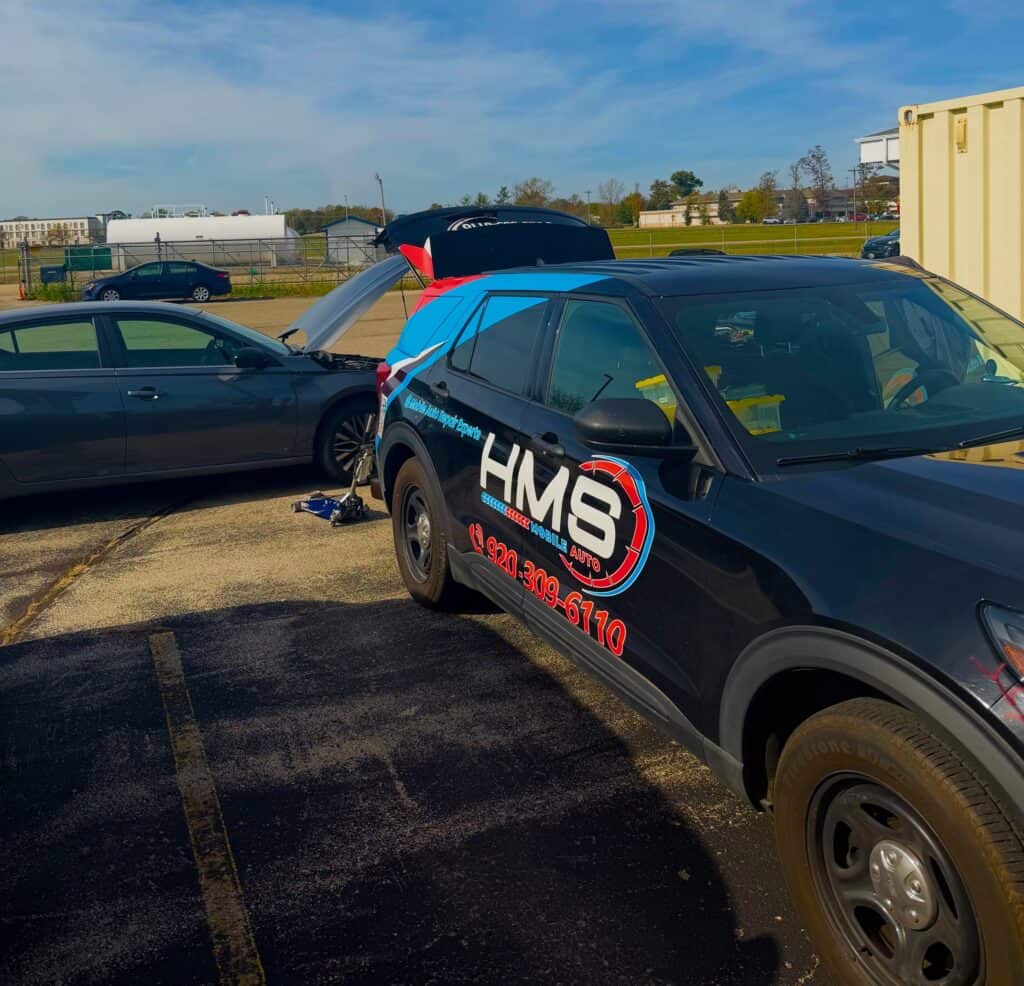
When HMS Mobile Auto arrives on site, he said it can provide oil changes, tire rotations and tire services, brake inspections and service, batteries, wipers, and other preventative maintenance.
Its offerings are designed for a range of vehicles, Franklin noted, including gas and diesel vehicles, light-duty trucks, cargo vans, pickups, and service vehicles.
He said oil changes are a primary focus, but the team can address a broader range of routine vehicle needs.
That was done with great intention; Franklin said he initially considered establishing a mobile tire repair and replacement business.
But the more he considered the opportunity, the more he questioned the viability of a business with that limited scope.
“[I thought], ‘Why are we focusing on just tires when we can do oil changes, tires, and that sort of thing?’” Franklin said.
The concept grew from an idea Franklin initially explored through franchise opportunities.
But between franchise costs and the specialized vehicles required, he said the initial investment could easily approach half a million dollars.
Purchasing already-outfitted vehicles alone could cost an estimated $160,000 to $180,000, he said.
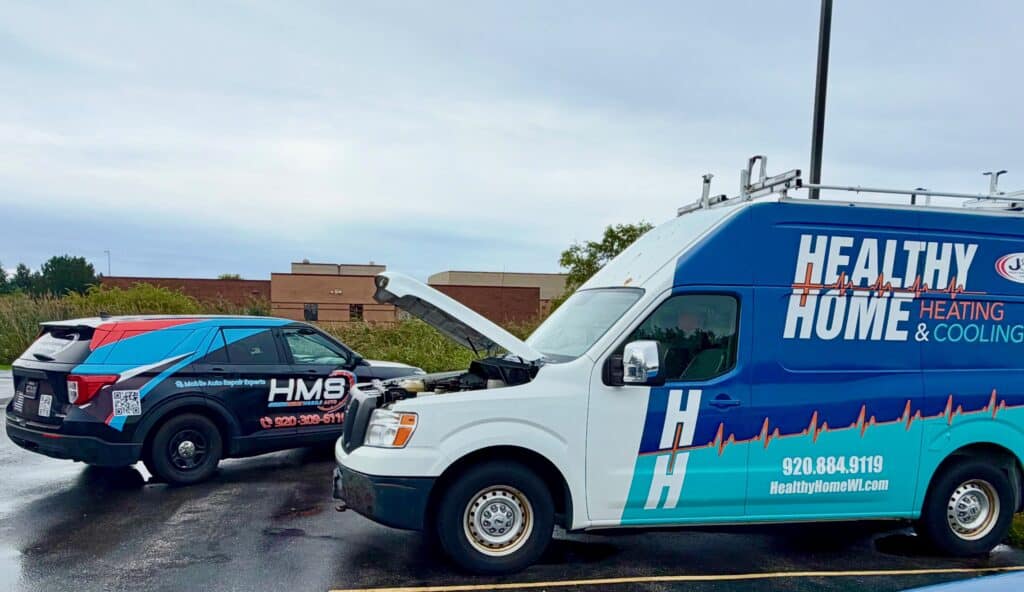
Instead, Franklin said he tapped some ingenuity and built his own operation, outfitting two vehicles for less than $100,000: a former Amazon Ford Transit, and a vehicle he describes as the “world’s first oil-changing Ford Explorer.”
Taking this approach allowed him to offer a broader roster of services at a lower initial investment than the franchises he had considered.
The result: HMS Mobile Auto – with the letters representing the names of Franklin’s daughters – opened for business in October 2025 and began active operations in summer.
Keeping business moving
Fleet maintenance has become the foundation of HMS Mobile Auto’s commercial work, with customers ranging from an HVAC company to a refreshment provider, automobile parts store, a construction company, and an appliance repair company.
HMS Mobile Auto services the auto parts store’s delivery vehicles every three weeks, Franklin said, reflecting the mileage those vehicles accumulate as they travel to serve customers.
The business’s work has already involved hundreds of rental vehicles, Franklin noted, and because rental cars are constantly moving between locations, a vehicle serviced in one community may be hundreds of miles away just a few days later.
He said that makes a consistent maintenance schedule especially important.
He said the rental car outfit – the company’s largest account – takes the HMS Mobile Auto team to Green Bay, Appleton, Wausau, Stevens Point, Madison, and the Central Wisconsin Airport to maintain approximately 40–60 vehicles each week.
HMS Mobile Auto can complete the work on site without requiring a rental vehicle to be taken out of circulation and driven to a traditional service location, and, Franklin said, it’s something HMS Mobile Auto can do throughout Northeast Wisconsin.
The company’s primary service area stretches across Northeast Wisconsin, from Fond du Lac north to Oconto, with service also available in Manitowoc.
One of the business’s vehicles is equipped to install new tires, including tires for recreational vehicles and campers.
Franklin said the fleet program is designed to make that work repeatable.
HMS Mobile Auto offers three levels of service, with the highest level including more services as well as recurring scheduling, priority service, multi-vehicle service days, and fleet health summaries.
The company also offers seasonal readiness days and scheduled service windows, which Franklin said allow businesses to group vehicles together for maintenance.
Service documentation and recurring schedules are intended to help fleet managers keep track of maintenance, he said, as well as to avoid skipped preventative work.
Getting started involves reviewing the number and types of vehicles, mileage ranges, service locations, and current maintenance process, Franklin explained, before selecting a service level and scheduling an on-site service day.
For Franklin, the commercial model is about more than performing an oil change; it is about finding ways to make routine maintenance less disruptive for companies and their employees.
He said a traditional shop or dealership visit can take considerably longer than the service itself.
Even when the actual oil change takes only a short time, customers may wait for a vehicle to be brought into a service bay, completed, and returned.
In contrast, Franklin said HMS Mobile Auto’s standard oil change takes approximately 15 minutes: the team comes to the customer, completes the work, and leaves the vehicle where it is.
“We are there to get things done, save the person time, and get out of the way so they can get back to their day as quickly as possible.”
That flexibility has led to some unconventional service locations, Franklin said, including grocery store parking lots, business properties, residential driveways, and even the parking lot at a baseball tournament.
“That’s something we did on a Friday afternoon when the customer otherwise would not have been able to fit that into their day.”
Convenience comes at a price, but Franklin said it’s still competitive: a standard oil change at HMS Mobile Auto is $75 (synthetic oil changes cost more), while a dealership’s advertised price may be closer to $90 before tax.
An employee benefit without the fleet
Not every business operates a fleet, but Franklin has developed another way to bring HMS Mobile Auto’s services into the workplace with the business’s employee benefit program – allowing employers to offer mobile oil changes to their employees without having to pay for the service themselves.
With the program, he said HMS Mobile Auto and the employer agree on a date and time for the team to visit the business.
Employees receive a custom registration link and sign up on a first-come, first-served basis.
Franklin remarked the company can typically service six to eight vehicles in approximately three hours.
Employees pay HMS Mobile Auto directly, he said, while the employer’s role is simply to provide access to the parking lot and let employees know the service is available.
For businesses, Franklin said the program offers another employee convenience without adding a direct expense to the benefits budget.
He said for employees, it removes the need to schedule a separate trip to a service shop.
Building a business through relationships
Franklin’s path to HMS Mobile Auto is rooted in a longer history of working with entrepreneurs and small businesses.
He has operated Franklin Consulting since 2012, helping growing businesses to establish processes, gain business insights, and strengthen their operations.
He also spent several years with the Greater Green Bay Chamber, first as Manager of its Startup Hub and later as Director of Entrepreneurship.
Franklin said those experiences and his own serial entrepreneurship with several businesses give him a deep understanding of the challenges small businesses face as they develop and grow.
He said his past also put him in regular contact with business owners and entrepreneurs working to turn ideas into viable operations.
Launching HMS Mobile Auto, however, has still taught him several business lessons.
“Every step has been a learning curve, so much greater than I expected,” Franklin said. “For example, I thought marketing was going to be a lot more effective than it has been.”
He said his significant investments in television and social media advertising didn’t generate as many leads as expected.
But for him, the experience reinforced the importance and value of personal introductions, particularly when reaching commercial customers in Northeast Wisconsin.
“Word of mouth plays a very big part.”
Franklin said he has taken a deliberate approach to fleet outreach: assembling information packets in presentation binders, identifying the appropriate operations or fleet contacts at businesses, and delivering customized packages.
He said he has prepared packages for prospective customers, then followed up a couple of days later to see whether it had arrived and start a conversation.
The materials help introduce the service, but Franklin said the fleet accounts he has brought on board so far have come through introductions.
“Personal connections have been the more effective path.”
That emphasis on relationships, he said, is also reflected in the company’s use of technology.
Franklin said he uses artificial intelligence to help manage HMS Mobile Auto’s social media and blog content, and initially envisioned relying heavily on an AI receptionist that could answer calls and book appointments.
He said his original goal – having 80% of bookings come through the website or automated receptionist – has not yet happened, as most customers are choosing to call to schedule.
Franklin said he expects that to change as more people become familiar with the service and how it works.
Finding the next opportunities
As HMS Mobile Auto builds its customer base, Franklin said he is looking at partnerships that could expand the company’s reach without requiring it to rely solely on direct customer acquisition.
“One of the things I would love to have is someone to chase new business for me, as I know we can grow this significantly.”
One opportunity he said he’s pursuing is working with traditional auto repair shops.
Oil changes can be a lower-margin service for repair businesses, Franklin said, with their shop service bays often better used for more complex and higher-value repairs.
He said he’s exploring a model in which HMS Mobile Auto, for a flat rate, would visit a repair shop one day each week and complete 20 or more oil changes on site.
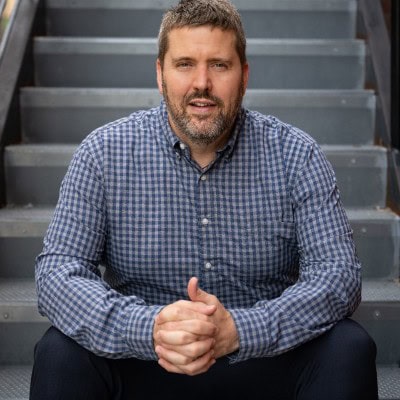
Franklin said the company is already in discussions with a few shops about the arrangement, while he also sees room to expand the company’s commercial outreach.
The business has demonstrated it can handle recurring fleet maintenance across multiple locations, he said, and he believes additional fleet accounts, employee benefit programs, and business partnerships could support significant growth.
The HMS Mobile Auto team currently includes one full-time employee and two part-time employees, but Franklin said he plans to add more part-time coverage.
Oil changes do not require the same certifications as some of the company’s other services, he said, although specialized work does require appropriate training and credentials.
He said his interest in building a team is part of how he defines success: growth is not simply about adding vehicles or increasing the number of appointments; it is also about creating jobs and providing people with opportunities to develop skills and earn a livable wage.
“I don’t mind training good workers who have a work ethic and are willing to learn.”
Franklin said he sees the ability to offer those opportunities as an important part of what he hopes to build.
Over the next five years, he said he would like to have at least five trucks operating full-time, with work scheduled seven days a week – a level of activity that could require a staff of at least 15 people.
“Success means being able to pay a livable wage for doing good work while growing the business.”
For more information, visit hmsmobileauto.com.