A lifetime of achievement
 Powering the next generation of community leaders



November 9, 2026
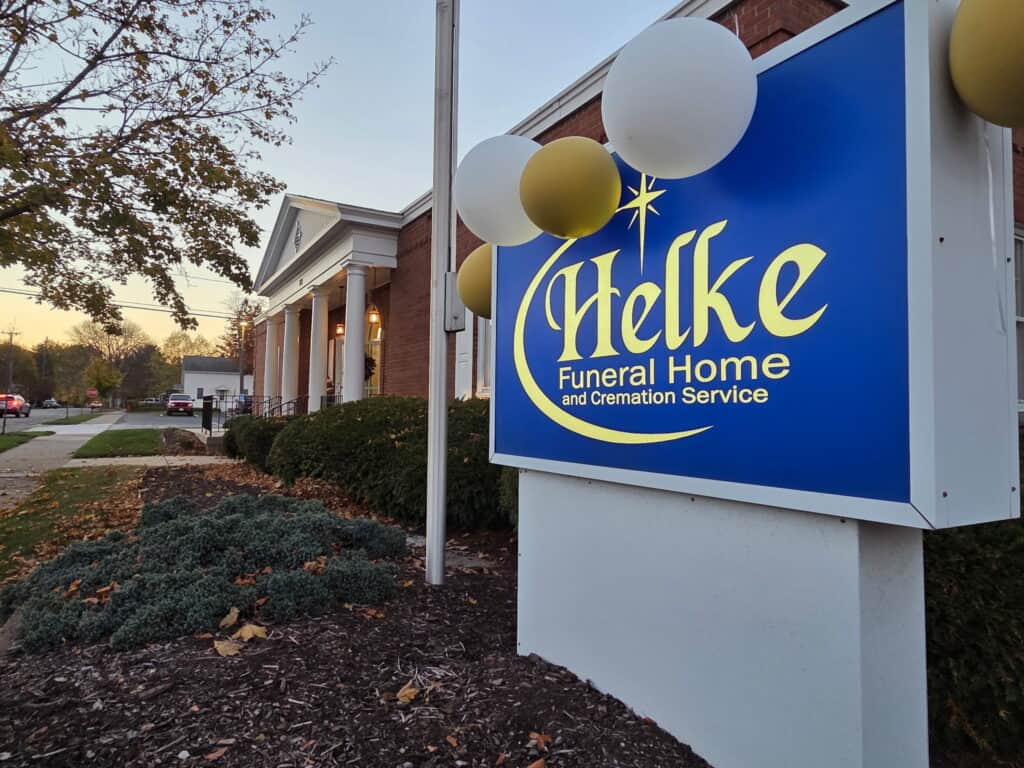
WAUSAU – Helke Funeral Home and Cremation Service – the oldest operating business in Marathon County – recently celebrated 100 years of helping area families both grieve the passing of loved ones and celebrate their lives.
Beth Juris, Aftercare Coordinator and licensed Funeral Director Apprentice for Helke, said they invited families they have served in the past, along with the general public, to a gathering marking its centennial.
The American Legion Post 10 was also present for the flag-raising ceremony, where more than 70 people attended.
Furniture connection
As was common years ago, Juris said there is an interesting historical correlation between the furniture business and funeral homes and the Helke family.
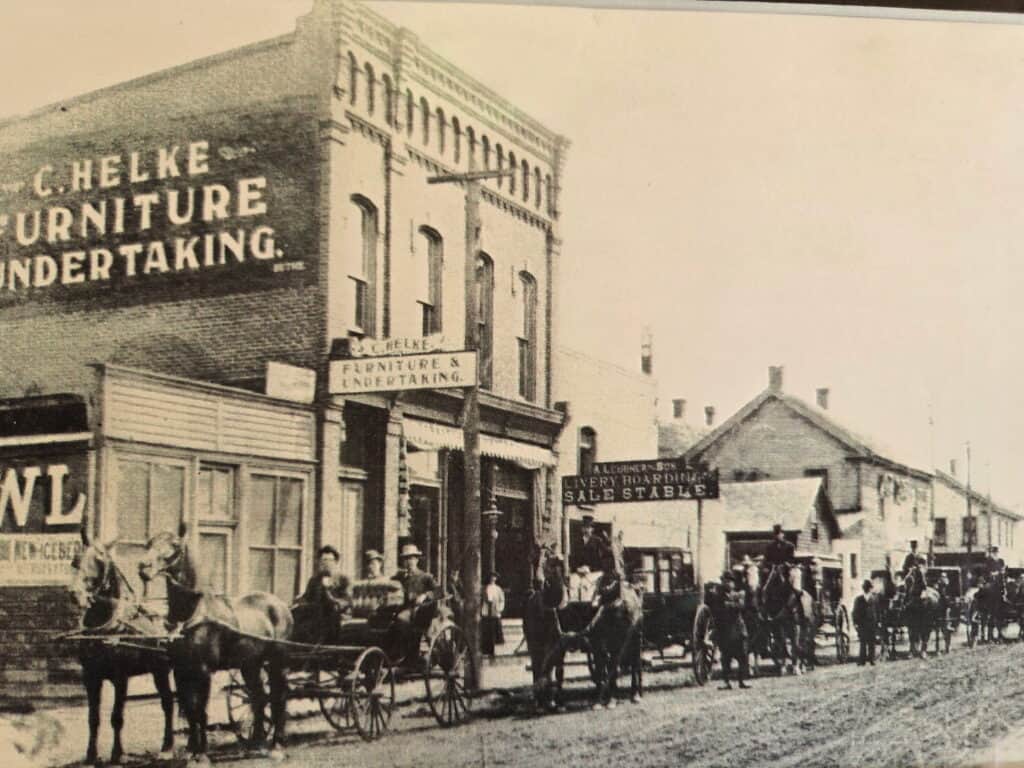
She said the Helke family emigrated to the United States in 1871 and, once settled in North Central Wisconsin, opened a furniture and fixture store.
At the time, it was not uncommon for furniture stores to evolve into making coffins, which closely resembled upholstered furniture.
According to the company’s website (helke.com), August Helke and his son, Charles, made furniture, bar and store fixtures, and church cabinets – founding Helke Furniture Company, located at 319 Fourth St. in Wausau, in 1874.
In 1926, Charles bought a house on Wausau’s west side on the site of what is now The Fillmor and used it exclusively for funerals.

Charles was also among the first licensed embalmers in the state.
He and his son, Carl, built Wausau’s first funeral home in 1939, located at 413 Jefferson St.
The website further states that by 1962, the founder’s grandsons, Charles and Richard, were part of the business, and the Helkes built a second funeral home on Wausau’s expanding west side.
This remains the current site of Helke Funeral Home and Cremation Service.
Juris said the last surviving family member is Dean Welker, who was funeral director at Helke in the late ’50s.
“He retired when he was in his 60s, then he came back to work as an assistant and to help all families who knew him from prior decades,” she said. “Families would make requests to work with him. He worked well into his 80s, but with the COVID-19 pandemic, he chose to no longer work.”
Changes, challenges over the years
In most businesses, change is inevitable, and Juris said Helke Funeral Home is no exception.
“The biggest change occurred in how families would get the notification out that someone passed,” she said. “Before any of our time, people would simply walk in and say their loved one passed away and here is the location. People also used to host the visitations and the services within their own private homes.”
Juris mentioned that it wasn’t just the funeral directors who did all the work, as their wives also provided support and administrative assistance.
While the wives did not work for the funeral homes, they served as secretaries and answered calls about people who had passed nearby.
The modern challenge for Helke and the funeral home industry is its shortage of directors, Juris said.
Due to an aging population, a shrinking workforce, long hours, the emotional demands of the job, and the challenges of recruiting younger people into the profession, she said there is a huge need for funeral-related jobs.
“Currently, there is approximately only one funeral director for every 125 deaths.”
According to the United States Bureau of Labor Statistics, Wisconsin had approximately 510 morticians, undertakers, and funeral arrangers in 2024, with employment expected to reach 520 by 2034.
Approximately 60 job openings are projected annually over that period, largely including replacement needs.
Services provided by the funeral home have also changed and expanded, Juris said, namely in what they refer to as aftercare.
“In the past, when someone would pass, the funeral would take place, families would get the bill, and often, that was the last time you talked to the funeral director until you coincidentally ran into him at the grocery store.”
One of her roles as a licensed Funeral Director Apprentice and Aftercare Coordinator is providing grief resources to families who need them.
Juris said they have plans in place for staying in contact with the families and bringing people together, maintaining some way of connecting with other people who have gone through similar experiences.
“The aftercare side of things is really important today,” she said. “I’m not saying the funeral home staff didn’t care previously, but it has come a long way in the last 40 years, and we want/need to continue this kind of care after the actual service. The way in which we care about our families in the hardest of times is probably the biggest reason for our century-old business.”
Being a family-based business, Juris said Helke’s level of care and compassion is what separates it from other funeral homes.
Another change, she said, deals with pre-planning, which is a growing trend for Helke and the industry at large.
“One of the best things you can do for your family is to prepare them for your passing,” Juris said. “We refer to it as advanced funeral planning. We recognize not everyone wants to talk about this or even think about planning for one’s funeral.”
When Helke’s funeral directors sit down with a family who has just experienced a loss, Juris said it can be overwhelming and sometimes chaotic during an emotional time, with more than 75 decisions that need to be made.
“We observe a big difference in the experience that a family has when everything has been taken care of ahead of time, versus one where nothing has been predetermined.”
The funeral service itself, Juris said, has also changed over the years, as there are many different options for families to select from.
Those options could be about whether their gathering will take place in a church with clergy, or be a celebration of life at a large community center months after the passing.
Other decisions, Juris said, include a traditional burial viewing of an open casket versus a closed casket or a cremation, along with determining songs, readings, and flower selections, plus selecting the participants in the service.
“There is a generational shift when it comes to funeral services and celebrations of life,” she said. “You can definitely tell the generational change noted specifically in the celebrations of life people are choosing. It’s not as stuffy or forced. Each person’s preferences are uniquely theirs.”
Juris said they have plans in place to continue to be there for the community.
“I want them to know how our team at Helke cares for our families,” she said. “While many things change, and trends come and go, the community knows how we care for families, and that will never change.”
For more on Helke Funeral Home and Cremation Service, visit its aforementioned website.