Green Bay Packaging succeeds at sustainability
 Growing beyond expectations – AG Drives reports 300% growth



November 9, 2026
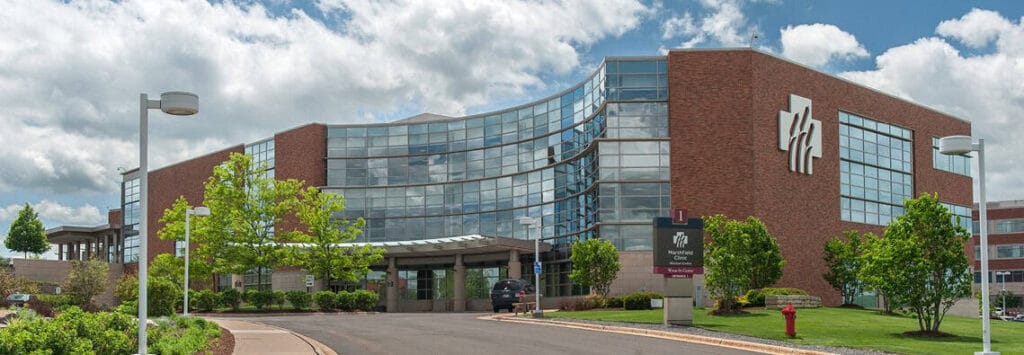
MARSHFIELD – The Substance Abuse and Mental Health Services Administration (SAMHSA) has awarded Marshfield Clinic a three-year Mental Health Awareness Training Grant, bringing nearly $580,000 in federal funding to support mental health awareness, education, and access to care across a 7-county region across northern, western, and central Wisconsin.
SAMHSA, an agency within the U.S. Department of Health and Human Services, leads public health and service delivery efforts that promote mental health, prevent substance misuse, and provide treatments and support to foster recovery while ensuring access and better outcomes.
Jennifer Smith, a Program Coordinator within the Center for Community Health Advancement, said most counties served by this grant have significantly higher resident-to-provider ratios, making it harder for individuals to access clinical services.
“Because we know there are higher rates of concern, [we need to explore] how we empower and train community members so they are better able to recognize, respond to, and potentially refer an individual who is in their organization, is in their family, or is in their community more effectively, as sort of that intermediate response,” Smith said.
Marshfield Clinic representatives stated the health system plans to use the funding to strengthen community capacity to recognize mental health concerns, respond to crises, and connect youth and young adults to appropriate services by way of evidence-based training, resource development, community outreach, and mental health navigator support.
Jay Shrader, Vice President of Community Impact & Social Accountability, said the project will improve early identification and access to behavioral health, crisis, and recovery services.
“Mental health continues to be a significant need in many of the communities we serve, and this funding helps us build on existing efforts while creating new opportunities for impact,” Shrader said. “This grant is a great example of how we’re using external funding to address priorities identified through our community health needs assessments and advance our community impact strategy, while at the same time promoting our behavioral health services.”
Addressing gaps in 14 counties
Smith said special implementation efforts will focus on Barron, Clark, Oneida, Price, Rusk, and Vilas counties, where behavioral health workforce shortages, provider scarcity, transportation challenges, fragmented referral systems, and limited access to care contribute to elevated rates of anxiety, depression, self-harm, and suicide risk.

The predominantly rural service area includes 14 counties designated by the Health Resources and Services Administration as mental health professional shortage areas, reflecting significant challenges in accessing behavioral health services.
During the next three years, Smith said one of the first goals is to support mental health training for community members and Marshfield Clinic staff to increase awareness, knowledge, and confidence in recognizing and responding to mental health concerns.
Part of this plan, Smith explained, is to create a resource directory for community members to use.
“There are a lot of resources and organizations and individuals who are trying to impact their community positively, but it’s hard to find all of these different pieces and organizations and resources,” Smith said. “When we’re doing trainings with community members, we can give them a resource and referral guide for resources that are available that they may not have awareness of in their own community, to help support individuals [with mental health needs].”
Development of behavioral health referral pathways in partnership with Marshfield Clinic Behavioral Health will also be part of its efforts, she said, helping ensure individuals can more easily connect to the services they need.
The clinic is currently in conversation with the six of those 14 counties most at risk, Smith said, and is looking at those referral pathways more specifically to learn how each crisis response functions in those counties.
“In Wisconsin, each county kind of independently runs its crisis response [and] each county looks different from every other county, which makes it challenging to navigate,” she said. “So, we’re in the process of really identifying what it looks like in a particular county, and then, are there places we can provide additional resources and support? Is there a way we can include this information in that directory so it’s clearer to an individual in a particular community?”
The grant also supports a behavioral health navigator, which Marshfield Clinic leadership said will strengthen their ability to connect people with appropriate resources and care.
“The benefit of the mental health navigator,” Smith noted, “is she is working internally in behavioral health in the clinic system and interfaces from the inside with the various referral pathways that are… coming into [the clinic].… She can see both sides of that relationship and has some unique insights into how we can really be supportive of making those pathways as easy and streamlined as possible, because unfortunately, they aren’t always easy to navigate.”
Smith added that although behavioral health can offer many resources, “sometimes they’re a little bit more complicated than we’d like them to be.”
Training efforts to be offered in person and virtually
Community awareness and outreach efforts are underway in planning stages, Smith said, and Marshfield Clinic is planning for events and education opportunities through its clinics, hospitals, and community partners as part of the grant term as well.
She said they’re taking a two-pronged approach, scheduling mental health trainings on a rotating monthly basis for the communities in the service area for the SAMHSA grant, including QPR (Question, Persuade, and Refer) suicide prevention training in December.
“Oftentimes, we see there is a small spike in suicide attempts and deaths around the holidays, so we’re targeting that month,” Smith said.
In January, she said, Marshfield Clinic will be offering youth mental health first aid training, designed for adults who work or interact with young people ages 12–18, giving them additional information, skills, and tools around navigating a variety of mental health diagnoses.
Smith said February’s training will be about de-escalation and how to support someone who might be navigating an elevated crisis moment, and how to step in and establish a little more stability and calm in the environment while navigating additional resources and supports.
“We’re also doing some personalized, targeted trainings,” she said. “We’ve had a couple of organizations already reach out to us; a church in the Rice Lake area would like to offer suicide prevention training, [and] a [school] district in Clark County has reached out to us about offering youth mental health first aid for some of their staff.”
Smith said Marshfield Clinic plans to do in-person and virtual training for interested parties, as well as invest time in traditional marketing efforts.
“In addition, we’re doing social media posts around mental health with different information and resources, [which] is also part of that outreach plan we’re engaging with.”
Building connections, one step at a time
Smith said she hopes the grant helps build support for individuals in communities who are really struggling to work through how they should support somebody they care about who may have mental health concerns.
“What we know is that when we’re unsure of what to do, we often choose to not do anything,” she said. “So, a success would be that we have strong engagement in our training opportunities, and individuals and communities feel more confident, and we see those individuals feeling more comfortable engaging with individuals they’re concerned about and making referrals.”
Smith said the clinic intends to track how people are using the resources, and whether or not that results in a successful connection or referral of some sort.
She hopes to see an increase in that.
“There are a lot of organizations and entities doing this work, and we aren’t always aware of those,” Smith said. “And sometimes, if you go out on the internet, there’s too much information, and you [don’t know where to start]. If we can have something people know is there and they can go to, and it has information that’s accessible and relevant to their communities, I’m hoping it is also helpful in how we navigate all of this as we’re trying to support each other in our communities.”