 Hard work, determination lead self-taught baker to success, storefront
 Trust Point: Meeting fiscal, volunteer needs across communities


February 2, 2026
TOMAHAWK – Austin Steinhafel said he moved around a lot as a kid – living in Wisconsin and several other states, including Virginia, where he first began learning to build engines and everything that went with it.
“I was fortunate enough to go to high school in Virginia where they had a vocational school that all the high schools in the surrounding area went to,” he said. “You had to apply and go through different things to get into the program. I ended up in a program called Motorsports, but it was really a drag racing and fab[rication] class. We built engines and chassis and went drag racing as a class with stuff we built.”
A family passion
Steinhafel said he shared his love of classic cars, trucks, hot rods, swap meets and drag racing with his father, Art – with the pair having a “pile of classic cars” between them.
But one car, he said, was missing.
Since he was young, Steinhafel said his father had dreamed of owning a 1967 Chevy II.
That dream, he said, became a reality in 2020 when Art was finally able to purchase the classic car.
Steinhafel said he and his father even put their restoration plans in writing, detailing how they would bring the car back to its former glory.
Sadly, however, those plans were never realized, he said, when his dad passed away in 2021.

“I didn’t quite have the pocketbook to do what he wanted to do with the car at that time, so I let it sit for a little while,” he said.
But in 2023, Steinhafel – who had been working in a local papermill near Tomahawk – said he took a few engine blocks apart and brought them to Colby, where Phil Huber, the father of one of his closest friends, lived.
“I asked Phil which one he thought was the best,” he said. “We picked one out and took it to Baxter’s Machine over in Eau Claire to have the machine work done. This was going to be the 327 for my dad’s Chevy II.”
Steinhafel said it took nearly a year to get it back, but the machine work was impressive, and everything was built to spec.
“I was very pleased with the work,” he said. “They had to put a sleeve in it, and you couldn’t even tell there was a sleeve in it. That’s how it should be.”
Walking into the shop, Steinhafel said he was surrounded by engine blocks, cylinder heads and nearly every component one could imagine filling the space – which sparked an idea.
“I was thinking of all the work there must be there, and clearly there had to be money in it,” he said. “That was what sparked the idea for me.”
On the drive back, Steinhafel said he asked Phil – a nearly 30-year veteran of a local machine shop – whether there was money to be made in the business and what kind of return on investment he could expect.
Over the next few months, Steinhafel said the idea continued to take shape as he worked through the basics and began forming a plan.
Eventually, he said he drove to Colby to have a more serious conversation with Huber in the same garage where he and his best friend, Hunter – Phil’s son – used to fix their minibikes when they were in third and fourth grade.
“It was very sentimental to go back to that same place,” he said. “I finally asked Phil if I put up the money to buy the building and the equipment, would he be willing to teach us how to machine? He agreed.”
From there, Steinhafel said a new dream began to take shape.
Fast-tracking a new business
Though he began looking for a building to house his new business, Steinhafel said it wasn’t anything serious at first.
“I thought it would be a longer process, but the building I ended up buying just popped up, and it was just inside the city limits, so we had city water and utilities,” he said.
Being located on the edge of city limits, though, Steinhafel said, helps minimize noise and disruption for nearby neighbors.
“We’re right on Hwy S, so it’s right off the highway and people coming into town don’t have to look hard to find us,” he said. “It’s a good location, and it seemed perfect for what we needed, so I bought it.”
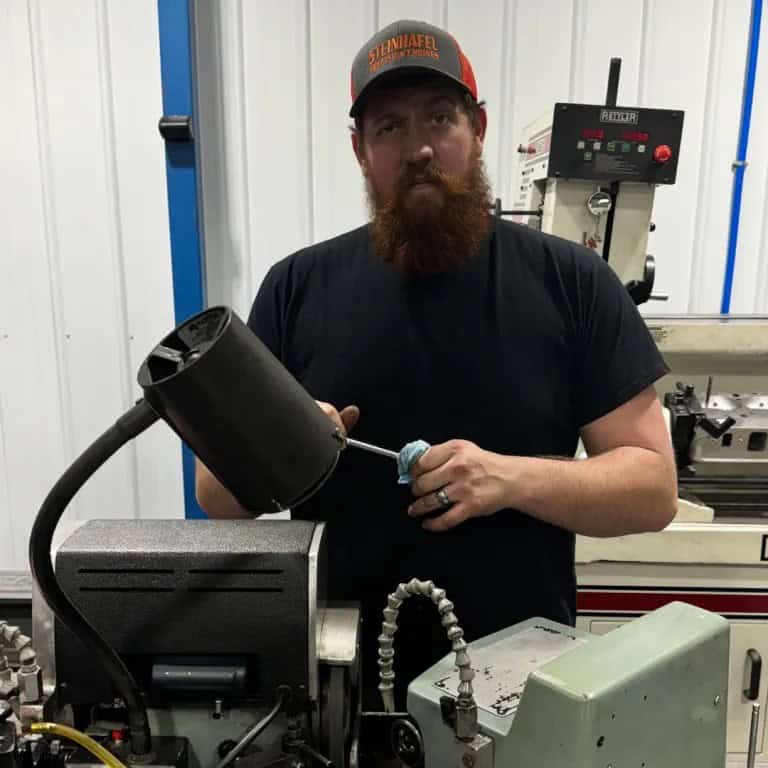
From there, Steinhafel said he remortgaged the building to raise the funds needed to purchase equipment.
“The guy Phil worked with for 30-some years was selling the shop he worked at,” he said. “So, I ended up buying the equipment from K&B Engines in November 2024. Phil couldn’t believe it all happened that fast, either. It was all in the course of about three or four months.”
Steinhafel said he then assembled his crew, drawing on lessons from his father, who understood the importance of running a business with the right people in place to delegate responsibilities and help manage operations.
“He kept his group of people around him no matter what company he went to,” he said. “He’d walk in, and within three months, he’d have his group of people with him. So, I always made a note of that.”
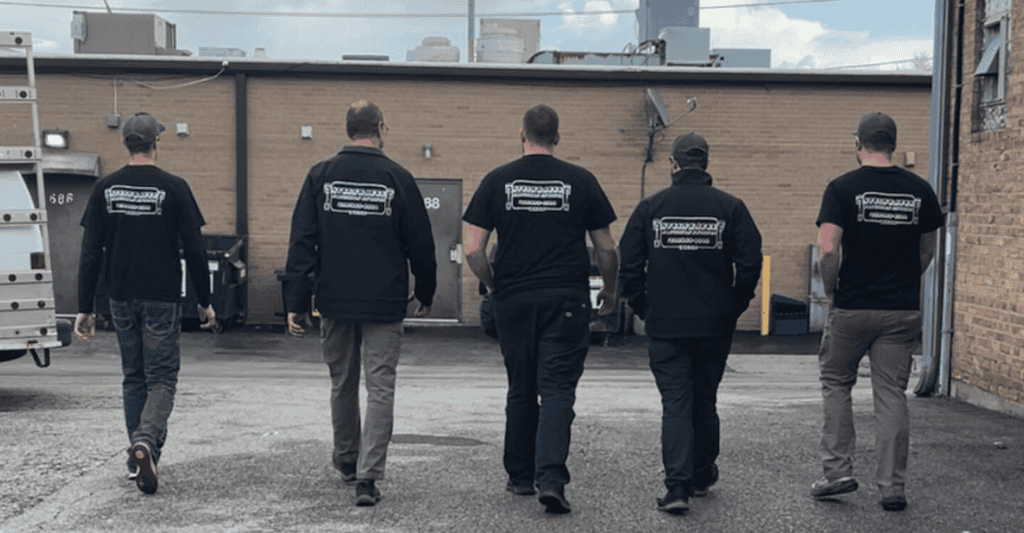
Steinhafel said he already had a core group in mind and selected those involved based on their character, work ethic, morals and values rather than their technical knowledge.
“None of us were machinists when this started,” he said. “We all had a basic understanding of how it worked. [But], we were pushed by keeping the knowledge alive and learning what we could do with what we had to make it work.”
Steinhafel said it became a collaborative effort, with everyone working together to learn how the equipment operated.
After finishing his workday, Steinhafel said Huber would come to the shop and stay until 9 p.m., to teach the crew how to run the machinery, while another former colleague of Phil’s – Sam – showed them how to operate a crank grinder.
Steinhafel said he also purchased several additional machines the shop needed, even though no one initially knew how to operate them.
The team, he said, spent time studying manuals and experimenting with the equipment to learn how to use it properly.
“We also put a couple of engines of our own together, learning what to do and what not to do,” he said.
Steinhafel said those early lessons helped shape the way Steinhafel Precision Engines operates today, handling everything from cleaning and resurfacing to grinding, polishing and precision machining – whether customers are rebuilding, repairing or fine-tuning an engine.
Keeping hot-rodding alive
Steinhafel said in just more than a year, Steinhafel Precision Engines has emerged as Wisconsin’s leading engine machining service.
All the shop’s work is done “out of frame,” which he said means they focus solely on the engine itself – handling anything from a Honda 110 three-wheeler to large diesel engines used in forestry equipment and semis.
“We can do all that, but it has very quickly become a speed shop,” he said. “I didn’t expect it would turn into a speed shop right off the bat. But that’s kind of what happened.”
Back in the 1960s through the 1980s, Steinhafel said a speed shop was the place to go for “go-fast” parts or to have a high-performance engine built.
“They would know all the little tips and tricks of how to make everything work just right to get the absolute most power you could out of an engine,” he said. “We can really make an engine run in any way a customer wants it to be done.”
Steinhafel said he generally steers clear of the lower-end parts of powersports engines, focusing instead on the cylinders and cylinder heads – the jugs and heads.
“But vehicle engines, car engines, diesel engines for pickups, logging equipment and stuff like that, we’ll do,” he said. “In the high-performance world, it’s a lot of the push rod, V-8 motors, hot rod motors, drag part motors and stuff like that. In fact, high-performance stuff is actually what our main business source is right now.”
Precision and passion
Shops like his, Steinhafel said, are becoming increasingly rare, with many machinists retiring and few entering the trade, which is why customers travel from all over the Midwest to have their engines worked on.
As more machine shops have closed and competition has tightened, pay has improved – but Steinhafel said for him and his team, it’s never been about the money.
“It’s the love of the work that makes people get into this kind of work,” he said. “We get to keep hot-rodding alive. We get to keep all of the knowledge that comes with this kind of work alive and thriving because there’s nobody else willing to do it.”
Steinhafel said it’s important to distinguish that his team is machinists, not mechanics – focusing on fixing hidden problems, issues most people wouldn’t notice but that can be detrimental to an engine’s performance.
“Everything we do is within 0.001 or 0.0001 of an inch,” he said. “We work on all the microscopic moving parts inside an engine. Our machines are extremely precise.”
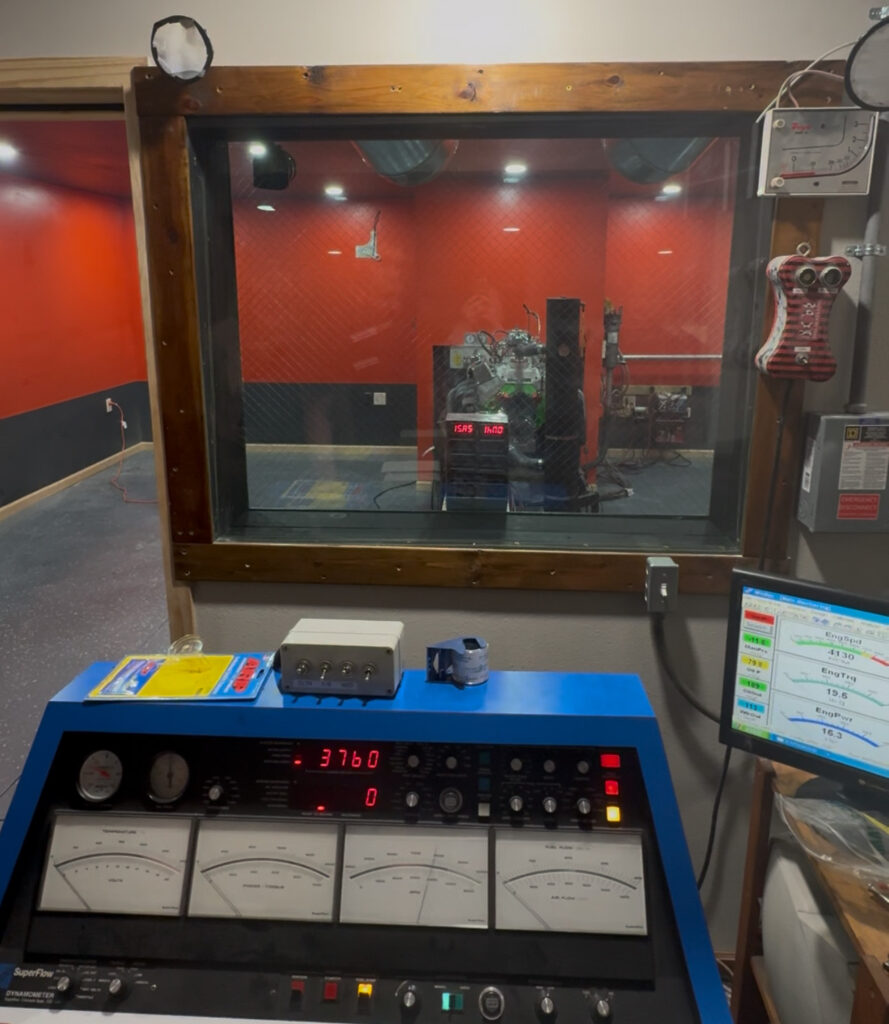
An engine contains countless tolerances, all of which Steinhafel said must be precise for it to function properly.
“We’re the ones who set the correct tolerances on the various engine parts,” he said.
That level of precision, Steinhafel said, can be intimidating for someone new to the industry.
“There’s a million moving parts inside of an engine,” he said. “The biggest thing is understanding how they all work together. If you can understand how all those parts work together, and how all of the tolerances are involved in that and will change how an engine acts, you will be fine.”
Though Steinhafel said it can be nerve-wracking, especially at the start, because being even 0.0005 off can determine whether an engine performs well enough to win a race.
“It’s a lot to take in,” he said, “but once you get over that initial fear of messing something up and not getting it right, you’ll be fine.”
Despite the shop’s rapid success, Steinhafel said he has no desire to turn it into a massive operation or open multiple locations, largely due to one key consideration: the people he works with.
“It took me all of my life, thus far, to get the people I have working with me who I can trust,” he said. “Besides that, we’re already covering a giant area on the map within the first year, which I wasn’t expecting.”
Steinhafel said he isn’t focused on getting rich from the business – rather, his goal is to make a comfortable living for himself while ensuring his team does the same.
“That’s really as far as I want to go with this business,” he said. “I enjoy building the custom one-off type of engine – the stuff that’s extremely detail-oriented toward what customers want. I will happily build custom engines for the rest of my life.”
Located at 409 S. Park Drive in Tomahawk, Steinhafel Precision Engines’ hours are 7 a.m. to 3 p.m. Monday through Friday and by appointment only Saturdays and Sundays.
More information about Steinhafel Precision Engines can be found on the shop’s Facebook page or at spengineswi.com.