 Venture Ag Drones ‘takes flight’ in Langlade County
 Honoring one Kaukauna family’s sports ‘Legacy’


March 2, 2026
ELCHO – With its patented PaperLock® technology, Co-founder Mark Resch said The Paper People in Elcho is making big strides in the sustainable packaging industry.
Since The Paper People began operations in 2019, Resch said the company’s goal has been to create the first fully recyclable and compostable paper packaging featuring a wood fiber mesh window.
Resch said they were able to do that in 2021.
“The innovative product helps to reduce plastic waste and promote greener packaging,” he said. “The technology allows for bags to be made in pouch form, roll stock for form, fill and seal or premade bags.”
Resch – who co-owns the company with Neil Bretl – said the coating had four parameters of need.
“It had to be invisible, it had to be okay for direct food contact, it had to work and it had to be 100% recyclable,” he said. “Those four parameters are how we created PaperLock.”
Resch said PaperLock is a water-based coating engineered by The Paper People team.
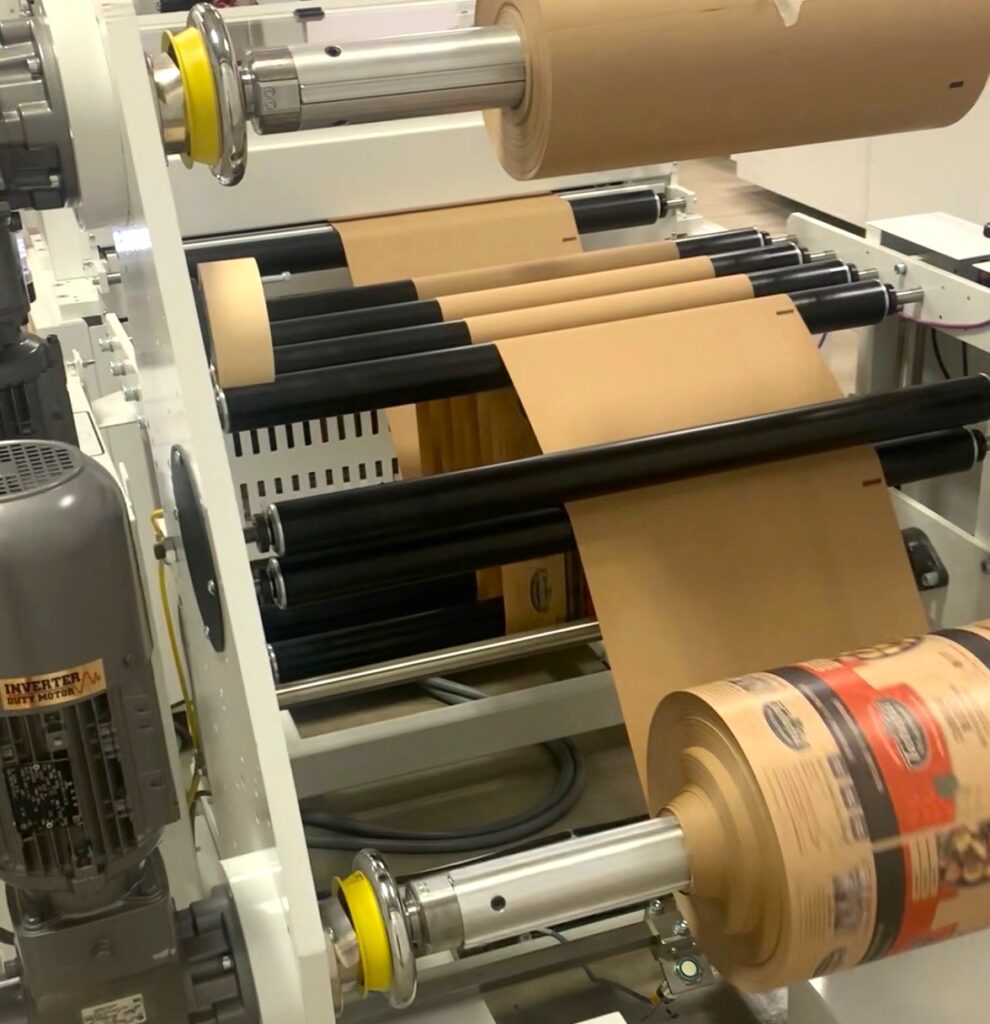
“You can’t see it, you can’t smell it, you can’t taste it and it’s 100% recyclable,” he said. “It allows the paper to be heat-sealable. One of the priorities was that it had to work on existing packaging equipment, so that’s what we developed. We can wrap paper towels and tissue products. Anything that was in plastic before that doesn’t require a barrier, we can wrap.”
Giving it further recognition, Resch said the PaperLock technology has earned recyclable certification from Western Michigan University.

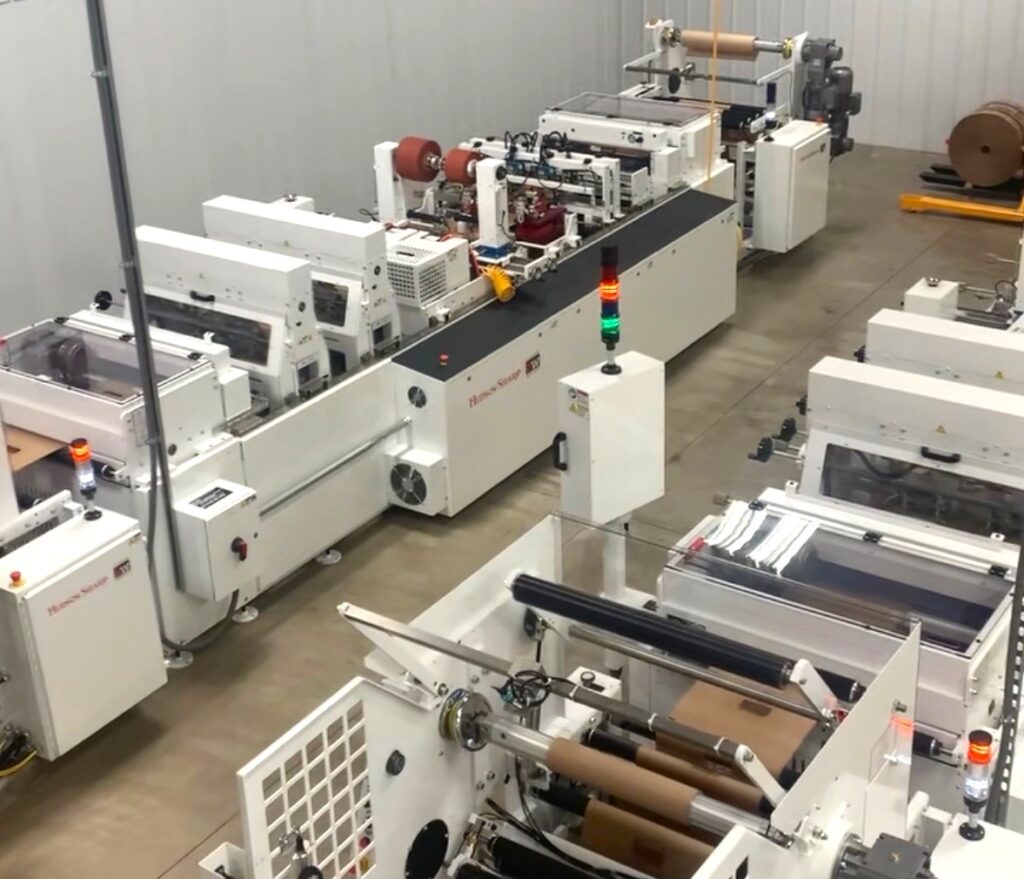
“Our heat-sealable paper works on existing equipment with little or no changes to machine settings while maintaining production rates,” he said. “We have videos on our website showing us packing things at very high speeds, just like plastic… We can print up to 10 colors and provide rolled material or finished packages ready to fill, making your transition to paper simple.”
Different options available
Resch said PaperLock is available in different versions.
For example, he said if a bag requires a grease barrier – for items like frozen french fries or tater tots – the company can apply it to the paper bag.
“Frozen french fries have a lot of grease in them, and if we didn’t have that barrier, the grease would bloom through the paper, and you’d have all these spots on the bag,” he said.
Resch said PaperLock is approved by the FDA for use in direct food contact.
“It’s completely safe, and you can’t even see it on the bag,” he said.
According to paperpeopleusa.com, there are several reasons why paper should be the top choice for packaging:
- Paper is a recyclable, sustainable, renewable resource, with a ready-made recycling stream, high consumer confidence and is universally recognized as a “green package.”
- It provides light protection, natural absorption properties and can be automated for efficient production.
- A large international network of manufacturers ensures a steady supply with manageable market fluctuations.
- Paper is the new buzzword in packaging with design and production innovations surpassing previous substrates.
- Paper is now very competitive with plastics due to innovation in fiber strength and “stretchable” products that improve package integrity.
- Most major retailers are requesting paper solutions to replace plastics and laminated structures.
- Many countries are eliminating or taxing single-use plastics in favor of paper.
- Paper can be adapted to existing automated packaging lines – such as form fill seals, stand-up pouches and wickets – keeping the cost of change from plastics to paper affordable.
The website also states that PaperLock was initially produced for the fresh produce industry but is now being used in a variety of food applications, including pet food, frozen food, snack foods, confectionery, overwraps and more.
“We’re working with all kinds of national brands for different opportunities, whether it’s sticky Post-it notes, diaper packaging [or] cheese,” he said. “Our goal is to eliminate the plastic bag and go to a paper bag. There are endless amounts of different things we’re touching.”
Because of the way PaperLock is applied, there are no issues with odors or contamination transferring to the packaged food.
“We have a patent on it now in the United States and Mexico, and we’re waiting for the patent to fall in Canada,” he said. “It was truly a grassroots effort to change the packaging industry, starting from scratch. The biggest customers you can imagine are contacting us to use our technology.”
One such company is Trader Joe’s, for which Resch said The Paper People manufactures bags for all stores nationwide.
The retailer, he said, has eliminated its plastic bags, and every branded Trader Joe’s bag is now produced in paper.
“If you buy a branded Trader Joe’s bag, it’s our package,” he said. “We make those bags daily. Trader Joe’s has been great. They said if you’re going to pack for us, it has to be in paper.”
More uses
Resch said they often describe the company as “a carrier, not a barrier.”
“If you think of a big bag of pre-wrapped candy where there are 50 small bags of candy in the big bag, that big bag doesn’t need to have a barrier – it’s just a carrier,” he said. “Using our PaperLock technology, that big bag could now be paper. That’s where we can make such a big impact in the market.”
Though capable of producing the smaller inner candy bags, Resch said The Paper People team cannot yet add the necessary packaging barrier.
“The small bags have barriers, so what we’re saying is, keep the small bags with the barrier so the candy stays fresh, but the outer bag can be all paper and be recycled,” he said. “This is happening in many markets.”
Resch said the company recognizes that not every product can be packaged in paper, but they aim to replace as much as 30% of plastic with paper alternatives.
“What kind of impact would that have on recyclability, and what would that do to our lumber and paper industry?” he said. “It would revitalize those industries, which are kind of stagnant right now. Think of all the Wisconsin communities that rely on paper mills and what we can do by changing the market.”
Without a designated sales force, Resch said much of The Paper People’s work originates from new customers discovering them online.
“We take calls daily from new people who see our website and ask, ‘Can you make us this?’” he said.
EPR legislation
Resch said legislation known as Extended Producer Responsibility, or EPR, is reshaping the recycling landscape.
“EPR legislation is already in place in California, Oregon, Vermont, etc.,” he said. “The [states that have EPR legislation in place] are going to tax you, depending on how recyclable your package is. Every bag will have a tax, but some of them are going to be taxed much higher – like plastics that don’t recycle.”
Resch said the tax on producers will be directed to municipalities to help manage waste disposal.
“EPR legislation is a big thing because it’s going to change for those items that don’t really need to be in plastic, like toilet paper and paper towels,” he said. “Why does that stuff need to be wrapped in plastic? If you can get it in paper, it works the same.”
Citing some of the bigger paper companies in Northeast Wisconsin, Resch said EPR could impose significant fines and taxes on those that fail to adapt their packaging.
“Right now, each state has different rules, but I do not doubt that at some point, it’s going to be a national law,” he said.
Projected growth
Resch said The Paper People currently employs eight people but expects that number to grow – with plans to expand both its workforce and its facility within the next two years.
“We can run massive amounts of volume with [very] little labor,” he said. “With our projected growth, we’re already looking at big additions and more overall sets. We would also add a lot more labor.”
Resch said the company utilizes 12,000 square feet of space on one side of the road and another 10,000 square feet across the road, which they rent.
“We have four acres of ground we own, so we have plenty of room to expand for warehousing, distribution, etc.,” he said. “We have a great labor pool in the area, too – we can draw from Rhinelander, Crandon, Elcho, etc. We also have seven paper mills within an hour of our plant, not to mention Green Bay, Appleton, Oshkosh, Menasha, etc.”
For more information on The Paper People, visit paperpeopleusa.com.