Prairie Dairy raises heifers for fellow dairymen
 Ashwaubenon Bowling Alley installs Neoverse LED video wall



June 15, 2026
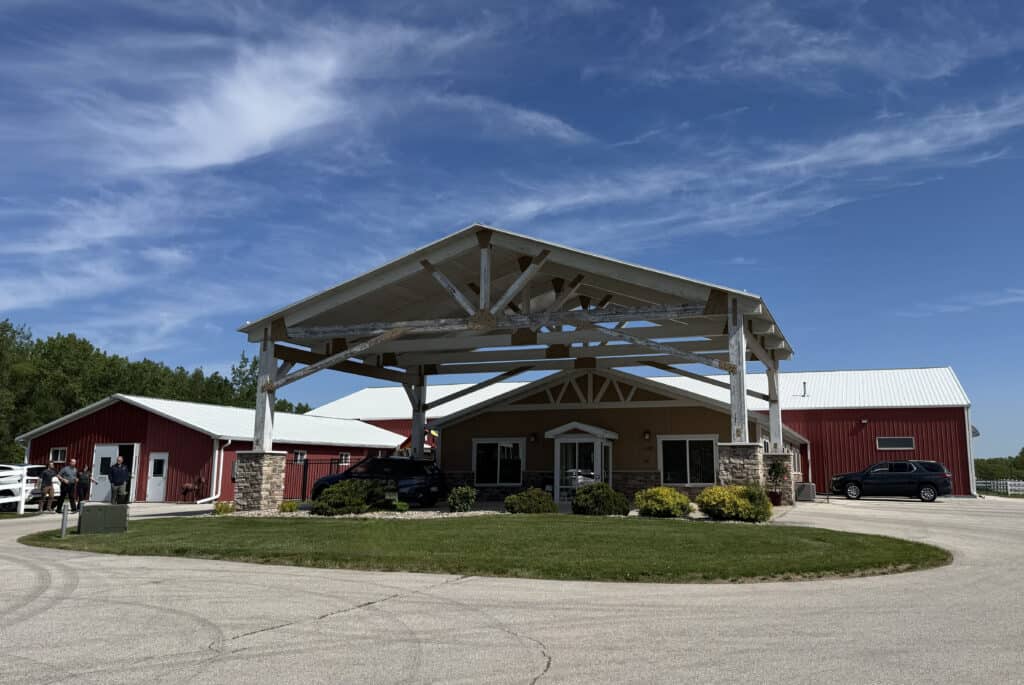
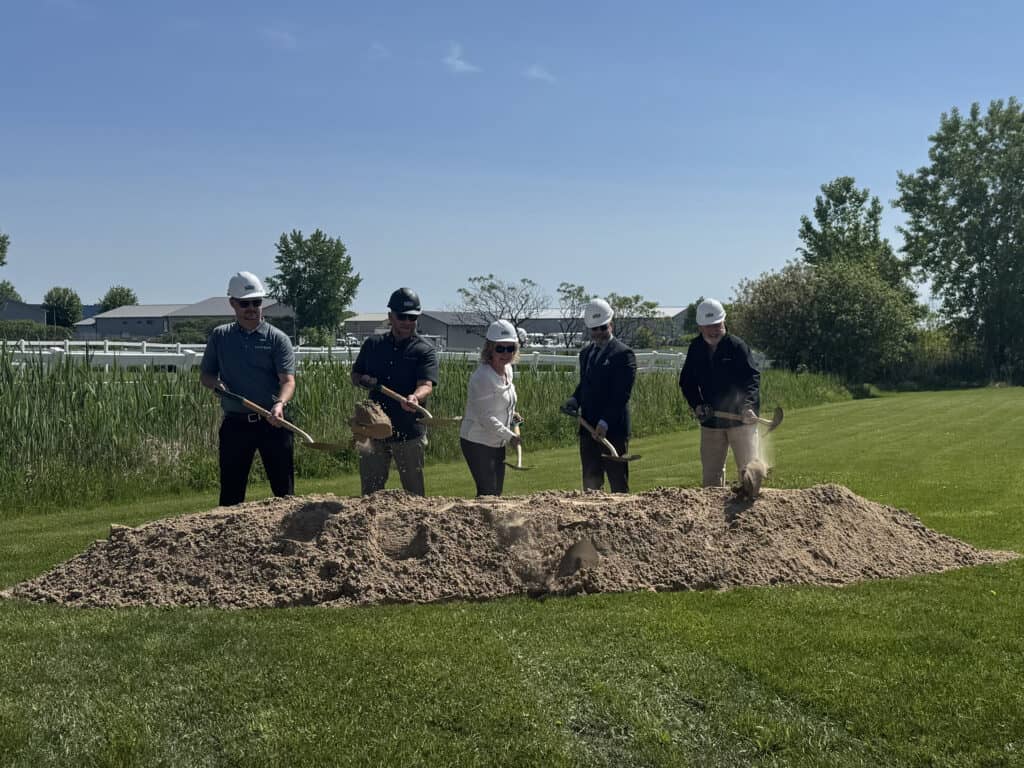
DE PERE – Founder and CEO Lisa Kafka said Exceptional Equestrians recently broke ground on a new facility that, once complete, will allow the nonprofit organization to expand both its traditional and equine-based therapy services.
“Exceptional Equestrians will be [able to] offer outpatient occupational, physical and speech therapy services,” she said. “We will also then continue to offer our equine therapy services, and we’re going to hopefully be piloting a new program for veterans and their families.”
Focused on providing mental health services, outpatient services and equine-based services all on the same campus, Kafka said the goal of Exceptional Equestrians is to make care “inclusive and convenient.”
“One of our issues was the constraints of the current facility – we just don’t have the space to provide services to all of the people who need them,” she said. “We have a significant waiting list right now, and because of that, it really hasn’t been a possibility for us to add an additional program. So, this new facility is specifically being structured to accommodate not only the services we’re currently providing, but to add new ones.”
Creating impactful outcomes
Kafka said she began her healthcare career working in neonatal intensive care in Green Bay.
“Then I worked in an outpatient center, and while I was at the outpatient center, I actually founded my own business, Country Kids – which is an outpatient OT, PT and speech pediatric clinic,” she said. “It was there that I then founded Exceptional Equestrians as a 501(c)(3) to specifically focus on incorporating equines.”
Executive Director Michael Telzrow said every staff member at Exceptional Equestrians is either a licensed occupational therapist (OT) or physical therapist (PT).
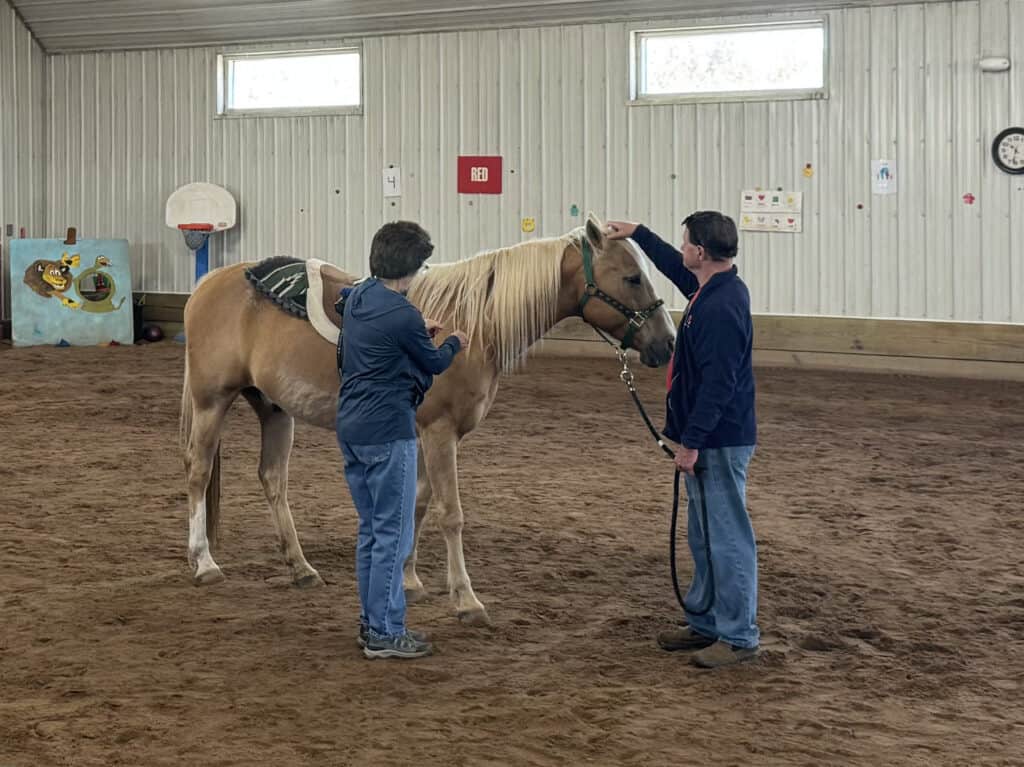
“They’re trained, qualified and licensed to do on-horse and off-horse therapy,” he said. “We’ll have an expanded therapy room in the new building, which will allow us to do, again, off-horse therapy as well as on-horse therapy. We’ll keep [our current] building, using it primarily for on-horse therapy.”

Just before the early June groundbreaking, Telzrow said Kafka sold her original Country Kids’ building, located next door to Exceptional Equestrians at 1130 Orlando Drive in De Pere.
“We sold that to a pediatric mental health provider, [who] we’re going to partner with, too,” he said. “So, that [sale] eliminated our space for off-horse therapy…, [but the] new building will rectify that.”
Kafka said that during her time in pediatrics, volunteering with a recreational equine program inspired her eventual use of horses in health care settings.
“I was watching all of these children come in and ride, and they were doing it recreationally, [so] there wasn’t a therapist there,” she said. “I could see there was a great benefit…, but I [thought] we could do more.”
With the structured involvement of OTs and PTs in equine therapy, Kafka said she thought they could create “more impactful outcomes” for their patients.
“I started doing some research, some studying and taking coursework specifically geared toward incorporating an equine into a therapy session,” she said. “I bought a horse [then] I bought a home in the country where I could build a barn. So, really, it was my family and I [who] built the original barn. We started with two horses and five children riding in the program, and we’ve expanded… We probably see 130 patients a week now.”
Whole-body benefit
Kafka said the movement of a horse influences the body of a rider “constantly.”
“As the horse’s pelvis moves, the rider has to accommodate by using their postural muscles [and] by having more flexibility,” she said. “So, if you have cerebral palsy and you have some tightness in your legs, the movement of that horse is going to relax your legs and allow your muscles to kick in and work the way they’re meant to.”
Riding a horse, Kafka said, also helps activate a patient’s postural muscles – which can alleviate undue strain on the diaphragm.
“What happens is a lot of [patients] use their diaphragm to support weak postural muscles, and that’s why they struggle with speech,” she said. “What we see on the horse – because now they’re becoming active in their postural muscles – is their breath support for speech improves, and we hear better talking because now they can use their diaphragm as a respiratory muscle, like it should be.”
In addition to being on the horse, Telzrow said program participants take part in activities that challenge both their bodies and minds.
“On the horse [a patient will] engage in various activities around the arena,” he said, “like catch a ball, toss a ball, pop bubbles, [etc.].”
These activities, in combination with the environment, Kafka said, create a comprehensive sensory activation in the patient.
“We’re moving through space, so we’re activating the vestibular system, the visual system and the tactile system,” she said. “Equine therapy is one of the only therapies that actually stimulates all of our senses simultaneously. So, that’s one of the reasons it has such a powerful impact.”
Beyond its physical benefits, Kafka said equine therapy can also help improve participants’ emotional well-being and help them develop social skills.
“Occupational therapists do work with people with mental health, [but] we’re not counselors – I think it’s important to say that,” she said. “For instance, I’m working with a child who has experienced trauma. It is not my role to work through that trauma from a counseling perspective, but what we do as occupational therapists is we say, ‘How is that experience impacting your ability to function in daily life, and what can we and the horse do to help you?’”
Because horses are “very intuitive [and] responsive to human behavior,” Kafka said they present patients with unique opportunities to reflect on their behavior.
“They will react, and their reactions are what teach our patients emotional self-awareness,” she said. “Because that horse is there, the learning experience is that much more powerful [compared to] just me as a person.”
Through their interaction with the horse, Kafka said patients learn skills applicable to their lives and relationships outside of the program.
“[They] learn respect, trust and, obviously, develop self-esteem and confidence through the activities we do, both on the horse and off of the horse,” she said. “But it’s that relationship they build with that equine [where] they learn skills they can take away from Exceptional Equestrians and use in their daily life.”
A community asset
Letting people experience the powerful impact of equine therapy, Kafka said, is how she’s succeeded in growing Exceptional Equestrians’ donor base.
“Selling what we do is easy if someone can observe it,” she said. “That is what draws people in [and] what has helped us get our supporters invested in our mission since day one.”
From its inception, Kafka said Exceptional Equestrians has been graciously supported by local organizations such as the Cornerstone Foundation, Schreiber Foods, KC Stock Foundation, Wisconsin Public Service and the Schneider Foundation.
She said the decision to establish Exceptional Equestrians as a 501(c)(3) – as opposed to a for-profit business – was made out of concern for patient accessibility.
“Country Kids was, if you will, the parent program for Exceptional Equestrians, because we did start using equine services, [but] third-party payers said ‘no horses in the program,’” she said. “That’s when I created Exceptional Equestrians as the nonprofit, so the patients who were receiving the equine services through outpatient [care] weren’t going to just lose that.”
Through the federal Children’s Long-Term Support Waiver program, Kafka said Exceptional Equestrians can offset 85% of its costs.
“But every single session leaves a gap,” she said. “We have a gap in funding, so we need to cover that gap [with] private donations, foundation donations, grants, fundraising events, [etc.].”
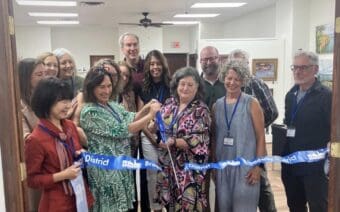
At the recent groundbreaking event, Kafka said Exceptional Equestrians launched the public phase of its capital campaign to fund the new facility.
“People can still get involved in this project in multiple ways, and I strongly encourage and welcome that,” she said. “A brand-new building is also going to come with a lot of responsibility. We’re going to have to maintain that new building, we are going to be bringing new patients in and we’re trying to pilot a new veterans program. All of those things take resources.”
Beyond financial gifts, Kafka said interested parties can donate their time to Exceptional Equestrians as well.
“Every single therapy session requires three people – there’s a volunteer who is leading the horse, there’s the therapist and then there’s a volunteer on the other side of the child,” she said. “Annually, we see about 4,000 volunteer hours.”
At the groundbreaking event, Kafka said many of Exceptional Equestrians’ long-term supporters and volunteers were present to celebrate – calling their attendance “awe-inspiring.”
“That was really meaningful for me, because they were there at the start when we were just two horses and five children, and they’re there now,” she said. “I’m so grateful to the community that has gotten us so far. I’m also grateful for them to stay involved with us and help us see this mission ongoing for years to come. I think Exceptional Equestrians is going to be a huge asset to the community.”
For more information on Exceptional Equestrians’ services, capital campaign or volunteer opportunities, visit exceptionalequestrians.org.