 Seeing growth clearly at Cherry Optical Lab
 Miron helps 17 graduates launch construction careers


August 10, 2026
WISCONSIN – The number of family farms in Wisconsin continues to decline each year, but that trend has not translated to a decline in FFA participation.
In fact, the Wisconsin Association of FFA said the state is experiencing record growth in both FFA chapters and student membership.
Pete Knigge, who has farmed near Omro in Winnebago County since 1969, said the reason goes beyond the number of farms themselves.
“There has been such dramatic change in agriculture over the years with the move to much larger farms,” he said. “There are not as many kids growing up on farms. So, the FFA shifted its focus.”
Beyond the farm
Knigge – who has deep ties to FFA as a former member and the father and grandfather of program graduates – said the organization expanded the number of programs it offers to address fields beyond traditional farm production.
Knigge Farms often hosts tours for FFA groups with some coming from as far away as Northwest Wisconsin.
“We were the first farm in Wisconsin to use robotic milkers 26 years ago,” he said. “So, when we do tours, I like to explain the non-production jobs that support the industry, like mechanics.”
Wisconsin FFA Executive Director Cheryl Zimmerman said Knigge’s example reflects a much broader reality.

“There are more than 300 careers in agriculture,” she said.
Zimmerman said those expanding career opportunities are helping drive interest in FFA.
“We have more than 28,500 members this year – the highest it’s ever been,” she said. “We were hovering around 250-255 chapters. Today, we’re at 267 FFA chapters in schools around Wisconsin. And this year, I have more school districts wanting to add FFA programs.”
Zimmerman said she has witnessed several ups and downs with FFA membership throughout her 34 years in this role.
As Knigge noted, Zimmerman said the latest uptick is less related to the agricultural economy’s ups and downs and more connected to a change in focus.
“Around the mid ’70s, FFA membership got as high as about 21,500 members, and then we saw a decrease,” she said. “The 1980s weren’t the greatest time for the farm economy, so there was a decrease in interest in agriculture.”
Though interest started to revive in the ’90s, Zimmerman said it really started to accelerate about 10-15 years ago due to the FFA broadening its scope to include more ag-adjacent careers.
“So often when we define agriculture, we think about only those young people who are coming from a farm with a production background,” she said. “Obviously, that’s the grassroots – that’s why we are here – we want our members to be going back into production agriculture. But we really opened the door on the idea that agriculture is a lot more as far as careers.”
Inside today’s ag classroom
Zimmerman said today’s agricultural education classrooms look far different from the traditional image many people associate with farming.
“Agriculture instructors are teaching about biotechnology and the science of food,” she said. “They’re teaching about everything from nutrition and food sciences to landscape management, soil management, turf management, horticulture and floriculture. So, not just food production but the environment and all the things that tie right back into agriculture.”
Zimmerman said ag teachers and FFA advisors across the state have driven much of FFA’s growth.
She said schools are doing a better job of informing students and parents of these ag-related fields, with many ag teachers taking an active role in marketing these programs.
“Our teachers have to be credited with the fact that they have evaluated the needs of the ag industry within their communities, and they have designed educational opportunities for students to really understand where they can fit into the local agriculture landscape,” she said. “We’ve even had some students design and build successful ag businesses.”
Zimmerman said FFA advisors explain how jobs in agriculture are evolving as technology evolves.
Many farms, she said, are making data-driven decisions regarding water usage and soil and animal health, while implementing precision farming methods, robotics, drones and other advanced-tech tools.
“As we market agricultural education, we talk to people about how it enhances your science skills, your math skills, your engineering skills,” she said. “All of these things are wrapped up in agriculture, and you can apply them to real life. Students might read about genetics in a textbook, but when they come to the agriculture classroom, they can see how breeding plants or animals happens in real life.
Zimmerman said that connection makes it real to them.
“And that’s what agriculture is all about,” she said. “It’s about supporting life.”
An increased desire to know where food comes from and how it’s grown, Zimmerman said, has also contributed to FFA’s growth.
“[Students] learn why certain pests are controlled the way they are – to continue an abundant food supply for everybody,” she said. “They learn why we raise animals in a particular way. There are so many misconceptions out there from people who aren’t connected with agriculture. In the agricultural education classroom, you really get to put pieces together and understand the entire food chain.”
With this broader focus on agriculture-related careers, Zimmerman said FFA participation is no longer limited to rural or small-town schools.
“We have two programs in Milwaukee as well as programs in Green Bay, Eau Claire, and we just started a high school program in La Crosse,” she said.
Another factor contributing to FFA’s growth, Zimmerman said, is increased accessibility for students learning outside traditional classrooms through programs, such as iForward and Destinations Career Academy.
Some FFA programs, she said, start as early as fifth grade and can continue through college if the student wants.
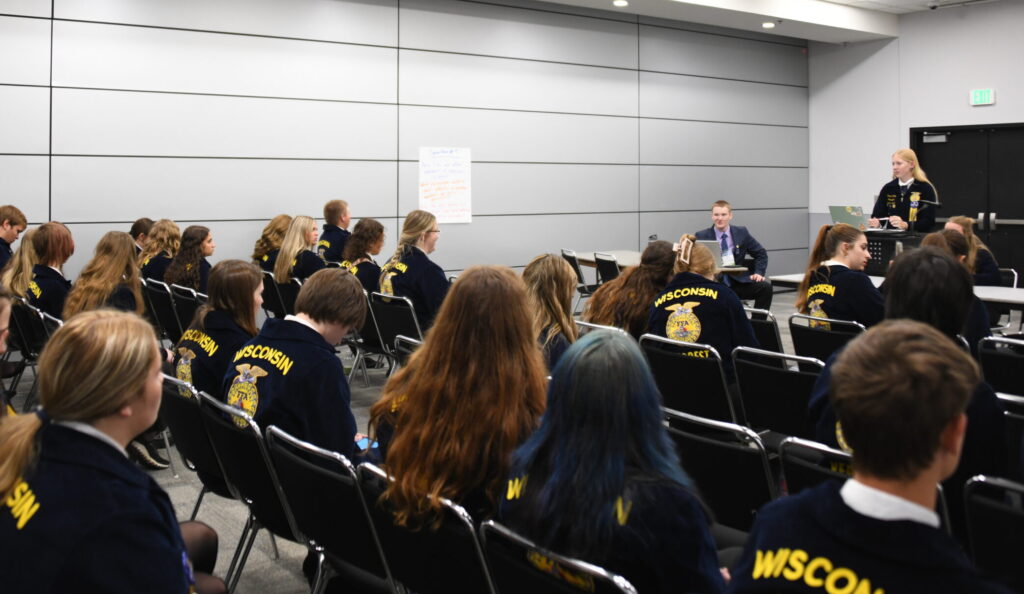
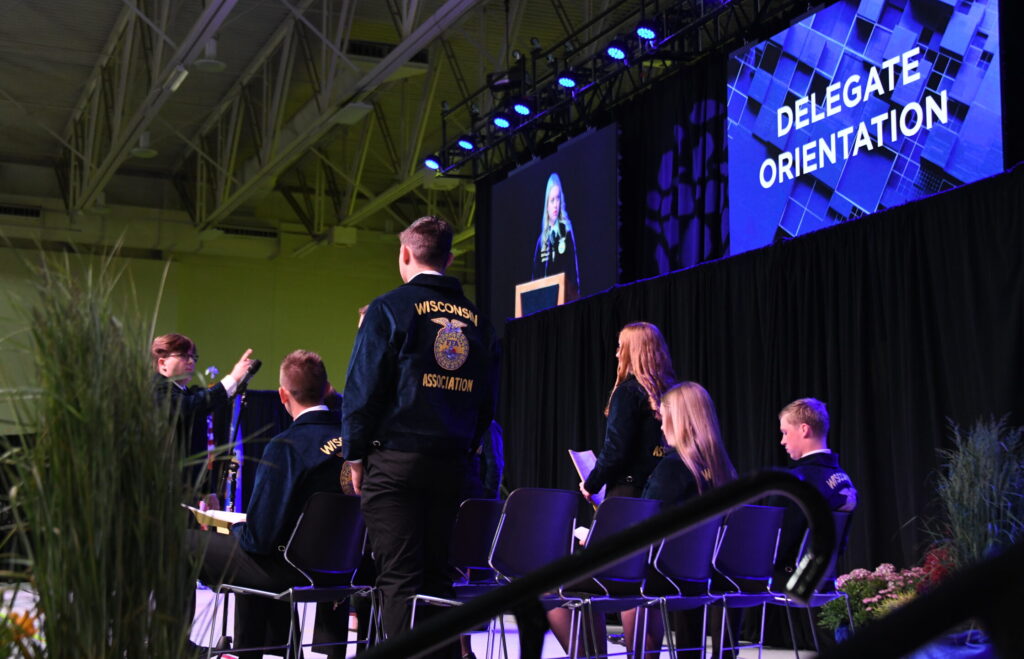
Zimmerman said many students continue participating in FFA because of its emphasis on leadership development and the opportunities it provides beyond the classroom.
“Our students come out with strong communication skills, leadership skills, team-building skills – a lot of those qualities any employer is looking for,” she said. “There are national leadership conferences where they learn how to advocate and learn more about career opportunities.”
Building skills beyond agriculture
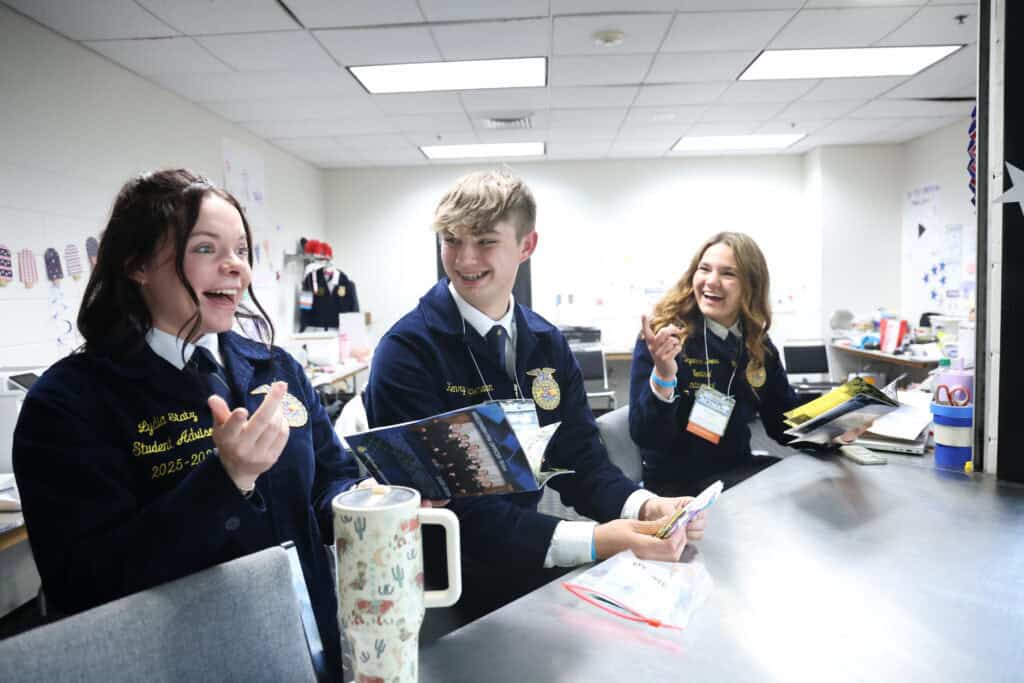
Erica Eickert, FFA chapter advisor for Brillion’s middle and high schools, said she has seen more students seek out the program because of the exposure it provides to new career paths and skill development opportunities.
Eickert said she works with roughly 200 ag students, which is considerable given the high school’s total population is under 330.
FFA’s evolution over the years, she said, began decades ago when the organization dropped its Future Farmers of America moniker for the name National FFA Organization.
“There is still definitely a place for the students who want to be farmers,” she said. “It’s just not where we see our numbers increasing. We have kids in our program who are interested in agricultural mechanics, working on tractors and preparing them for the farmers. We have kids who are interested in food science, and we have kids who are interested in being vet technicians – all of the support positions that our farmers need.”
Eickert said FFA has something for every person – “even students who aren’t necessarily going directly into an ag field.”
A lifetime of impact
Kathy Schmidt said her family – who operates Grand View Dairy Farm, Inc. near Brillion – are big fans of Eickert’s program.
Schmidt said she, her husband and all of their children are FFA alumni.
As president of Brillion FFA Alumni and Supporters, Schmidt said she helps coach local FFA teams and supports students competing at the state and national levels.
She said the group also helps fund local FFA programs and “support them in whatever facet they need.”
“Erica can pick up the phone and say, ‘This is what I need. How can we make this happen?’” she said. “And we see what we can do. We want the chapter to be successful.”
Schmidt said the Brillion program has grown in recent years as students have developed a broader understanding of agriculture and “all that’s packed into it.”
“Food and fiber have been touched by so many hands by the time they get to the consumer,” she said.
Schmidt said the skills she developed through FFA have continued to benefit her throughout the years, including in roles beyond the farm.
“I learned the correct way to run a meeting, how to move a motion and move an amendment,” she said. “[I’ve learned] how to get up in front of a group of people and talk – things that have stuck with me for a lifetime.”
Schmidt said her son also learned firsthand how FFA membership can benefit a person later in life.
“He thinks he has the job he has right now thanks to getting to discuss his FFA involvement and FFA leadership experience during the interview,” she said.
Another lasting benefit of FFA, Schmidt said, is the lifelong connections members build through the program.
“You meet people in FFA throughout your life – I mean, they’re all over, some even worldwide,” she said. “The networking and community-building opportunities are endless.”
Zimmerman said many FFA teachers tailor their programs to the needs of local agriculture while helping students identify where they fit within the industry.
“We are very blessed here at Brillion,” Schmidt said. “Erica is an amazing teacher. She’s an amazing advisor. She does so much for our students. She’s always finding new opportunities for them to try different things.”
Schmidt said one of the most rewarding parts of FFA is watching students develop confidence, communication skills and leadership abilities through their involvement.
“As an alumni member, it is just wonderful to see the kids’ smiles when they succeed at something,” she said. “It’s so rewarding to watch them blossom and grow.”