Nine decades of excellence – Ariens Company still thriving today
 BCI Burke works so kids of all abilities can play


May 4, 2026
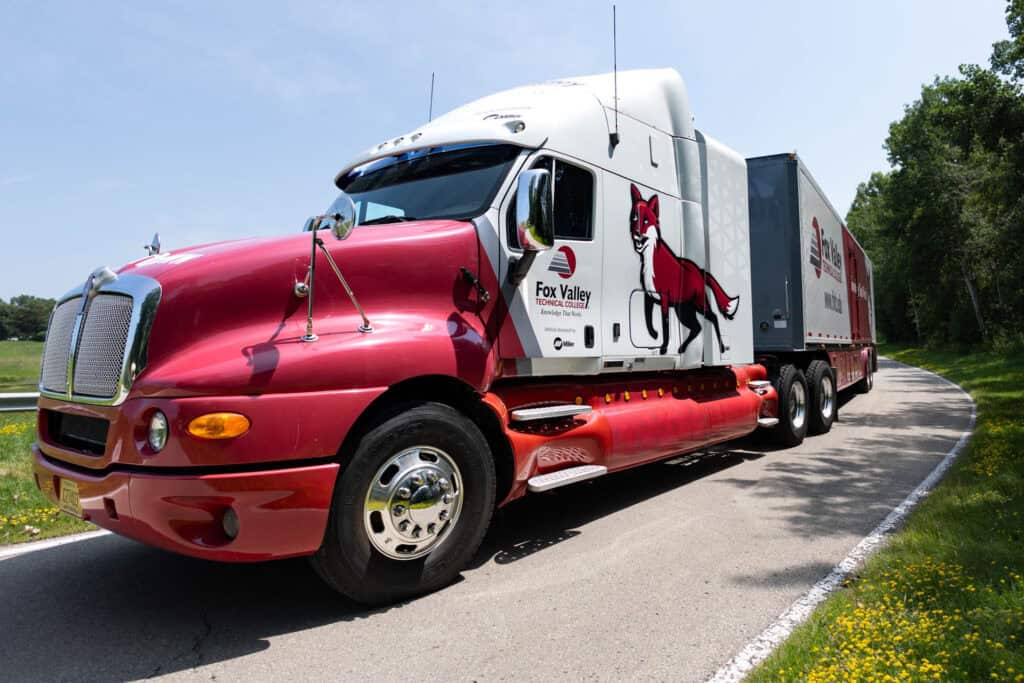
NORTHEAST WISCONSIN – As of late April, more than 500 open positions requiring a commercial driver’s license (CDL) are listed with the Job Center of Wisconsin – but a new statewide initiative seeks to pump the brakes on this shortage.
In Northeast Wisconsin – per the announcement from Gov. Tony Evers and the Wisconsin Department of Workforce Development (DWD) – the funding allows for 28 individuals to obtain their CDL training at Fox Valley Technical College (FVTC) for nearly half the cost.
Rob Behnke, director of Truck Driving at FVTC, said the grant specifically focuses on the Class A CDL Truck Driving technical diploma program at the college’s Chilton, Clintonville and Wautoma regional centers.
Behnke said participants who complete the eight-credit CDL program – which typically costs about $2,070 – are eligible for roughly $1,000 in reimbursement to help offset expenses, such as tuition, textbooks and their first attempt at the CDL skills test.
He said the hope is for the reimbursement to reduce financial barriers for new drivers entering the workforce.
“Anytime we can provide some resources, some funding for our students is a good thing,” he said. “That is a struggle for most of our students, finding time and money to upskill or switch their careers.”
From an industry perspective, Chris Buckingham – vice president of operations at Paper Transport (PTI) – said such workforce development grants help to “align training programs with real‑world industry needs.”
“Commercial driving is a critical part of the regional and state economy, and ensuring access to quality, flexible training helps support a sustainable pipeline of professional drivers,” he said. “From an employer perspective, investments like this strengthen the talent pool by making training more accessible and responsive to both student and industry feedback.”
As part of that effort, Behnke said FVTC has expanded the program in recent years to a year-round schedule and hybrid format, helping accommodate students with potential time constraints.
“It blends online theory coursework with hands‑on Range and Road training,” he said. “Students can complete the program in just eight weeks and can choose from morning, afternoon or evening schedules. This flexibility allows working adults to pursue a CDL without putting their lives on hold.”
Behnke – who has “been in truck-driving for just shy of 40 years” – said it’s “perfect timing” for FVTC to receive this funding for a second consecutive year – for the sake of students and, by extension, the state.
“Truck driver shortages have been in the news for many years, and it does [have an] impact here in Appleton and certainly here in Wisconsin,” he said.
Behnke said he estimates the state is short thousands of drivers.
“[Gov.] Tony Evers is aware of that – what the impact has on the economy when we have skilled drivers,” he said.
Buckingham said such drivers play a key role in keeping goods and manufacturing moving throughout the region, where the transportation industry is “foundational.”
“Grants like this not only support individual career growth but also help employers meet ongoing workforce needs, which in turn supports local businesses, supply chains and economic stability,” he said. “It’s a win for students, employers and the broader community.”
More on the program, grant
Behnke said in 2024, FVTC redesigned and reformatted its CDL training, modifying the program to create greater efficiencies, effectiveness and experiences across the board.
“There were a number of things we were hearing from the industry [and] from our constituents – the students – so we made some considerable adjustments, and we feel it’s been very successful,” he said.
Among the efficiencies identified, Behnke said, was the ability to trim the program from nine credits to eight – with coursework organized into eight one-credit classes
Each class, he said, is a week long, meaning the full program can be completed in as short as eight weeks, but the redesign also resulted in the flexibility of no assigned timelines or deadlines to complete the coursework, allowing students to take whatever necessary time off between classes.
He said the full scope of changes was implemented as of 2026, but they’ve already received “great feedback.”
“We’re hearing positive results, and we [have seen] an uptick in enrollments because of it,” he said. “I think we’re reaching out and meeting people where they are at in their lives, and providing them with this opportunity.”
As for creating a greater program experience, Behnke said the goal is to help participants better understand the industry and its importance – emphasizing the role drivers play in keeping it moving, while also fostering pride and a positive connection to the field.
The experience starts, he said, when interested students contact FVTC.
From there, they’re connected to an enrollment specialist, who Behnke said assists with the enrollment process and explains the disbursal of the grant money.
“We get inquiries about our program, and then identify [students] with a regional center that’s closest to them,” he said. “The enrollment specialist will give them the information regarding the grant offering, and let them know they pay for these materials up front. Once they successfully complete the course, they get 50% of the investment back at the end.”
Buckingham said programs like FVTC’s are “beneficial because they help expand and diversify the pool of individuals who can realistically pursue a CDL” – particularly with the financial support of the grant, combined with the college’s flexible scheduling and modernized instruction.
“That ultimately benefits employers by creating more opportunities to connect with candidates who are well trained, motivated and entering the industry with a clearer understanding of what the job entails,” he said.
Diagnosing the driver shortage
Both Buckingham and Behnke said they’re acutely aware of the shortage of skilled truck drivers in Wisconsin.
“Like most carriers in the industry, we’ve operated in a very competitive labor market over the past several years,” Buckingham said.
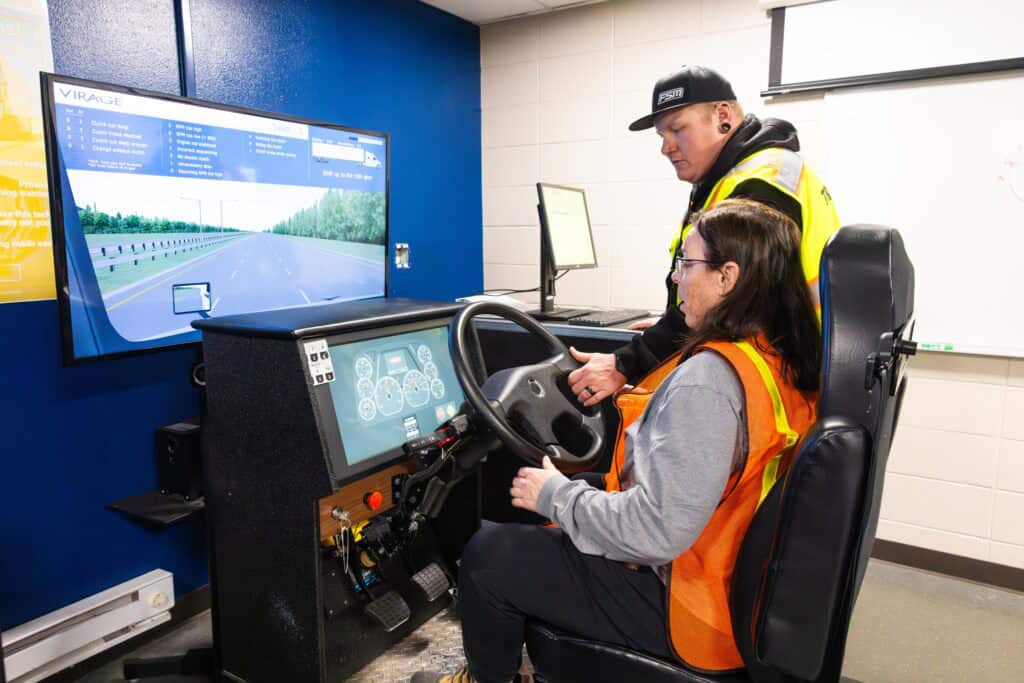
Behnke said as career truck drivers hang up their CB handles and retire, the positions aren’t being adequately filled by new drivers, resulting in an average driver age of “somewhere between 50 and 53.”
As to why younger people are shying away from what he considers great careers rife with opportunity, he said trucking remains hindered in misconceptions.
“Sometimes it’s a stereotype of the industry,” he said. “I think people think, ‘If I get a CDL, that means I’m going to be over the road and gone for a lengthy period of time.’ Sometimes, it’s just the unknowns – ‘I don’t know what that looks like.’”
Behnke said he’s quick to dispel inaccurate rumors and assures there are good fits for all lifestyles, including many options for more local transportation routes.
“There are different opportunities that pop up with specific freight that is being purchased or requested,” he said. “People start their own business hauling freight – they buy a pickup truck and a trailer and start moving freight that way.”
Behnke said changes across manufacturing – particularly the advent of “on-demand” shipping – have also created more job openings and new types of transportation careers.
“With Amazon, you order it today, and you expect it to be here today or tomorrow – there’s just such a demand from our constituents that we move product,” he said. “So, business models change. We need more drivers. We need to move freight more quickly.”
Buckingham said the demand “reinforces the importance of partnerships between employers, educators and workforce agencies.”
“At PTI, we focus heavily on long‑term retention, safety and fit – which means we value programs that not only produce licensed drivers but also prepare them for the realities and expectations of a professional driving career,” he said.
Revving up careers, the economy
Behnke said in some pockets of the U.S. with adequate infrastructure, autonomous trucks have been “utilized with great success” – but certainly in Northeast Wisconsin, for the foreseeable future, this technology is “not a threat” to eliminate jobs.
On the contrary, he said about 85% of students who complete FVTC’s CDL training program find work within six months of earning the technical diploma, with starting annual salaries ranging from $45,000 to $80,000.
“You can make some really good money from eight weeks of class, being qualified with your CDL,” he said.
More so, Behnke said drivers earn a sense of pride.
“Honestly, we move America,“ he said. “There’s just great value and pride and appreciation that go with being a truck driver.”
Behnke said between 90-95% of FVTC’s CDL students pass the class.
Though he acknowledges “trucking isn’t for everybody,” he said the new grant funding offers an opportunity for people to “dip their toe in the water” and see if it’s a good fit.
“What better way to enter a career with minimal time, minimal expense and to come out on the other side with such great opportunity in this industry,” he said. “Having this grant gives some people who may never have been able to consider truck-driving and how it may positively impact their life a great opportunity, and we’re very fortunate to be a part of that.”
Motor over to fvtc.edu for more information.