 Farm Doc Microgreens: Where less is more when it comes to nutrition
 Making a Difference: This year’s Bart and Cherry Starr award recipient bleeds Green and Gold



August 10, 2026
NORTHEAST WISCONSIN – A stolen shipment is no longer just a lost load – it can disrupt supply chains, expose businesses to risk and cost companies far more than the value of the cargo itself.
As organized cargo theft continues to rise, J. J. Keller Industry Business Advisor Josh Lovan said Northeast Wisconsin transportation and logistics companies are taking a closer look at how they protect their operations.
“Cargo theft is no longer just about protecting trailers and warehouses,” he said, “it’s about protecting information identities and business processes.”
According to a study released last year by the American Transportation Research Institute (ATRI) – a 501(c)(3) nonprofit research organization – respondent carriers reported that $16.15 million of cargo was stolen across 555 incidents in 2023 (most current data available), averaging $29,108 lost per incident.
The study further states that 65% of U.S. carriers and 100% of logistics service providers (LSPs) experienced motor cargo theft in 2023, with each impacted company reporting “an increase over the previous year.”
Total industry losses in 2023 – weighing both the direct cost of the cargo and the indirect costs of its theft (supply chain disruptions, financial penalties, legal exposure, customer impact) – per the study, reached into the billions.
Lovan said cargo theft has evolved significantly in recent years, with larger theft cases tied to organized criminal groups.
“The industry has seen a shift from that traditional ‘trailer break‑in at a parking lot or a truck stop’ to more sophisticated fraud schemes,” he said.
Then vs. now
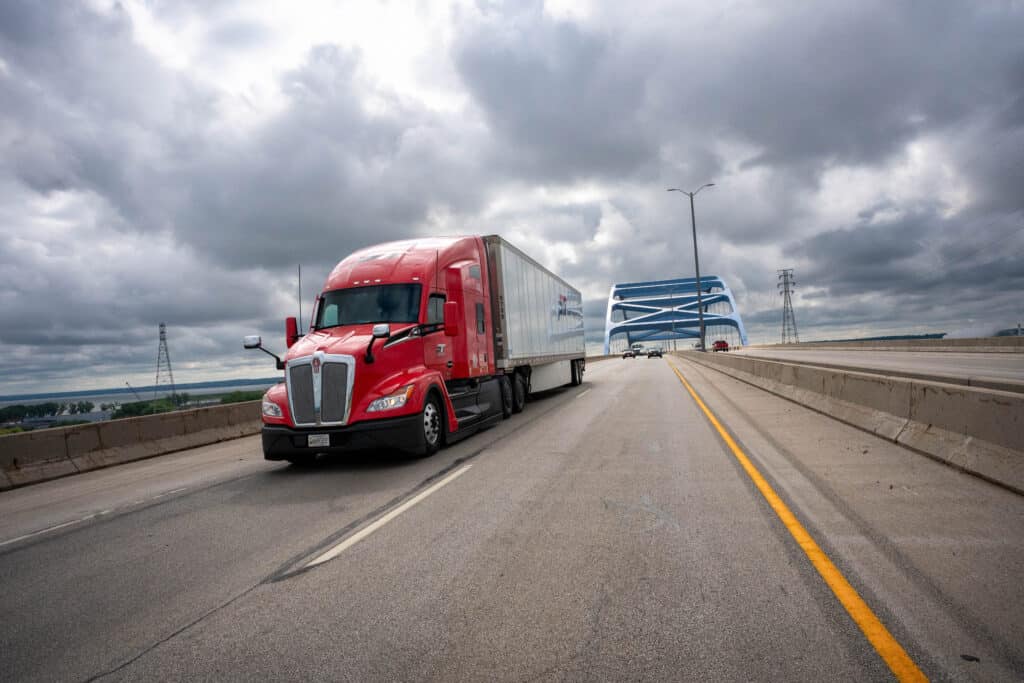
Combating brute-force theft, Lovan said, is a different challenge than addressing today’s more sophisticated tactics – such as fictitious pickups, identity theft and carrier impersonation.
At Paper Transport in De Pere, Vice President of Safety Keith Stelzer said the “easiest” way to protect freight over the road is to control its environment from pick-up to drop-off by limiting stops and avoiding potential exposure.
Securing yards and distribution hubs – where trucks and freight are regularly kept for, at times, extended periods – he said, gets a little more complicated.
“There are a couple locations where we will only park in gated, locked and secured facilities,” he said. “[Some places] are just more prone to theft – there are areas you need to be aware of and need to have proper precautions in place, just because… [of] theft that occurs in them.”
Lovan said being aware and taking necessary precautions while operating in high-theft markets or time periods – such as long holiday weekends, according to historic data – is a good starting point.
However, as security measures increase and adapt, he said so, too, do criminals’ efforts to circumvent them.
“They’re doing carrier impersonations and stealing not [just] a pallet of iPads,” he said, “now, they’re stealing entire trailers.”
Because most, if not all, identifying information for 3PLs and LSPs is publicly available, Lovan said it’s easier for criminals to impersonate legitimate businesses.
“The criminal obtains information about a real trucking company,” he said. “They create lookalike websites, email addresses and business documents…, [and] a lot of times they’re going to bid on freight on local load boards.”
The shipper, Lovan said, believes they’re releasing freight to a legitimate carrier because, for all intents and purposes, they look legitimate on the surface.
“They’re acting like ‘Josh Lovan Trucking,’ [for example], even though they’re not,” he said. “They just found my information, they put ‘Josh Lovan Trucking’ on the side of a truck with that USDOT number, and the shipper now believes they’re dealing with the legitimate carrier. The freight is released, and then it disappears.”
Though fictitious pickups are a bit more difficult for criminals to arrange, Lovan said they are nonetheless becoming a larger issue.
“[They have] been a real big problem in the industry for the last five years,” he said, drawing on his more than 20 years of experience combating criminal theft, first as a police detective, then in logistics security.
Lovan said criminals attempting a fictitious pickup are typically targeting a specific load – requiring access to dispatch details obtained either through inside sources or, sometimes, weeks of surveillance on the targeted hub prior to launching the attack.
“We have really involved cargo theft networks that have done counter surveillance for up to two weeks before hitting a place,” he said.
Taking many of the same steps to obtain a truck, a legitimate USDOT number and carrier name, Lovan said the difference is the criminal’s impersonation of the carrier is not ongoing.
“They get [the freight], and they’re out the gate,” he said. “Once they’re out the gate, they’re ripping signage off [and] they’re transferring the loads.”
Michelle Konop – the director of truckload operations for the Green Bay-based 3PL, Focused Transport Solutions, with 25-plus years of experience in logistics – said the transportation industry can no longer assume a carrier is legitimate simply because they appear official.
“My expectations have definitely changed over the past several years,” she said. “Experience has taught me that if something doesn’t feel right – whether it’s unusual communication, discrepancies in documentation or answers that don’t add up – I stop and investigate before moving forward.”
Multi-layered prevention
As criminals evolve their strategies to attack carriers and steal freight, Lovan said a “multi-layered” approach is necessary to ensure comprehensive security.
Prior to joining J. J. Keller in 2020, Lovan said he worked for a trucking and logistics company where his sole duty was to enhance security and prevent loss.
“We started implementing a layered security approach, and enhanced yard lighting is the biggest theft deterrent a carrier can have,” he said. “So, we really focused on enhanced yard lighting, we upgraded perimeter fencing, we used alarm systems where needed… I even used CCTV on the docks and in the yard and [had a] security guard.”
Lovan said it’s not “one specific tool” that will help carriers prevent cargo theft, “it’s all of them.”
“I didn’t want my teams to always be chasing freight and theft problems,” he said. “We really did try to get into that preventative mindset.”
Now at J. J. Keller, Lovan said he uses his tenure in preventing cargo theft to advise LSPs and 3PLs on ways they can “beef up” their security measures when and where they are needed.
At Paper Transport, Stelzer said when the company itself is handling a load from pick-up to drop-off, keeping it secure is relatively straightforward – park in safe, secure areas and lock the trailers.
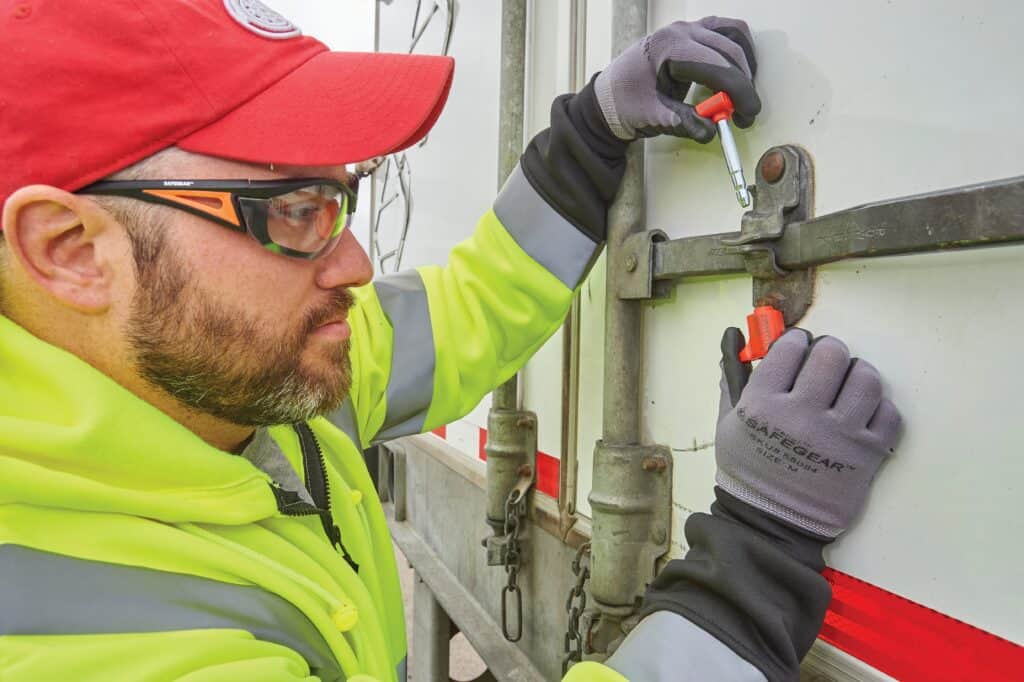
“[We’ve started using] king pin locks, and that’s gone a long way,” he said. “It’s something that’s much more effective against full-load freight theft trailer break-ins…, [but] if somebody wants to get in there and the trailer is in a location that’s not protected, there’s little you can do to stop somebody who has the time, energy and ambition to get inside of it. So, you just need to be smart about where you’re going to be moving and leaving your freight.”
For 3PLs like Focused Transport, Konop said the due diligence to protect customers’ freight is done on the front end.
“As a freight broker, my first line of defense is the carrier qualification process,” she said.
Using multiple layers of verification before assigning a load, Konop said, is key to ensuring she’s “communicating with legitimate” companies.
“We invest in MyCarrierPortal as one of our primary fraud prevention tools,” she said. “I also conduct my own due diligence by reviewing a carrier’s operating history, verifying insurance and authority, confirming contact information, asking detailed questions and making phone calls.”
However, the most prominent place criminals impersonating carriers can be stopped is at security gates, Lovan said – preventing them from entering the yard or hub in the first place.
“If I’m a dispatcher and I’m sending a truck over to you, a lot of times on that paperwork documentation, it’s going to have the ID of an employee,” he said. “Shippers have to be aware of things like, ‘What does that name badge look like? Do they have identification at the front gate? Are you making a copy of that identification, or do you have some type of vetting process?’ A lot of times, that will get rid of people.”

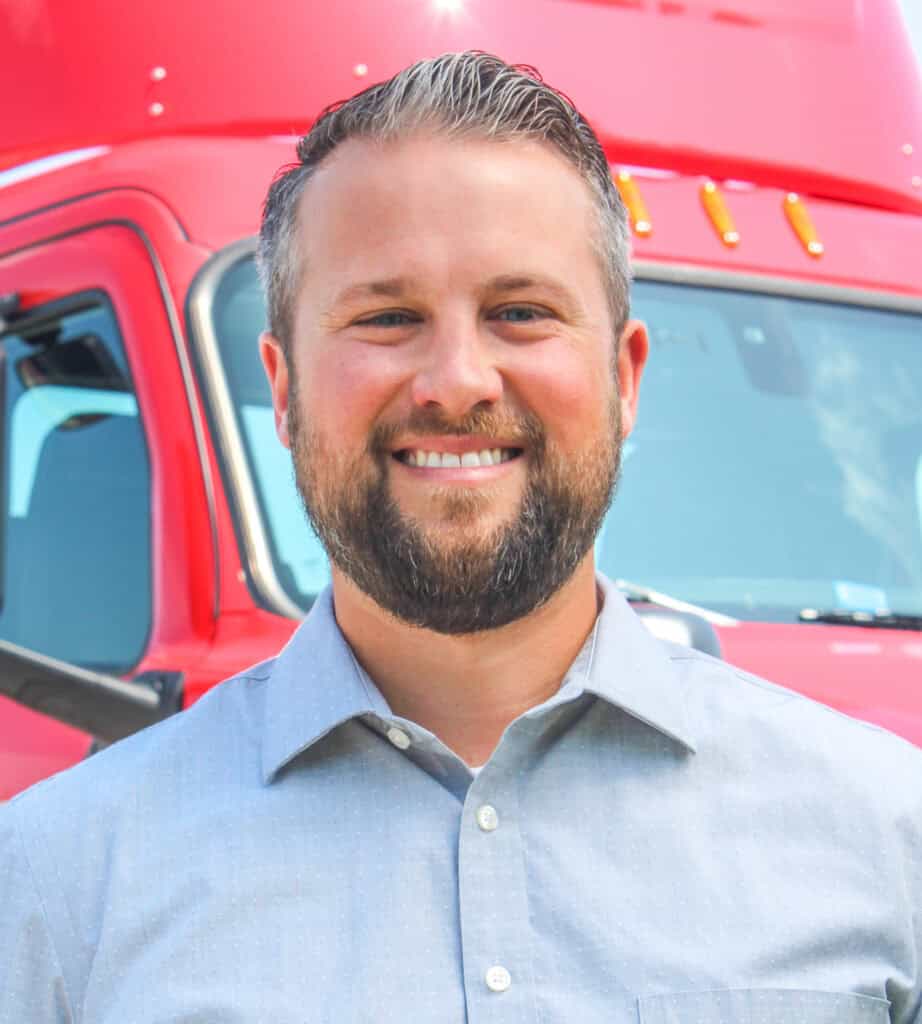

Though stronger security is critical, Lovan and Stelzer said carriers shouldn’t stretch their resources trying to apply the same level of security to every facility.
A more strategic approach, they said, means focusing resources where the risks are the highest.
“You need to be cognizant [that] it’s not the same across the board,” Stelzer said. “How you prevent theft and think about theft in Atlanta, Georgia is probably different than how you need to think about it in Green Bay, Wisconsin… That being said, freight theft has exploded into many small markets.”
Especially regarding fictitious pickup and carrier impersonation, Stelzer said those are no longer “big market” issues.
“That’s happening all over the place,” he said.
Industry, customer expectations evolve
Those shipping and receiving cargo, Lovan said, are driving change when it comes to bolstering security measures across the transportation and logistics industry.
“Primarily, that is because… a lot of those contracts involving loss of freight [do] not pay the full value of that trailer,” he said. “You may be only getting 50 cents on the dollar for that freight, sometimes significantly lower than that, and that is a great way to destroy relationships with your clients or with your customers.”
Stelzer said he’s seen freight security become “much more of a focus to most customers and shippers” since the COVID-19 pandemic and “even more so in the last two to three years.”
“It’s something they’re cognizant of…, they’re focused on [it] and they want to understand how you’re going to protect their freight,” he said.
Konop said she’s likewise seen 3PL customers become more aware of potential theft risk.
“They expect brokers to have robust vetting procedures,” she said. “Those expectations align with our own standards and have reinforced the importance of a layered approach to carrier qualification and shipment visibility [because], at the end of the day, trust is one of the most valuable things Focused Transport Solutions offers our customers.”
As a 3PL, Konop said Focused Transport is entrusted to “make informed decisions on behalf” of its clients.
“And that responsibility has only grown as cargo theft and fraud have become more sophisticated,” she said.
Another shift Stelzer said he’s seen in cargo theft is the types of cargo thieves are targeting.
“[Though] it still can be… what used to be your high-prone-for-theft type freight – whether that’s consumer electronics, alcohol or like cigarette loads – now, your consumable goods, your disposable goods [and] beverage markets are under attack,” he said.
Stelzer said items such as clothes, household and personal care products as well as food and beverage freight are becoming increasingly targeted because they’re “typically not well secured” and they don’t have serial numbers like pharmaceuticals, firearms or technology would.
“Those are things that can be stolen… [and] resold much more easily,” he said. “They have warehouses full of products they’re selling online and through different channels.”
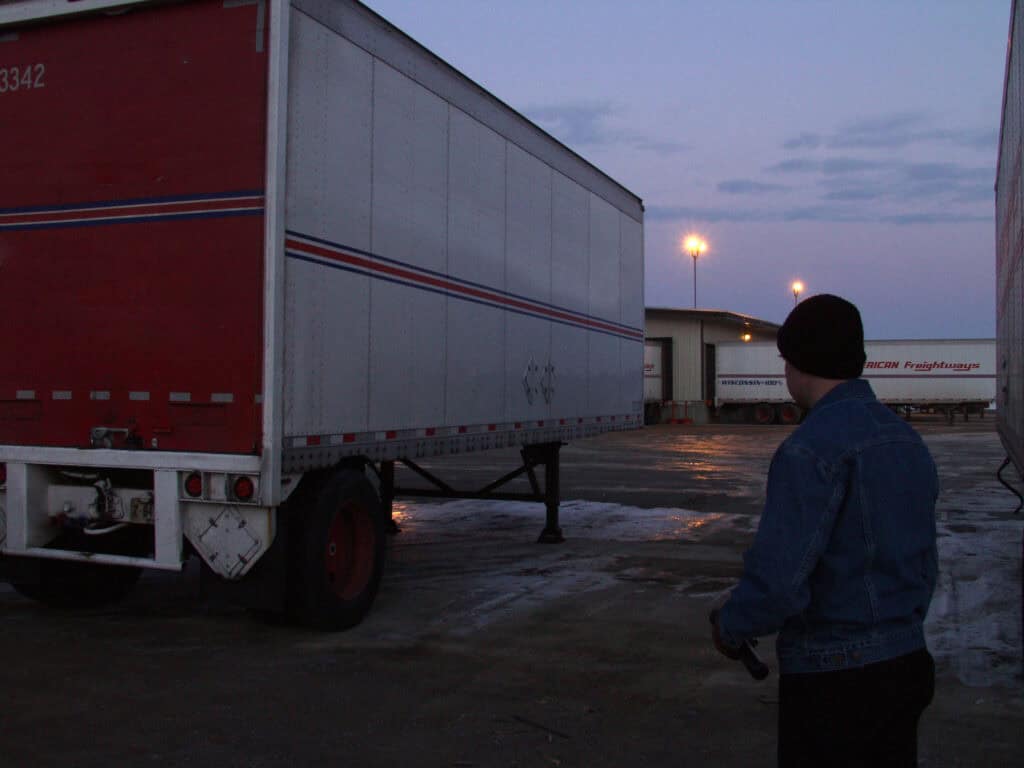
For customers who are shipping “high-value or sensitive freight,” Konop said the carrier selection process becomes “even more critical”
“Whether it’s ammunition components, medical products, electronics or other specialized commodities…, I spend additional time verifying I’m working with experienced, reputable carriers and maintaining clear communication throughout the shipment,” she said. “I also expect consistent tracking and proactive status updates so I can quickly address any issues.”
Lovan said the best thing any logistics company can do is prevent theft before it happens – utilizing a multi-layered security approach at every potential intersection – because once customer trust is lost, it’s difficult to re-earn.
“The companies seeing the most success are those that build multiple layers of security that address both physical threats and fraudulent activity,” he said. “Don’t wait until you’re beat to enhance your yard.”