Carbliss Ranks No. 7 on fastest-growing private companies in America list
 Ardy & Ed’s Drive In serving up food and fun since 1948



December 1, 2025
GREEN BAY – Cities across the country, NeighborWorks Green Bay President and CEO Noel Halvorsen said, are in a continuous battle with the affordable housing shortage – and Wisconsin’s northeast region is not immune.
“This isn’t just a Northeast Wisconsin challenge,” he said. “This is across the state and across the country right now.”
With property, construction, labor and materials costs soaring, Halvorsen said the housing industry had “lost so much capacity to build” new, affordable homes since the 2008 recession.
“We have such high costs associated with all the challenges we have in the [housing] environment today, and it’s a recipe for an ongoing crisis in affordability,” he said
The Badger State’s housing shortage is also taking a toll on employers – who, according to the Wisconsin REALTORS® Association, are finding it increasingly difficult to recruit workers amid a lack of affordable housing.
Halvorsen said this is particularly felt by businesses in Northeast Wisconsin, where hiring and retaining talent is becoming a real challenge.
“I hear from HR folks from major employers throughout the region that they’re losing hires because that new employee can’t find a place to live a reasonable distance from the shop, the plant or the office,” he said.
Those reports of lost hires, Halvorsen said, personify the economic impact a lack of affordable housing can have on an area.
“They’re quitting to take [what’s] maybe even a lower-paying job further away, but they found an apartment near that location, and they cut their commute in half,” he said. “So, it’s a real issue for everybody, and we’ve all got to come together to figure out how to change it.”

Halvorsen said NeighborWorks Green Bay – a resident-led 501(c)(3) nonprofit that, according to nwgreenbay.org, focuses on providing individuals and employers with home-buying resources and developing intentionally affordable housing – is doing what it can to help address the affordability crisis in the city of Green and Gold.
Over the last couple of decades, Halvorsen said NeighborWorks has “built or renovated 465 homes or apartments” as supply and demand in the Green Bay area continue to grow further apart.
“Though that’s a substantial number, and it is important, it’s also a drop in the bucket in terms of the housing need in our community,” he said. “We’ve got a deficit of thousands of units in terms of the demand for homes, regardless of somebody’s ability to pay.”
Affordable developments income restricted
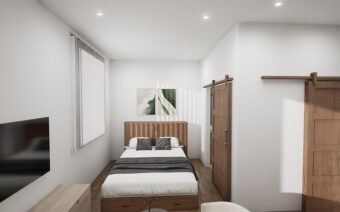
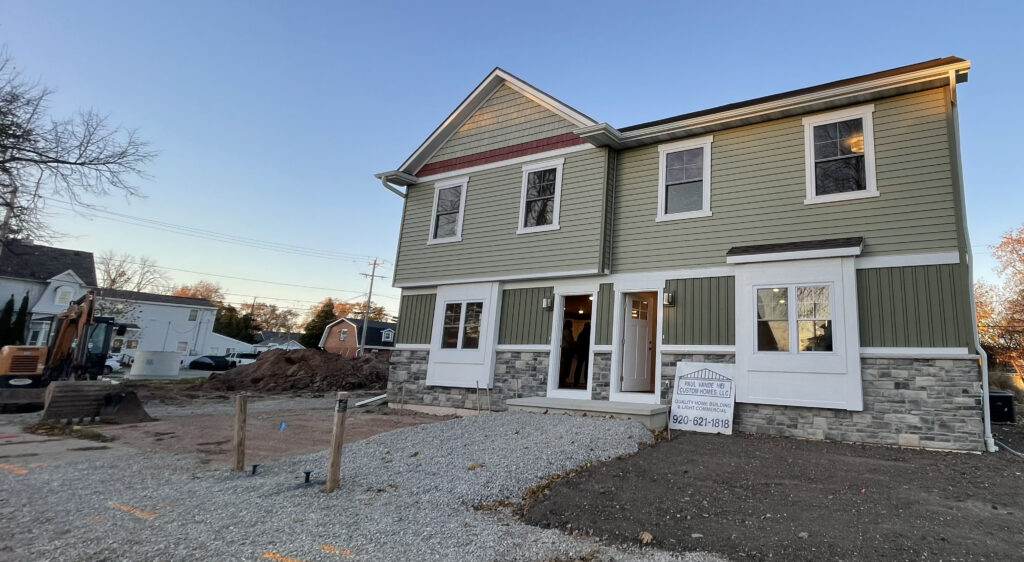
Last month, NeighborWorks Green Bay held several walk-through events at numerous new housing developments spearheaded by the organization – one being at a duplex, located at 418-422 4th St. in the city’s developing Shipyard District.
David Erickson, director of real estate development, said the duplex, similar to many other NeighborWorks developments, will be restricted to applicants whose income is less than 80% of the area median income (AMI).
“For the City of Green Bay or Brown County, for a four-person household, [the AMI] is around $80,000 a year,” he said. “So, they’ll have to provide income verification documents and go through our homebuyer education class as well.”
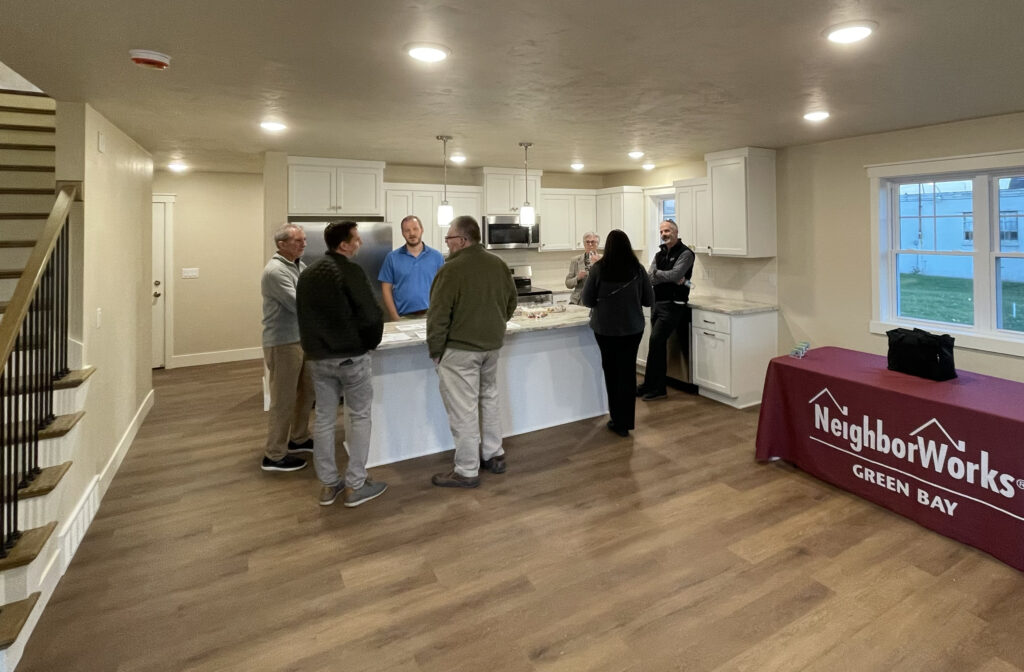
Though NeighborWorks Green Bay has “been building houses for decades,” Halvorsen said another important aspect of the organization’s work is the preparation and education opportunities offered to individuals and employers.
“Things like our homebuyer preparation services – through education, counseling, down payment, closing costs, assistance, lending and other tools to help people make smart decisions when they get to the point of actually being able to compete for a home in the market – are so important,” he said. “We help 1,000 families a year make smart decisions about their home ownership situation, even if they don’t all successfully find a place to call their own.”
‘Creative stewards’ of community resources
Halvorsen said home ownership gives families much more than simply the benefit of owning personal property.
“You think about the benefits of home ownership,” he said. “[It gives them] the ability to someday tap some of that equity – whether it’s to cover some of the life surprises, or to help your kids get into home ownership and enjoy those same benefits you’ve gotten that maybe your family has had for generations.”
However, Halvorsen said the barrier to entry to enjoy those benefits is becoming increasingly difficult to overcome.
“Folks are having a tougher time getting into that cycle of the American Dream,” he said. “We’re seeing the median age of homebuyers is 10 years older than it was when I started in this. It was 29-30 years old, and now, it’s pushing 40 years old before people are buying their first home.”
These challenges, Halvorsen said, impact every aspect of and profession in the housing industry.
“You talk to the [Wisconsin] Realtors Association, they know the challenges,” he said. “You talk to the homebuilders, they know the challenges. The City [of Green Bay] did a housing market study a couple of years ago – looking at where we’re at, the demand and then projecting that growth needed over time – and we’re just falling further behind.”
Though more attainable than privately constructed homes, Halvorsen said the price for NeighborWorks’ homes greatly depends on its ability to, creatively, keep project costs down.
“We’re working with all the contractors, trades and suppliers that anybody else is [using to try and] build in the community,” he said. “They have to cover their expenses, too – they don’t have unlimited resources to make things happen. So, sometimes we get some discounts, sometimes we might get some donated materials, but oftentimes, we do a lot of creative shopping and try to find discontinued items, closeouts or other things to be able to put these houses together.”
Halvorsen said the City of Green Bay also supports affordable housing projects by providing subsidies that help keep the final product affordable.
“We look at what available subsidies there might be to make it more affordable,’ he said. “We might then buy down our construction costs with some of those grant dollars to bring the home to market at a more attainable price.”
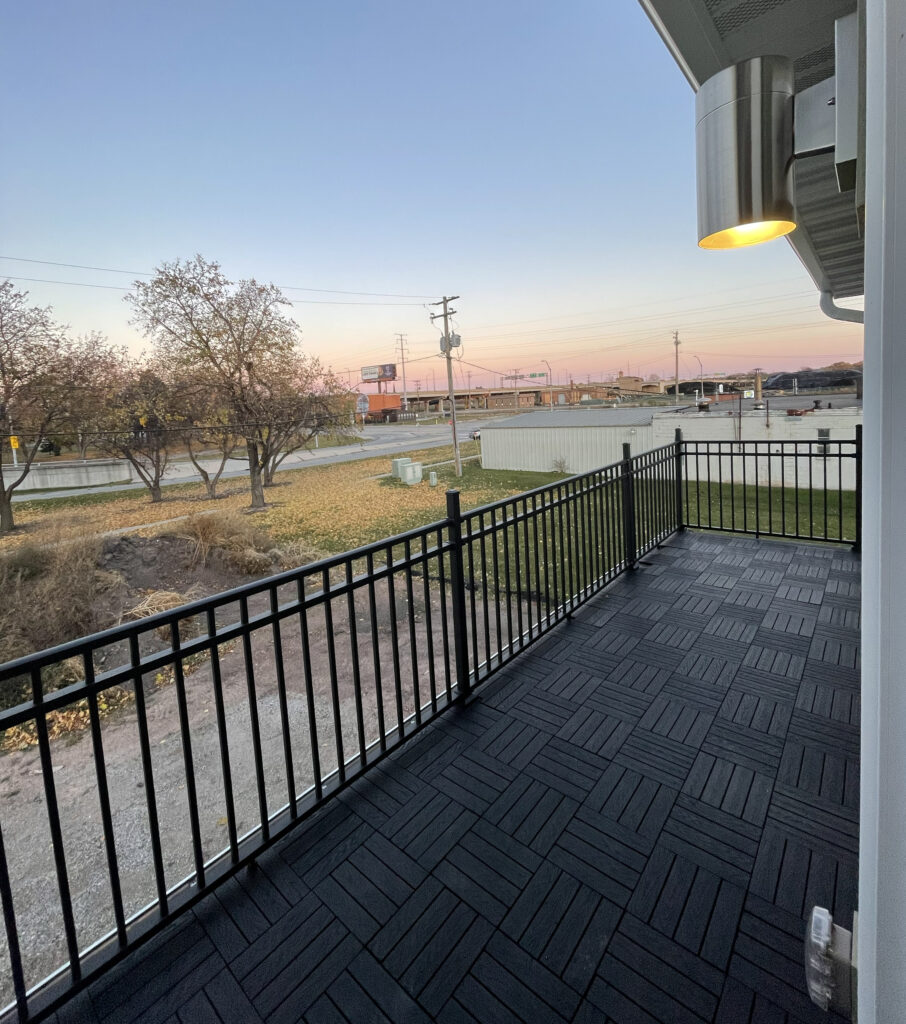
In addition to the resource network NeighborWorks Green Bay has built over its 43-year history, Halvorsen said the city played a crucial role with its new 4th Street property.
“A project like [that] is advanced significantly by a partnership with the City of Green Bay, which helped connect us with the property and put some grant funding into it,” he said. “We also have private donors who have helped move the project forward. So, we are just creative stewards of the community’s resources to try and bring homes to market that are attainable for more modest-income families.”
In-house resource offerings
To help alleviate challenges amid the ever-growing affordable-housing battle, Halvorsen said NeighborWorks offers resources to community members and local employers, helping prospective homebuyers and renters – both current and incoming.
“For any employer who wants to think about how they can help their employees attain housing, we’d be willing to have a conversation with them about some things they might want to consider,” he said.
Though, at this time, buying a home is “more challenging than it used to be,” Halvorsen said it’s still possible through “perseverance and, sometimes, luck” – adding that, through it all, NeighborWorks Green Bay is here to support efforts that combat the ongoing, affordable housing crisis.
“There are still people successfully closing every day,” he said. “I’m hopeful [the market will] turn at some point – and we’re going to keep building houses one at a time if we have to – but we really need to get to a future where the production is meeting demand.”