 Driving NEW collaboration, diversity, opportunity
 Green Bay cardiologist writes memoir promoting preventive care


March 9, 2026
GREEN BAY – Melissa Detrie said she believes that sometimes, before one can move forward, it’s necessary to get back to one’s roots.
“In our journey through life, the stuff we experience really can affect and change a person,” she said, “and we can lose ourselves throughout some of the experiences we have.”
Detrie said this reclamation is the central engine behind Return to Self Counseling, her Green Bay-based, independent therapy practice.
The practice, she said, is driven by “the idea of returning back to you, and who you were before the trauma, the difficult experiences – those types of things.”
Detrie said it’s hard work “bringing you back to who you were before all the hard stuff happened” – and that’s why she and her practice partner, Helga Meyer, are eager to provide another counseling option in a region where demand well outpaces supply.
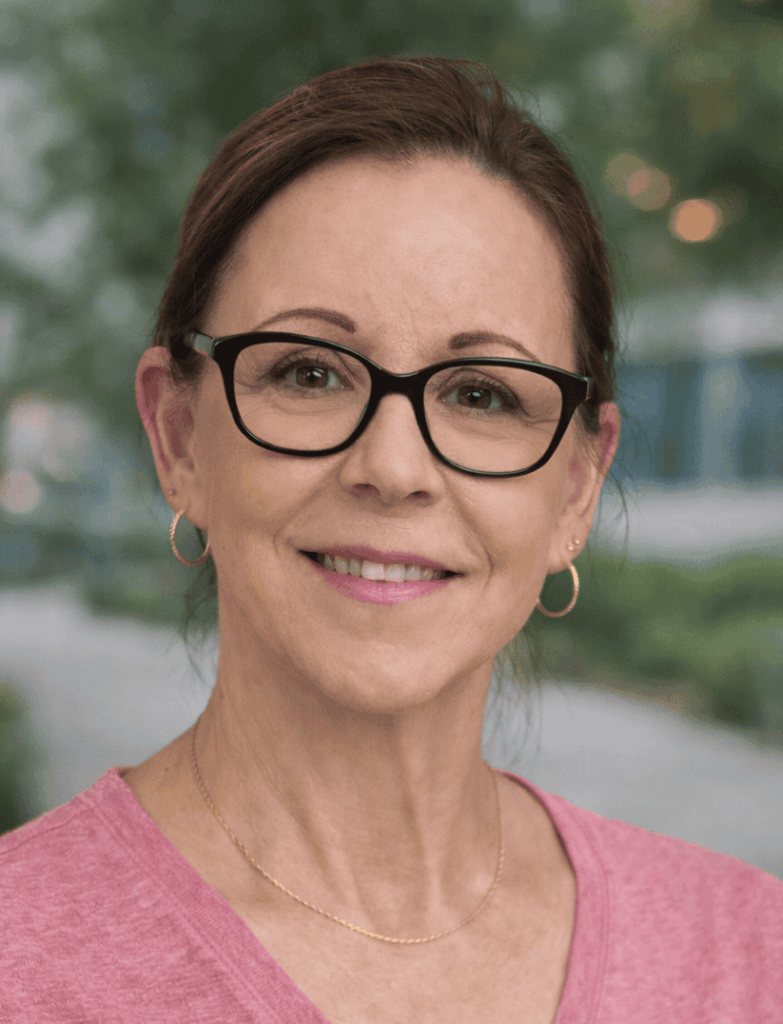
After founding Return to Self as a telehealth service last August, Detrie said she and Meyer are now seeing patients in person at their “warm and inviting office space” located at 1566 W. Mason St.
In addition to the new option for in-person appointments, she said clients can also choose to have certified canine company join them for added comfort, thanks to a partnership with Shepherds Path.
Detrie said this animal-assisted intervention practice enlists the calming talents of three trained German Shepherds: Simeon, Samson and Ezekiel.
“Animals help people feel much more emotionally safe…, help with emotional regulation, can increase engagement [and] connection,” she said.

With the new office now open, Detrie said Return to Self began offering in-person appointments with the option of animal-assisted intervention as of this month.
‘A more client-centered approach’
After entering the field nine years ago with the best of intentions, Detrie said her initial optimism gave way to frustration with the efficacy of larger agencies, and made her eager to go independent.
“I’ve unfortunately worked for a lot of organizations where finding financial benefit was a main concern for them,” she said. “[With] client care, to me, you can’t put a number on someone’s mental health. And when it is rushed, people fall through the cracks because of that.”
With Return to Self, Detrie said she and Meyer – both licensed psychotherapists – are “able to offer the opportunity of a more client-centered approach for clients.”
“What we try to do is… meet our clients where they are at with what they need, taking our time, really being able to focus on their needs individually and bring in different individuals within the community,” she said, adding that this range spans from children to senior citizens.
By creating an independent practice more concerned with client progress than the agency’s profits, Detrie said “people could come to us knowing it was a safe space – no matter who you are – to come in and receive services.”
“We serve everybody,” she said, “but I would say a big population of ours that we are geared toward is more so the LGBTQ community [and] different cultures that don’t necessarily have a lot of support.”
Beyond both their education, credentials and professional and life experience, Detrie said Meyer can also provide an outsider’s perspective.
Born in Brazil, Detrie said Meyer can offer cultural insight into what it means to be an immigrant in the United States and what it’s like to navigate systems that are not always tailored to diverse backgrounds – fostering “a sense of belonging and encouraging clients not to feel afraid or ashamed of who you are.”
Unfortunately, Detrie said the current counseling system has significant gaps, from long waitlists to the stigma or shame some people feel in seeking help.
The client-centered approach at Return to Self, she said, operates with judgment-free sympathy.
“The world is hard to live in today, even for people who maybe haven’t experienced what they would call ‘big traumas,’” she said.
When it comes to counseling, Detrie said “nothing is too small [or] too big.”
“We all experience our own things in different ways, and the weight of the world has taken a toll on a lot of people,” she said.
With her and Meyer’s combined specialized training, Detrie said Return to Self can utilize integrative natural-focused care to help support clients navigating issues from personality disorders to life-altering events like divorce.
“I also do a lot of work geared toward supporting dads, because there’s nothing out there for men – especially men who are going through divorce and have children,” she said. “We try really hard, and we feel like we have a lot of good things to bring to people that not a lot of other [practices] have to offer.”
The new office
In order to build authentic rapport, Detrie said their “biggest thing is just being real and down to earth” with clients.
Establishing a brick-and-mortar office for Return to Self, she said, may allow for even greater connection, although appointments conducted via telehealth do have their advantages.


For one, Detrie said there’s the range of the remote modality, which allows her to take appointments from clients across Wisconsin and Michigan, and, in Meyer’s case, across Wisconsin and Minnesota, where the two are respectively licensed.
Other general advantages, she said, include the clients being at ease in the comfort of their homes; their exemption from having to commute (particularly in winter weather); and, for younger clients, the ability to incorporate therapeutic screen-based games.
For the latter, Detrie said some kids are able to experience the full benefits of telehealth, but for others, “putting a five-year-old in front of a computer screen for a half-hour can be a struggle.”
Above all, she said in-person appointments allow for rapport to be built more quickly than in virtual equivalents.
“We want people when they walk into the office, or even when they meet with us face to face, to feel comfortable – not like they’re walking into a doctor’s office, not like they are walking into a facility that feels like a jail cell,” she said.
Rather than wear a white clinician’s coat at the office, Detrie said she often wears a hooded sweatshirt – “we don’t try to be something we’re not.”
“When [clients] feel like they’re walking into a space with another person who’s just like them, who’s experienced life, who’s gone through some of the same challenges, it’s a lot easier to connect that way,” she said.
Clientele’s best friend
Detrie said the new office allows Return to Self to build on its commitment to a human-centered experience while broadening its services.
Clients, she said, can enjoy the flexibility of switching between telehealth and in-person appointments, and now, for the latter, also add the services of the pack of helpful canines.
Detrie said Return to Self’s partnership with Shepherds Path is rooted in a lifelong connection, as the owner of the animal-assisted intervention practice, Terri Huntley, happens to be her mother.
The idea to formally combine their services, she said, stemmed from inquiries at her previous counseling agencies.
“We always wondered, ‘Why can we not bring more animals into therapy?’” she said. “People would always ask, ‘Why don’t you guys have a cat or a dog in here?’”
At former agencies, Detrie said any proposed benefits of animal-assisted intervention were always outweighed by risk/insurance concerns.
Operating independently, though, she said she’s able to “call the shots,” while addressing any potential issues.
Detrie said she first provides clients with proof that Huntley’s three German Shepherds have been trained and certified as service dogs.
“They are dogs that she also works with to take into the community…, into hospitals and nursing homes, etc.,” she said.
Next, Detrie said, is ensuring clients feel safe around the dogs.
Because it can raise issues of confidentiality and comfort – “it can be really overwhelming for clients to have more than one person in the room with them” – she said she initially handles the dogs herself during appointments, as she is already very familiar with them.
“We’re going to start with just me bringing the dogs into session, sitting with them,” she said. “There are going to be precautions we’re taking. [The dogs] will be tethered on a leash at all times during the session. Clients can request if they want the dogs muzzled for their own peace of mind, not necessarily for safety reasons.”
Further, Detrie said Huntley is always close by.
“My mom has her office with the dogs within the same space,” she said. “I have a door off my office that leads right into the space for her. We have a doorbell set up, where if she needs to enter, I ring the doorbell, and she’s alerted to come in and either bring the dog in, take the dog out, assist, whatever.”
With all precautions taken, Detrie said it’s been “phenomenal to join together” with Shepherds Path and provide the “grounding relaxation” of animal-assisted intervention.
“Animals are [inherently] healing, and a great distraction, too,” she said. “When you’re talking about the hard stuff, it’s always good to have a nice distraction there to help talk through things.”
The dogs are available for all clients, but Detrie said they can be an especially “great way to get kiddos to open up while they’re talking or in therapy.”
“If they have a small dog to play with or pet, they don’t notice they’re sitting there, petting the dog and they’re actually sharing and talking at the same time,” she said.

As part of their training, Detrie said the dogs are also able to do a few therapeutic tricks.
“The dogs are going to be trained to do deep-pressure therapy, where they can lay across your lap, which is a benefit when dealing with anxiety, stress [and calming the] nervous system,” she said.
Self-fulfillment
Counseling is an “absolutely tough” field to work in, Detrie said, and not one “you go into to make millions of dollars.”
“We deal with our own struggles, and when we’re going through our own stuff and we have to be present, prepared and ready for our own clients, that can be really heavy,” she said. “You’ve got to get good at being able to separate that out. You have to be able to put your own stuff aside, even your own biases.”
Still, Detrie said psychotherapy is fulfilling like no other profession.
“When you get those clients who come out from the darkness, so to speak, and are really able to make huge positive changes for themselves within their lives, there’s nothing more rewarding than that,” she said.
Detrie said ultimately, whether clients are working with her, Meyer, Huntley, Simeon, Samson or Ezekiel, it’s the clients themselves who deserve the credit for their success.
“A lot of my clients will say, ‘Because of you, [I could do this] – thank you,’” she said. “And I always tell them, ‘I was here to walk the journey with you – you’re the one who did all the hard work.’”
Visit returntoselfcounselingllc.com for more information.
AI for therapy?
Detrie said the current counseling system has significant gaps, from long waitlists to the stigma or shame some people feel in seeking help.
These challenges, she said, have driven many to look for contemporary solutions, such as using AI as a free, instant and private personal counselor.
Though she can understand the inclination, Detrie said she’s apt to point out AI “is not a human person, and it doesn’t have empathy.”
“There’s been a lot of stuff in the news about individuals, unfortunately, using AI and it becoming very detrimental,” she said, citing instances in recent years of AI platforms being sued by parents claiming the chatbots have contributed to their children’s self-harm or suicide.
The technology, Detrie said, seeks to tell users what they want to hear, rather than understanding their true needs and path to progress.
“A huge thing in the therapy world is ‘change is uncomfortable and it’s necessary,’ so there are times where, yeah, we have to have really hard conversations with our clients, and they may not like what we have to say, but we’re not there to please – we’re there to help challenge so that they can grow, heal and work through – breaking cycles and patterns that have kept them stuck in that same space for a really long time,” she said. “AI is not going to do that.”
Nor, Detrie said, will it pick up on serious mental health diagnoses, such as schizophrenia.
“[AI] is a great tool to put in the toolbox, sure, but that’s what it is – a tool,” she said, adding that psychotherapists often use the tech to take notes and/or generate worksheets. “[But] it should not be used as a therapeutic approach.”
Something else AI can’t do for clients, Detrie said, is provide the warmth of, say, a German Shepherd on one’s lap.
“And it can’t give you a hug,” she said. “It can’t cry with you.”