 Lonely Oak Farm thrives as demand for local food grows
 Treankler’s business playbook leads Green Bay Blizzard to success


June 1, 2026
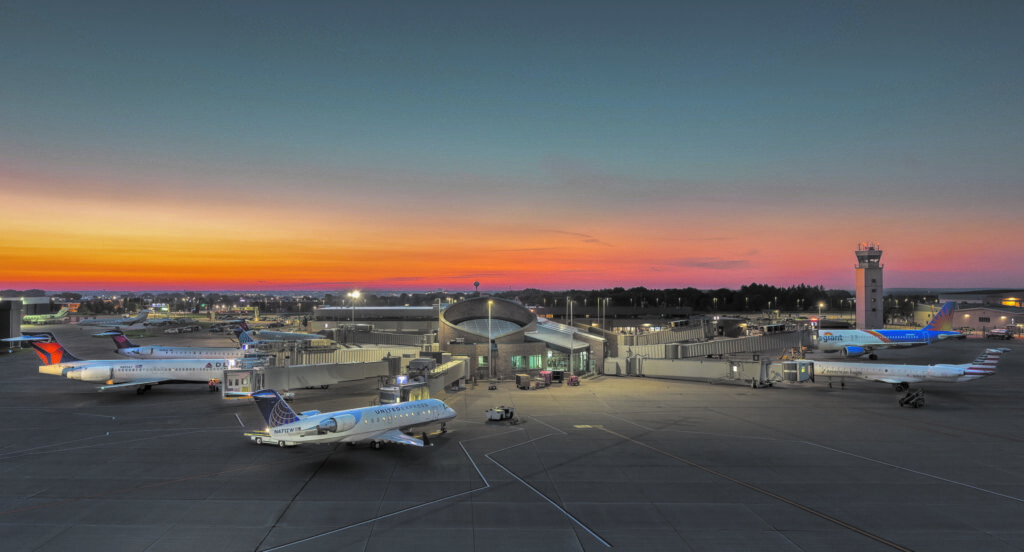
APPLETON – From boarding calls to rolling luggage, airports are filled with competing noise that can make announcements hard to follow.
At Appleton International Airport (ATW), Director Abe Weber said new hearing loop technology is helping travelers with hearing loss hear gate announcements more clearly by transmitting audio directly to compatible hearing devices.
During the airport’s expansion, Weber said hearing loops were installed under the carpeting in the concourse, which allows individuals to simply push a button on their hearing devices, and the gate announcements transmit directly into their devices.
Weber said the airport is the first commercial airport in Wisconsin to install the system.
“Background noise in an airport can be a challenge if you’re hard of hearing,” he said. “It isn’t about making announcements louder – it’s about making them clearer. Before installation, we researched systems, consulted with the Hearing Loss Association of America and searched for experts.”
ATW’s search, Weber said, led them to one of the nation’s top experts in the application of assistive listening technology who happened to be in their backyard – Juliëtte Sterkens, a retired audiologist (previously working in clinics in Oshkosh, Ripon, Neenah and Appleton) and current consultant to the Hearing Loss Association of America.
According to Sterkens, the hearing loop technology works through a small copper wire known as a telecoil, or T-coil, found in many hearing aids and cochlear implants.
Sterkens said the T-coil picks up magnetic signals from the airport’s assistive listening system and delivers the audio directly to the user.
“The moment you turn on the telecoil in your hearing aid, you switch the microphone of the hearing aid off, or you reduce its sensitivity,” she said. “So, you’re literally turning that background noise down, and the voice from the speaker comes wirelessly into your ear.”

In effect, Sterkens said the technology functions like a personal speaker delivering announcements directly to the listener’s hearing device, making the audio significantly clearer and easier to distinguish from surrounding airport noise.
“Rather than hearing the background noise, you’re hearing the signal from the microphone,” she said.
Weber said the system helps travelers hear important announcements – including gate changes, flight delays and weather-related updates – directly through their hearing devices without the distraction of surrounding airport noise.
Stakeholder input
During the early planning stages of the concourse expansion, Weber said Appleton International Airport and its partners gathered input from airport users and members of the community.
“We had community sessions where anyone and everyone could come in and talk to us about what they wanted to see,” he said. “We were focused on how we could make this new concourse and the airport, as a whole, much more welcoming and accessible to everyone.”
Weber said the idea for the hearing loop system emerged from those community conversations.
“As we put our design and development together and moved into the construction phase, we knew it was something we wanted to have once the new concourse was added and once we were able to revitalize our existing gates to meet the new concourse,” he said.
As ATW researched assistive listening options, Weber said airport leaders found Oshkosh-based Sterkens, who helped guide their selection of technology to best serve travelers with hearing loss.
“She helped guide us every step of the way from examining various options, through scoping through install and now testing the product – making sure we have it installed correctly and it’s working for everyone,” he said.
Weber said the hearing loop technology was installed in the new airport’s concourse expansion – six gates in all – in April 2025.
He said it is currently being installed in the remaining four gates within the airport’s original concourse, which should be completed by September.
“So far, the cost is right around $450,000 for the concourse expansion’s six gates,” he said. “We expect that cost will increase as we continue to retrofit the existing four gates. When the project is all done, the cost will probably be around $750,000.”
Weber said the airport was able to secure federal and local funding to help offset the cost of installing the hearing loop system.
He said the system – which features gate signage explaining the T-coil technology – has been well received.
“We have heard several positive comments, and people Juliette speaks with have also provided some positive comments,” he said. “The people who use it have found it really helps cut down the clutter and the noise while providing clarity as they’re making their journey through the airport.”


Sterkens said she applauds what ATW has done.
“They looked at it from the users’ point of view and what’s going to work for people with hearing loss, not what’s going to be the easiest to install or the least expensive,” she said. “They went all out, and every gate has or will have its own individual hearing loop.”
Technology a must-have, not a want
Sterkens said more than 1,000 hearing loops have been installed in Wisconsin alone, serving thousands of users – with ATW being the first commercial airport to do so.
Still, she said many more facilities should be equipped with the technology.
The Americans With Disabilities Act of 1990, Sterkens said, requires government buildings, businesses and nonprofits with public address systems to provide assistive listening systems in public gathering spaces.
That, she said, includes venues such as concert halls, theaters, convention centers, hospitals, courtrooms, legislative chambers, classrooms, movie theaters and public transportation facilities.
“People must recognize that one out of six or seven people has some degree of hearing loss,” she said. “Some of it is mild, but some of it is severe, and it can be at any age.”
Sterkens said the rollout of assistive listening systems has been slow, with some sites potentially unaware of the requirement to offer the technology.
“In addition, most people don’t understand the real nature of hearing loss, the limitations of hearing aids and how effective these systems can be, especially in airports,” she said.
By prioritizing inclusivity for all, Weber said ATW continues to set a new standard for accessible air travel – not just in Northeast Wisconsin, but in all of Wisconsin.
“Our goal is always to make air travel accessible for all individuals,” he said. “Our new gate area features family restrooms, our connector area has a gradual incline eliminating the need for escalators and we added a sensory support room for neurodivergent travelers who might be overwhelmed by a typical airport setting. Adding hearing loops to make travel easier for the hearing impaired was a logical addition to our expansion and continued renovations.”