Gourmet, on-the-go food options along Sturgeon Bay’s waterfront
 New office, cohort for Appleton’s start-up ecosystem



July 27, 2026
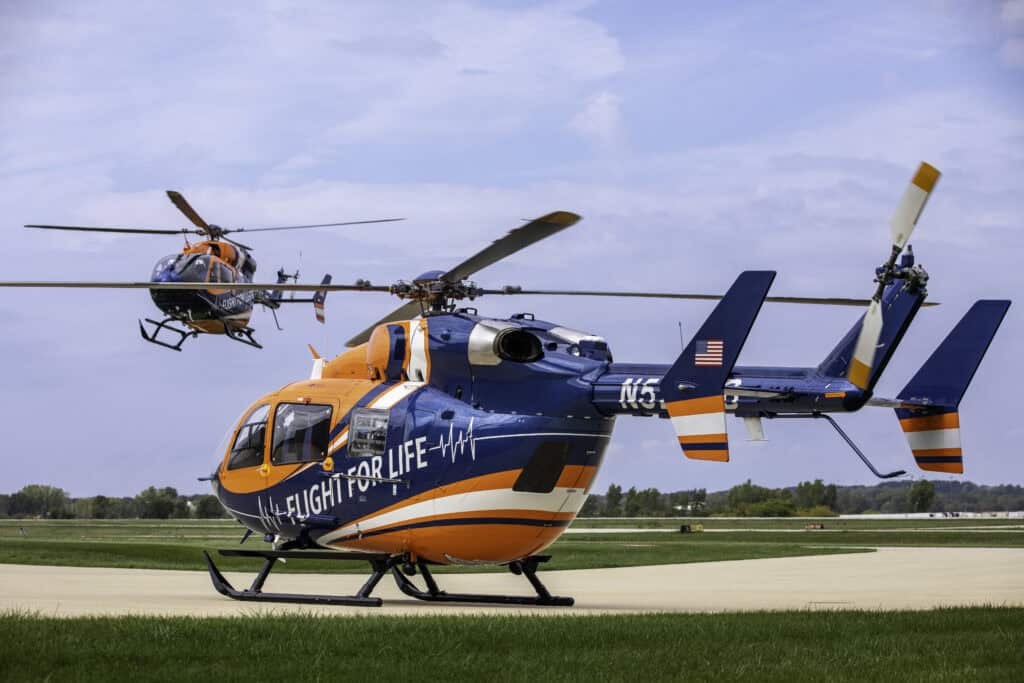
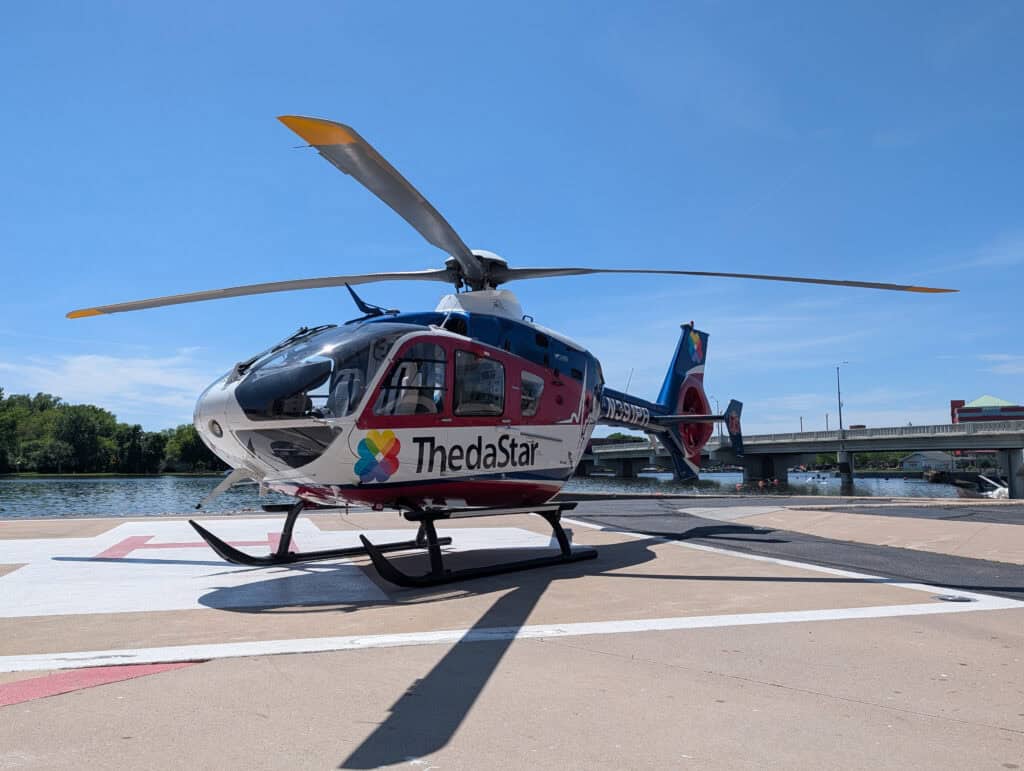
NORTHEAST WISCONSIN – After decades of mutually beneficial cooperation, Executive Director Leif Erickson said Flight For Life (FFL) and ThedaStar are taking off on a new chapter of consolidation – officially announcing the emergency med-flight providers’ merger last month.
“Our missions are both driven at taking care of the patients in the communities we serve,” he said. “It’s about getting to the patient with the right resources [in] the right amount of time…, and we worked well together, so this was a pretty easy concept to get our hands around.”
Across both the for-profit and nonprofit sectors, Erickson said the healthcare industry is seeing increasing levels of service saturation, leading FFL and ThedaStar to consider a consolidation of resources.
“Why not take best practices from both, combine them and move forward?” he said. “There’s a lot of expertise in these two programs we can draw from.”
Now operating under the singular name Flight For Life-ThedaStar, Erickson said merger discussions commenced roughly two years ago – culminating in the organizations’ internal integration in December 2025.
“That is effectively the date when… everything [fell] under the Flight For Life 501(c)(3), so our incorporated status,” he said, “but we [kept] both brands in the market areas we currently serve.”
Having worked with FFL for more than 20 years, Erickson said he can’t remember a time when FFL and ThedaStar didn’t collaborate – making the official merger all the more obvious.
“It was already being done daily prior to the integration or the merger discussions,” he said. “So, we brought 82 years of combined experience between the two programs together.”
A life-saving service

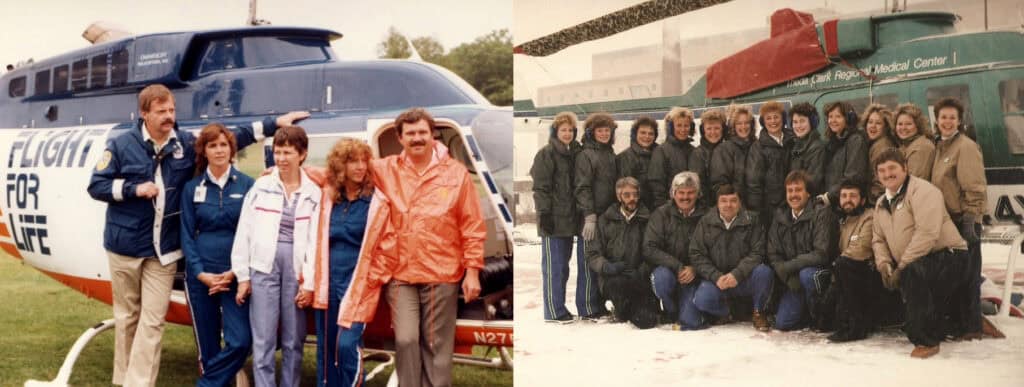
Founded in 1984 and 1986, respectively, as the first and third air medical programs in Wisconsin, Erickson said FFL and ThedaStar grew to have “a lot of similarities over the years.”
“We did work together well from the competition standpoint,” he said. “We would send the closest aircraft, [regardless], so if we got a request for a motor vehicle accident and ThedaStar was closer than Flight For Life, we would reach out to their program to see if they could accept the request.”
With FFL primarily having served Southeast Wisconsin and ThedaStar operating in Northeast and East Central Wisconsin, Erickson said the new, combined program allows for a more comprehensive coverage across the dairy state.
“The goal is we’ll have four primary aircraft and four bases, and then one dedicated backup for the entire program,” he said. “We will be relocating two of the bases we currently operate out of, and then growing by an additional two bases to make sure we meet the demands of the service area.”
Though FFL and ThedaStar’s merger appeared smooth on the surface, Erickson said the process presented a bit more turbulence than expected.
“When you dive into it, you start looking at all of the changes and the impact on people and staff,” he said. “So, we wanted to make sure we took care of staff who were coming over, we wanted to make sure we addressed dispatch centers and make sure we worked with our customers.”
Due to the nature of their work, Erickson said great caution was taken to ensure the safe and responsible continuation of Flight For Life-ThedaStar’s life-saving service.
“We ensured that while we made these changes, we were addressing safety, we weren’t decreasing the level of service to the communities and we [weren’t] inheriting any risks we didn’t foresee coming through this,” he said. “So, it was not a rush by any means.”
By the end of 2027, Erickson said Flight For Life-ThedaStar hopes to have its four bases open and operational to serve as much of the state as possible.
“We want to make sure that when we are planning, we look at the current data, where our response areas are, where the requests come from and make sure we have the right resources in the right places based on volume,” he said. “There are some areas right now that we identify as underserved in Wisconsin, if you will. So, part of our goal is to bring air medical resources to those communities.”
Realized benefits, increased impact
Despite the most obvious part of their job flying overhead, Erickson said there is an incredible amount of behind-the-scenes work done on land to prepare response teams for their missions.
“It is complicated,” he said. “There’s definitely the clinical side, the communication side and the aviation side to our industry, along with finance, IT and all the other program areas that come along with it. And in air medicine, because of the aviation and the clinical requirements, the IT component is huge.”
From the avionics operating the aircraft to the devices running providers’ charting software, Erickson said there is virtually no step in an emergency med-flight that is not aided by technology.
“And we’re tracking every aircraft in real time to make sure we get to the right destination,” he said.
Despite having an official leadership hierarchy like most organizations, Erickson said Flight For Life-ThedaStar’s staff operate “alongside each other.”
“When you’re making those decisions that impact people’s lives, imminently, you have to work together as a team,” he said.
On each mission, Erickson said there is a policy – “four to go, one says ‘no’” – that if the pilot, the flight communicator or either of the two clinicians calls off the operation, the flight is grounded.
“If any one of them has a concern about weather or inherent risks that are involved in that mission, it just takes one of them to say no,” he said.
The expectation of working as a team, Erickson said, is especially important in the kinds of environments Flight For Life-ThedaStar’s staff operate in.
“When you’re accepting a high-risk mission, you want to make sure everybody has a say and everybody’s involved in that decision,” he said.
With a current, combined fleet of four helicopters, Erickson said Flight For Life-ThedaStar anticipates completing 1,250 missions in its first year as a newly combined organization.
“In the air medical industry right now, it’s a costly service to provide, [but] it’s a needed service,” he said. “The financial impact of us avoiding duplication of services…, we can get some realized benefits on that [while] trying to keep costs down [and] serving the communities of Wisconsin.”
For more on Flight For Life-ThedaStar, visit flightforlife.org.