 Fox River Trail upgrades pave the way for economic boost
 Mission Coffee House – a shop with purpose


July 6, 2026
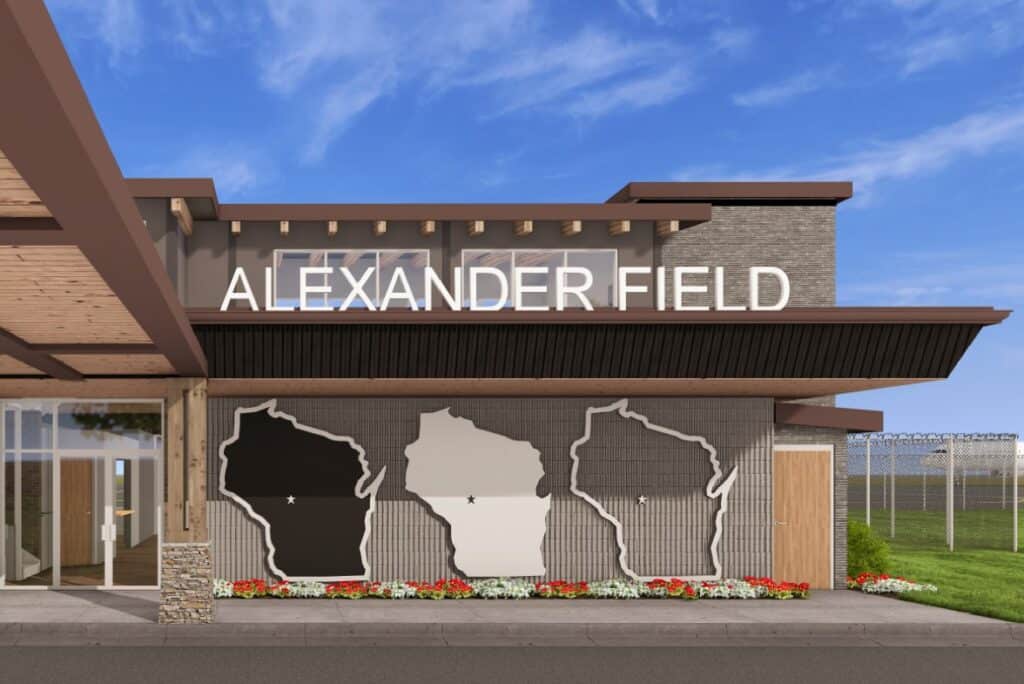
WOOD COUNTY – Alexander Field–South Wood County Airport in Wisconsin Rapids has secured a $2.7 million Federal Aviation Administration grant to modernize its 1970s-era terminal.
Airport Manager Jeremy Sickler said the upgrades are long overdue and will help shape a stronger first impression for visitors as traffic continues to rise, driven in part by Sand Valley Golf Resort and other aviation activity.
“Just having a facility that is made to accommodate these folks and their planes will ultimately paint a better picture of the community in general,” he said. “The upgrades will augment our ability to provide the level of service that these folks need, make a good impression and encourage them to come back again.”
Sickler said the project is expected to include:
- A more modern, visually appealing exterior, interior and passenger/crew areas
- Accessibility and ADA-compliant upgrades that include renovated restrooms, improved entrances, vertical circulation availability and better signage
- Improved energy efficiency and building systems via new HVAC systems, energy-efficient lighting and sustainable material sourcing
- Updated technology and operational improvements to improve capacity, circulation and efficiency, while also introducing a new pilot lounge, flight planning facilities and modern meeting spaces
Sickler said the aging terminal’s communications systems can’t keep up with today’s bandwidth demands and advancing technology.
He said the building also lacks sufficient outlets, noting there were far fewer devices to plug in when it was built in 1973.
Keeping up with demand
Though managed by the City of Wisconsin Rapids, Sickler said the airport is owned by the South Wood County Airport Commission, which includes Wisconsin Rapids, Grand Rapids, Port Edwards and Nekoosa.

Over the last decade, he said the airport has invested more than $14 million in upgrades – a period that coincides with Sand Valley Golf Resort’s 2017 opening.
Jet traffic at Alexander Field, Sickler said, has climbed from roughly 100 operations in 2016 to 700 in 2024, including as many as 200 private arrivals per month in peak season.
In 2018, he said the airport used $4 million in state and federal funding to expand the apron where airplanes park, refuel and passengers embark and disembark.
This work, Sickler said, nearly tripled the apron’s size, providing more space for larger jets.
He said the project also included the construction of a new 13,200-square-foot hangar.
In addition to the $2.7 million grant, Sickler said the airport commission had sought private funding that, if approved, would have allowed for a terminal expansion, including an upper level and observation deck.
Though those requests were not approved, he said the airport may still pursue a more public-friendly space for aircraft viewing in the future.
“There is the intention of making a viewing patio area out here in front on the apron side of the terminal building,” he said. “There are always people driving through the airport loop area to observe the activity on the apron.”
Once the building is complete, Sickler said the airport could feature a more park-like setting, including handicap-accessible picnic tables and a shelter.
“[This would provide] something year-round that would allow the people who are parking their cars to watch the planes an opportunity to actually get out of their vehicles and have access to some welcoming amenities,” he said.
Airport Commission Chairman Brad Hamilton said the grant reflects continued local, state and federal confidence in Alexander Field’s role as a critical transportation and economic asset for the region.
“Airports are gateways to opportunity,” he said. “This funding will help ensure Alexander Field continues to meet the needs of travelers, businesses and the broader community for years to come.”
A more welcoming appeal
Though the airport and terminal have always been open to the public for viewing aircraft departures and takeoffs, Sickler said he envisions a more inviting space for the community.
“Our fence looks terrible,” he said. “It’s an eight-foot-high, chain-link fence with barbed wire along the top of it – so it looks like a jail yard. That alone probably deters people from staying, and I would like to change that.”
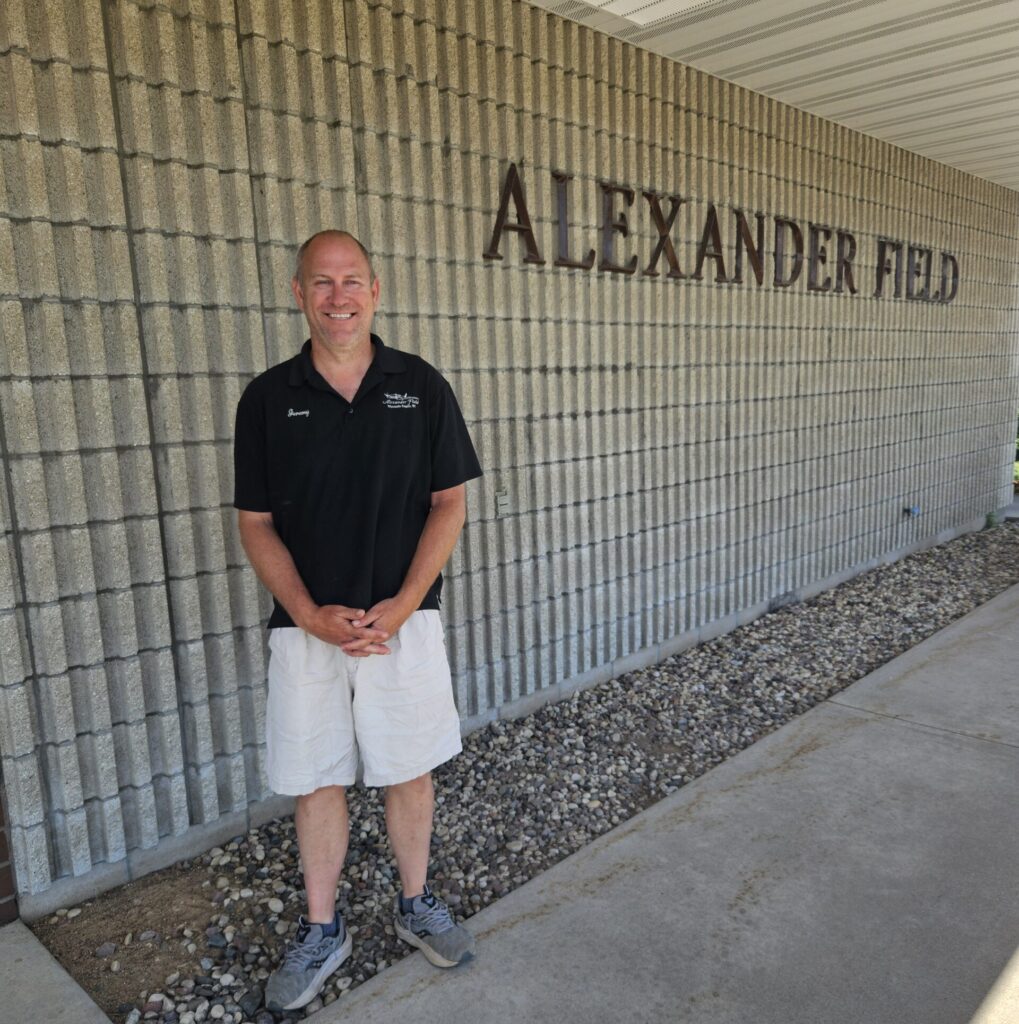
For now, though, Sickler said the focus is on improving the terminal.
“The general manager of the Sand Valley resort and I have had many conversations about the fact that the impression this clientele has of our region, their vacation here and their overall experience, starts and ends at the airport – not just at the golf resort,” he said.
Sickler said the clientele flying into Alexander Field has included celebrities such as Mark Wahlberg, Aaron Rodgers, Condoleezza Rice and NFL Commissioner Roger Goodell.
Flights, he said, have arrived from 31 states and several countries.
Sickler said the draw is rooted in the experience offered at Sand Valley Golf Resort, as well as its ownership group’s track record of developing two other highly successful North American resorts, which has helped establish a respected brand within the golf community.
“Their attention to detail and customer service is five-star level,” he said. “It’s very customer-oriented, and I think that’s what attracts customers from across the U.S. and other countries.”
Sickler said the design of the golf courses and their style of play are also major draws.
“They choose places like Central Wisconsin because of their natural sand deposits,” he said. “They build in sand rather than having to truck in thousands and thousands of truckloads of sand to create sand features on their courses. It lends itself to a style of golf that is very appealing.”
Sickler said Sand Valley emphasizes accessibility for golfers, rather than exclusivity, compared to some luxury resort courses.
“Most of their courses are made easier to play, so people would have fun playing them and people could feel good about their own golf,” he said. “Courses designed to the standards of professional golfers are intentionally very difficult to put them to the test.”
Plans on moving along
Sickler said the airport’s goal for the $2.7 million FAA grant is to support the region’s growing tourism economy.
The grant was announced in May, he said, and the FAA required final design work to be submitted in early July, prompting a “pedal to the metal” push for SEH, the project’s design contractor.
“We’ve got a team of architects, engineers, designers and planners who are working on this, so once the design is approved, we can move into the next phase of the process with bids having to be out by the end of September,” he said.
Sickler said he expects construction to begin in late fall next year, after the airport’s busy season typically winds down in mid-October.