 From retro classics to modern hits, new arcade opens in Wausau
 Strongwood custom indoor golf enclosures – built to a ‘tee’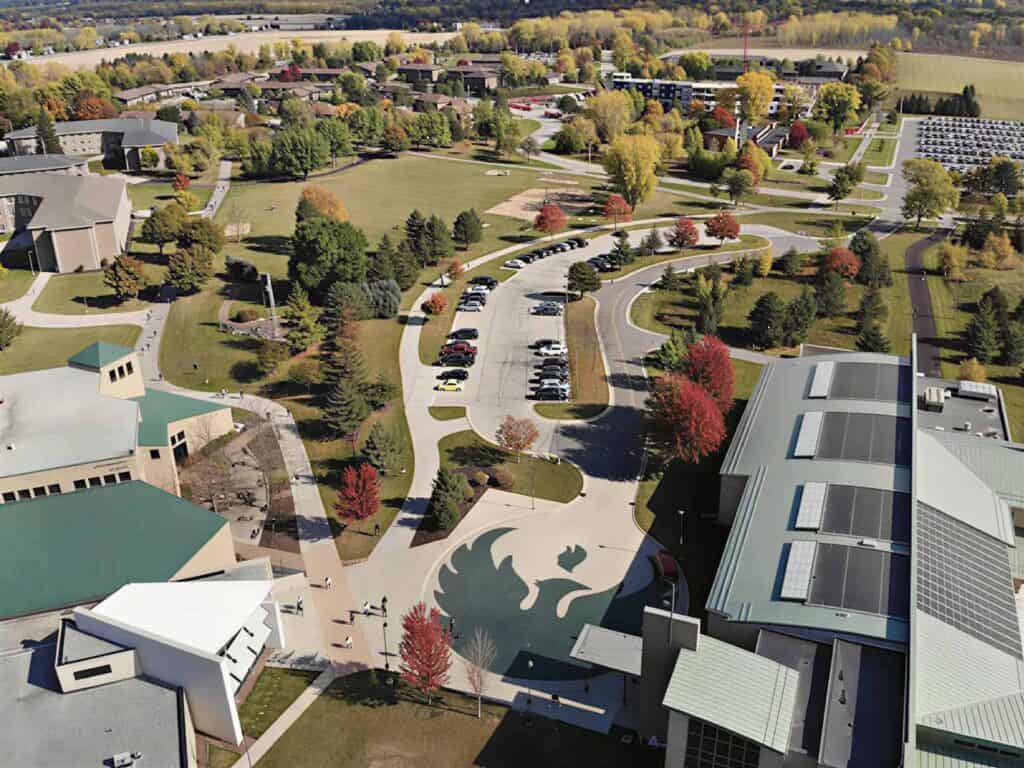



July 13, 2026
GREEN BAY – According to Matt Dornbush – the University of Wisconsin-Green Bay’s (UWGB) Dean of the Coffin School of Business – sustainability is “an interdisciplinary field by nature.”
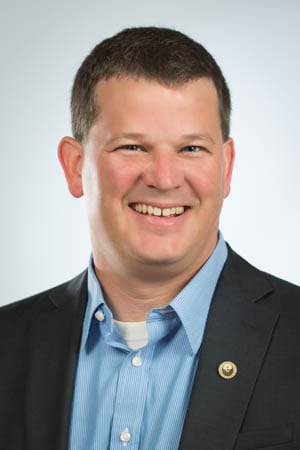
“The campus has really emphasized this for a long time, but I think the business school itself [has], more recently, grown [to] a size and a scale [where] we can really start to address some of these areas,” he said. “Young people want to work at a place where they feel like they’re adding value to the world.”
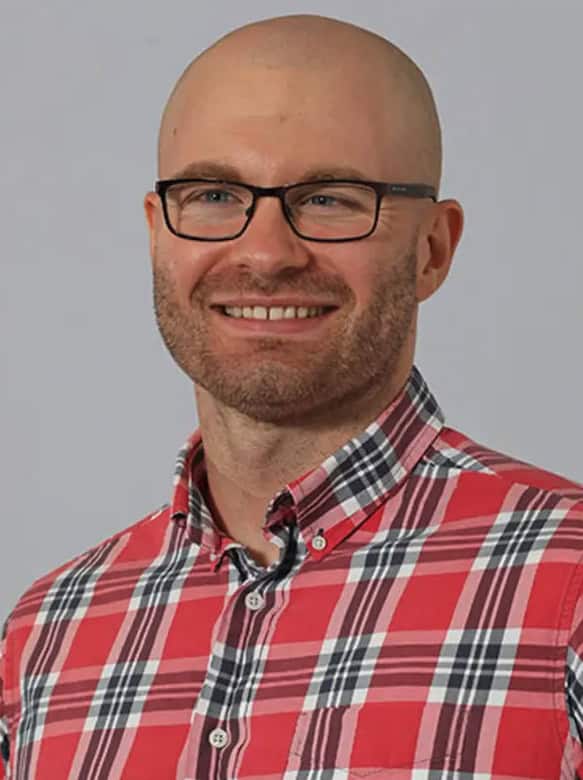
As pressure grows on businesses to operate sustainably – including around natural resources and workforce conditions – Dornbush said UWGB is preparing students for the future through the recent hiring of JT Bates.
Bates, who earned his doctorate at Washington State University, said before pursuing a role at UWGB, he spent two years as an assistant professor of professional practice at Rutgers University in New Jersey.
“I fully approached them,” he said. “At Rutgers, I can do work with Johnson & Johnson [or] with Procter & Gamble – a lot of these big organizations – but I don’t necessarily get that personal touch I think I can get at Green Bay, both with the students and with some of the industry connections.”
As part of his new role with UWGB, Dornbush said Bates will both teach and help guide the future of sustainable management education within the Cofrin School of Business.
“We really haven’t had a true thought leader driving the conversations around these topics; helping connect the business school with [UWGB’s] Environmental Management Business Institute (EMBI); pushing us in different directions, making faculty think a little differently; helping students think a little more intentionally about it; or helping drive connections with industry partners in the region around sustainability issues,” Dornbush said.
‘Real-world examples’
With existing efforts – such as the EMBI and others like UWGB’s master’s in sustainable management program – Dornbush said the university has long recognized the importance of teaching students about sustainability.

“UWGB has a long history in sustainability,” he said. “All of the students in any of our business majors are required to take a foundational sustainability course as part of their curriculum.”
Though his degree focused on “big-picture management,” Bates said over time, he’s niched down to studying and teaching about organizational ethics.
“So, it’s not necessarily sustainability specifically, but because it’s ethics, I think that’s a big sustainability question,” he said. “During my classes, when I teach ethics, I talk a lot about different stakeholders. That has a very natural progression towards talking about stakeholders in the ethical domain, and now we’re talking about sustainability – it’s the exact same people from the exact same perspective.”
Though excited to join UWGB’s existing infrastructure, Bates said the thing he’s looking forward to most is making new connections within the university and beyond.
“The big thing for me is I want to make sure there’s a very practical approach to a lot of this stuff,” he said. “We’re wanting [to make] connections with industry partners, and I think my big goal is to give the students the tools to speak in a little bit more of a sustainability-[focused] mindset, [and] to recognize [there are] tools that can help us in the business world that are also sustainable, so we can have [something that is] mutually beneficial.”
Jim Filter, president and CEO of Schneider National, said “corporate responsibility” is becoming an increasingly important factor in the transportation industry in Northeast Wisconsin.
“[It’s been] driven by customer expectations and regulations,” he said. “At Schneider, those priorities align with how we’ve long approached our operations, [because] we believe responsible, efficient operations are simply good business.”
A larger responsibility of Bates’s role, Dornbush said, is helping UWGB and its school of business best educate students so they’re equipped to solve problems “that don’t have simple answers.”
“We don’t know what the problems are going to be tomorrow, the year after and so forth,” he said. “What I really like about the approach that JT brings is one, he’s really focusing on helping students learn how to think about challenges…, [and two], coupling that with the applied approach he emphasized a lot in his interviews – understanding that students need real-world examples, and the closer they are to northeastern Wisconsin, the better they’re going to resonate with the students.”
Sustainable management education, Filter said, is paramount to ensuring problems that don’t yet exist are met with leaders prepared to solve them.
“[It] helps develop leaders who can balance business performance, operational efficiency and environmental responsibility,” he said. “As customer expectations and industry needs continue to evolve, these skills will be increasingly important for driving innovation, solving complex challenges and maintaining a competitive advantage.”
Both as Schneider’s president and a UWGB alumnus, Filter said he’s seen “firsthand” the university’s role in strengthening the community by helping grow and inspire the region’s next generation of talent.
“Schneider has maintained a long-standing relationship with UWGB through recruiting, scholarships and sponsorships,” he said. “[Our] student engagement opportunities and relationships help connect students with real-world industry experience.”
Setting the curve
Having grown up in Utah, Bates said he closely identifies with Northeast Wisconsin’s vigorous protection of its natural resources.
“In Utah, one of our greatest resources in the state is our natural resources,” he said. “I see a lot of overlap there, because there’s a large focus on, ‘we have these natural resources, we want to make sure we are protecting them,’ and then also, a large side of the business as well, is tourism and being able to bring people in to see these lovely areas.”
With “20% of the world’s fresh water” at its doorstep, Dornbush said Wisconsin’s natural resources provide the state with a glaring comparative strength.
“I don’t think anybody would disagree that’s not going to be a huge competitive advantage for us to create a better quality of life, better jobs [and] better opportunities for the future,” he said.
Creating and marketing sustainable practices aimed at protecting such resources – and, in turn, the people who rely on them – Bates said, is what helps businesses drive their “value creation.”
“Instead of the core message being disentangled from the organization – ‘We want to make money, therefore we’re doing X’ – the message is, ‘We’re trying to build a sustainable organization, and the profits just follow,’” he said.
On a national scale, Bates said companies like Patagonia serve as current examples of organizations practicing this type of value creation.
“They make very specific claims about things they’re trying to do, and we see customers fundamentally respond to that,” he said. “I have my Cotopaxi coat that I like to wear because it’s pretty, but it also makes me feel good, [because] I feel like I’m doing something that connects with their vision and their message.”
Bates said he also sees many parallels between New Jersey’s environmental concerns and Northeast Wisconsin’s.
“New Jersey [has] lots of Superfund sites (a highly contaminated location in the U.S. designated by the EPA for long-term cleanup) with DuPont being the main [company charged] with PFAS production,” he said. “You see a lot of similar things with the Fox River in Green Bay, and some of the organizations that were putting the PCBs into the water…, but now they’re trying to make some of those things right.”
As he excitedly awaits the onset of his time in Northeast Wisconsin, Bates said he’s already identified a few key organizations he’s hoping to connect and work with – such as the Lower Fox River Basin Volunteer Monitoring Program and the Bay Beach Wildlife Sanctuary, in addition to the thousands of farms and agribusinesses in the region.
“My dad comes from a long line of ranchers and shepherds, and those are the most outdoorsy people you’re ever going to meet,” he said.
Dornbush said he’s also excited for Bates to connect with the for-profit community to learn about how companies in Northeast Wisconsin have been leading the sustainability charge.
“There are a lot of global success stories we could highlight right here in Green Bay,” he said. “You think about some of the work Breakthrough Fuel has done [with] fuel efficiency; you look at Green Bay Packaging and what they’ve done [with] water emissions – basically setting the global standards for sustainable water use. It’s incredibly impressive, and it’s right here in northeastern Wisconsin.”
At Schneider, Filter said the company operates “one of the most fuel-efficient fleets in the industry” while simultaneously having its sights set on potential improvements.
“We’re continually testing new technologies and best practices to further improve performance,” he said. “We also have one of the largest fleets of battery-electric trucks in North America and were the first carriers to surpass 10 million zero-emission miles with the Freightliner eCascadia.”
With companies such as Schneider in its backyard, Dornbush said UWGB is excited to start working with Bates on how to best highlight Northeast Wisconsin innovation in the classroom.
“There are some really great stories for us to do a better job telling and exposing students in the rest of the community to right here in our own backyard,” he said.
As sustainability grows into a larger interdisciplinary conversation, Bates said – from his experience – UWGB’s foresight will help it set the educational curve.
“This is new development,” he said, “and I think it’s a really good opportunity for UWGB to be on the cutting edge.”