 New eras, next levels – Parallel 44 relocates to Door County
 Dry cleaning, laundromat business passes from one family to another



August 24, 2026
NORTHEAST WISCONSIN – Wisconsin is putting more than $2.4 million behind workforce training efforts aimed at helping businesses build and retain skilled workers.
The state Department of Workforce Development (DWD) recently awarded the funding through its Wisconsin Fast Forward program, with Northeast Wisconsin recipients including Sheboygan-based Quasius Construction, Brown County’s Jones Sign and Marinette’s Fincantieri Marine Group.
Launched in 2013, Wisconsin Fast Forward – according to the DWD – has awarded more than $57 million to 507 workforce training projects, supporting tens of thousands of workers across the state.
This most recent round of funding – per the announcement available at wisconsinfastforward.com – resulted in Jones Sign receiving more than $89,000, Quasius receiving nearly $87,000 and Fincantieri receiving roughly $30,500 from Wisconsin’s DWD.
“When the unemployment rates are as low as they are and the talent pool is decreasing as it seems to be, it’s more important than ever to make sure you are giving your current employees opportunities to increase their skillset and advance within the company,” Scott Schmidt, director of talent development for Quasius Construction, said.
Just as employee turnover can be costly, so can training, Kayla Wendlandt – senior manager of talent acquisition and development at Fincantieri – said.
Wendlandt said cost was a factor in the shipbuilder’s decision to apply for the program, as it was for Quasius.
“Training can be expensive, especially when you consider instructor costs, materials and the time employees spend in training,” she said. “Any funding that helps reduce those costs allows us to provide more learning opportunities for our workforce.”
At Jones Sign, Executive Vice President Sara Ledvina said their experience with the program was a bit different.
“We were not actively looking – [the program] actually solicited us,” she said. “We did a discovery call, which led us to believe it was a really good opportunity to match what some of our company objectives were for the year.”
Regardless of how each company came to discover the available funding, Schmidt, Wendlandt and Ledvina all agreed: to combat ongoing workforce challenges, upskilling current employees is a necessary initiative.
Quasius
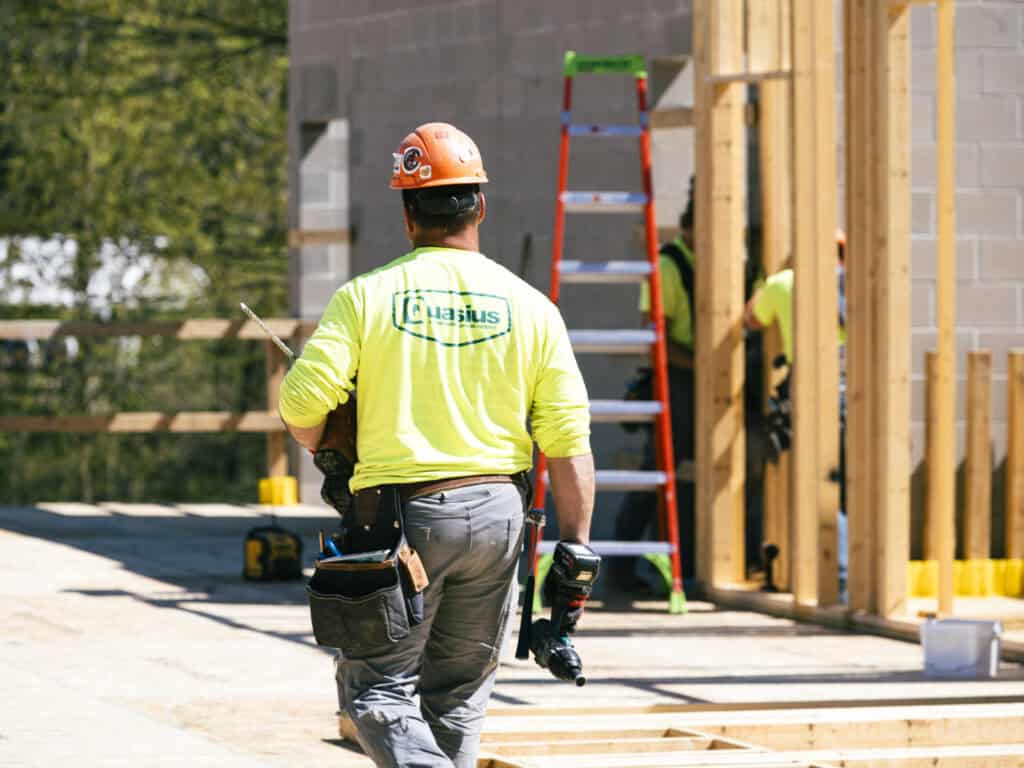
At Quasius – a general contracting and commercial construction company – Schmidt said investing in its current workforce is essential for continued growth.
“We have a growth plan that gets us to, probably, a $100 million company in the next five years, or something of that nature,” he said. “You can’t do that if you don’t train and upskill the workers you have.”
Sporting a “pretty diverse” project portfolio, Schmidt said the Quasius speciality – “our bread and butter, or what we do best” – is food manufacturing and cold storage solution construction.
“So, as part of our growth plan, we want to capture a larger section of that market,” he said. “That’s a good place for us to increase our growth, [and] this Department of Workforce Development grant is going to help us put together what we call a ‘food manufacturing cold storage construction training program.’”
Schmidt said the goal of the program is to train current staff in the “types of construction relevant to food manufacturing.”
“They have very high sanitation and hygiene standards,” he said. “So, we’re talking about HACCP (Hazard Analysis Critical Control Point) training and GMP (Good Manufacturing Practices) for everybody who sets foot on one of those construction sites.”

Schmidt said the training is designed to give Quasius the expertise to confidently take on projects and deliver for its customers.
“We can go to those companies and say, ‘Hey, we are not only good at this kind of construction, but every team member who’s going to step into your plant understands what they need to do to make sure we’re not causing undue contamination,’” he said.
Partnering with Lakeshore Technical College, Schmidt said one of the areas Quasius plans to train employees in is food-grade sanitation and TIG welding.
“That’s one of the more immediate areas we can impact straight across the board,” he said. “From there, we’re going to be moving to controlled contaminants, which is a course provided by the Northern Midwest Regional Council of Carpenters (NMRCC)… That [training covers topics like] contaminant control barriers, HEPA use [and] airflow pressure control.”
The courses Quasius chose, Schmidt said, will help upskill employees in “basic sanitary design principles” to be utilized throughout a project’s lifespan.
“It’s not just about how to be sanitary while we’re there, but while we’re estimating a project, we’ll take these things into consideration,” he said.
In addition to Lakeshore and the NMRCC, Schmidt said Quasius is also partnering with organizations like NSF International to develop its workforce in the sanitary design of food manufacturing facilities.
“We have quite a few different providers for the training we put together,” he said.
Jones Sign
With “a lot of initiatives” planned this year and in the years ahead, Ledvina said continuous improvement remains a key focus at Jones Sign.
“One of our big visions is making sure we provide a good, stable work environment for all of our employees,” she said. “So, when the grant program talked about how we could take some of our continuous improvement initiatives and apply that to the grant, it was a win-win.”
Jones Sign’s tenured workforce, Ledvina said, also made the program an attractive opportunity for the company to demonstrate its commitment to its employees.
“I’ve been here 21 years, most of the management team has been here between 10-30 years, so [we have] a lot of longevity in the company,” she said. “But, as we continue to grow, we want to keep attracting top talent who want to stay with the company.”
Ledvina said Jones Sign strongly believes in supporting the longevity and tenure of its current workforce through continued workplace improvements and training.
“Being able to invest in people helps keep [them engaged] once they’re here,” she said. “Our big goal is to be an employer of choice in the area.”
Ledvina said Jones Sign plans to use part of the grant to invest in technology and expand its use across the company.
“[We’re looking at] how to leverage technology to let our workforce be more productive,” she said. “[When] you get rid of some of that redundant manual entry, those people can gain additional skills that elevate them within the company.”
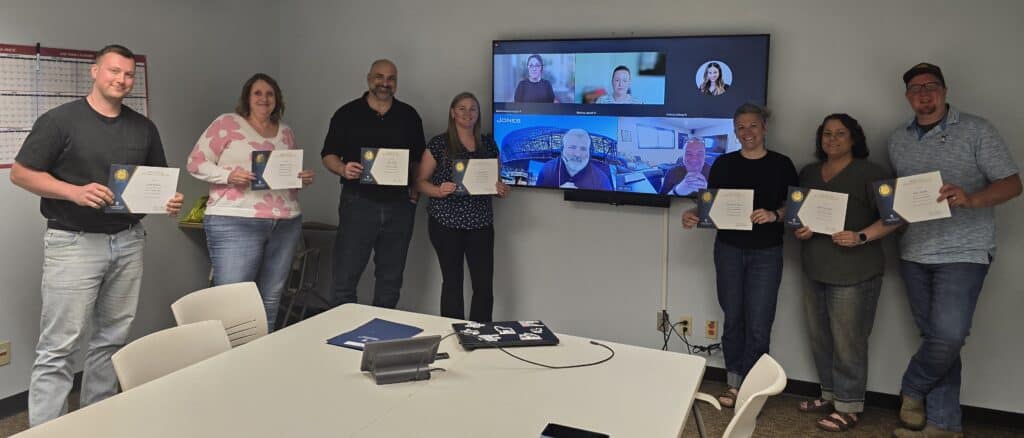
The second investment initiative Ledvina said Jones Sign has already completed is its “green belt training” – certifying more than a dozen employees to “lead and manage Kaizen events” that help train other staff.
“[This helps us] build that culture of continuous improvement,” she said.
Workplace safety training, Ledvina said, is the third and final area Jones Sign is investing its grant funds.
“Safety is a top priority for us,” she said. “We work in the construction field, [and] there is a voluntary protection program (VPP) you can get certified in [that’s] well above what OSHA’s standards are. So, part of that is going to be building out our voluntary protection program to make sure all of our employees stay safe.”
With 14 new green belts already trained and their VPP application submitted, Ledvina said Jones Sign hit the ground running after receiving the grant.
“We’re waiting for word back to take [the VPP] to the next step,” she said. “Then, in terms of [technology], we are actively working with our IT team to get the training and software in place to up-train all those folks.”
Fincantieri
Wendlandt said Fincantieri’s previous experience with Wisconsin Fast Forward made the decision to apply again an easy one.
“We are always looking for ways to provide training for our employees, so we try to stay informed about available grant opportunities,” she said. “The DWD newsletters are a great resource – [and] we have received Wisconsin Fast Forward grant funding in the past – so we knew about the program and keep it in mind when planning our training each year.”
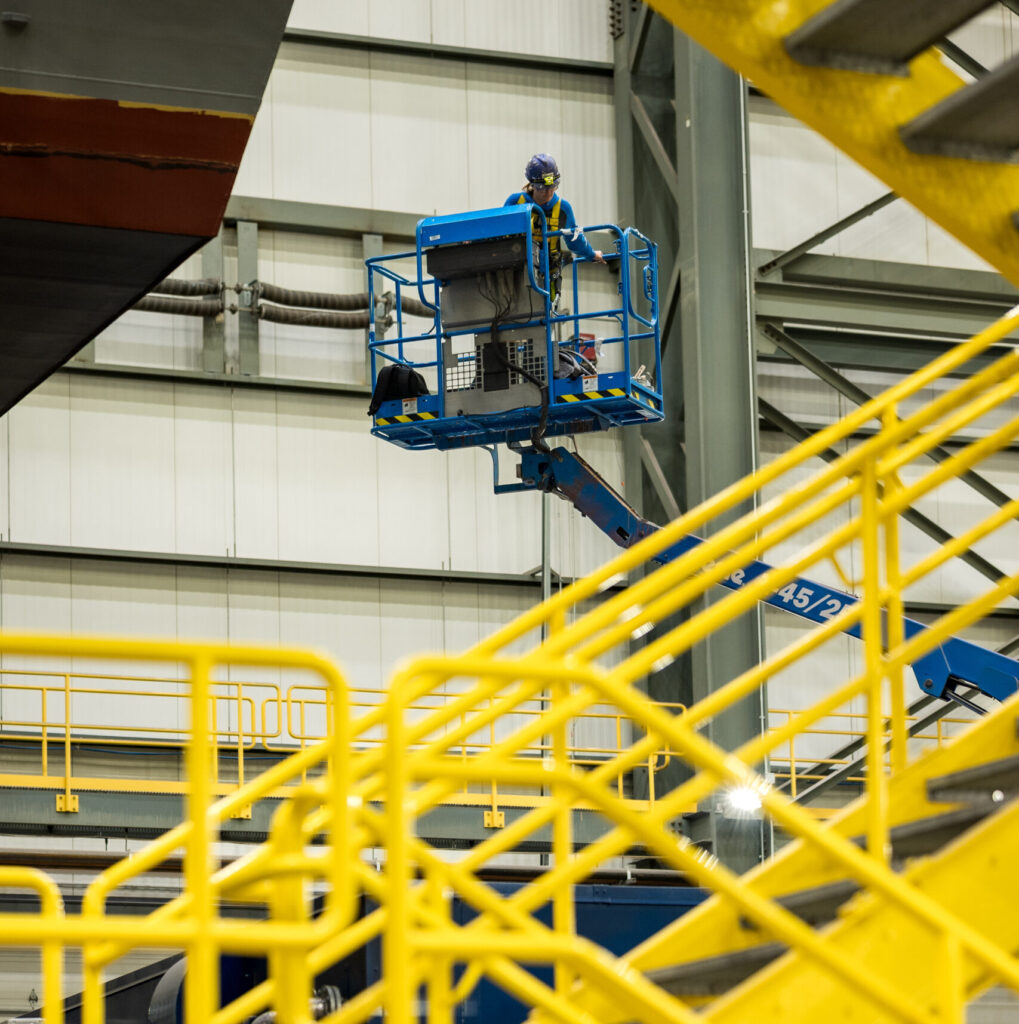
This year, Wendlandt said Fincantieri invested its grant monies in its shipyards, directly supporting hands-on safety and skills training.
“Employees completed ‘train-the-trainer’ courses for overhead cranes, forklifts, manlifts and mobile cranes,” she said. “We trained 24 employees – including supervisors, production employees and safety personnel – [who] can now safely operate equipment and, after completing the program, help train others within our shipyards.”
Because the Wisconsin Fast Forward program is often focused on new training, Wendlandt said the application “encourages” companies to think about the additional skillsets that could genuinely benefit operations.
“Every year, we review our training needs and look at where we can improve or add new opportunities,” she said. “We really needed ‘train-the-trainer’ courses for this equipment, so it was a great opportunity to build that capability within our organization.”
Wendlandt said trainings such as these help Fincantieri’s existing workforce grow in their careers without having to leave the company – further supporting the shipbuilder with a highly skilled, tenured and dedicated workforce.
“It prepares them for additional responsibilities, opens the door to future advancement opportunities and allows them to train other employees,” she said. “It also helps create a safer workplace, which benefits both our employees and the organization.”
Workforce challenges, support
Unlike Fincantieri, Schmidt said Quasius is new to the Wisconsin Fast Forward program and is eager to get its new training courses underway.
“Anytime we can go not just to the office, but to the field employees as well and say, ‘Hey, we have this program, and you’re going to be a part of it’ – it’s always an exciting thing,” he said. “This is the first time we’ve gone through the Department of Workforce Development…, so it’s really exciting to have the support of the State of Wisconsin.”
Ledvina said Jones Sign’s three investment areas are expected to benefit nearly every employee on staff.
“I think it will help us continue to be that employer of choice by elevating our employees and providing opportunities for career advancement and additional education,” she said.
Rather than focusing solely on recruiting new talent, Ledvina and Wendlandt said investing in the current workforce shows a company’s commitment to its employees while also helping attract new workers.
“Investing in employee training shows we are committed to helping our people grow and succeed,” Wendlandt said. “Offering opportunities like these certifications [not only] helps us retain current employees – because they can see we are investing in their future – it also helps attract new talent by demonstrating that learning, development and career growth are important parts of working at Fincantieri.”
And, when employees feel supported, Ledvina said customers are taken care of properly and with pride.
“I think anytime an employee knows more about the business or is better trained, the better they get to serve the clients,” she said, “which gives a better customer experience and hopefully some better profitability, too.”
With a 135-year history in the Sheboygan area, Schmidt said Quasius’ commitment to its employees also means investing in the community it calls home.
“The neat part is, Quasius is already a business that has had longevity, [and has] been a huge part of Sheboygan County and surrounding counties from a building standpoint, but also from a give-back standpoint,” he said. “We do a lot of volunteering, [and] we do a lot of nonprofit-type work as well. So, [this is] kind of like another chapter in the story of how Quasius is involved with our direct community.”
Above all, Ledvina said the most interesting part about applying for the Wisconsin Fast Forward program is discovering how many grants are available to financially support the growth and development of Wisconsin companies and their people.
“As we’ve gone through this journey, I’ve learned there are more grants out there that are available in a lot of different ways to support businesses,” she said. “I think it’s just really cool to be able to tap into those and see how they align with your company initiatives.”