‘Broadband access is the great equalizer’
 Jolly Good Soda – now that’s cool!



October 19, 2026
NORTHEAST WISCONSIN – Every fall, families pile into cars for trips to pumpkin patches, cornfields, petting farms and harvest celebrations.
At these farms, visitors enjoy hayrides and fun foods, build scarecrows, navigate mazes and search for just the right pumpkin.
Behind those traditions, however, agritourism businesses use an equation.
For farms that have fall activities/events, significant revenue is compressed into a few short weeks, dependent on crops surviving an unpredictable growing season and customers choosing pumpkin patches over other pastimes.
A rainy Saturday can mean hundreds or thousands of visitors stay home, while expenses continue regardless of what Mother Nature does.
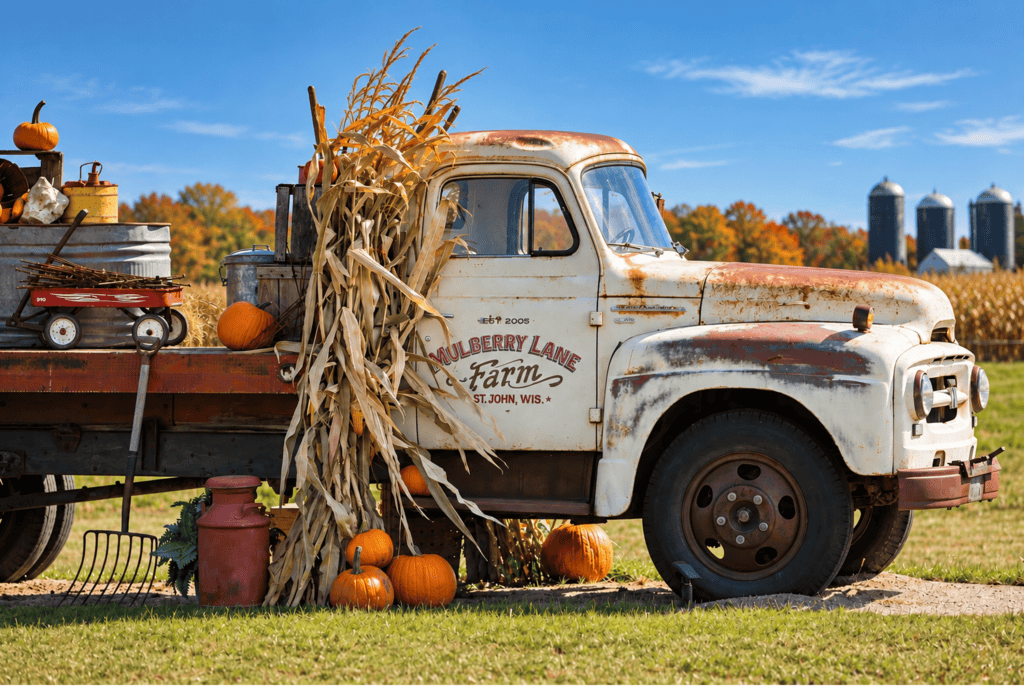
Bonnie Keyes, co-owner of Mulberry Lane Farm, said the fall pumpkin harvest celebration is the biggest season of the year.
Located near Sherwood, the 125-acre farm – owned by Keyes and her husband, Patrick – commenced its 21st season on Oct. 1 and operates as a hands-on educational farm, seasonal family destination and wedding venue.
Although its diversified operation provides more cushion than a farm dependent exclusively on fall visitors, Keyes said she understands how crucial a short autumn season can be to the bottom line.
“Many pumpkin patches operate just in the fall, and their whole year’s revenue balances on one month’s income,” she said.

Keyes said before a single family arrives on the farm, there are months of variables Mulberry Lane navigates.
A wet spring while trying to get pumpkin seeds planted this year, Keyes said, was followed by a dry period that brought concerns about germination, not to mention the threat of poor weather, mildew and corn root beetles.
“Then you get through to the point where you’re ready to open up your doors, so to speak, and [you wonder], ‘Is the weather going to cooperate?’” she said. “[Will we] have the beautiful fall days when thousands of guests come out or rain every day in October?”
One bad season can be more than disappointing for a small agritourism operation, Keyes said.
“Unfortunately, for those in the business, one bad season could cause somebody to close their doors,” she said.
More than a pumpkin
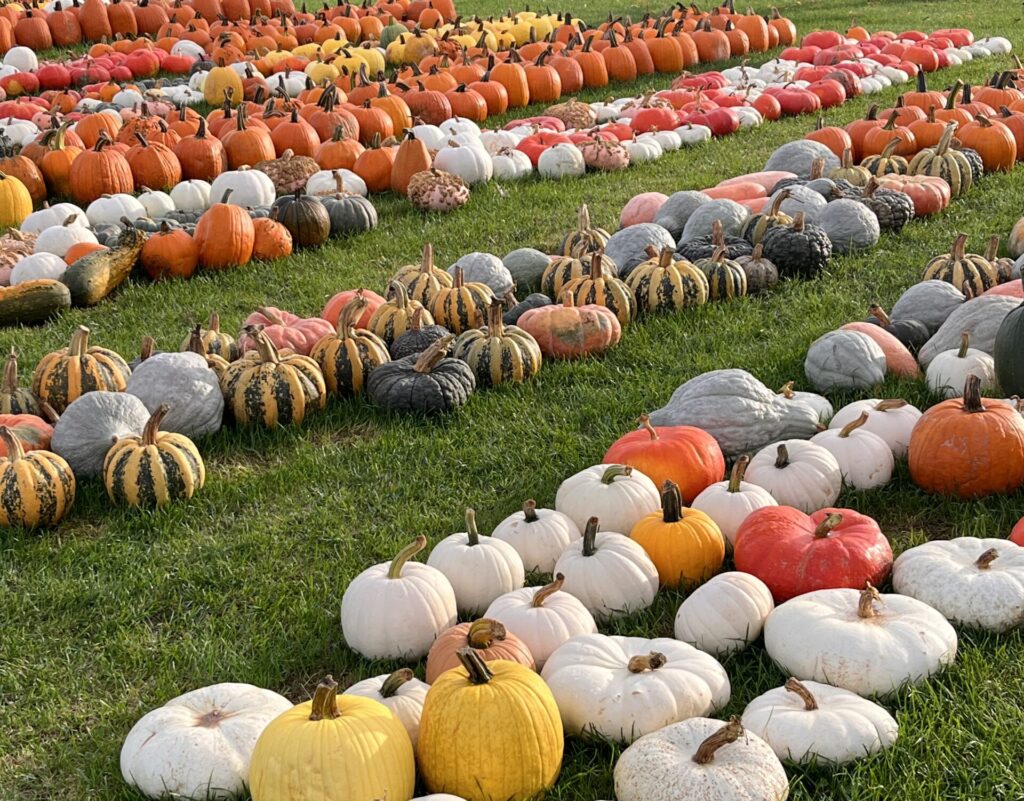
At Mulberry Lane, Keyes said admission during its mid-September-through-October pumpkin harvest celebration includes the farm experience, a hayride to the pumpkin field and a pumpkin that visitors select themselves, regardless of size or color.
With 15 varieties grown on approximately 15 acres, she said the business goes well beyond simply growing pumpkins and selling them from a farm stand.
Keyes said bundling the activities and pumpkin into the admission fee is intentional.
“It’s all-inclusive, and that’s probably what separates us from other patches in the area,” she said.
More than 300 animals live on the property, Keyes said, with guests able to enter pens, milk a cow and interact with animals.
An old-fashioned play area incorporates retired farm equipment, she said, while food is among the few add-on purchases.
The experience has become as important as what visitors carry home, Keyes said, attracting multiple generations, with families sometimes choosing Mulberry Lane as a central meeting point.
She said the farm has also seen growth among high school-age couples and people in their early 20s, as well as young parents and grandparents who bring children to experience agriculture.
“The number of grandparents bringing grandchildren to the farm is phenomenal because they were either raised on a farm or every weekend, visited [their own] grandma and grandma on the farm,” she said.
Those connections can create customers who return season after season, Keyes said, while providing access to agricultural experiences that have become less commonplace as generations have grown further removed from production agriculture.
The months visitors don’t see
Keyes said Mulberry Lane does not depend exclusively on its pumpkin season, but opens in May, hosting school and summer field trips, welcoming family visitors throughout its regular season and having between 600 and 700 annual passholders.
It also hosts a small number of weddings, though changes in Wisconsin liquor laws have affected that part of the operation, Keyes said.
She said spring opening weekend and Mother’s Day weekend are two of Mulberry Lane’s largest weekends outside of fall, and that the diversification helps to stabilize a business whose expenses do not disappear when visitors do.
From November through April, Mulberry Lane is closed to the public, but “offseason,” Keyes said, is something of a misnomer.
“Our offseason [from November to April, when we are closed] is ‘off’ in the sense that the farm isn’t open to visitors; however, we’re just as busy [personally], if not busier,” she said.
Keyes said animals must be moved from summer to winter housing and cared for throughout the winter while she continues wedding tours and begins marketing and hiring for the coming season.
The farm also employs a worker from Honduras through the federal H-2A agricultural worker program, a process Keyes said is complicated enough that the farm uses an attorney each year.
The worker, she said, typically arrives by mid-April, but this year, they did not arrive until May 15, after two of Mulberry Lane’s biggest weekends.
Seasonal employment ramps up substantially again in fall, Keyes said, with Mulberry Lane’s workforce jumping to 40-50 employees as it staffs the parking lot, pumpkin field, sugar shack and animal pens, among other areas.
She said the farm draws on a mix of employees, from retired teachers and farm wives who help with school field trips, to high school students who work weekends and during the busier spring and fall seasons.
Finding teenage employees, Keyes said, has become increasingly difficult, and along with other factors, has led to the discontinuation of a popular attraction.
“There was a time pre-COVID we had a pony ring, and it was a highlight of the visit to the farm,” she said. “But we found it increasingly difficult to get high school students in who wanted to lead ponies.”
Some longtime employees provide continuity, Keyes said, with one particular manager employed since the farm opened, and a co-manager who’s worked there for 15 years.
Different patch, same season
Near Bonduel, Porter’s Patch has developed a different approach to managing seasonality.
The family farm traces its roots to the 1870s and includes 95 tillable acres.
Sixth-generation Lucas Porter became half-owner with his father, Troy, in 2023, maintaining the business’s span of berries, vegetables and other seasonal crops along with fall Farmtoberfest activities.
For Troy Porter, co-owner, diversification means not asking one crop or one season to carry the entire operation.
“If we only had fall season, we’d be putting all our eggs in one basket,” he said.
Some individual crops generate relatively modest revenue, but together, Porter said, they contribute to the farm’s overall economics.
One example is pickling cucumbers, which he said might generate $2,000 in a season.
Fall field trips and company events introduce new visitors to Porter’s Patch, some of whom return during another season, and likewise, Porter said, customers who first discover the farm during strawberry season may return for Farmtoberfest.
He said children who first experience the farm during a school field trip sometimes persuade their parents to return because they did not have enough time to experience everything.
“Everything feeds off everything else,” he said.
With this year’s opening weekend, Porter said the mist and rain prompted him to open for a limited period that Saturday, but not a single visitor came, and Sunday’s attendance also suffered following the wet weather.
He said he remembers being rained out for five of the first seven fall days in 2019.
“That’s farming; you never know what you’re going to get,” he said. “We invite people to the farm – that’s how we make our money – and if it’s [bad] weather, they don’t come out to pick berries or enjoy the fall events.”
Porter said a good weekend day can bring more than 1,000 people to the farm, with 2,000-3,000 visitors over a weekend.
Farmtoberfest has come a long way since its beginnings, Porter said.
“The very first year, all it was was me sitting in a stand selling fall décor and pumpkins on the farm,” he said. “They could go out and pick [a pumpkin] in the patch. I sat there all day and manned it, and I was happy if I made $100.”
Today, Porter said admission covers the corn maze and numerous activities, while food vendors, pumpkins, fall décor and other offerings provide additional sales.
Unlike strawberry season, which can require 35-45 employees during its peak, he said he and Lucas have redesigned the fall operation to essentially run it themselves, relying on detailed signage to guide customers through activities.
Porter said getting bigger is not automatically the goal and that scaling back some parts of the operation has allowed the family to concentrate on doing fewer things well while controlling labor and overhead.
“If we get smaller, we can do a better job with everything,” he said.
Paying at Polly’s
Polly’s Pumpkin Patch in Chilton offers yet another model of this agritourism equation.
Owner Polly Roland said the farm’s fall season runs approximately six weeks, and its ability to generate enough revenue during that period remains closely connected to weather.
“If we have great weather all seven weekends [of that season], we can definitely do well to sustain the farm,” she said. “But rain can be a setback.”
Polly’s grows about 20 acres of pumpkins, along with soybeans, and harvests the corn used for its maze for grain, Roland said.
Unlike many agritourism destinations, she said visitors pay for the experiences they choose, such as a wagon ride, 17-acre corn maze or pumpkins from the field, instead of general admission.
Roland said the play area is free with corn maze admission – whereas visitors who haven’t visited the maze are simply asked for donations to join the fun.
She said this flexibility allows families to tailor their spending.
“If you add up the price of the corn maze, wagon ride and a pumpkin from the field, it’s about the same price as several other places in the area with corn mazes and such, but you only pay for what you want to do,” she said.
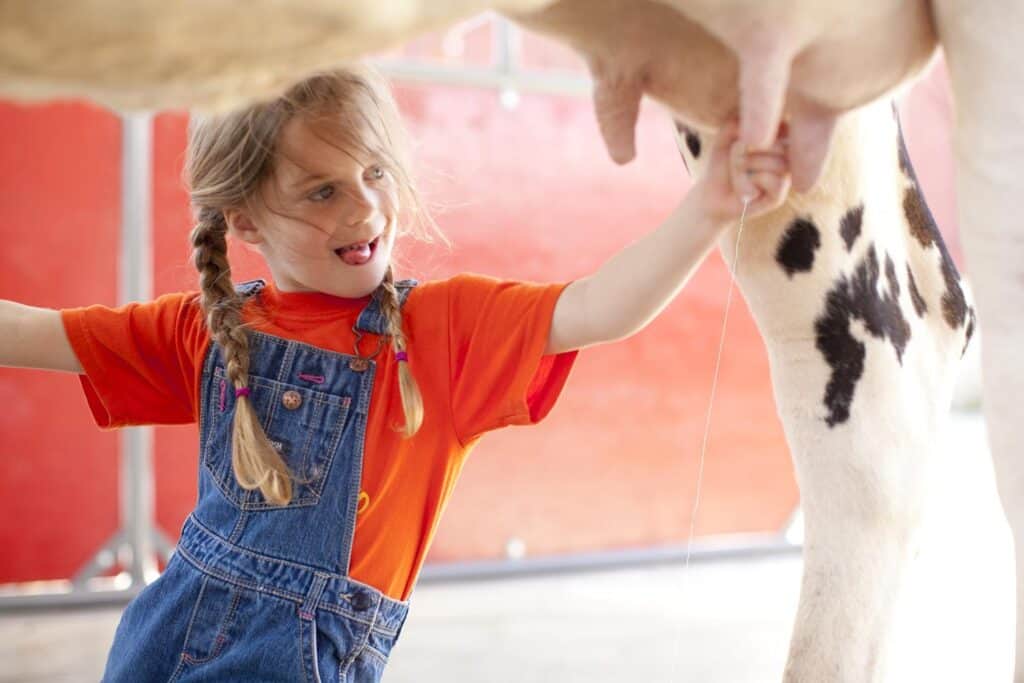
become less commonplace with time. Submitted Photo
It is a far cry from the farm’s early pumpkin-selling days, Roland said, when a coffee can sat in the driveway for customers to leave their money.
Nowadays, she said Polly’s draws thousands of people on busy weekend days and employs about 20 seasonal workers, in addition to several returning employees who take on the fall work for extra holiday income.
Field trips account for about 10% of income, Roland said, with other visitors generating the remaining 90%.
Pumpkin sales, she said, remain an important revenue stream.
Roland said she adjusted the farm’s operating schedule this year, closing more weekdays after analyzing revenue generated on those days compared with staffing expenses.
Beyond the patch
The economic impact does not necessarily stop at the edge of the pumpkin patch.
Mulberry Lane draws most of its fall visitors from a five-county radius spanning the Fox Valley, Green Bay, Manitowoc, Sheboygan and Fond du Lac areas, Keyes said, but families also come from Milwaukee and beyond, not only to spend time at the farm but in the surrounding community.
Mulberry Lane, she said, gives visitors stickers at admission, making its customers easy to spot at other businesses.
Keyes said operators of Frogg’s Ice Cream in Sherwood have told her they know when Mulberry Lane has had a busy day because so many customers arrive wearing those stickers.
Wedding guests, she said, are also often directed to area establishments for rehearsal dinners, and out-of-town farm visitors use nearby campgrounds she recommends.
Roland said she sees similar connections between Polly’s and nearby establishments such as The Outpost Pub & Provisions and Granary Supper Club.
“Calumet County is a small county as far as square mileage and even population, but the county has a lot to offer, and all the agtourism businesses work together,” she said, adding that Polly’s is located roughly 30 miles from Green Bay, Appleton, Fond du Lac and Manitowoc.
Some corn maze enthusiasts, Keyes said, will drive two hours to visit, while area residents bring out-of-state guests.
Likewise, Roland said visitors often ask her for advice.
“It’s pretty common to ask ‘where else I should go?’ – and I recommend a lot of places,” she said.
She recommends places such as Heritage Orchard and LaClare Creamery, Roland said, and these other businesses return the favor.
After she had referred a large group to a local bar and grill, Roland said its staff sent Polly’s a pizza as thanks for directing customers that way.
She said Polly’s also participates in the East of the Lake Fall Harvest Trail, while its annual craft show grew from about 50 vendors last year to 75 this year, extending the economic impact to other small businesses.
Porter said he sees the same phenomenon around Bonduel, with visitors pairing Porter’s Patch with a visit to a nearby apple orchard, community event, Navarino Nature Center or another area destination.
Since he started expanding his own fall celebration, Porter said he’s noticed more pumpkin patches have opened but doesn’t view it as taking away business.
“I always welcome competition,” he said. “Others open and it doesn’t seem to affect us. It’s a positive thing.”
A concentration of fall attractions, Porter said, can give visitors more reasons to make the drive and stay in an area once they arrive.
Supporting family traditions
For all three farms, the business of fall intersects with something equally weighty: family traditions.
At Porter’s Patch, Porter said families return each year to make scarecrows or complete the latest corn maze challenge.
“It’s all about making memories and traditions,” he said.
At Polly’s, Roland said she recently saw just how long one of those traditions can last.
A couple visiting with their nine-month-old daughter told Roland they had first come to Polly’s years earlier.
“[The woman] told me, ‘We had our first date here, ended up getting married and come every year to take a picture in the same spot – now that we have a nine-month-old, we bring her to take that picture in the same spot,’” she said.