Bluff View Bank: A bank with a 142-year view
 AI: Endless possibilities, finite budgets


October 12, 2026
NORTH CENTRAL WISCONSIN – In what may be a boon to the manufacturing community in Central Wisconsin, Mid-State Technical College has recently been awarded a $5 million grant from the U.S. Small Business Administration (SBA).
The school is one of 11 organizations across the country selected as part of the SBA’s Manufacturing in America Empower to Grow (E2G) grant initiative.
Per sba.gov, E2G is a workforce-and-technical-assistance grant program, not a direct manufacturing subsidy.
According to the terms, Mid-State will receive the grant in one lump sum and have 12 months to find areas in which to spend the money.
“You’d think it’d be easy to spend $5 million, but when you can’t buy a lot of equipment, and you can’t do any sort of building modification, that makes it a little tougher,” Ryan Kawski, dean of Mid-State’s School of Applied Technology, said. “But the purpose of this grant is to truly get it in the hands of businesses. And, specifically for our proposal, it is in the hands of the manufacturing businesses.”
Mid-State has titled its initiative USA MADE (Upskilling and Strengthening America’s Manufacturing Advancement and Development Ecosystem).
With USA MADE, Kawski said Mid-State will deliver free business courses, in-person/hands-on manufacturing training, technical assistance and one-on-one consulting to small manufacturers in critical industries in Central and North Central Wisconsin.
He said the college will achieve these actions via multiple avenues.
The first, Kawski said, is to develop what they’re calling their core training modules, particularly in the areas of mechanical and technical assembly work – ensuring people are receiving entry-level focused manufacturing skills for assembly.
He said the training starts with quality control and inspection, including “more of the compliance-focused items” and OSHA safety training.
“Then, we’ll get into some more of the compliance for businesses – for example, their ISO standards; those are the set of quality standards for manufacturing businesses,” he said. “Then, we’re going to get into some other pieces that are more like your entry-level automation skills, and understanding the basics of electrical components and logic control devices, how those work and how to set up your business so it can be automated, and what goes with that.”
USA MADE
Mid-State’s 12-month USA MADE project, Kawski said, is designed to strengthen the region’s manufacturing workforce, improve small-business competitiveness and build domestic supply-chain capacity.
In short, he said, USA MADE is designed to serve eligible manufacturers throughout Mid-State’s district and across a wide range of industries.
Kawski said the school’s plans to establish advanced propulsion manufacturing in Stevens Point will underscore the growing demand for highly skilled workers, advanced technical training and a strong network of manufacturing suppliers throughout Central Wisconsin.
“It’s to help boost the economy, the manufacturing and the small-business economies so they can start building some of their stuff on their own turf,” he said. “As an institution, from a training capacity, we’re built for this moment. We’re ready to go.”
As it was, Kawski said Mid-State has “well-established educational programs and academic programs that have existed for years.”
“We just need to pare them back so that – from an incumbent workforce standpoint, from a training capacity standpoint – the businesses can access them a little bit easier,” he said.
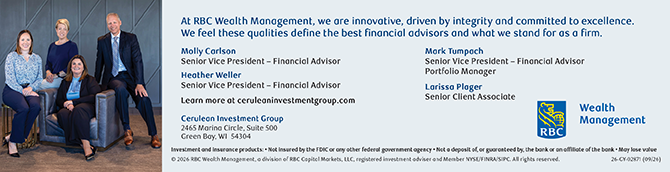
Mid-State was able to secure the grant, Kawski said, largely due to strong and established relationships with area manufacturers and a track record of successful program delivery, such as the college’s 48,000-square-foot Wayne H. Bushman Advanced Manufacturing, Engineering Technology and Apprenticeship (AMETA®) Center in Stevens Point.
In fact, he said, much of the new hands-on training will draw on the AMETA Center’s resources, including specialized labs and equipment supporting automation, robotics, welding, machining, manufacturing operations and mechanical design.
When it comes to Mid-State’s relationship with local manufacturers and the way in which they develop their programming – whether it’s for their general curriculum or the USA MADE initiative – Kawski said the college’s staff is adept at meeting employers’ needs after years of learning about them.
“We conduct twice-per-year advisory committee meetings where we are constantly asking the businesses to provide us information on what they’re doing and how they’re doing and what their needs are,” he said. “We’ve gathered years of data on this, and we’ve been able to now respond to some of those more ‘just-in-time’ training needs.”
Kawski said Mid-State, as an institution, is “good at developing programs that are hundreds or thousands of hours long” – but those academic programs are often too long to meet the needs of just-in-time training.
He said his relationship with employers in Central Wisconsin goes back even before he became a dean at the college.
For several years, Kawski said, he worked in the K-12 system in the Stevens Point school district, where he served the local businesses – especially the manufacturers – through program initiatives like youth apprenticeship and work-based learning programs.
“So, I’ve gotten to know a lot of those other businesses and have worked hard to build those relationships,” he said. “Building trust is critical to the success of a grant-funded program like this, because when I call and communicate what we’re doing and need to ask for letters of support for a grant initiative, [I’m proud] I can secure three, four, five, six of those letters of support pretty quickly. Having that established relationship and mutual trust with the college and our faculty makes it so much easier.”
As part of the USA MADE program, Kawski said faculty will develop a condensed version of training, taking a 36-hour course (for example) and condensing it down to an eight-, 10- or 12-hour training that is more usable and manageable by business, so they can get some skills for an incumbent workforce.
He said training incumbent workers – “those folks who are already employed, [who] the business is looking to upskill” – is the primary focus of the grant.
“We’re not necessarily opening the doors up to train folks who are just coming to us from the general public,” he said, reiterating the grant’s focus on manufacturing. “The grant funds are also to help businesses access other services and other consultants they need to better their business operations.”
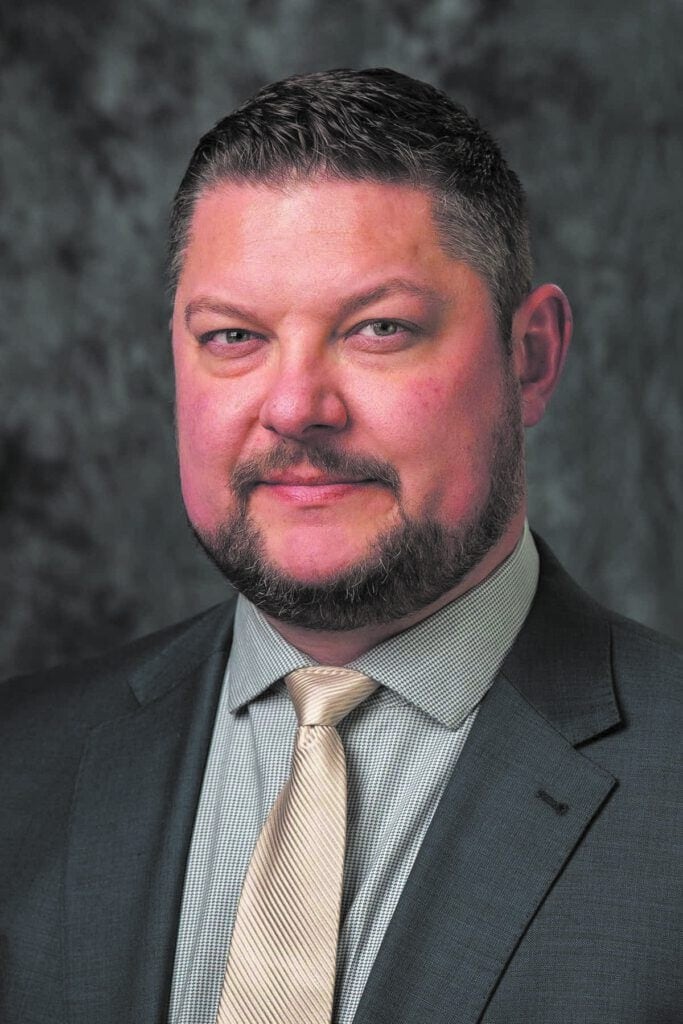
In a press release regarding the grant, Mid-State President Shelly Mondeik said this investment “recognizes both the importance of manufacturing to Central Wisconsin and Mid-State’s ability to respond with practical, employer-driven solutions.”
“By connecting workers and small manufacturers with advanced training, industry expertise and state-of-the-art facilities, USA MADE will help our region compete, grow and create lasting economic opportunity,” she said.
Recommended by regional business
Firecrest Aerospace – a relatively new company, Kawski said, with which Mid-State has affiliated for several months – played an important role in identifying the grant opportunity and recommending it to Mid-State, especially in light of the scale and urgency in the region’s emerging workforce needs.
Kawski said “this is a Mid-State grant, though; this is not a Firecrest grant,” with Mid-State writing the proposal, receiving the funds, disbursing the funds and procuring any sort of goods or services.
In a press release announcing the grant award, Firecrest CEO Paul Lemke said the investment is one example of the advanced manufacturing growth taking shape in Central Wisconsin.
“The long-term success of projects like ours depends on a deep pool of skilled talent and a strong regional manufacturing network,” he said. “Mid-State’s USA MADE initiative will help build that capacity while creating opportunities for manufacturers and workers throughout the region.”
More on the project
Per Mid-State’s announcement regarding the SBA grant, the USA MADE project will:
- Serve 20 manufacturing businesses
- Train at least 150 workers
- Target 75 industry-recognized credentials, 20 technical-assistance engagements and 15 operational-improvement initiatives during the grant period
- Offer tuition- and fee-free training to eligible participants, with qualifying certification application or exam costs covered by the project
- Feature five stackable certificate pathways, allowing workers to build foundational skills and advance into specialized areas including quality management, manufacturing engineering, advanced manufacturing, supply-chain development and workforce leadership
- Provide participating manufacturers customized operational assessments and technical assistance, addressing needs such as lean manufacturing, process optimization, quality systems, advanced manufacturing readiness, supplier development, cybersecurity and compliance, workforce planning and operational effectiveness
Where do they go from here?
Kawski said it’s an ambitious undertaking for Mid-State to establish the program in 12 months.
In order to be up and running by January, he said there is much to do.
Kawski said USA MADE kicked off in September with initial outreach and employer onboarding.
The next steps, he said, include curriculum development, customized organizational and individual training.
“We are finalizing the curriculum that we intend to [finish] in October,” he said. “We’re also going to be hosting our roundtable listening session, so we can find out what other needs businesses have. The delivery of curriculum and content will happen sometime right after Jan. 1 when we come back from holiday break, and run through Sept. 29, 2027.”
Kawski said he has a core group of four faculty working through some of the higher-level curriculum development that identifies the core competencies, which will determine what their learning objectives and what the target outcomes for the training would be.
“We’ve done some prework in advance so we can hit the ground running,” he said. “That curriculum development could take us a few weeks or months, depending on the level of skill.”
Additionally and urgently, Kawski said, the faculty is developing a program that will “train the trainers.”
“A lot of the training packages or the certification packages we’re working on will include industry-recognized credentials, third-party verified credentials,” he said. “We need to get our faculty through those train-the-trainer models, so we can offer some of these certifications. That’s going to take us a little bit of time, too.”
All of this has to be balanced by the faculty who are teaching full-time in their programs, Kawski said, who need to be upskilled and trained themselves before they can start delivering alongside the actual curriculum development.
“There are a lot of moving parts right now,” he said, “but I have a core group of faculty who are doing an outstanding job on this, and they are ready and excited and eager to deliver.”
While this grant is not intended for traditional college students or those already enrolled at Mid-State, Kawski said the college will realize a significant “side benefit.”
The faculty working on the E2G initiative, he said, will themselves benefit from upskilling.
Further, Kawski said the advanced skills and credentials acquired by the faculty will eventually be embedded into the college’s precision machining and mechanical design programs.
For more information about the E2G program, Mid-State’s customized workforce training and the AMETA Center, visit mstc.edu.