Keeping nostalgia alive in Northeast Wisconsin
 Clover Hill Dairy plants its mission in sustainability, family legacy



November 9, 2026
NORTH CENTRAL WISCONSIN – It’s no secret that rural areas of Wisconsin continue to struggle with finding dental professionals.
Legislative leaders recently addressed those shortfalls through the 2023 Wisconsin Act 89, which allows Wisconsin’s 16 technical colleges to expand dental education and training programs and provides guidelines for a $20 million oral healthcare workforce program created in the state’s 2023–25 budget.
Two of those colleges – Mid-State Technical College and Northcentral Technical College – are working toward helping address the statewide shortage of dental professionals.
“I know a lot of the shortages are simply from supply and demand,” Daniel Wall, Dean of the School of Allied Health at Mid-State, said. “It’s healthcare in general, especially in rural areas like Central Wisconsin. Along with the considerable time commitment and financial responsibilities, a lot of dentists – and other dental professionals – are hitting retirement age and there is nobody to replace them.”
Regarding dentists specifically, Wall said another issue is the lack of dental schools in the state.
“Marquette University has the only dental school in Wisconsin.”
Mid-State opens oral health lab
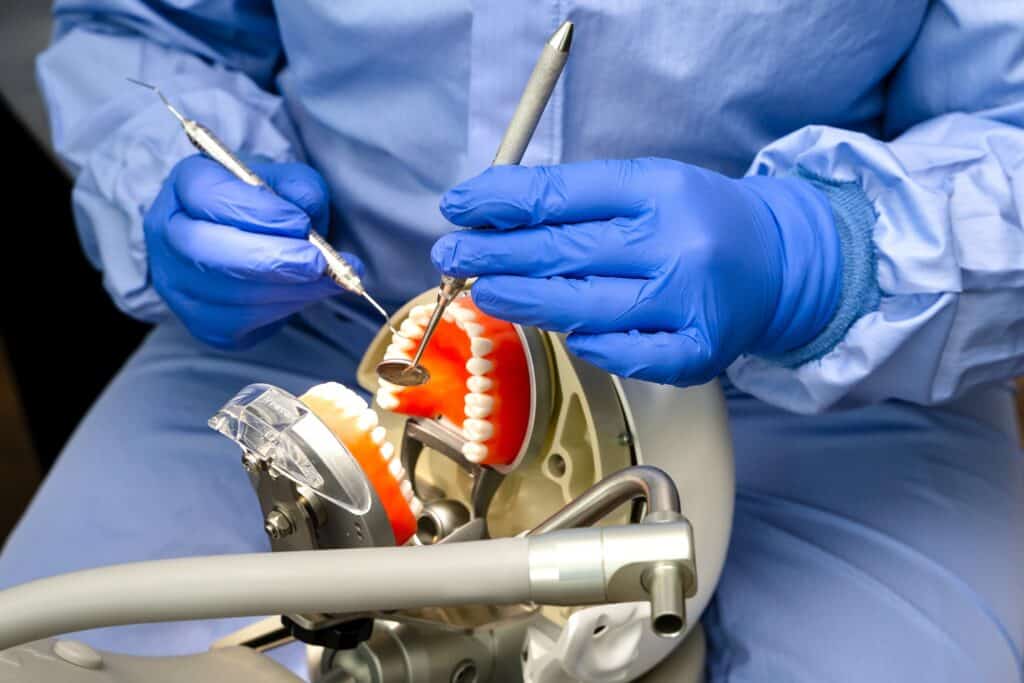
Mid-State celebrated a significant investment in oral health education Oct. 19 with the opening of its new oral health lab at the Wisconsin Rapids Campus.
College leaders, community partners, and supporters gathered for a ribbon-cutting ceremony and tours of the new training space, which will support the college’s Dental Assistant program and its new Dental Hygienist program.

“This investment is about more than opening a new lab – it’s about strengthening the oral health workforce and expanding access to care in Central Wisconsin,” Shelly Mondeik, Ed.D. and President of Mid-State Technical College, said. “Through the support of our partners, we are creating opportunities for students to enter high-demand careers while building capacity to serve our communities for years to come.”
The approximately $3.5 million project was made possible through a combination of public and private support, including:
- 2023 Wisconsin Act 89 funding
- Delta Dental of Wisconsin, including support for Dental Assistant program equipment and the required match for 2023 Wisconsin Act 89 funding
- Wisconsin Department of Health Services Allied Health Professional Training & Educational Grant
- Guidance and support from Mid-State’s oral health advisory committee
Wall said the new lab provides students with a modern, hands-on learning environment designed to closely reflect professional dental settings.
Students, he said, will be able to build technical skills and gain practical experience as they prepare to enter the workforce.
The college’s Dental Hygienist program, he said, will complement its existing Dental Assistant program and provide another pathway for students interested in careers supporting the oral health needs of Central Wisconsin communities.
“There has been a lot of expansion in oral health in the state with the passing of Act 89,” Wall said. “The goal of that seed money was to help kickstart expansion in oral health programs, which is much needed.”
Wall stressed that the additional seed money given to Wisconsin’s technical colleges will go a long way in helping to address the shortage of dental professionals in the state.
He used his own son as an example of how the shortage affects residents, particularly in rural areas.
“My son did not get a cleaning scheduled after his last appointment,” Wall said. “When we caught it and called in, it was nine months to get him in for a cleaning. Most dental practices are only taking emergency care right now, and some of the dental practices are closed. It’s really a challenge in Marshfield.”
Wall said the recently opened oral lab is about 4,500 square feet of remodeled space, which was formerly administrative offices, a classroom, and a student lounge.
“We’re currently in the space and able to run two programs,” he said. “We had already started a Dental Assistant program in spring 2023, which was based out of Marshfield partnering with Family Health Center. We were teaching our classes in an educational space in their dental clinic because we did not have any dedicated dental space.”
This fall, Wall said, Mid-State began its first cohort of dental assistants in Wisconsin Rapids after the program moved from Marshfield.
Next fall, he said Mid-State will begin its first cohort of students for the Dental Hygienist program.
“We’ll be able to take 10 students a year,” Wall said. “We’ve had a great response. Currently, a lot of students are taking some of their general education courses, and we’ll move into those core dental hygiene classes next fall. From the time they start core dental classes, it will take two years, so [the first cohort] will be graduating in spring 2029.”
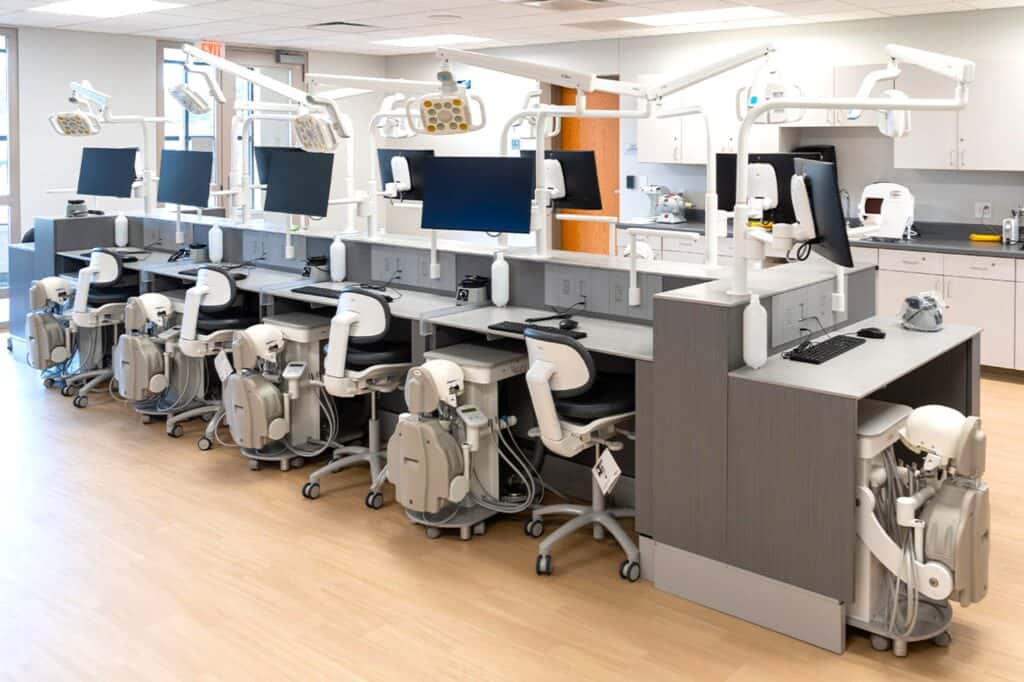
Beginning in spring 2028, Wall said the facility is also expected to begin serving members of the public, creating opportunities for students to gain supervised clinical experience while expanding access to oral health services in the region.
“This is not unique to Mid-State – all the technical colleges are doing it,” he said. “With technical college programs, four process classes are needed to become a dental hygienist. With Process 1, they learn to clean teeth on mannequins, and toward the end of semester one, they begin working on each other.”
With Process 2, 3, and 4, Wall said that’s when Mid-State will bring in members of the community.
“Basically, we’ll be running a low-cost dental hygiene clinic,” he said. “It’s only hygiene services, so students can clean teeth and complete X-rays. There is no restorative work completed, at least not at Mid-State. There will always be supervision, and it’s very well structured. It’s another great way for us to give back to the community, but it’s also a program requirement.”
NTC launches Dental Therapy program
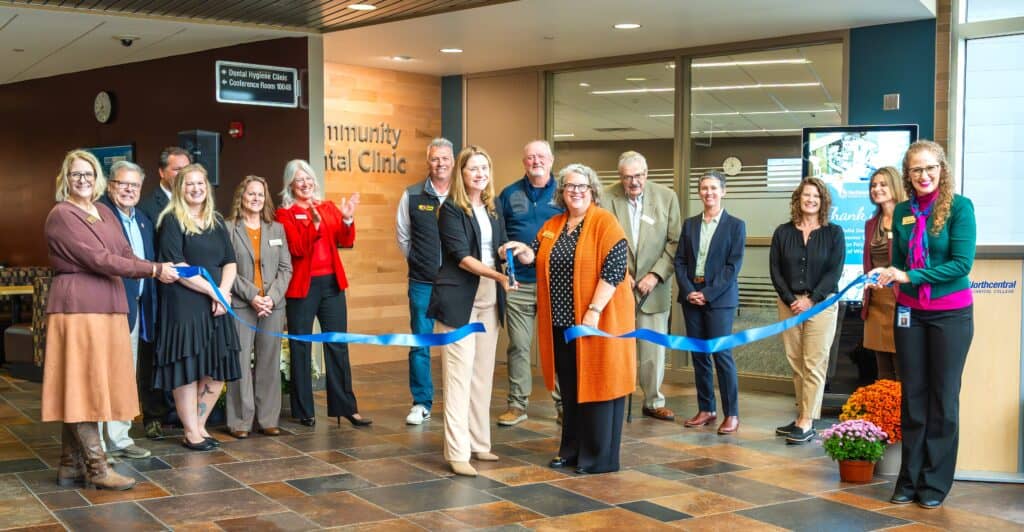
Meanwhile, about an hour’s drive north of Mid-State, Northcentral Technical College (NTC) in Wausau recently celebrated the launch of its Dental Therapy program at the NTC Community Dental Clinic, marking a new career opportunity for students and a step toward addressing oral health workforce needs in the region.
The program’s first cohort of students has begun training for a career designed to help expand access to dental care, particularly in rural communities.
“From an NTC perspective, we were specifically given $2 million to start a Dental Therapy program,” Jeannie Worden, Ed.D. and NTC President, said. “Right now, we are the only technical college in Wisconsin that is offering the program. We anticipate more dental therapy offerings to spread as things get moving.”
Worden said Wisconsin’s authorization of dental therapy made this new pathway possible.
She said state funding helped NTC expand its dental clinic and labs to prepare students, and support from the Delta Dental of Wisconsin Foundation contributed to the expansion.
What is dental therapy?
In a nutshell, Worden said the Dental Therapy program is a step above possessing a Dental Hygienist associate degree.
Once students become dental hygienists, she said they can then apply for dental therapy.
“It’s a second high-value associate degree on top of the Dental Hygienist degree,” Worden said. “A good way to look at it is the nurse practitioner model. NPs work under the cover of a doctor, but they’re able to do more advanced types of work. That’s the same thing with a dental therapist.”
Worden said dental therapists can perform routine extractions and higher-level work, just not at the same level as a dentist but above a dental hygienist.
She said that includes more in-depth oral exams, minor restorative procedures, etc.
“The neat thing about this program is we know there are so many dental deserts in the area, similar to what we talk about with daycare deserts,” she said. “Having a dental therapist work with the dentist and serving our rural community is really a benefit for the state.”
Worden said the “champions of this work” were Sen. Mary Felzkowski, Gov. Tony Evers, and the legislators who supported the legislation and investment.
“Sen. Felzkowski has been championing this work for probably at least 10 years,” she said. “Knowing the rural communities she serves, the impact of the lack of dental care, and then how that impacts your healthcare. She has been working hard and asked if NTC would be her partner in this pathway.”
NTC also recognized the contributions of the Wisconsin Technical College System, the NTC District Board of Trustees, dental professionals, community partners, faculty, and staff for helping establish the program.
“We know that other locations that have dental therapy – Minnesota and Alaska – show that it helps the dental practice to be more profitable for the dentist, as well as to expand their services,” Worden said. “I think dental therapy is absolutely a future pathway.”
Worden said when someone becomes a dental therapist, it doesn’t necessarily mean they need to advance to becoming a dentist.
“It’s very much like that NP model I discussed,” she said. “Some nurses don’t necessarily want to become a doctor and are perfectly content staying as an NP. Going from a dental hygienist to dental therapy is another amazing pathway where I think people might stay on that trajectory and make that their lifelong career. Having said that, we don’t want to close any doors if people want to advance [to further education].”
More on the program
Worden said Dental Therapy is accredited under the Commission on Dental Accreditation, so there are significant practices NTC needs to follow.
She said it took NTC almost a year to get through that process once it received the funding from the state.
In the meantime, Worden said the college wrote the curriculum, which was approved last spring.
“Our goal is to eventually have a cohort of 12 students in the program every start,” she said. “We’re starting with six students this year, which is typical for a new program being launched. It’s a two-year program after students complete their Dental Hygienist two-year degree.”
NTC, Worden said, has been providing dental training for years.
As an example, she said NTC partners with Colby Community College in Colby, Kan., helping to train dental hygiene students.
“We have always been a leader in dental hygiene,” Worden said. “The other new program we added is an Expanded Function Dental Auxiliary (EFDA) certificate. It’s a pathway right above Dental Assistant. A dental assistant is basically the first job opportunity, then it’s EFDA, then dental hygienist, and then dental therapy.”
Worden said the beauty of NTC’s programs is that students can decide what they want to do as they go through each level.
“That might initially mean going out into the workforce, coming in for more schooling to expand their opportunities, or both,” she said. “With the dollars we received from the state, we built a simulation center within our dental clinic and expanded the number of operatories where students can learn from a dentist. Dr. William Akey is the program director for our Dental Therapy program, and he’s working with them every day in a simulation environment before they go out and actually practice.”
Worden said excitement for the new program is high, and it’s NTC’s job to educate the dental community on what dental therapy provides and how it will help dental practices.
“From the support we’ve received, I think it shows that this new model is being embraced,” she said. “There are a couple of other technical colleges in Wisconsin we will partner with because they’re looking at expanding dental therapy. We want to make sure we share all of the work we put into the program with them, so they don’t have to reinvent the wheel.”
Dentists needed
As NTC has built its Dental Therapy program, Worden said the college has a need for dentists who have a passion for giving back and wanting to teach.
Because this is the first Dental Therapy program in Wisconsin, she said NTC is spending a lot of time educating people on what it is.
“One way people can learn is by getting involved in the Dental Therapy program,” Worden said. “You can have a dental therapist do the teaching, but because Wisconsin hasn’t had dental therapy licensure before, there aren’t people to draw from to teach, so we’re having dentists come in and teach our dental hygiene students. We’re thrilled about it because our dentists are very active in the program.”