 Iron House Gym powers a new era of wellness in Weston
 Forst Auto drives to new heights with expansion


October 12, 2026
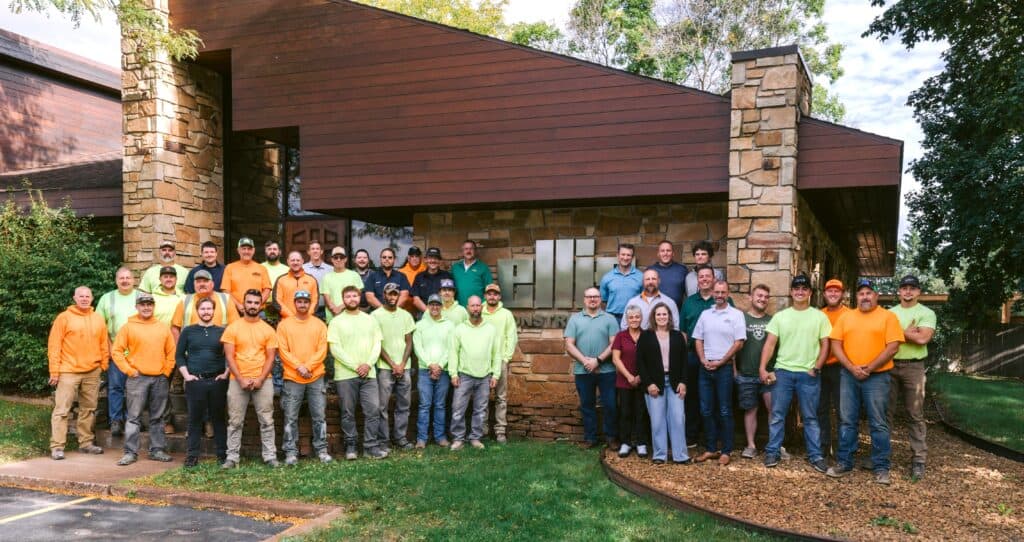
STEVENS POINT – For a company that has been family-owned for more than 90 years, transitioning to an ESOP (employee stock ownership plan) is something worth writing about.
Andrew Halverson, executive vice president and corporate secretary for Ellis Construction in Stevens Point, said the company has been thinking about transitioning to an ESOP for “quite some time.”
“Roughly a year ago, we started thinking about all of the research we wanted to do and the questions we had revolving around it,” he said. “The bottom line for [Ellis President] Erik [Carlson] and I was about giving the folks who do the daily work a real opportunity to enjoy the collective successes we have experienced, and certainly will experience in the future.”
An ESOP is a tax-qualified retirement plan designed to invest primarily in the stock of the sponsoring employer, making employees beneficial owners of the company they work for.
According to esopassociation.org – an organization advocating for businesses to give employees an ownership stake in the company they work for – there are several benefits to an ESOP:
- Employee engagement and retention: Employees become invested in the company’s success and are more likely to contribute to productivity and problem-solving.
- Retirement wealth: ESOPs can become a significant source of retirement savings, often providing higher wages and greater savings than non-ESOP companies.
- Tax advantages: ESOPs offer tax benefits to both the company and the selling owners, including potential deferral of capital gains taxes.
- Business continuity: ESOPs help keep companies local, preserve jobs and maintain company culture when ownership transitions.
“Ellis Construction is a general contractor and construction management firm,” Halverson said. “We are also a design-build firm, so we have our own architects on staff, and we engage specifically in the manufacturing, health care, education and overall commercial markets. The vast majority of our work – probably 85% of it – is done between Wausau, Stevens Point, Marshfield and Wisconsin Rapids.”
The ‘ultimate ESOP’
Looking back 94 years to Ellis’ founding, Halverson said the company was an example of the “ultimate ESOP.”
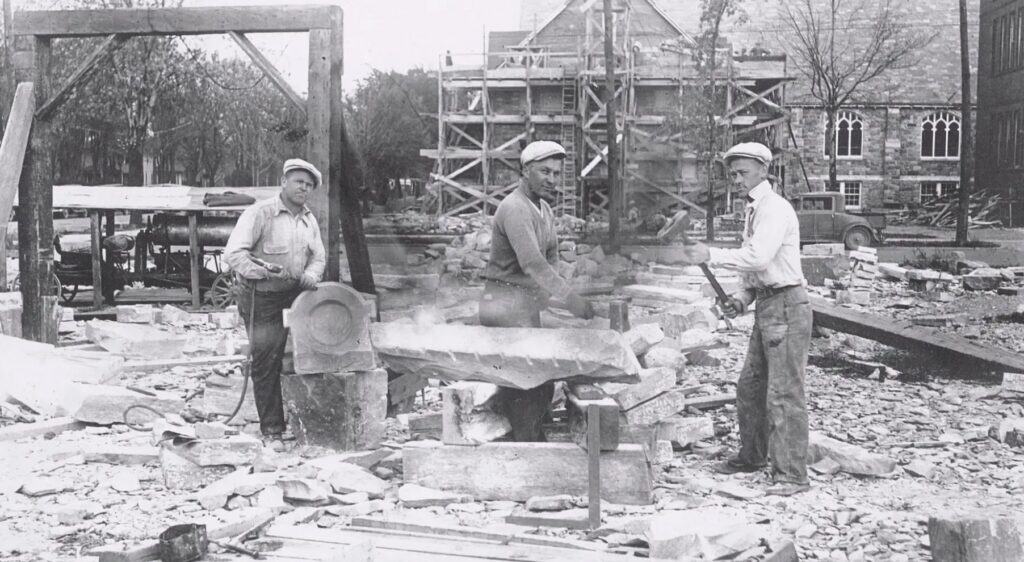
He said four Swedish immigrants – Nils Anderson, Helge Carlson, Walfred Olson and Manfred Peterson – came to the United States at the height of the Great Depression to start a company to better their lives.
According to the company’s website (elliswi.com), working out of a leased quarry in Ellis, just northeast of Stevens Point, the four quarried stone to build churches, schools, homes and more.
If any of the four were alive today, Halverson said, “they’d be extraordinarily proud we’re going back to the roots of how the company started.”
“Most importantly, it’s about recognizing the real work that goes on daily with the placement of our work by our craftspeople for the benefit of the clients who place their trust in us,” he said. “Our clients throughout Central Wisconsin have believed in us, and in turn, we believe in those who are putting forth the effort to bring what our clients are looking for us to accomplish.”
With the transition to an ESOP, Halverson said it will also ensure Ellis Construction’s legacy continues.
“That’s one thing unique to construction: you start with nothing and you end with something of substance, where people will work, pray, play and heal,” he said. “There really isn’t an industry like it.”
Because Ellis Construction team members have a lot of pride in the landmarks they leave throughout the state, Halverson said transitioning to the ESOP is another way to recognize their accomplishments.
“Leadership felt this was the best way we could recognize our dedicated employees – to turn the company over to them and ensure all of them have a collective opportunity to succeed,” he said.
Before the transition to an ESOP officially occurred Aug. 31, Halverson said Ellis Construction’s principal shareholder was his business partner, Erik Carlson – the grandson of Helge Carlson.
“Of course, starting with our four founders, another interesting note is that in the early 1950s, Nils Anderson and Helge Carlson bought out the remaining founders,” he said. “So, basically, from about 1950 until 2017, when our other three owners and I bought our shares, either an Anderson or a Carlson owned, in essence, 50% of the company. We felt it was right to have all of our team members have ownership and a vested stake in the success of the company.”
More on the ESOP
With the shares done on an annual basis, Halverson said that as the success of the company continues and the value of the company rises, there is a direct correlation to their stock becoming more valuable.
Given that it is a regulated ERISA (Employee Retirement Income Security Act) retirement plan, he said this is an additional benefit Ellis can provide its team members to help in retirement.
“Not only do we have our 401(k), but now we also have the ESOP, which gives employees beneficial ownership in the company,” he said. “It’s really an amazing additional benefit for them, and one that ties everyone together. The ownership is distributed across all members of the company, and that’s something we really felt was front and center in this decision.”
Even before the transition to the ESOP, Halverson said Ellis employees were already working hard and doing the best they could.
“Now, it’s truly personal to them,” he said. “The quality level, the detail and the added success of the company means that much more to them – not just, of course, figuratively, but literally in terms of the value. The more successful we are, the better we’re serving our clients. The better we are on our clients’ behalf now directly benefits all of our employees financially, and that is a huge cultural driver.”
Because ERISA accounts are “very regulated,” Halverson said there is a specific process for how employees receive their retirement benefits.
Once employees decide to retire, he said the company buys back their shares.
“By law, they cannot keep them,” he said. “Those shares get bought back by the company, redistributed back to the ownership group that would be in place at that time and then there is a payment stream that would flow directly to them as they retire.”
Halverson said after a 25- or 30-year career working at Ellis, it can be a “huge difference-maker” for the company’s fellow owners in their quality of life when they decide to retire.
With the way the shares are paid out, he said the board of directors and the trustee who runs the trust retain reasonable flexibility regarding payment options.
“We have flexibility where the money could be paid out potentially in a lump sum or perhaps over a five- or six-year period,” he said. “It really is a very unique process, but it might not be the best choice for every company. This was an individual decision, and we felt it was most respectful of our employees.”
Because the process of transitioning to an ESOP is “fairly detailed and complex,” Halverson said the company utilized a “great deal of legal assistance through the process.”
“As a formal retirement plan regulated under ERISA, we had to make sure all of those various elements were within the plan document we have accepted and that it also meets all of the U.S. Department of Labor standards,” he said. “It’s all regulated as to how those funds are distributed. Erik and I have been in business for quite some time and feel we are quite proficient in understanding finance, but the process required excellent legal assistance and great consultants.”
Halverson said now that the transition to an ESOP is complete, clients will not notice any changes in how Ellis runs business.
“We have always operated with our clients first in everything we do,” he said. “Quite frankly, I see things getting even better. The leadership team stays the same, and now our employees will see a bigger benefit financially in the long term.”
For more information on Ellis Construction, visit the aforementioned website or its Facebook page.