Sugar Rush by Amanda brings fresh sweetness to Suamico
 The future of sustainable energy looks to alternative materials



August 3, 2026
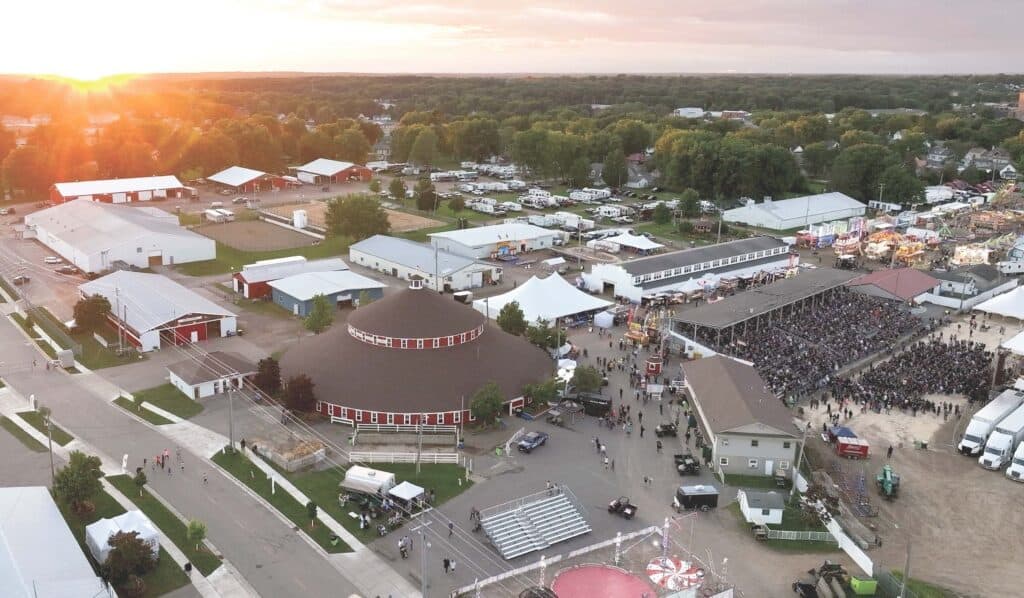
NORTH CENTRAL WI – According to the International Association of Fairs and Expositions (IAFE), Wisconsin’s 74 county, district and state fairs made a total statewide economic impact of $1 billion in 2025.
“[The] IAFE did an economic impact study throughout the whole country, and they offered it to a lot of fairs in Wisconsin, [so] we could all participate in it,” Dale Christiansen, executive director of the Central Wisconsin State Fair, said.
Available on the Wisconsin Association of Fairs (WAF) website (wifairs.com), the 74 fairs collectively welcomed 3.4 million visitors, which is equal to roughly 57% of the state’s population.
However, Christiansen said not every Wisconsin fair-goer is a Wisconsinite – calling on the events’ ability to draw tourists from across the country.
“With the entertainment we brought in, as I scanned through our ticket sales last year, [I saw] we had visitors and sold tickets to [people from more than] 26 different states,” he said.
With many fairs sporting a history of more than a century – with the Wauskesha County Fair, founded in 1842, believed to be the oldest – Wisconsin Valley Fair Administrator Jodi Langenhahn said their agricultural roots have grown to include contemporary urban culture.
“We have cows and sheep and pigs on the grounds, but you can also stroll to the grandstand and see great entertainment, and I love that we have both of those,” she said.
As the entertainment and agriculture industry have evolved – both in very different ways – Langenhahn said fairs have also had to evolve, both to accommodate crowds and encourage agri-education amid increasing urbanization.
“You could bring the same cow I showed however many years ago…, but then we also have projects like arts and crafts and foods,” she said. “We try to update [the scope of exhibiting] to stay trendy and relevant.”

As inclusive as showing and exhibiting at the fair has become, Christiansen said it’s been much harder to keep up with the expectations of those attending primarily for entertainment.
“The cost of bringing entertainers into the community [has] changed significantly,” he said. “We still deal with some national artists at the level [of the Central Wisconsin State Fair], but the cost of bringing that type of entertainment into the fairs has become more and more cost-prohibitive.”
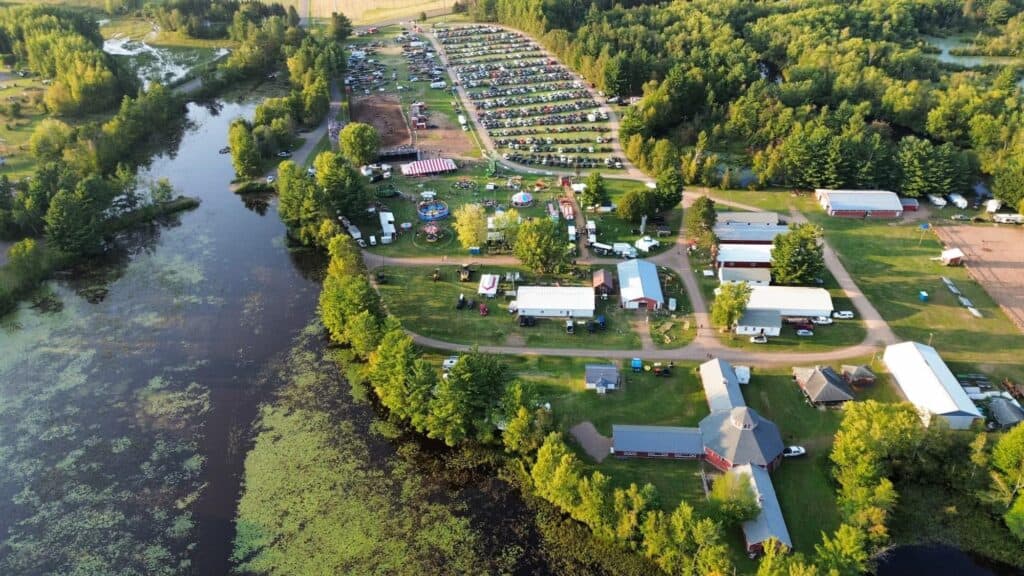
Even in regard to lower-profile events, Alexis Schienebeck, fair board member and the founder of Price County Productions, Inc. – the 501(c)(3) nonprofit that owns the fairgrounds – said the Price County Fair didn’t have a grandstand event until recent years.
“With some hard work and [meetings with] the board, we decided to bring in what is called a Dirt Dash & Demo Derby,” she said. “We partnered with Uttecht Derby Industries for 2023, had our first official Dirt Dash & Demo Derby and we flat out blew the doors off our fair on Saturday.”
Though entertainment is a clear attendance driver for fairs, Schienebeck’s fellow fair board member and UW-Extension employee Amber Rehberg said the offshoot industries fairs have created continue to expand their impact well beyond their entrance gates and ticket booths.
“I was talking to [an] individual who was at the Dunn County Fair [who pointed out that] two young 4-Hers who showed hogs are now grown young men, and they have their own show pig businesses selling to the next generation,” she said. “It’s become a market – they’re selling their business, but also teaching and influencing the next generation.”
Education and exhibiting
At their inception, Christiansen said fairs were created to give space for agriculturalists to gather with the best of their stock.
“When we started [more than] 100 years ago, the focus was on the animals,” he said. “It was on farming and new practices, and the entertainment was horse racing and that type of thing.”
Schienebeck said if she had to estimate, she thinks only a quarter of the Price County community understand the origins of their annual fair.
“Originally, fairs started out as a place to showcase agriculture and your local community talent,” she said. “It has now been noted as a place to see entertainment and much less noted for its agriculture and exhibits.”
However, as farming operations have continued to close and consolidate across North Central Wisconsin and beyond, Christiansen said fair organizations recognized the events needed to include an educational component as well.
“We’ve evolved into an industry that needs to educate the public about the agricultural side of their lives,” he said.
Having been raised on a dairy farm herself, Rehberg said she’s seen how families and children have slowly migrated away from the farm as the industry thins and becomes less tenable for smaller operations.
“When I was growing up on that dairy farm, there were farms across the countryside…, and now in Price County, there are a handful,” she said. “Now, most of our young people who are even in 4-H are not living on farms or working farms.”
However, even as more people associate fairs with food, carnival rides and entertainment, Christiansen said his fair maintains a “very good crowd flow for both.”
“There are a lot of local people who like to come, go through the exhibits and attend grandstand shows,” he said.
Drawing on her professional experience with UW-Extension and her passion for attending fairs across the State of Wisconsin, Rehberg said she thinks whether someone is attending a fair for the food and entertainment or the agriculture depends on which one they’re visiting.
“I think – [depending on] the size of the fair, the size of the community – it really is different,” she said. “I think some fairs have done a great job… showcasing agriculture as we become more urban, so people can understand where their food comes from and stay connected.”
Though many fairs experienced a decline in exhibitors – agriculture or otherwise – during and after the COVID-19 pandemic, both Christiansen and Langenhahn said their fairs are enjoying a resurgence.
“There was a bit of a drop just because nobody was doing things,” Langenhahn said, “but [at the Wisconsin Valley Fair], we’re seeing our numbers get back to where they were.”
Though exhibiting opportunities vary from fair to fair, Langenhahn said the Wisconsin Valley Fair welcomes nearly 1,000 artists, makers and farmers annually.
“We have two different classes: we have our junior fair… and then we have something called open class, which is generally [for] adults, but anybody else [can exhibit],” she said. “We get about 150 exhibitors [in that class] each year…, [and] I think we have somewhere around 800 youth exhibitors [every year].”
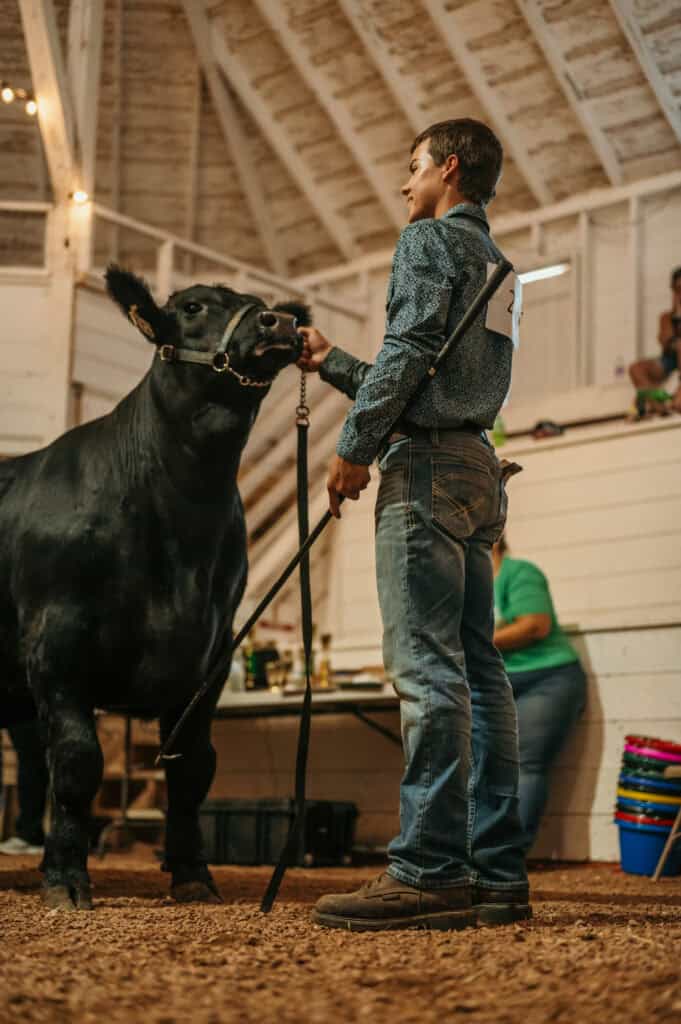
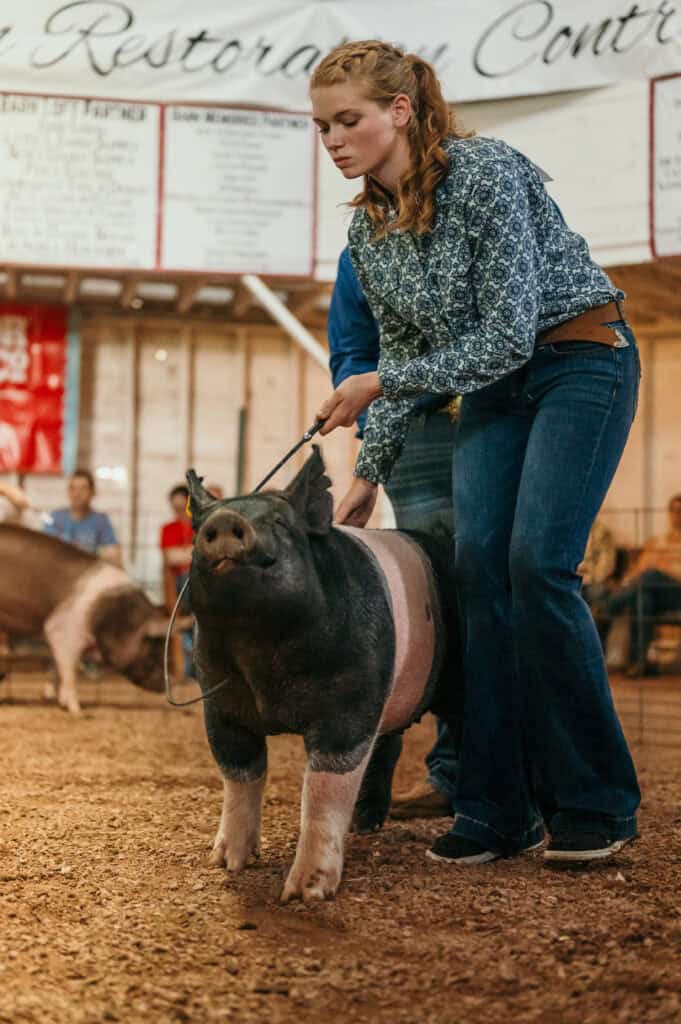
Christiansen – whose experience with the fair began as a child showing his family’s dairy cattle – said the competition of exhibiting goods and stock provides local farmers and makers a platform to demonstrate their quality and, in some cases, superiority to potential customers.
“It’s seeing how your project stands up to the neighbors’ project, but a lot of our exhibits do get down to the state fair and exhibit statewide,” he said. “We send the best we have down to the [Wisconsin State] Fair – in animals and in all of our other projects. It’s a kind of a learning competition experience, and, when it comes to [farm animals], by exhibiting, it helps with selling and moving cattle and [herd] genetics.”
Close-to-home entertainment
Beyond ticket sales, Schienebeck said the true impact of hosting a fair can be felt throughout a host community.
“Just from the fairs’ [operational] end, we put up entertainers in local hotels, they go to local restaurants and gas stations, then come to our fair to entertain our community where then, in return, they spend money on tickets,” she said. “Then, we go and are able to bring back future entertainment and donate back to local organizations.”
For example, Langenhahn said Wisconsin Valley Fair’s profits help fund annual community scholarships.
“2023 was sort of a huge year – we had great concerts that were well attended, but last year, on Friday night we had the rodeo, and it was our third, highest-grossing night at the gate of all time,” she said. “That allows us to do things like give out scholarships every year, and we make a monetary donation back to some of the groups we use to staff our gates and do other jobs around here. So, a lot of the money we bring in that isn’t used to continue to fund programs gets put back into the community.”
In addition to the workforce that often comes along with live performances and carnivals, Christiansen said out-of-state visitors likewise patronize local businesses while coming for the fair.
“Last year, we had 62,000 visitors, 236,000 yearly website views [and] a fiscal impact of $373,000,” he said.
The Wisconsin Valley Fair, Langenhahn said, likewise has a greater economic impact that extends outside of its fairgrounds – outputting millions of dollars since its founding in 1868, per a study done by the UW-Whitewater Fiscal and Economic Research Center.
Statewide, the IAFE study reports Wisconsin’s 74 fairs generated 48,900 hotel nights stayed and $348.7 million in wages – both temporary and ongoing for the 7,800 jobs the industry supports – in 2025.
“By the time you look just at people coming to the area to attend the fair or the shows, from even vendors who have hotel rooms to stay the week, it really is amazing to see the impact that it can have on the community,” Langenhahn said.
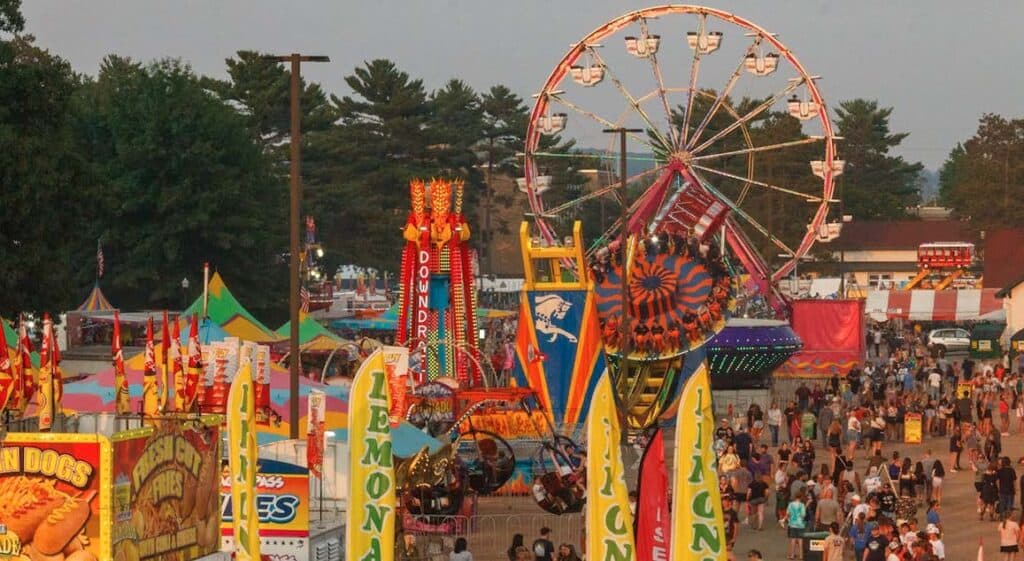
As fairs continue to evolve, one role Rehberg said they’ll always play is that of a close-to-home community gathering.
“Yes, the entertainment is exciting and the lights and the action, but whether it is the Walworth County Fair or Sheboygan or Price or Oneida – wherever – the one thing I do think is it’s just a little bit slower,” she said. “People can slow down and take in the community.”
As expectations grow and expand amid a culture of fast-paced entertainment, Christiansen said fairs continue to provide an accessible event worth anticipating.
“There’s nothing better than having it right here at home,” he said.
Fairs happening in North Central Wisconsin following this issue’s publication include:
- Waushara County Fair – from Aug. 20-23
- Lincoln County Fair – from Aug. 5-9
- Vilas County Fair – from Aug. 13-16
- Price County Fair – from Aug. 20-22
- Wisconsin Valley Fair – from Aug. 4-9
- Central Wisconsin State Fair – from Aug. 25-30