 Luxemburg-Casco School District preparing students for life with AI
 Westby Creamery announces $14 million expansion


January 5, 2026
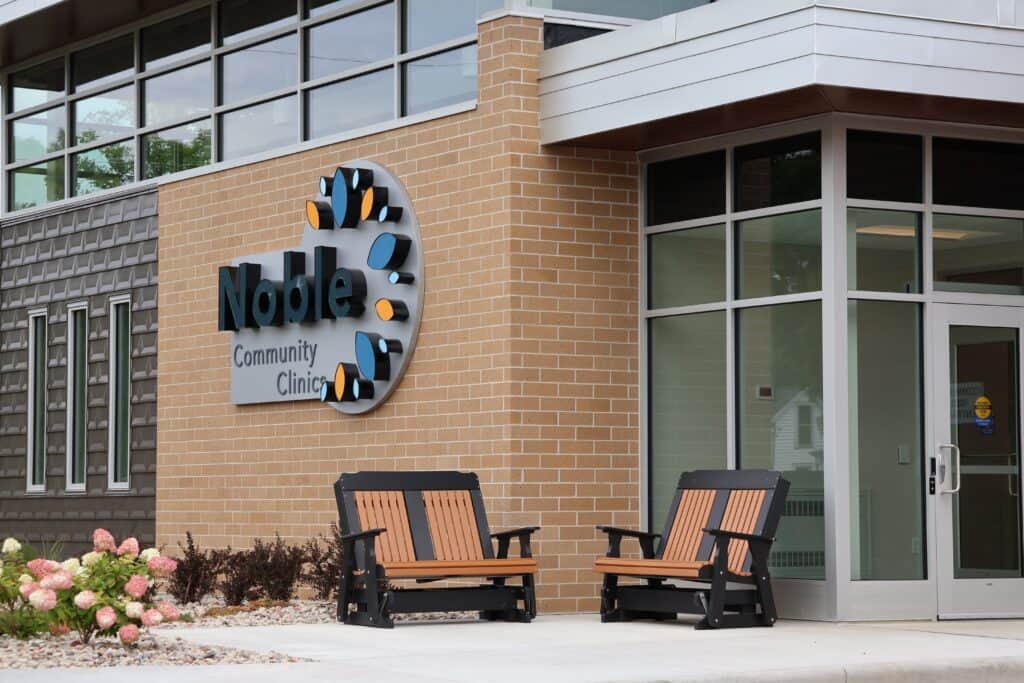
STEVENS POINT – CEO Laura Waldvogel said the opening of Noble Community Clinics’ (Noble) new Stevens Point facility in 2025 marked the culmination of years of planning, COVID-19-pandemic-delayed progress and community need assessments.
Waldvogel said it also signaled an important message that community health centers matter now more than ever.
“At our core, we exist to improve access to health care,” she said. “Noble is a community health center… and we are by design here to improve access to health care, high-quality integrated health care – that’s the bottom line. We enter communities because there is an identified need not being met that cannot be met within the available healthcare infrastructure.”
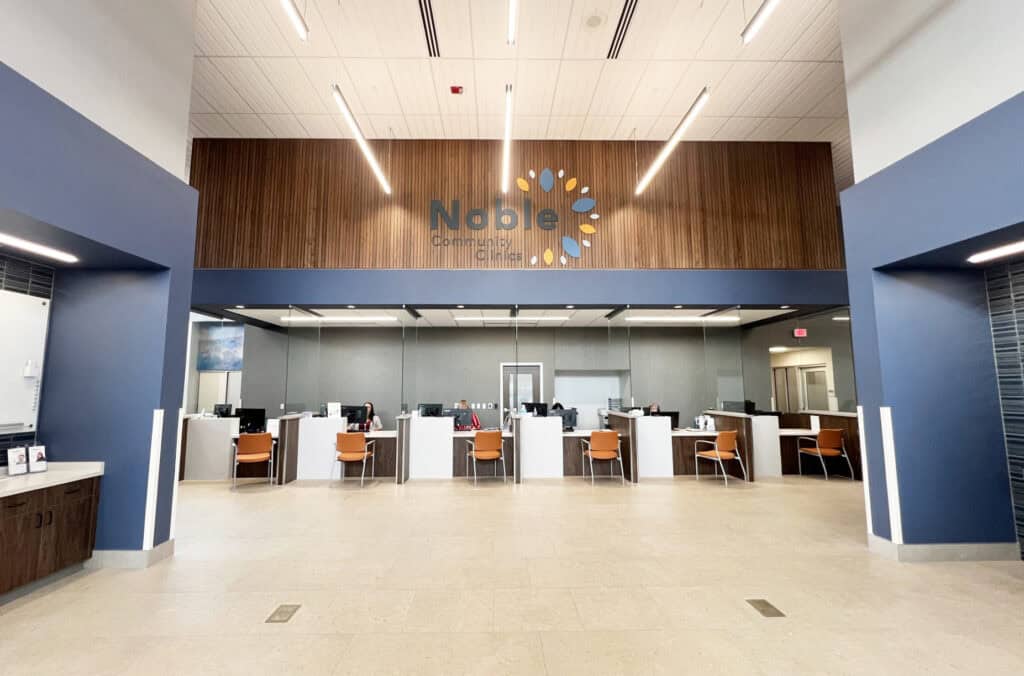
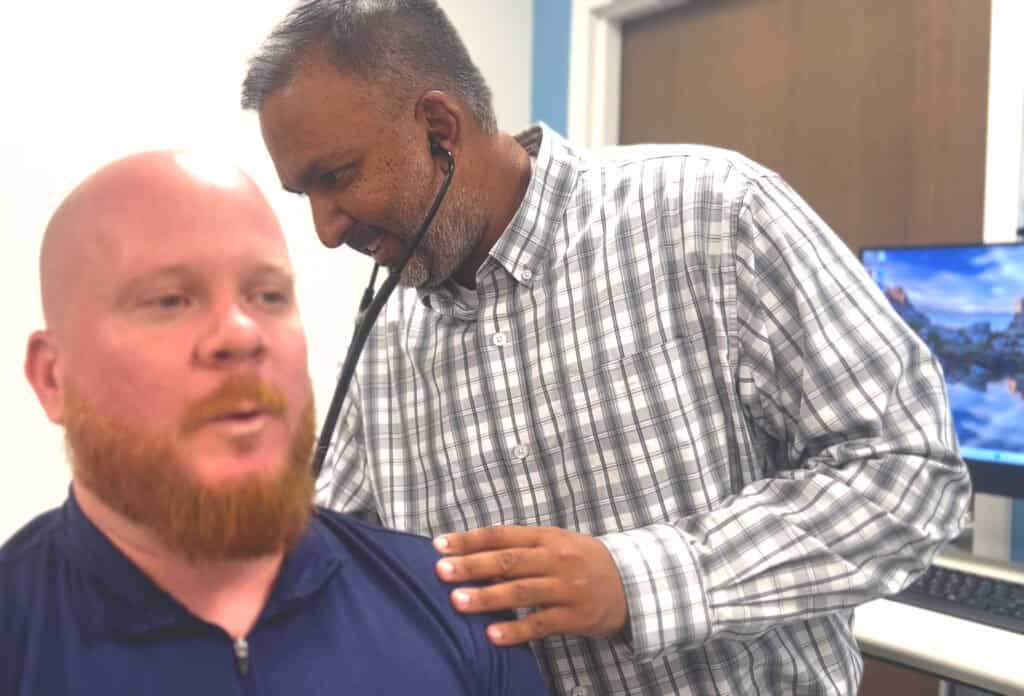
Waldvogel said the 38,000-square-foot Stevens Point clinic brings medical, dental, behavioral health, pharmacy and chiropractic care together under one roof, simplifying care for patients who previously visited several locations.
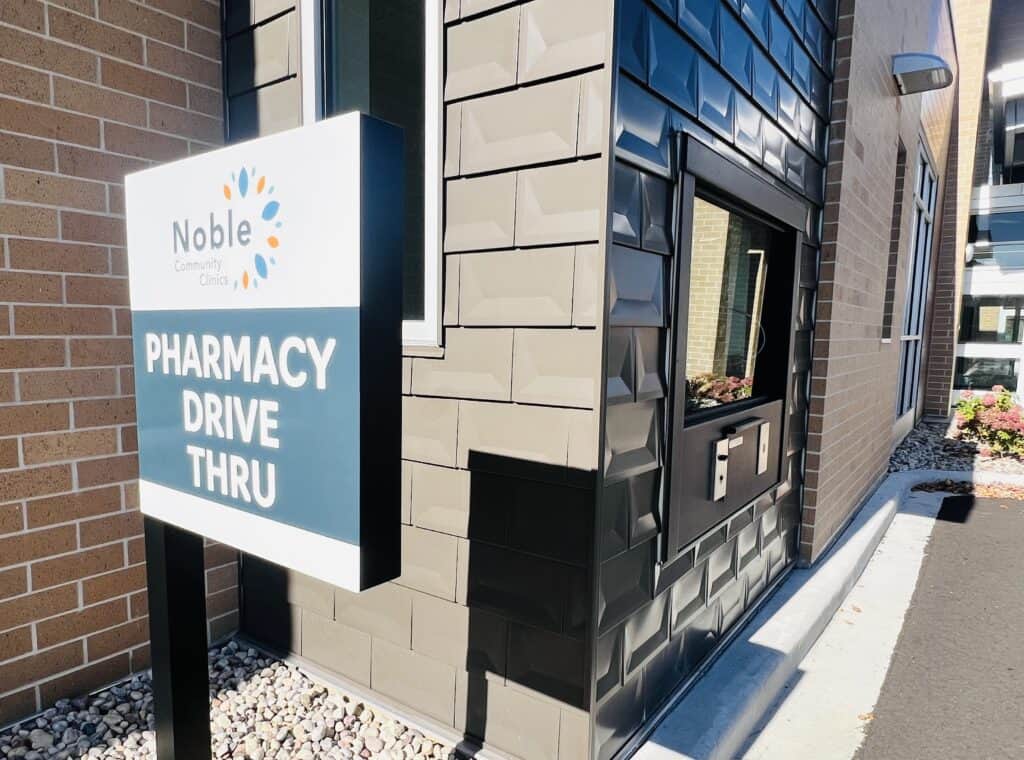
The addition of a full-service, in-house pharmacy and chiropractic care this fall, she said, further strengthened Noble’s integrated approach to mission-driven care.
From three sites to one integrated hub
Though the Stevens Point clinic is new, Waldvogel said Noble’s presence in the community is not.
The organization first entered Stevens Point, she said, in 2019 with a dental-only clinic, initially operating as a safety-net dental provider in partnership with what was then Ministry Health Care and became Ascension.
Over time, Waldvogel said Noble expanded to include medical and behavioral health services.

Bringing those services together, she said, was always the goal.
Waldvogel said the new Stevens Point clinic allowed Noble to close three separate locations – administrative offices, dental-only space and medical and behavioral health offices – and consolidate services into a single, patient-centered hub.
“That’s really a trademark of a community health center,” she said, “to bring as many services as needed in a community under one roof to make it easy for patients to access the care they need.”
Addressing gaps in care – by design
Waldvogel said the evolution of the Stevens Point location was driven by extensive needs assessments that identified three particularly acute gaps: dental access, behavioral health capacity and affordability across the care continuum.
Dental care, she said, remains a challenge statewide, particularly for patients covered by Medicaid or BadgerCare.
The Stevens Point clinic, Waldvogel said, now includes 21 dental operatories, including a dedicated pediatric wing designed for children.
Though services focus on general dentistry, she said they are comprehensive – crowns, bridges, root canals and pediatric services.
Behavioral health, Waldvogel said, was another priority, one that exists nationwide – especially in smaller and rural communities.
The new facility, she said, significantly expanded capacity for counseling, substance use disorder services and integrated behavioral health care.
Waldvogel said Noble continues to add clinicians as demand grows, intending to reach full capacity while maintaining timely access.
A licensed professional counselor by training, Waldvogel said she has spent her career working in community health settings.
Since becoming CEO of Noble in 2015, she said she has seen demand for services accelerate, particularly since the COVID-19 pandemic.
Behavioral health needs among children and adolescents, Waldvogel said, have grown significantly, a trend Noble sees reflected in schools and clinics alike – highlighting the significance of increased service capacity in Stevens Point.
“Post-pandemic, anybody will say the need [for behavioral health care] in schools is so important,” she said. “It really impacted kids and teens, and it impacted all of us.”
Primary care services, she said, are also expanding in response to need.
“In many communities, people wait a long time to get into primary care,” she said. “It may not have risen to the same level as the other needs, but that doesn’t mean it isn’t important. It absolutely is.”
New services: Pharmacy and chiropractic care
Two of the most visible additions to the Stevens Point clinic, Waldvogel said, are its on-site pharmacy and chiropractic services – both new to the location, and chiropractic care is new to Noble overall.
The pharmacy, she said, operates as a closed operation, serving Noble patients exclusively.
As a Federally Qualified Health Center, Waldvogel said Noble participates in the federal 340B Drug Pricing Program – which allows eligible organizations like theirs to purchase medications at significantly reduced costs.
Those savings, she said, help to make prescriptions more affordable for patients facing high deductibles and those who are underinsurance or have no insurance at all.
“At this time, we are for our patients only,” she said. “You have to establish care with us to access that.”
Chiropractic care, added shortly before the pharmacy opened, Waldvogel said, reflects Noble’s evolving approach to integrated, whole-person care.
Many peer community health centers, she said, already offer chiropractic services, and for Noble, it had long been part of the organization’s strategic vision.
A statewide footprint with local focus
Waldvogel said Noble’s clinics and mobile services serve more than 20,000 patients annually across 10 counties, with the majority living at or below 200% of the federal poverty level.
In addition to Stevens Point, she said Noble operates a medical and behavioral health clinic in Friendship; a dental-only clinic in Mauston; a full-service medical, dental, behavioral health and WIC clinic in Wautoma; and two locations in Beaver Dam that will soon merge into a single integrated site similar to what Stevens Point did.
Waldvogel said mobile programs extend Noble’s reach even further, delivering care to migrant and agricultural workers statewide, providing school-based dental and behavioral health services and supporting WIC programs across multiple counties.
Mobile and school-based programs, she said, are intentionally designed to go where the need is greatest.
“We’re all over with that program as we go where the need is,” she said.
Waldvogel – who has worked in community health centers since 2009 – said she sees the Stevens Point expansion as an indicator of health care in general.
Economic pressures, mental health needs and policy uncertainty, she said, are all at play, and community health centers play a crucial role as a safety net.
And yet, Waldvogel said they are largely an unknown offering for many people, which is why key Noble team members do significant community outreach to bolster that awareness.
“Community health centers are a pretty well-kept secret, unfortunately,” she said. “It’s excellent health care, and I think it’s where it’s at.”
As a Federally Qualified Health Center (FQHC), Waldvogel said Noble can access federal grant funding and programs – such as the 340B Drug Pricing Program – but the designation also carries strict requirements for governance, accountability and care delivery.
Maintaining FQHC status, she said, requires operating as a nonprofit organization with a board that is at least 51% composed of patients, ensuring that leadership decisions reflect the lived experiences of those receiving care.
“It’s incredibly important that patient voices are at the table,” she said. “Their perspectives shape how we think about access, integration and what people actually need to have positive health outcomes.”
Waldvogel said FQHCs are also required to assess and address the broader factors that affect health.
And access, she said, means more than a physical building – it includes affordability and removal of socioeconomic barriers that often prevent people from seeking care.
Waldvogel said that might mean connecting someone with food resources, transportation, housing support, translation or interpretation services or assistance enrolling in Medicaid or marketplace insurance.
Waldvogel said Noble’s staff does more than provide phone numbers – they actively help patients navigate systems and follow through.
“These are not add-ons,” she said. “They are fundamental to whether health care actually works.”
Serving everyone
Though Noble specializes in caring for individuals with barriers to access, Waldvogel said the organization’s doors are open to everyone – insured, uninsured and underinsured alike.
Approximately 70% of Noble’s revenue, she said, comes from billing Medicare, Medicaid and commercial insurance.
When coverage gaps widen and uninsured rates rise, Waldvogel said health centers must make careful financial decisions to sustain operations while maintaining access.
Sliding fee scales, she said, remain a critical tool, available to income-eligible patients regardless of insurance status.
Even patients with commercial insurance, Waldvogel said, may qualify if high deductibles or out-of-pocket costs create financial strain.
“We don’t deny care,” she said. “And even if people aren’t eligible for the sliding fee, we have very accessible payment plans – we make it work.”
Waldvogel said Noble’s patient population also includes a growing number of older adults enrolled in Medicare, reflecting broader demographic shifts.
“That population is growing, and they’re very impacted by the same affordability challenges,” she said.
Waldvogel said each clinic is established through collaboration with local partners, health systems and community organizations.
“We’re not in any community because we just set up shop,” she said. “It’s always because of collaboration and invitation.”
Waldvogel said that collaborative care extends to referrals as well, with Noble coordinating closely with specialists, hospitals and health systems to ensure patients receive the right care based on medical needs, location and financial considerations.
Looking ahead
Waldvogel said Noble’s planned merger with Lakeshore Community Health Care in 2026, pending federal approval, reflects that same long-term, patient-centered strategy.
The merger, she said, will bring together two neighboring FQHCs to share resources, reduce redundancies and strengthen services across eastern and central Wisconsin.
“It’s not because either of us has to,” she said. “It’s because we believe it’s in the best interests of our patients, our staff and the communities we serve.”
As health care continues to evolve, Waldvogel said Noble is positioning itself not just to respond, but to lead and remain committed to providing healthcare access.
“Community health centers are here for everyone,” she said. “And right now, that matters more than ever.”
As Noble prepares for its planned merger, Waldvogel said the organization is doubling down on that mission: expanding access, integrating services and ensuring that no matter where someone falls on the income or insurance spectrum, care remains within reach.
Kristin Stearns, CEO of Lakeshore Community Health Care, said the combined organization will invest in workforce development and provider retention, expand services to meet changing community needs, modernize facilities and adopt innovative care models that improve patient experience.
“Together, we can offer patients greater access to compassionate, comprehensive care while also supporting the dedicated staff who make that care possible,” she said.
Visit nobleclinics.org for more information.