New North named Accredited Economic Development Organization by IEDC
 From backyard chicks to 2,000 hens



September 14, 2026
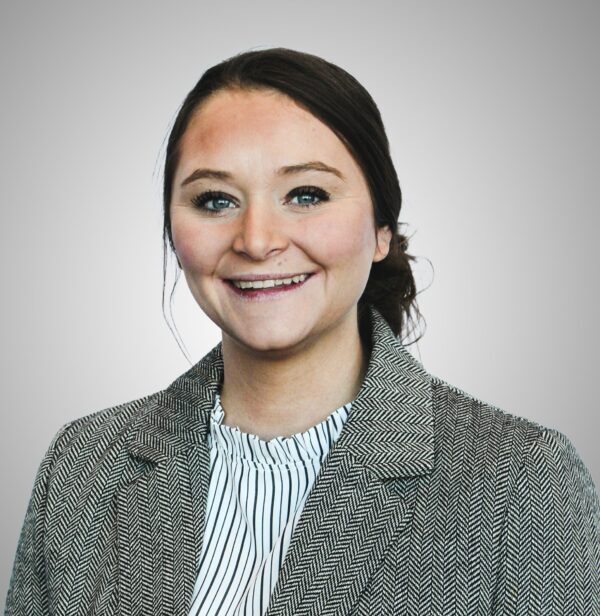
ANTIGO – With sights set on the future of farming, one of the Wisconsin Farm Bureau’s 35 Under 35 honorees – Samantha Solin – and her husband, Matt, are helping ensure the health of their land, animals and family through sustainable agriculture.
At Solin Cattle Company in Langlade County, Samantha said she and her family breed and raise Angus, commercial and Shorthorn cattle, primarily, to be sold as calves to another local outfit: Premier Livestock and Auctions in Clark County.
“We wean our calves from their moms, and then we keep them for [roughly] 60-90 days,” she said. “We make sure… they have a full understanding of how to function as a calf before we sell them.”
Whoever purchases a calf, Samantha said, is who will feed and raise it to mature weight – a business decision that came after the realization that she and Matt didn’t “have the space” or the resources to care for and help mature their cattle.
“We feed all of our steers grain from [when they are a] baby on, and the price of grain has gone up so much,” she said. “We just decided we’ll feed our heifers instead of more steers, because it’s more cost-effective to sell them right away than keep them and raise them ourselves.”
Samantha said regardless of why a cow is at the Solin Cattle Company, the guarantee is that they will be treated with a high level of care and kindness.
However, she said special consideration is taken with their heifers as they are both the farm’s biggest investment and asset.
“Heifers are really hard to raise in the sense [that] they are what costs your operation the most,” she said. “We expect them to get pregnant at about 18 months [while they’re] still growing, then they have a calf and then [they] breed back again while nursing that calf, while still growing.”
Putting that workload into perspective, Samantha said she and Matt decided to invest into the heifers what the heifers invest into their business – a key sustainability initiative highlighted in her application for the Wisconsin Farm Bureau’s 2026 35 Under 35 list.
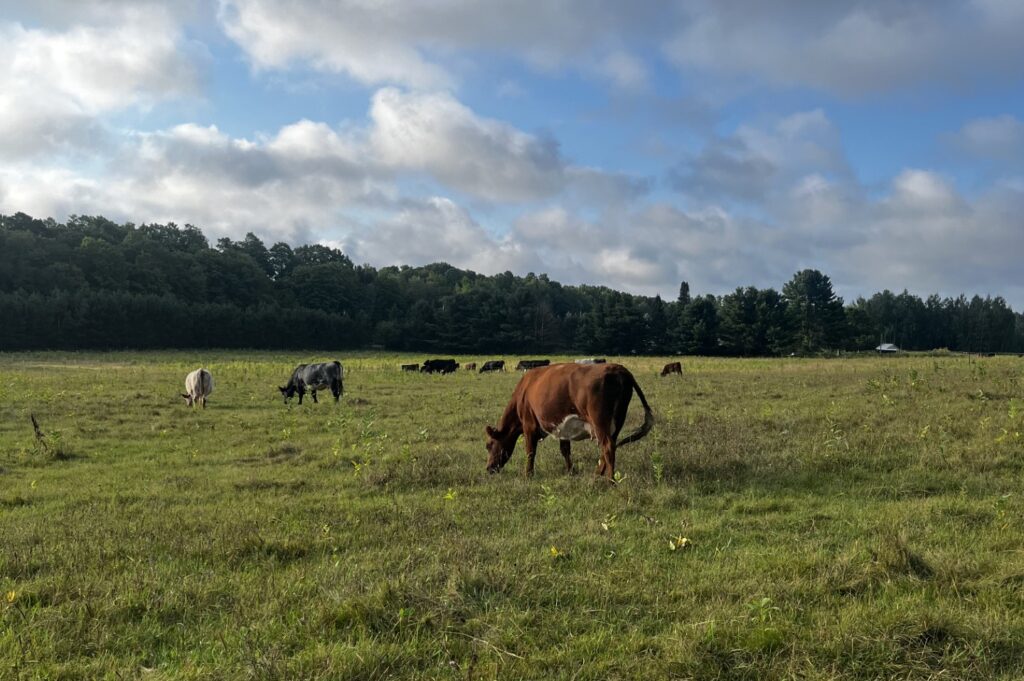
“We’re raising our heifers and our two-year-old cows separately from the mature cows in the hopes [of being] more sustainable [and to] have more longevity in the herd,” she said. “They grow more efficiently, and we can keep them longer in our herd.”
The recently released Wisconsin Farm Bureau list – available on wfbf.com – recognizes Samantha in its Sustainable Future category.
“The Sustainable Future category recognizes individuals who are preserving generational success on the farm,” per the website, with other categories including Sustainable Environment, Sustainable Service, Sustainable Self and Sustainable Storytelling.
“Also, we rotationally graze,” Samantha said. “So, we work to better our soil [and] take care of the grass so the ground we do have will last them and be around for our daughters, if they would like to farm, or for the next farmer who wants to farm on our ground.”
At the Solin Cattle Company, Samantha said she and Matt believe in sustainability not simply for the purposes of operating better business, but for building a better world.
“It’s our responsibility to take care of the ground we run, the grass we grow and be efficient with that,” she said, “and take care of it just as much as our cows.”
Cattle and customers
Samantha said she and Matt have been in the cattle industry for 12 years – meeting through their experience showing cattle before “joining forces.”
“He comes from a dairy farm, [while] I showed beef heifers across the country – I was heavily involved in 4-H and the Wisconsin Shorthorn Association, so that’s how I started,” she said. “He also showed beef. Then, we met, and we’ve been progressing ever since.”
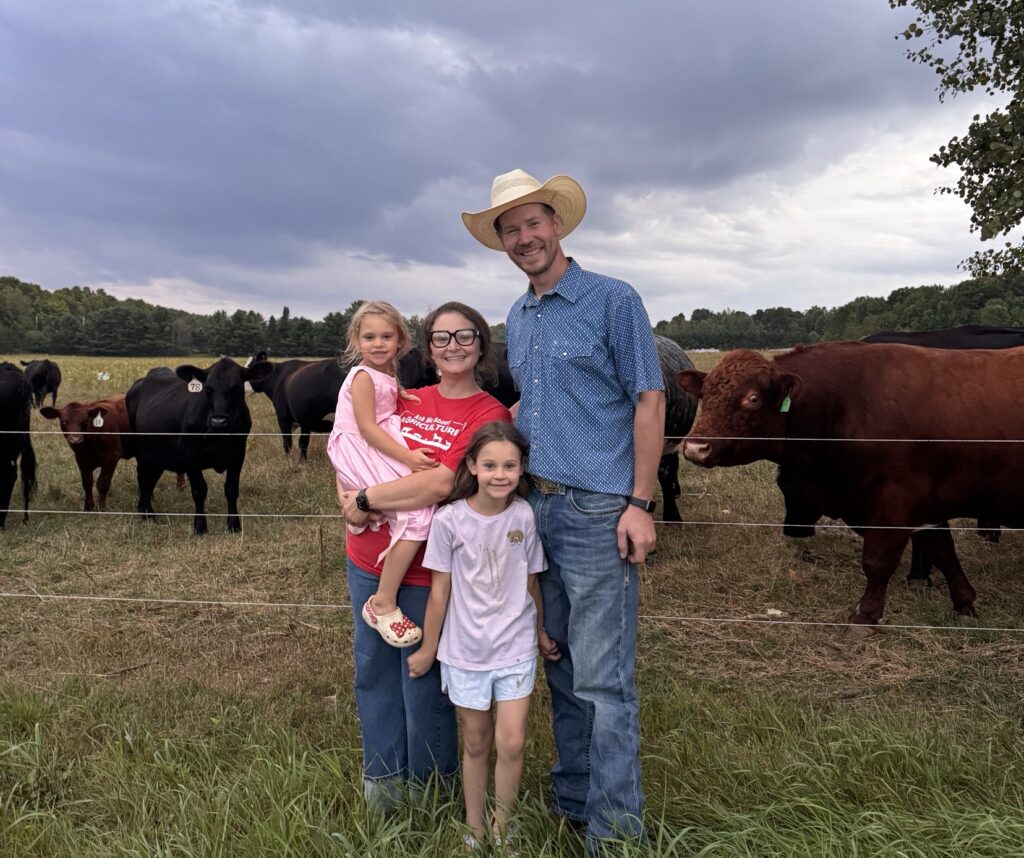
Living on and operating their farm on their property in the Antigo area, Samantha said living and working in the same place provides her and Matt with a lot of control over their animals’ environment.
“Before, we had to rent a place about 15 minutes down the road, but now everything’s home, and it honestly works out so much better for feeding, calving and watching everyone,” she said. “And it’s on our dead-end road. It’s a slice of heaven.”
Prior to adjusting their business model to primarily selling calves, Samantha said Solin Cattle Company would raise cows to mature weight and sell them for their beef.
“We used to sell every steer as freezer beef to our community members,” she said, “but with the price increase [of grain], selling them at weaning versus feeding them out became more efficient and financially responsible.”
Not only was it a more efficient and fiscally sound business, but Samantha said it allowed her and Matt more time to take especially good care of their heifers.
“We just felt we needed to give them the best possible chance,” she said. “So, that’s why we keep [our heifers] separate and raise them differently than the mature cows. They have a home [here until they’re] 10, 12, 14 years old.”
For the calves they do sell, Samantha said if they don’t go to Premier Livestock, they’ll also sell to local 4-H students or other farmers interested in growing their herd.
“We select a couple heifers to keep back, and then we sell some, too, to local 4-H kids or people who want breeding stock,” she said.
Taking care of what you have
Roughly one month prior to her interview with The Business News is when Samantha said the Wisconsin Farm Bureau released its lists and she discovered she had been included as a finalist.
“It’s exciting [to have] your efforts recognized and [to] know we are doing something sustainable in our operation,” she said. “We’re putting our best foot forward in the sustainability aspect.”
Similar to her recognition, Samantha said her and Matt’s sustainability efforts are relatively green as well.
“It’s something newer we decided to do,” she said. “We realized we needed to be good stewards of the land – be better stewards of it and not abuse it. So, we just really dug into learning a lot about how we can take care of it better and see if [those efforts] go [along with our caring for] the heifers.”
Raising two young daughters on their farm as well, Samantha said teaching them how to care for the land and why sustainability is important is both a benefit to their education and to their environment.
“We want to take care of what we have, so they can have it someday,” she said. “There’s always room to grow. We like that, so we’re always on the hunt for more land we can graze so we can add more cows, but we’re content where we’re at, too – continuing to learn.”
For more on the Wisconsin Farm Bureau, navigate its aforementioned website.
To learn more about Solin Cattle Company, visit its Facebook page.