Fifth Ward Brewing Co. raises a glass to growing business
 Silver Spring Foods launches Signature Sauce Line



August 3, 2026
RHINELANDER – Across North Central Wisconsin and beyond, healthcare systems are continuing to consolidate as they battle workforce challenges amid an aging population.
At the same time, independent practices are opening new locations in droves, such as the recent grand openings or groundbreakings of new offices for three specialty-care providers in Central Wisconsin: Bone & Joint, ENT & Allergy Associates and GI Associates.
Though GI Associates CEO Steve Brewer said he has only spent two years in his leadership position with the private practice, his experience in healthcare administration spans three decades, beginning in independent care before transitioning to a larger health system.
“I actually kind of cut my teeth, if you will, administratively with private practices or independent groups, [but] then there [was] a shift,” he said. “A lot of groups were being purchased or acquired by health systems, so that was my first foray into health-system employment.”
After 15 years in healthcare executive leadership, Brewer said another acquisition led to his return to private practice.
“Now, I’m kind of at the tail end of my career, but coming back to independent practice,” he said.
Though the ebb and flow of mergers and acquisitions in the healthcare industry may not be new, ENT & Allergy Associates Physician and President David Edmondson said the clinic sees patient preferences currently trending in favor of independent providers.
“Patients are seeking out self-referred specialty care because, in general, primary care is getting harder and harder to get into nationwide,” he said. “Patients are making the decisions on their own to self-refer to specialties they feel are necessary for their health.”
As patient expectations for timely and quality care continue to build, Edmondson said more are forgoing the step of being seen by a primary care provider (PCP) prior to making an appointment with a specialty clinic.

“They’ll pick up the phone or go online and they’ll make the appointment,” he said. “In part, it comes down to ease of accessibility. The barrier is lower to get in.”
Independent practices’ “agility,” Adam Halverson – an orthopedic surgeon and president of Bone & Joint’s orthopedic medical practice – said, allows them to more quickly respond to the healthcare needs of underserved communities.
“I think the potential for good care is present anywhere – anywhere there’s a good doctor and a good nurse, good care can be given,” he said. “Due to the smaller size of our business compared to a large health system, [however], we can effectuate change very quickly, and that’s certainly a benefit for us as physicians [that] hopefully translates to the patients. The ability to stand up a clinic in this short of a period of time [is] an example of that.”
Independent ‘agility’
Celebrating its groundbreaking in early July, Halverson said Bone & Joint’s forthcoming clinic in Rhinelander is expected to welcome patients next year.
“We should be tentatively planning to open next spring, so March/April of ’27,” he said. “[From] conception to open for business, [it] should really be [done] inside two years.”
Despite having recently celebrated the grand opening of their new, respective clinics in Rhinelander, both Edmondson and Brewer said these aren’t the first steps into the Northwoods for ENT & Allergy Associates and GI Associates.
“[GI Associates’] main building is in Wausau, and then we’ve had three ‘outreach locations’ where we send doctors part-time or APPs (advanced practice providers) part-time in the Northwoods,” he said. “[With] one of them being Rhinelander – and given the central location of Rhinelander and where patients are coming from – we thought that made the most sense in terms of location. Then, ENT and Bone & Joint [are] looking in the same area.”
Even before its grand opening July 15, Edmondson said the schedule at ENT’s new clinic became “quite filled up,” as the practice had also been serving the area for many years prior.
“We’ve been going to Rhinelander and servicing that Northwoods community for well beyond 16 years,” he said. “Unfortunately, beyond our control, two years ago, [our former] space was no longer available, which led us to look at building possibilities so we’d have our own space. Fortunately, in the interim, Forest County Potawatomi Health & Wellness Center graciously offered us clinic space for the last two years while we built this building.”
Across the Northwoods and into the Upper Peninsula of Michigan, Edmondson said there are patients in healthcare deserts with chronically “unmet needs.”
“This is rural health,” he said. “So, the opportunity to build our own facility… is really reassuring for us and the patients we’re servicing, because increasingly in health care, what is happening is there is a lot of turnover of physicians, of clinics. Large organizations are getting bought and consolidated and you’re losing predictability for the patients.”
In recent years, Halverson said he’s seen Rhinelander evolve into a “a centralized hub for medical care” in the Northwoods – drawing patients from areas as far as Vilas and Oneida counties and “even into the U.P.”
“The reality for our practice in particular is many of these patients in the Northwoods are already our patients,” he said. “When I’m in Wausau seeing patients, I see three or four patients every day from north of Highway 8. There are a huge number of patients who are driving one, two hours to see us in Wausau very regularly. So, one function of [Bone & Joint’s new office] is it more practically allows us to take better care of these people by being out there in their communities.”
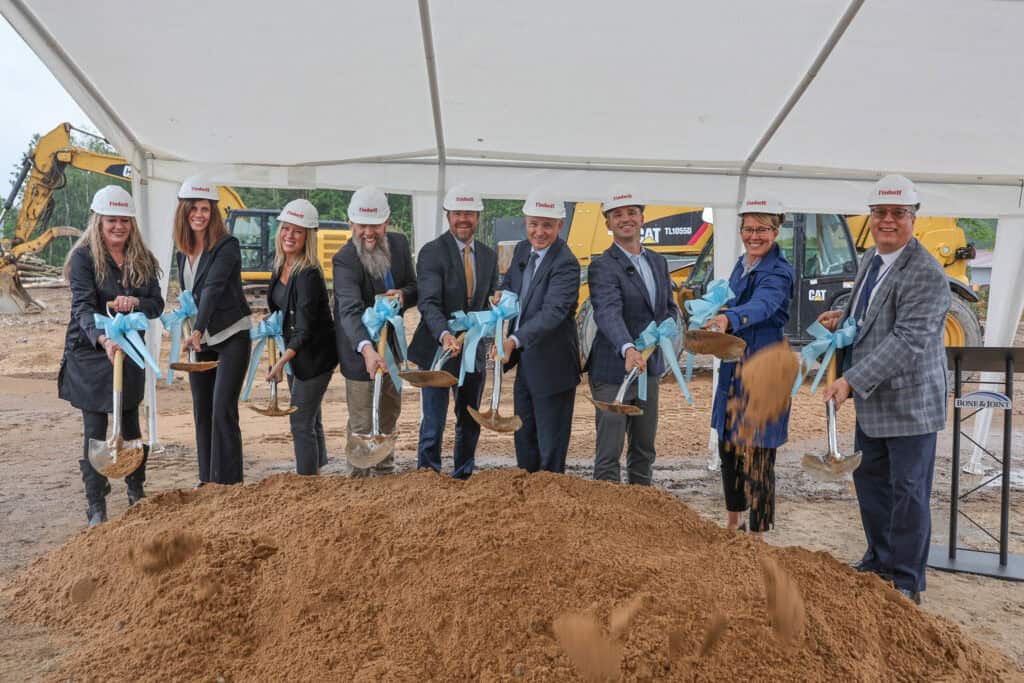
The ability to recognize and respond to rural care needs, Halverson said, is a unique strength of independent practices – highlighting that Bone & Joint’s new office went from conception to construction “inside of one year.”
“The agility of a small group is certainly an advantage that allows us to do things like this – or even our peers at ENT [& Allergy] Associates or GI Associates who have recently gone up there as well,” he said. “They’re doing it for all the same reasons. They want to create better access for the patients and be where they are.”
As the U.S. continues to experience a “primary care shortage nationwide,” Edmondson said speciality care practices are in key positions to fill healthcare gaps.
“If our board members feel like there’s an unmet need somewhere, we can do a market analysis, proceed with the investigation to consider building and then pull the trigger on building with much less bureaucratic red tape, so to speak, and get that project going,” he said.
Though Edmondson said private practices like ENT typically have less funds to work with, that doesn’t inhibit their mission or expansion.
“We’re not a multi-billion-dollar healthcare company, so we need to spend our dollars wisely,” he said. “So, financially, we have to be quite savvy, but that’s where I see the perceived benefit – we’re more nimble.”
Collaboration, competition
Though there are many differences between the operational abilities of a large health system as compared to a private practice, Brewer said it’s important to know the two do not directly compete with one another.
Rather, he said GI Associates and others aim to offer complementary care and community resources – working to collaborate with PCPs in order to provide patients with the most comprehensive care possible.
“It’s almost entirely impossible to keep up with all the different subspecialty nuances,” he said. “So, we’re actually trying to partner with some of the primary care [providers] to talk about what are the things they might be challenged with, or that are being addressed in the exam room that we can help them with.”
Though he estimates more than half of Bone & Joint’s patient encounters come via self-referrals or walk-in appointments – which will be available in Rhinelander upon the clinic’s completion – Halverson said independent practices’ collaboration with larger health systems will always remain paramount to the success of the patient.
“Certainly there has been a shift from traditional primary care-based referrals, [but they] are still important and still part of our practice,” he said. “Patients come to the walk-in, they get appropriate imaging, they get a diagnosis and they get referred to the right person to take definitive care of them.”
One area in which health systems and independent practices do directly compete, however, Brewer, Halverson and Edmondson said, is in talent recruitment and workforce retention.
“For probably the first time” in recent years, Brewer said GI Associates is not actively recruiting providers.
“GI Associates has been very successful, and to be honest, a lot of it’s through the physicians here networking with their [colleagues] where they went to training or other doctors they might know,” he said.
In the competitive landscape of healthcare recruitment right now, Edmondson said tapping the talents of local professionals is a strategy that has worked well for ENT.
“The ENT physician who’s going to be starting [at our new clinic] in about a month is Dr. Shane White, who was born and raised in Rhinelander,” he said. “He called us years ago before he was a full-fledged otolaryngologist, and basically asked if we were hiring… That’s part of the reason we built this [new clinic] – to make a location for White to have for the next 25-30 years of his career.”
As Bone & Joint begins construction on their new clinic, Halverson said hiring local staff – beyond care providers – is also going to be a priority for the private practice.
“There is competition for nurses, X-ray techs and employees, but that’s ultimately good for the employee,” he said. “Our other furthest away satellite clinic is Medford, which is, similarly, about an hour from our main hub, and most of the staff who work at Medford live in that community. The doctors travel, but mostly the staff is local. So, we will be hiring local staff in the Rhinelander market.”
The ability to evolve with its employees and quickly create space for new team members, Halverson said, is also a unique strength of private practices.
“It has been a struggle over the years to recruit and retain good physicians – I think we see that all around this part of the state – but our personal experience [has] maybe [been] a little different,” he said. “We’ve been very successful at being able to recruit and keep really good physicians in our group, [and] I think that’s another benefit of being independent. We can create a very nice role for the physicians.”
‘Refreshing’ medical care
As accessible care becomes harder to find and maintain, Brewer said the ease of receiving care at an independent clinic is drawing patients in.
“From a patient experience standpoint, to be honest, it can be a little daunting to go to a health system’s campus,” he said. “My thought is that if you kind of went around and looked at physician-owned [and] -designed buildings with ambulatory surgery centers, the ingress or the patient flow [is simple]: you come in, you drop off, you leave, you exit. It’s just a nice flow.”
Edmondson said throughout his 20-year tenure as an independent provider, he’s found consistency in private practices’ “ability to focus on the patient experience.”
“We know what the patient wants and needs… because we are in the exam rooms with them, so we can provide the experience, the care [and] the quality,” he said. “And quality revolves around not just what the insurance company or what Medicare determines as a quality metric. It’s bedside skills, it’s talent, it’s clinical skills, it’s really [the] focus on patient outcomes. We have control over that in a smaller clinic, and the patients know that.”
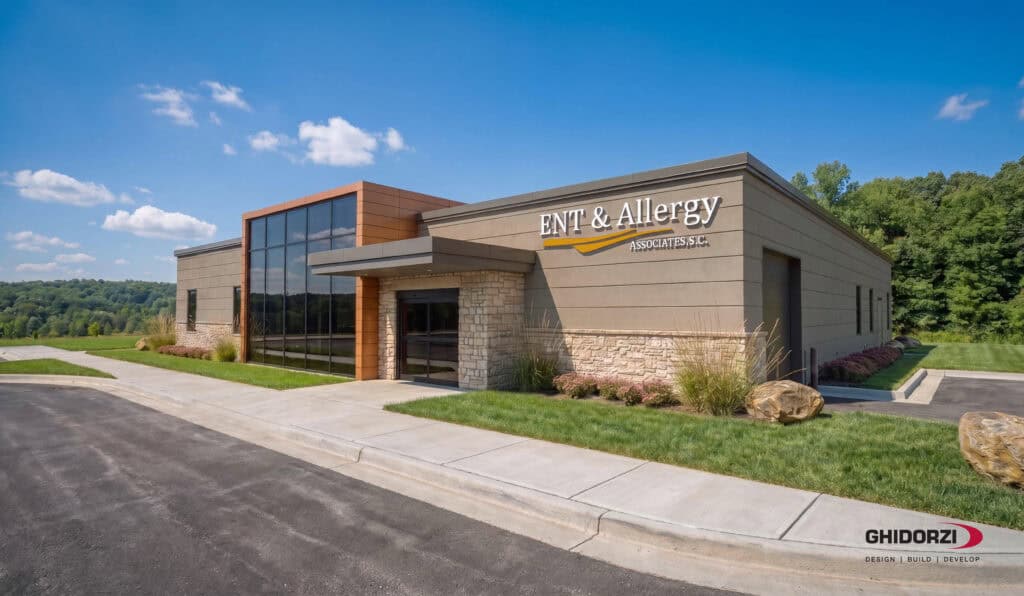
The convenience of seeing an independent provider, Halverson said, further encourages patients to include them in their care plan as independent practices continue to expand their footprint.
“They have an office they can drive to, [and] their follow-ups before or after surgery can be much more convenient for them…, allowing us to take better care of [them],” he said. “Our current plan is to bring all the service lines we offer up to [Rhinelander]. So, we’ll have orthopedic surgeons, we’ll have pain management physicians, podiatry, physical therapy and our walk-in will all be available in that location.”
The continuity of care private practices can provide patients, Edmondson said, is especially important as health care continues to become more fractionalized.
“It’s a refreshing way to get medical care,” he said. “With an independent practice, there is going to be less turnover of physicians, there is going to be more incentive for physicians to provide the best care they can and you get the continuity of care – [which] is so important, because patients don’t want to see a different physician each time they’re seen. They want predictability.”