 EmPATH unit to bridge behavioral healthcare gap in region
 Powering the next generation of community leaders


February 9, 2026
SHEBOYGAN – Though the City of Sheboygan is better known for surfing, Elizabeth Heitzmann said she encourages people to try floating instead.
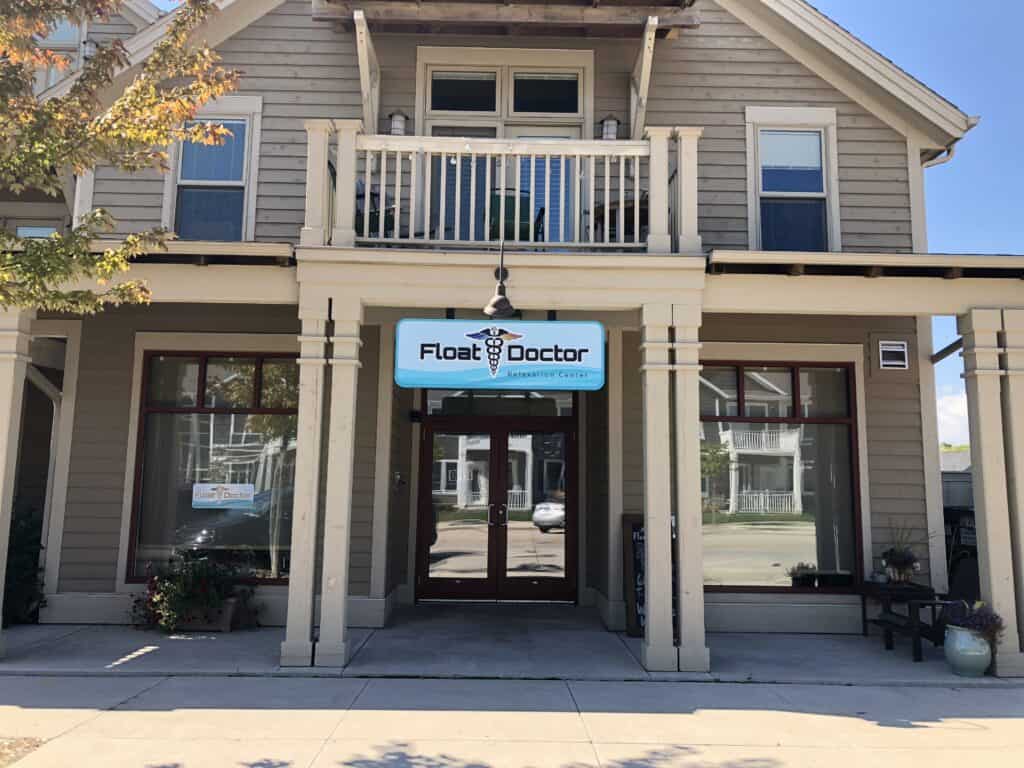
Located at 640 S. Pier Drive in Sheboygan, Elizabeth said the Float Doctor – Wisconsin’s only certified float lab, per floatdr.net – offers not only wellness services, but education on how float therapy and supplemental care can improve a patient’s health.
From injury relief to enhanced athletic performance to increased mental health and clarity, Elizabeth said the benefits of float therapy can be innumerable.
Though she’s seen float therapy provide “magical” results for both her patients’ mental and physical well-being, Elizabeth – a licensed and board-certified psychotherapist and integrative health practitioner – said the practice is widely under-explored.
“There’s just not enough research on it, which is part of something I want to do,” she said. “[I want to offer more than the] anecdotal [evidence] I see here all the time, and really get [to the root of] what is really going on.”
At the Float Doctor, Elizabeth said patients can schedule up to a 90-minute session in its gravity-free, soundproof and certified Float Lab cabin tank filled with 1,200 pounds of Epsom salt – designed to help the body and mind synchronize for healing and restoration.
“When you lie in a float tank that has 1,200 pounds of Epsom salt dissolved in it, so much so that you’re floating on the surface…, your body is going to absorb this highly concentrated magnesium sulfate,” she said.
Magnesium, Elizabeth said, “is so important” for many bodily functions and is a common deficiency for people to experience – which, according to the National Institutes of Health’s Office of Dietary Supplements (ods.od.nih.gov), can cause appetite loss, nausea, vomiting, general fatigue and bodily weakness.
“If you are deficient, you’re going to feel some euphoric responses right away when you get out,” she said.

Since 2017, Elizabeth said she has overseen 20,000 floats and seen patients experience numerous benefits from the restorative rest of float therapy.
“We don’t realize that stress can actually cause systemic inflammation [and] people can get inflammation just in their nervous system,” she said. “Maybe your nervous system is inflamed from not getting a break or not getting enough sleep and rest. This is the ultimate rest – like meditation on steroids – where you really just shut down.”
Getting to the root cause
Elizabeth said she first trademarked “Float Doctor” nearly a decade ago and began building her clientele in Northeast Wisconsin.
“I really like what I do – helping people in a natural way,” she said. “I think with all of my [professional] history, even before [becoming the] Float Doctor, someone would have to do a lot of work and a lot of research to recreate anything even close to what I’m doing.”
Beginning her healthcare career in the late ’90s – after earning bachelor’s and master’s degrees from Lakeland University – Elizabeth said her passion has always been rooted in her desire to help people.
“I was going to school full-time in the morning, and then I was working second shift at a mental health facility,” she said. “So, I’ve been doing counseling since like 1995.”
In the early days of her counseling career, Elizabeth said the “treatment approach” for mental well-being was largely medication-based.
“Medications have certainly changed a lot in the last 30 years, but we’re really not getting to the root cause of some people’s problems,” she said.
Elizabeth said float therapy supports both physical and mental health, offering the nervous system a “hard reset.”
“You are floating, you have no pressure points, [the water is] the same temperature as your body core and eventually, you don’t even feel your body and things turn off in your brain,” she said. “It’s like a reset for your computer or your phone after you get an update – it resets it.”

Stress, be it mental or physical, Elizabeth said, can cause ongoing, systemic inflammation throughout a person’s body – which she’s seen lead to unhealed or under-healed injuries.
When the body sustains a significant injury, Elizabeth said the brain can “shut off” the motor processors controlling that area, similar to turning off Christmas lights.
“[Your brain will] shut off the Christmas lights around the injury to help you not re-injure the area and limit your motion…” she said. “Those motor processing lights don’t always turn back on right away, and sometimes don’t [turn back on ever].”
Elizabeth said floating allows portions of your brain – “like your cortex that tells the motor processor to turn on” – to fully rest and revitalize themselves.
“Sometimes, we’re just so full of inflammation… that your body never actually clears the inflammation away from previously injured areas and the brain still thinks there’s something wrong with it when there isn’t,” she said.
One story Elizabeth said she frequently shares from her early years involves an older man who doubted float therapy – until his time in the tank quickly changed his mind.
“He comes and sits on the chair in the front lobby, he’s just staring at his hand, making a real slow fist and then opening it,” she said. “He kept doing it for [more than] a minute…, so [I ask], ‘Hey, how was your float?’ And he [said], ‘I can’t believe it – when I was in high school, somebody stepped on my hand in football with cleats. It broke my hand, and I have not been able to make a fist since high school.’”
Beyond addressing common health issues, Elizabeth said athletes can also improve physical performance through regular float sessions.
“Floating can help to prepare [athletes] for competition [by] releasing lactic acid in muscles and also help to hasten recovery from heavy physical performance,” she said. “I have a client who does bicycle racing… [and she floats] the day before the race to recover from heavy training, and then again directly after the race… She was able to shave minutes off of her time.”
These, Elizabeth said, are just two of the many stories she can recall as anecdotal evidence for the benefits of float therapy.
‘Functional’ healing
Elizabeth said she initially discovered float therapy through attempts to alleviate her own health issues many years ago.
“I had a gallbladder procedure that went wrong,” she said. “I had bile leaking into my body for [more than] two weeks, and it pretty much digested my internal organs. After those two weeks, I was practically dying.”
In immense pain, Elizabeth said she underwent a second surgery to drain the bile from her body and surgically separate some of her organs that had fused together.
“It fried some of my nerves pretty seriously, so I had neuropathy and a lot of digestive issues,” she said. “I went to about six different doctors, and round and round they just [gave me] medicine, but none of it really made things better. If not, they made things worse, sometimes.”
That’s when Elizabeth said she began researching for herself how to ease the pain and procedural complications she was experiencing.
“I really started getting into the natural and functional approaches to healing,” she said. “I was on pain medicine for almost 10 years… and floating really helped my body and my brain work together. [It] actually silenced those nerve pain issues that I had for a very, very long time. So, I’m not on any pain medication anymore either, and I don’t need it.”
Expanding impact
Born in Kewaunee, Elizabeth said she moved to Sheboygan with her parents when they purchased a bakery when she was two years old.
“I’ve been in Sheboygan pretty much all my life, and I just love Lake Michigan,” she said. “I’ve had more than 4,000 patients and… I’m starting to get to the point where I do have to expand my reach to help more people outside of my little vicinity.”

Elizabeth said her work at the Float Doctor goes beyond the tank – offering complementary wellness services in addition to float therapy, such as infrared sauna sessions, zero-gravity lymphatic massage and personal health consultations.
The desire to broaden her impact, she said, has led her to pursue continuing education on how supplemental care and products can provide some patients with better results than traditional medicine.
By offering concierge lab services to not only her in-person patients but anyone within the United States, Elizabeth said she’s currently attempting to expand the Float Doctor’s reach.
“The lab services are something I’m credentialed in and got trained to do,” she said. “What I’ll do is ship all the lab [materials] to their house, then a phlebotomist is scheduled to come and [the patient] gets their blood drawn, or they can have a urine test.”
Those samples, Elizabeth said, are then shipped back to her facility in Sheboygan, where she will test for deficiencies and not only provide the patient with results, but help them create an actionable plan to improve their overall well-being.
“We strategize a plan for them to be healthier,” she said. “It’s not just the float tanks – although the float tanks are amazing to have in conjunction [so they can] heal and synchronize their body and their mind to work better together. The other [supplements] will help them have more success, and people are really feeling an improvement [in their] quality of life.”
Education, Elizabeth said, is another key factor in her ability to disseminate her evidence-based results of float therapy and supplemental care in general.
“I would never promise [certain results]…, but this place has done magical things,” she said. “I see it all the time, and people tell me about it.”
For more information or to book a consultation and/or session, visit the Float Doctor’s previously mentioned website.