 Stepping out from private-label ‘shadows’ to serve community
 NWTC, Aviate Flight School pilot program cleared for takeoff


July 13, 2026
APPLETON – Human resources is often associated with managing employees and workplace processes, whether handled internally through a company’s HR department or through outside consulting firms.
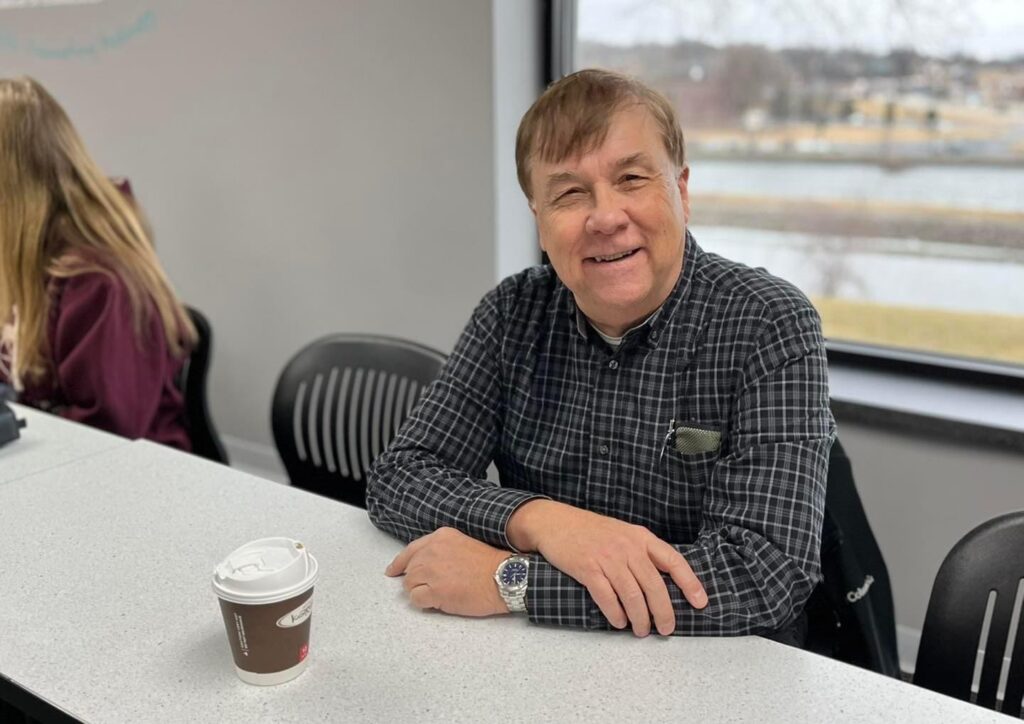
But Don Herrmann – vice president of Future Focused HR – said he approaches the field differently.
Per futurefocusedhr.com, Herrmann designs and implements market-aligned compensation structures, strengthens recruiting efforts and helps reduce turnover in critical roles by up to 50%.
In each engagement, he said he brings a problem-solving mindset focused on measurable results.
Rather than replacing HR departments or existing staff, Herrmann said he focuses on improving business performance by helping organizations better utilize the people already working within the business.
“I don’t go in there to replace any existing HR departments,” he said. “I go in there to augment them, to take things off of their plate they haven’t even had the chance to get to because they’re too busy with administrative or reactive tasks that HR often finds themselves doing.”
However, Herrmann said he understands the concerns and the fear it can create.
“Here comes this guy with 30 years of experience walking in the door, trying to work with the business, and I’m the HR director, and [he thinks], ‘Oh, my gosh, now my job is being threatened,’” he said. “But that’s not my role at all.”
Herrmann said his focus is not on displacing anyone, but on supporting the organization’s work.
That’s an important distinction, he said, noting he isn’t there to handle traditional HR functions like payroll and benefits.
Instead, Herrmann said he focuses on helping businesses reduce costs tied to workforce inefficiencies.
“I look at companies’ business objectives,” he said. “I look at where their leadership and workforce challenges are restricting their results. I build practical solutions that will improve business productivity, profitability and organizational effectiveness. Then I measure success by business outcomes, not HR activity. So, almost everything I do is quantifiable in dollars and cents.”
Measurable gains
Herrmann said that when he begins working with a business, he conducts an assessment and can often quickly identify problem areas.
An example, he said, involved a client who sought leadership coaching because they believed a manager was underperforming and not meeting expected results.
“In this situation, I found out the real issue was not just one manager – it was across the board,” he said. “There was also an issue as it related to prioritization of what had to be done, work organization and how work was structured.”
Over the course of about nine months, Herrmann said they improved on-time project completion rates from 68% to 94%.
“Their missed deadlines fell by half, and the particular business unit I was working with exceeded its annual revenue target by 11%,” he said.
Herrmann said that underscores what sets him apart
“I’m not selling HR services,” he said. “I’m solving business problems by looking at how the workforce impacts the bottom line. That’s very different from what many people traditionally understand HR to be. And I am creating real business value for owners, executives and leadership teams.”
Herrmann said another company approached him seeking leadership training, a request he hears frequently.
In discussions with the organization, he said he worked to dig deeper into the underlying business challenges driving the issues they were experiencing.
Though some training was ultimately needed, Herrmann said he found it wasn’t leadership training.
Through a series of interviews with the leaders involved, as well as members of the board of directors, Herrmann said a leadership development process was developed that went beyond typical leadership topics like having difficult conversations.
He said it also included practical elements such as how to assign and measure goals, and how to conduct coaching sessions with employees.
“We decided we were going to use their productivity measurements as a sign of success or failure,” he said. “So, we baseline that with where we are now with our productivity, and then over time we started measuring as productivity increased. That was how we measured the success of the training, and we attributed the productivity measurement to the outcomes of the training.”
Herrmann said he then visited each of the company’s business locations to meet employees and observe how work was actually being done, incorporating those insights into the plan as the effort expanded beyond training alone.
“It was about workflows, onboarding, things like that,” he said. “And over time, we gave the organization some pretty good improvements. They’re still a client, but now we’re working on things beyond leadership.”
This, Herrmann said, includes leadership coaching for the managers involved in the process – helping them not only align with the training and desired outcomes, but also apply those tools to address other leadership and performance issues as they arise.
Objections are often the same
Herrmann said one of the objections he hears pretty frequently from companies is: “We’ve got our own HR department and don’t need anybody else.”
Or, he said, they might say, “I think we’re doing just fine on our own.”
“What I tell those businesses who say they’re doing just fine is, ‘That may be, but you can be doing better – let me give you some examples,’” he said. “Then, I’ll tell them about something such as avoidable turnover.”
Some companies, Herrmann said, have managers or leaders who are performing adequately, but their workflows are disorganized and inconsistent.
“I give them real-world business examples that may pique their curiosity,” he said. “Many companies feel they are doing well enough, and for them, ‘good enough’ may be just that. But if they want to do better, I can help them accomplish that.”
Herrmann said he doesn’t typically close a deal with a new client in the first conversation.
Instead, he said it usually takes a second or third discussion.
During that time, Herrmann said he helps organizations see where they could be leaving money on the table and not fully maximizing the value of their workforce.
“They might say their workforce is their greatest asset, but they’re treating them like a cost instead of an investment,” he said. “Those are the kinds of things I share with them when we first start talking.”
Herrmann said in many cases, the companies he works with – or those that approach him – already have strong HR professionals in place, and he does not want his involvement to be seen as a reflection of failure by those teams.
“I think what they need to look at is, maybe, those HR teams don’t have the knowledge, skills, abilities or experiences I have,” he said. “They’re doing good work with what they have, and I can help take them to a different level – not replace them… They’re motivated and want to do a good job, but sometimes you just don’t know what you don’t know.”
People operations focus
Herrmann said he stepped into an executive human resources role immediately following his retirement from the U.S. military.
That, he said, was 30 years ago, and since then he has held HR leadership roles and worked in private consulting across a range of industries, including defense contracting, technology, aerospace, health care, financial services and manufacturing.
Herrmann said he has helped businesses – both domestically and globally – build, scale and optimize their workforce infrastructure in high-growth and private equity-backed environments, combining strategic thinking with hands-on execution to address challenges.
Though similar companies exist in other states, Herrmann said Future Focused HR is largely unique in Northeast Wisconsin.
“I have a pretty good network of people who do what I do, but they’re in New England, Florida and Texas,” he said. “I have not come across anyone who does exactly what I do here in Northeast Wisconsin. Some focus on just leadership or HR administration, but not to the level that I do.”
Based in Northeast Wisconsin, Herrmann said he works primarily with local manufacturers – mostly small manufacturers – as well as machine shops, distributors, commercial service companies and industrial cleaning firms.
He said about 95% of his business comes through referrals or from companies that find him via his website.
Herrmann said his work applies broadly across industries, but he generally steers clear of restaurants, bars and gas stations/service stations.
“Their business model is very foreign to what I do, has tremendous turnover that is kind of the nature of their business and doesn’t have any control over that turnover,” he said.
Herrmann said he also prefers to work with independently owned companies rather than those owned or controlled by larger corporations, including franchise operations.
“They don’t typically have control over how their businesses are run,” he said. “The exception to that would be if the larger corporation wants to work with me.”
Herrmann said the companies he works with typically range from 40-250 employees and those based in Wisconsin as well as Georgia, Texas and Missouri.
Workload and writing
As sole owner, he said he operates the business independently, handling all aspects of the work himself.
That, Herrmann said, includes preparing proposals and invoices, meeting with clients, resolving issues, networking and managing communications.
He said he is also in the process of developing a leadership effectiveness tool for use in client engagements going forward.
Doing everything yourself, Herrmann said, requires time management skills.
“I try to organize my day and follow that plan as best I can,” he said. “But I always have to be prepared to switch gears and pivot if something comes up that I hadn’t planned on.”
Herrmann said in his case, that also includes carving time out of his day to write – as he is currently working on his fourth book.
His three previously published books, he said, include: “Fix HR, Fix Your Business: How to Rebuild the People Function Without Blowing Up the Business,” “From Tactical to Strategic: Bringing HR to the Forefront of Business” and “The HR Department of One: Driving Business Performance, Controlling Risk and Leading Without Authority.”
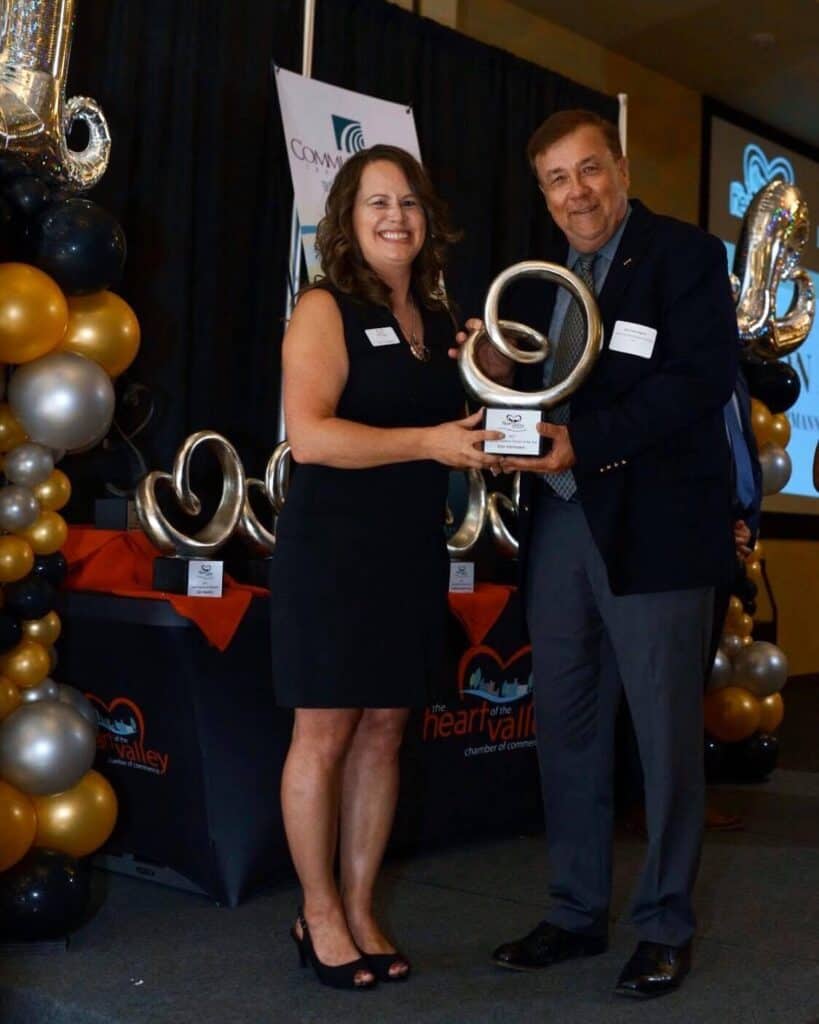
Herrmann said he is also proud of the three awards and recognitions he’s received in recent years in the Fox Cities area, including:
- Inspiring Businessperson of the Year Award from the Heart of the Valley Chamber of Commerce in 2021
- The Joyce Bytof Exceptional Mentor Award from the Fox Cities Chamber of Commerce in 2017
- Community Votes Appleton 2026 for HR Services