Renovo Health offers affordable health care through traditional options
 The importance of well-educated, -prepared leaders in the workforce



November 16, 2026
NEENAH/APPLETON – Nearly 20 years after losing their son Adam following a racing accident, Grace and Bill Schatz still remember the comfort of having a place to gather with family and friends while he was being treated at ThedaCare Regional Medical Center-Neenah.
The Chicago couple had traveled to Road America near Elkhart Lake in summer 2008 to watch their 26-year-old son compete in a professional sprint kart race.
A collision on the track left Adam with critical injuries, including a broken neck and a traumatic brain stem injury.
He was airlifted to ThedaCare’s trauma center in Neenah, where he remained for a week before passing away.
After spending the first night in a hotel, the Schatz family was able to move into one of ThedaCare’s healthcare hospitality guest homes, giving them somewhere to sleep, prepare meals, do laundry, and just be together.
That experience has stayed with the family.
Today, the Schatzes said they continue to support the ThedaCare Family of Foundations through annual contributions to the ThedaCare Foundation-Neenah Guest House Fund, helping to make that same kind of comfort available to other families.
Recently, the Foundations announced its fourth guest house.
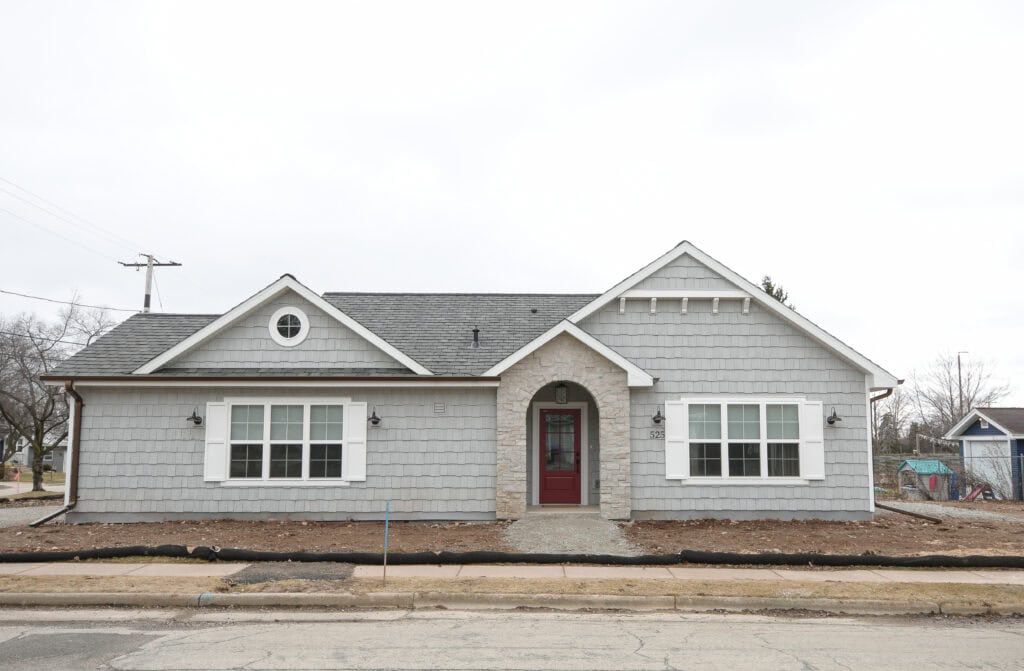
Located at 525 Lincoln St. near ThedaCare Regional Medical Center-Neenah, the newly constructed home began welcoming families in July, with major support from Bergstrom Automotive, according to the announcement.

The addition expands a program that provides temporary lodging at no cost to families who need to remain close to a loved one receiving hospital care.
While accommodations are available to all patient families, those facing trauma-related hospitalizations receive priority.
A place to be together
The accident happened at Road America, where Adam was competing in a sprint kart race.
The karts race bumper to bumper and can reach speeds of more than 100 mph, Bill said.
There was a collision on the track; Adam was hit in the back of the kart, ejected from the kart, broke his neck, and suffered a traumatic brain stem injury, Grace said.
Emergency personnel stabilized Adam and transported him to a local hospital before he was airlifted to ThedaCare Regional Medical Center-Neenah.
The Schatzes said this all happened after their family had come to the race with little more than what they needed for the weekend, yet suddenly, they were facing an extended hospital stay hours from home with no way of knowing what the days ahead would bring.
The guest home offered a more familiar setting than a hotel, they said, with a kitchen, dining room, living room, and space for family members to come and go.
With Grace, Bill, and their 18-year-old daughter sharing a bedroom, Grace said she appreciated having a private place of their own within the house: “It had a more homey feeling and a little bit more security than a hotel.”
The arrangement was especially meaningful, she said, because the Schatz family had a large circle of relatives and friends who wanted to be there for them.
Grace noted how Adam’s brothers and sisters came and went throughout the week, along with Bill’s sisters, Grace’s siblings, and other family friends.
She said Adam’s girlfriend at the time, Jackie, was also there, as were her parents and sisters, with Jackie’s mother, Anna – who ran a catering business – taking over the kitchen.
The home gave everyone room to gather without the limitations of a hotel room or the need to coordinate visits around a shared public space, Grace said.
“We have a large family, and it was a way to be together at any given moment,” she said. “We could not have gotten that at a hotel.”
While the family spent almost every day at the hospital, Grace said the guest house offered a place to return to to decompress and find a sense of normalcy.
“We had some really nice talks [at the house],” she said. “We could all be together and talk about how we were feeling or what was happening, or not.”
One of Adam’s sisters described the house as a “happy place” and a place of comfort, as Grace added the residence helped her to feel “at ease” in light of the circumstances.
Not only was it “lovely to have a space for us to be together,” but Grace remarked how they also appreciated the practical amenities, like the washer and dryer.
“The house meant a lot to us,” she said. “It was the small things, a blanket, a nice pillow…. It was a treasure for us.”
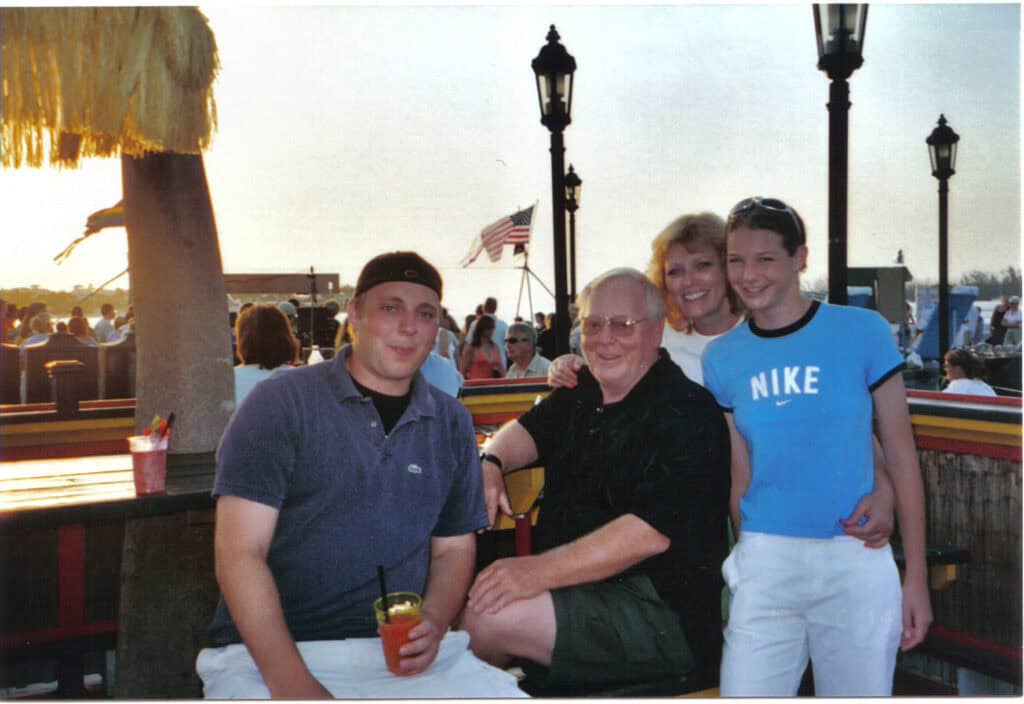
When Adam was taken off life support, members of the care team remained with the family.
“ThedaCare helped lighten our load,” Grace said. “We did not have a good outcome, but we owe ThedaCare a lot simply because they took care of us, which was all that could be done at the time.”
Meeting a need
The Schatz family’s experience is one example of what ThedaCare hopes to provide through its Home Away From Home program.
ThedaCare Family of Foundations now operates four guest houses: three in Neenah and one in Appleton.
Two of the Neenah homes came online in 2016 through a partnership with Bergstrom Automotive.
The Appleton home has been operating for at least 15 years, Barbara Beuscher, Chief Philanthropy Officer for ThedaCare Family of Foundations, said.
Beuscher said the newest home, at 525 Lincoln St. in Neenah, is a newly constructed, single-family, Nantucket-style house with a garage, full-service kitchen, laundry room, bedroom, and living space.
Unlike the other homes, which are multilevel and have three bedrooms that can accommodate more than one family, she said the new house has one bedroom and is designed for one family at a time.
The additional space responds to a demand that can exceed the number of available rooms, according to Kevin Verdine, Security Supervisor for ThedaCare’s North Region, who serves as a primary contact for families using the homes.
As a Level II trauma center, ThedaCare Regional Medical Center-Neenah receives patients from throughout the region and beyond.
Some arrive by Flight For Life-ThedaStar – the health system’s medical transport service – meaning their families may be far from home and suddenly need somewhere to stay, Verdine explained.
“The demand is there – greater demand than the space we have available – and that’s really what drove adding this additional space,” he said. “Being a Level II trauma center, we unfortunately see a lot of trauma patients coming into our facility, and [family members] want to stay close to their loved ones. We try to ease some of what the families are going through.”
The need is not determined by mileage alone; Verdine said each situation is evaluated individually, with the goal of identifying families who would benefit most from having a place nearby.
For example, a patient might live locally, while relatives have traveled from another state.
In another situation, a couple involved in a vehicle crash may suddenly be without transportation and have no other support available.
Verdine said the circumstances surrounding the hospitalization, the family’s resources, and the availability of other accommodations all factor into the decision.
Most stays are less than a week, he said, although some families need accommodations for longer.
The process typically begins with a trauma coordinator, social worker, or emergency department team member contacting Verdine’s team.
ThedaCare staff check availability and work with the family to arrange a stay, Verdine said, and if the homes are full, they help to identify other accommodations.
He stated there is no charge to families to stay in the guest houses, and there is no expectation that guests donate, as the guest houses are operated through the ThedaCare Family of Foundations and are funded entirely through donor support.
Beuscher noted this support also makes it possible to maintain and upgrade the homes as needs arise, from replacing flooring to purchasing a washing machine.
Since the homes are intended to be ready for families who may arrive with little notice and few belongings, she said things like towels are provided, so someone arriving in the middle of the night can settle in.
“It is meant to be turnkey, so if it is 2 a.m. and we bring you over, you’ll be able to get settled.”
Beuscher and Verdine clarified that the support can extend to needs that are not necessarily part of a traditional lodging arrangement, with staff also helping to provide a needed phone charger and a change of clothes.
“We’re able to get them clothing, a shower, and get some sense of normalcy back as much as they can in the moment,” Verdine said. “It’s really about dignity.”
He said the support can also include food vouchers and help connecting families with other resources.
Beuscher added that ThedaCare’s social workers and care coordinators help identify needs that may affect a patient’s ability to continue care after leaving the hospital, including transportation, food, housing, and access to medications or follow-up appointments.
For her, that broader approach reflects the understanding that a hospital stay affects more than the patient.
“Patients having a positive attitude helps to speed or enhance their healing, and having loved ones close by helps with the healing process,” Beuscher said. “It’s important that we are not only meeting the needs of the patient but also the family.”
Verdine sees the impact in the interactions between patients and the people who have been able to stay at one of the guest homes nearby.
“If we escort someone to hospital from the guest house and up to the [patient’s] room, they light up knowing their loved one is right there,” he said.
For families already dealing with uncertainty, Verdine said easing their burdens with a comfortable place to stay nearby can make a difference.
“People have enough going on,” he said, “and [with the guest homes], they have the ability to be close to their loved one and not worry financially.”
Giving comes full circle
Beuscher said some families who stay at the guest houses choose to give back after experiencing the support firsthand.
For some, she said the opportunity to help another family becomes part of how they process what happened and express their gratitude.
“Philanthropy is part of the healing process as well,” Beuscher said. “Being able to give back in a tangible way helps to enhance the healing process.”
The Schatz family is one of those families; Grace said the family simply wants to help ensure another family has access to the kind of support that made a difference for them.
“We still want to support and pay it forward for someone else.”