La Crosse-based grazing board business owner wins 2024 Entrepreneur of the Year
 100% resilient, renewable energy healthcare campus



June 1, 2026
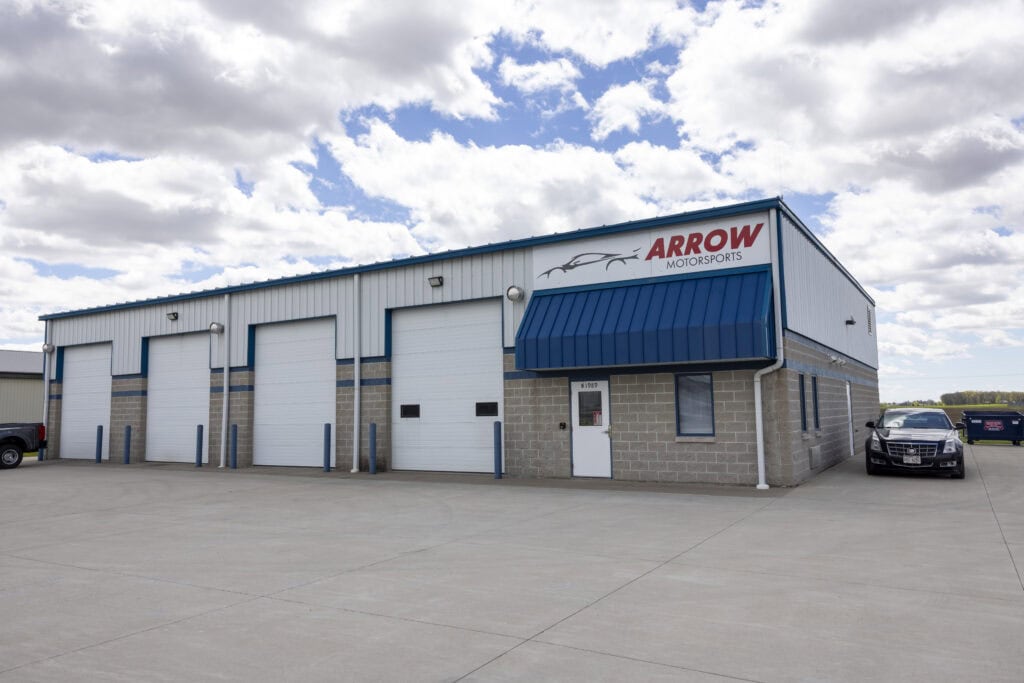
FREEDOM – Known for hands-on expertise and tailored setups, Owner Ben Peotter said Arrow Motorsports has built a strong reputation in the regional motorsports community.
Serving racers across all levels, Peotter said Arrow Motorsports provides preparation and support for everything from amateur hobbyists to full-time professionals.
He said the shop specializes in vintage race cars as well as modern, modified builds used in endurance and sprint racing on asphalt road courses.
Peotter said Arrow Motorsports’ work centers on performance and safety, with a strong emphasis on detail to ensure drivers have reliable, track-ready vehicles performing at their best.
Careful attention to setup and preparation, he said, is key to delivering cars that are both competitive and dependable on the track.
“I consult with customers at any part of the process, whether that’s helping them at the track, giving support and instructions, or at the shop before they hit the track,” he said.
From a customer standpoint, Peotter said racers are already investing significant money, so they want a car that performs at its highest level when they get to the track.
“Most importantly, the car has to be reliable and safe, making the weekend far more enjoyable,” he said.
Peotter said the goal is to eliminate the concern of breakdowns or missed races due to mechanical problems.

“Proper prep ensures that drivers can focus on their driving skills,” he said. “This also means a lot to their guests and fans, because they don’t want to watch us work on a broken car.”
Because race cars are highly customized and heavily modified, Peotter said they require a specialized race mechanic – something Arrow Motorsports is built to provide.
He said the shop approaches each build and repair with an outside-the-box mindset, always prioritizing performance.
“We put high-end components together and make it work to peak performance,” he said. “A great example is a street race car needing better brakes and safety equipment. That’s very difficult to bring to a standard automotive shop. Many times they won’t put it in because they don’t have the ability. That’s the space we work in.”
Experience begets experience
Peotter said he bought his first road racing car right out of college, which led to an opportunity with a team where he learned multiple roles within the sport.
Combining a 30-year career at Miller Electric with hands-on involvement running multiple semi-amateur and semi-pro racing teams, Peotter said his background reflects a deeply technical and experience-driven history in the sport.
He said he has always been drawn to the technical engineering side of racing, including fabrication work, welding and building multiple cars.
He said his background spans endurance, vintage and SCCA road racing across a variety of well-known circuits nationwide, including Road America, Indianapolis Motor Speedway, Mid-Ohio, Watkins Glen, Road Atlanta, Daytona, Gingerman and Autobahn Country Club.
After years of hands-on experience with the racing team – handling car prep, driving and serving as both lead mechanic and team manager – Peotter said he eventually felt ready to take the next step on his own.
“If I was going to make the big move, I didn’t want to wait longer,” he said. “I knew Arrow was what I wanted to do, so I went all in and decided to start a specialty company.”
Even with his background, Peotter said launching Arrow Motorsports required patience, as client development doesn’t happen overnight.
He said he was grateful for early leads that helped secure steady work – noting that word of mouth remains the company’s primary driver a year later, supported by exposure and niche specialization that reaches across the Midwest.
“Our customers are Midwest-based, living in and racing in the Midwest,” he said. “It’s also very common for a race-prep shop to be outside your hometown.”
Focusing on the matter – or car – at hand
Peotter said Arrow Motorsports’ approach is centered on going the distance for clients, whether that means shipping vehicles, coordinating pick-ups and drop-offs or delivering cars trackside.
A year into the business, he said he feels he has come into his own as an owner – and then some.
As the shop has taken shape, Peotter said growth has followed a steady path, beginning with an intern in year one and continuing into year two with another intern and a part-time employee, with plans to eventually build a full-time crew.
He said his focus now is on efficiency – getting cars in, completed and back out on the track as quickly as possible in a steady, repeatable cycle of work.
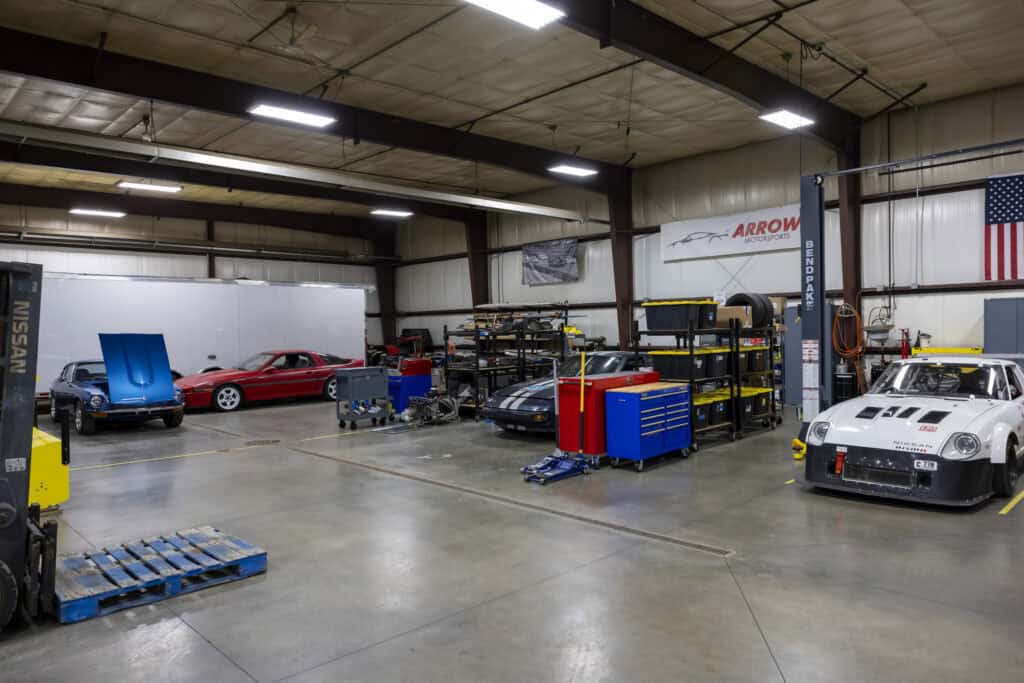
Peotter said the shop operates out of a roughly 6,000-square-foot building at W1989 Industrial Drive in Freedom, giving Arrow Motorsports room to grow as demand continues to build.
One advantage of the location, he said, is its placement in an industrial park, where the absence of storefront retail space allows for additional working room.
Peotter said the site also provides space to store race trailers and semis for extended periods during peak racing season, making it easier to access cars and parts as needed.
Looking back at the original business plan, Peotter said one area of unexpected growth has been streetcar work.
Though it exceeded initial projections, he said it is a segment he wanted to develop anyway.
“I enjoy working on those because people come and ask for something better than original production cars,” he said. “Having customers ask for my opinion on the best components and doing the install, all because they want to take the car to the track for the weekend, is rewarding.”
Track-ready prep
Car prep at Arrow Motorsports, Peotter said, is an in-depth review of a vehicle and its systems, typically taking one to two days to complete.
The process, he said, starts with something simple but often overlooked by drivers: a full cleaning of the car.
During that stage, Peotter said the team conducts a detailed inspection of all components, checking every system as part of the overall evaluation.
From there, he said the process moves through a full mechanical check, including fluid changes, gearbox inspection and evaluation of brake pads and rotors – which are often replaced after a race.
Peotter said the team also completes a suspension check to ensure everything is properly aligned and positioned.
Next, he said, comes a more detailed diagnostic phase that incorporates driver feedback on how the car is performing on track.
Peotter said the final step is a complete “nut-and-bolt” inspection before the vehicle is cleared for use.
“The nut-and-bolt procedure is one of the most critical things we can do,” he said. “It takes two to four hours, and we put a wrench on every single nut and bolt on the vehicle. You tighten the really critical ones, and if the car has a history of certain nuts and bolts coming loose, we’ll put paint marks to make sure we check it next time.”
Peotter said in his experience, two of the most commonly overlooked steps among drivers are properly cleaning the car and completing a full nut-and-bolt check.
He said many drivers tend to check only a few items before calling it done.
“Some people don’t have the correct alignment tools or knowledge, but even roughing it with tape measures is better than nothing; you can do a lot with a little effort,” he said. “If you’ve been racing a long time, then you know the most important thing is you have to finish the race to win.”
That’s why Peotter said the attention to detail matters so much.
Prep isn’t limited to the shop, he said – it also extends to the track, where Arrow Motorsports uses a checklist at every race.
Peotter said this system helps ensure consistency, noting that “it’s easy to miss something, especially when you have multiple people working on a car.”
At the start of race day, he said, the goal is simple: make sure every driver gets into their car with full confidence.
Though his primary focus is on preparing and repairing cars, Peotter said he also provides trackside support, offering technical and mechanical assistance for clients during events.
In that role, he said he often pulls data acquisition from the car to pinpoint issues, helping determine whether a problem stems from the vehicle or driver input.
“I have a lot of racing experience, so I can relate to them and give them techniques to solve their issues,” he said. “I teach techniques that encourage drivers to drive to the limit safely, while maintaining control.”
Technical expertise
Peotter said his background as an automotive engineer and years of performance car experience help set him apart in the industry.
That experience, he said, allows him to guide customers toward the right components rather than off-the-shelf parts, helping them better understand their cars and avoid unnecessary costs.
Peotter said one of his main focuses is brake system performance, which he views as critical for both safety and consistency on track.
Cooling systems, he said, are another key area that is often misunderstood by drivers, ranking just behind brakes in importance.
“A lot of customers are upgrading engines, but they don’t really understand the cooling systems, and that’s just as important,” he said.
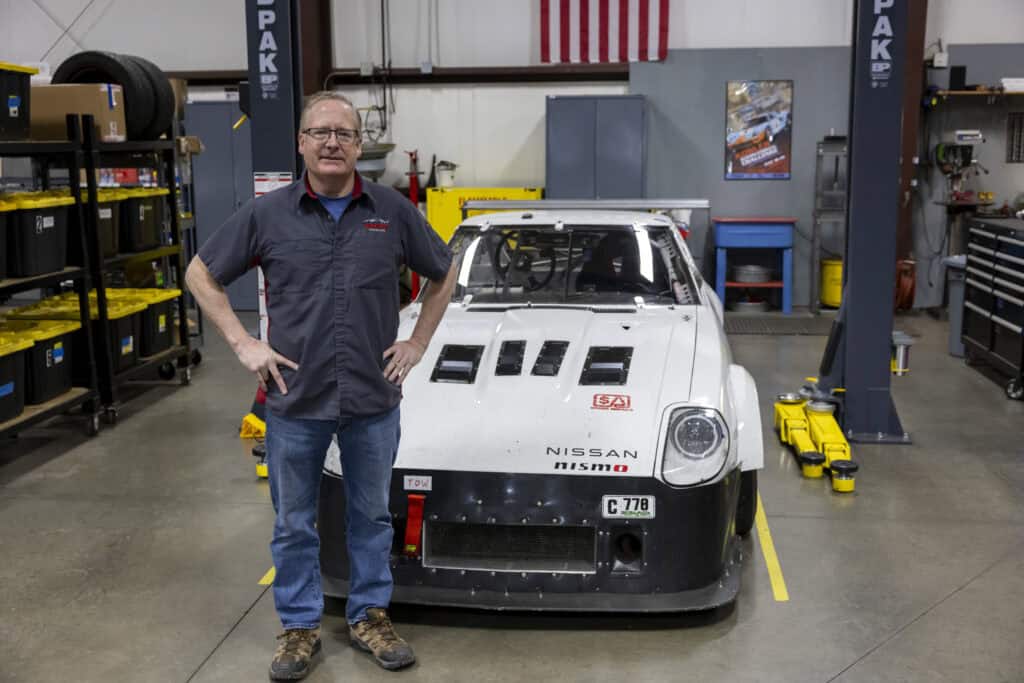
Peotter said quality car prep is worth the cost, noting the results are often reflected on the track – where his own cars draw compliments from other racers for their performance and reliability.
“We’ve taken the time to figure that stuff out, but that’s what makes it enjoyable,” he said. “I love helping people, whether that’s at the tracks during race days or at events where we can set up a booth. They’re both great opportunities for us to connect to people who have questions.”
An example of this, Peotter said, came at a local car show, where he noticed a Mustang with a newly installed engine still running a relatively small radiator.
Curious, he said he asked the owner how well the car was staying cool, which sparked a conversation that led to new ideas and potential upgrades for the build.
“To me, it’s fun to help people regardless if they race or not because it’s not something they deal with every day,” he said.
Driving, Peotter said, is a mental game.
“You’re trying to get the most out of your body and your car without overdoing it,” he said. “Racing is not like a Hollywood movie. Everything in driving and racing needs to be second-nature, and that’s essential so you remain in control.
Sharing experience
Peotter said his experiences have helped him serve as a mentor to others in the field.
“Like myself when I was learning to race, I see others who are afraid to ask questions and want to do everything themselves,” he said. “I want them to know there are a lot of good people out there.”
Early in his career, Peotter said he was part of a team that received direct training from manufacturers, including hands-on instruction in transmission rebuilding and visits to chassis suppliers.
He said those early opportunities – traveling to manufacturers for training on transmissions and chassis systems – provided invaluable, hands-on experience that shaped his approach.
“I think it goes hand in hand with my technical training and background, and knowing there are a lot of smart people out there I can still learn from,” he said.
Peotter said he’s committed to passing that knowledge along, helping others grow through the same kind of practical, hands-on experience that influenced his own career.
“Whether someone wants to learn to do it themselves or I help them with their car – especially with the young drivers, [as] there’s not a lot of opportunity for them to get support and education – I want to help,” he said.
Learn more about Arrow Motorsports at arrowmotorsportsllc.com.