Fifth Ward Brewing Co. raises a glass to growing business
 Mold resistant, pest resistant, rot resistant, fire resistant




October 19, 2026
SHAWANO – Model airplanes are more than just toys – they’re a tool, Dave Scott, owner of RC Flight School in Shawano, said.
For 38 years, Scott said he has been teaching skills ranging from basics to advanced radio-controlled (RC) model airplanes to students.
Now, as he inches toward 40 years in the business, Scott said he’s got his sights set on the future – not only for his business but for the community engaged in learning.
“This also includes the future of drones and unmanned aerial vehicles for flight being used by private businesses, NASA and the U.S. military,” he said. “Recently, I was invited to speak at EAA, giving an entertaining and inspiring presentation about RC aircraft and the art of learning to fly.”
An early start to present day
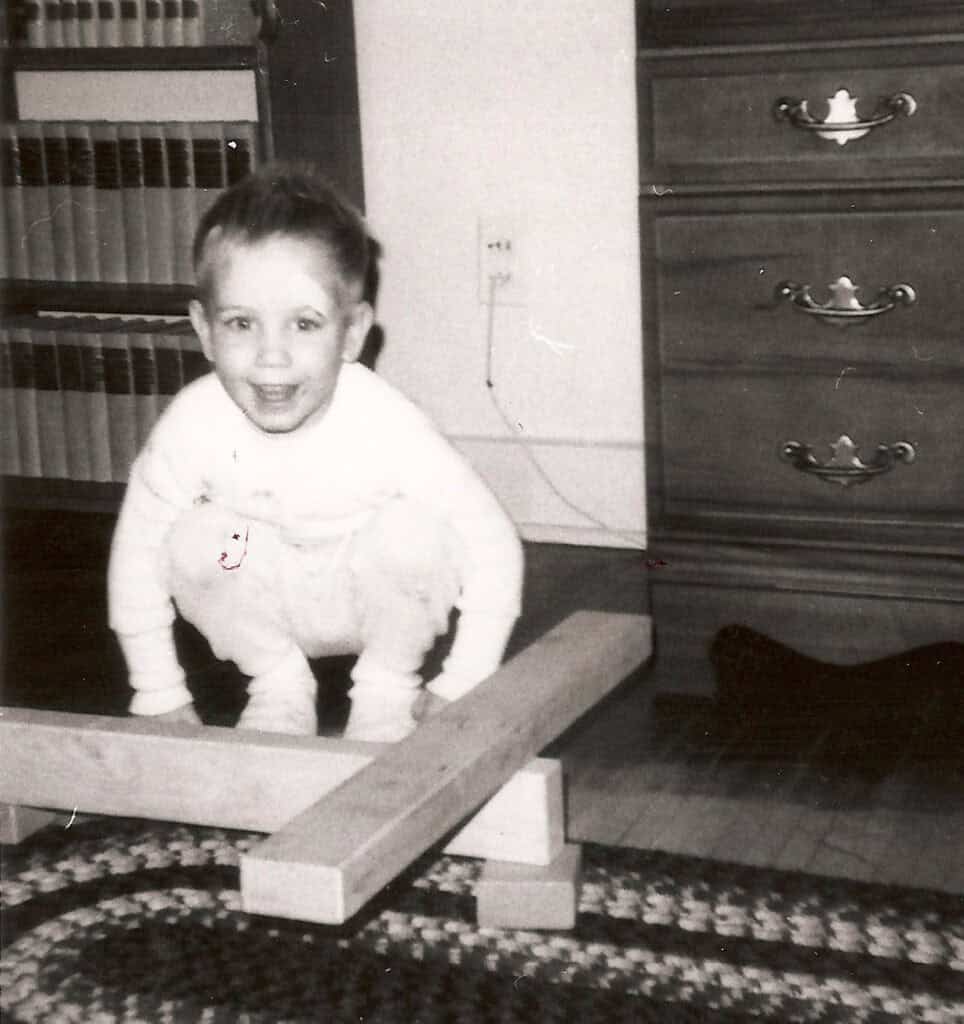
Aeronautics is something Scott said he was into from a very young age.
The lore goes, he said, that his first word after “mom” and “dad” was “plane.”
“There are even pictures of me sitting in a baby carrier on the hood of my parents’ car as airplanes landed overhead leading up to the convention,” he said.
Of course, Scott said, as a child, flying a full-size aircraft was not possible, so he was relegated to model RC planes with his dad.

“I started flying models with my dad when I was eight years old,” he said. “My dad was a teacher and had summers off, so we’d be flying out in the field almost daily. I always tried to fly my models in a manner that mimicked the full-scale airplanes I saw at EAA.”
As a nine-year-old, Scott said he began training in the sport for fun in the 1980s, with a lot of World War II-era people returning full circle to flying with model airplanes like they did when they were young.
By default, he said he became the local club instructor.
“Once the word got out that a nine-year-old kid actually had a method, as opposed to just launching the airplane and trying to figure it out once you’re in the air, my career took off,” Scott said. “From time to time, guys would offer to pay me if they could get one-on-one time, and what a magical thing that is when people say they’ll pay for your services.”
Scott said he would bounce his educational ideas off his dad, who confirmed the young flyer was on the right track.
This path of flying recreationally and instructing continued for years, he said, until he had such a high demand that people were coming from different states to learn, thus leading him to open RC Flight School in 1990.
“In the early days of the school, it was mostly retired guys with discretionary time and money,” he said. “While that’s remained somewhat true into the present, I’ve had the age range of young children to 84. Most of the younger kids are coming along with their father or grandpa. The average age now is around 50 years old, which is encouraging; it’s not quite retirement age.”
Becoming better by educating others
Reflecting on his time in business, Scott said it wasn’t the money driving him to do this job, rather, it was the quest to keep improving himself.
He didn’t go to college to be an educator, he said, but he had the innate ability to know if a student didn’t perform up to expectations.
“I didn’t have ready-made boxes to put students into in the early days, although it turns out with a fresh sheet of paper, there are solutions to just about everything,” Scott said. “The content on how to fly a model airplane is fixed, but delivering it to different people is the art form of instructing.”
Instructing has never been a chore, Scott said, because seeing a student progress and the smile on their face get bigger fuels the push to get better – “especially the older guy who discovered he can learn new tricks.”
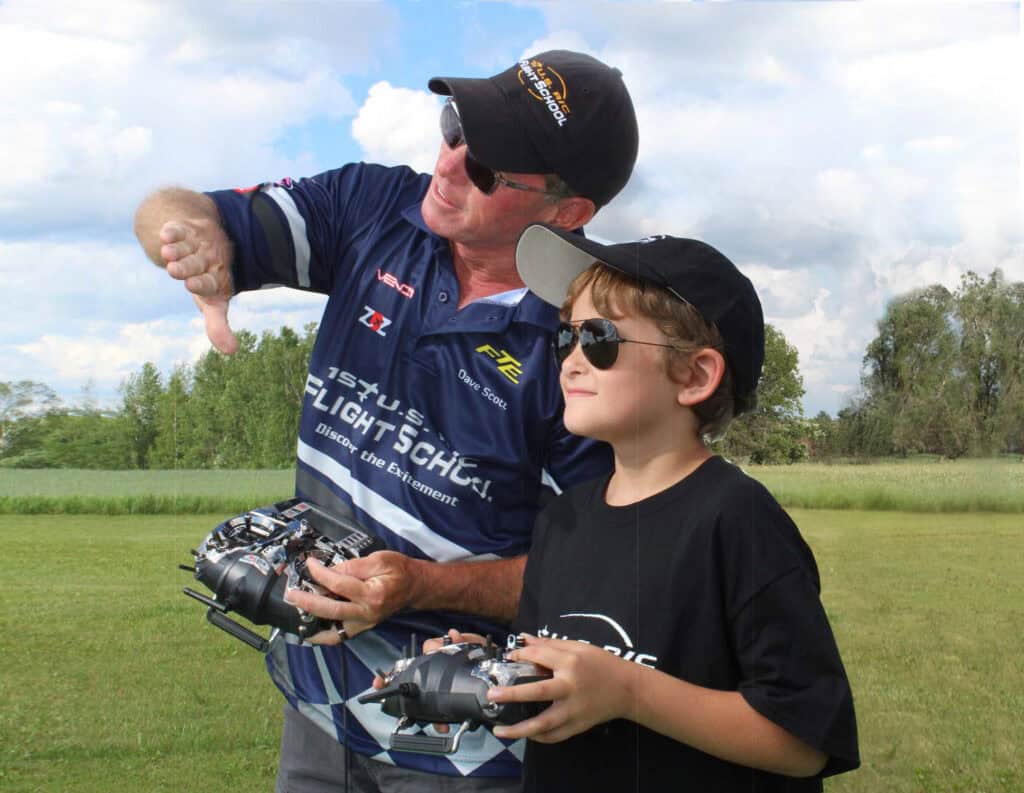
“RC Flight School teaches in small groups, which helps put individual focus on students,” he said. “The courses are four to five days, and people really want to learn. They know that trial and error is not the way to do it. They’re open to learning, so it’s a natural response that they want to do their best.”
As a result of the classes offered, Scott said he meets some very interesting people.
“It could be your regular Joe, to NASA and Air Force generals,” he said. “Because of the wide age range and what’s offered, the courses will help anyone.”
Scott said he confidently knows that the next commercial pilot flying your plane first learned flying on RC model airplanes and simulators to feed their love of aviation.
“It teaches the younger generations STEM topics such as electronics and aerodynamics, because a model airplane is just a miniature airplane, just like what NASA uses when they test models in a wind tunnel,” he said. “The principles are all relative. If you went to the Air Force Academy and wrote on your resume you had RC model experience, that doesn’t mean you were playing with toys; it means you’ve got a head start.”
Scott said he expects drones to be the future of the military.
In those cases, he said, there are people in the Air Force who spend their whole career flying working with a joystick and never sitting inside an airplane.
“Beyond the military, 80% of the people I train are/were full-scale professional aviation pilots,” Scott said. “When they retire, they still have the love of aviation, but they’re done with all the headaches that go into full-scale aviation. It’s a good carryover, giving the same kind of thrill without the potential cost of your life if the worst happens.”
Better technology, more participation
Scott said technology improvements have opened the space up for more participation, at less cost and with more enjoyment.
When he first began his flying endeavors, he said the planes were built throughout winter and made of balsa wood.
“If it cracked on your first flight, it was devastating,” Scott said. “Instruction was poor back then, but newer technology is allowing first-timers to experience flight without cracking up their airplane. This is important because a very large number of people flying RC are self-taught.”
The pushback with newer technology, he said, is that “some people think it’s cheating.”
“I think technology helps reduce discouragement because of a crash,” he said. “Things such as speed control, altitude control and stabilization can all be switched off once you’ve learned the traditional basics. This is where the fun starts.”
Despite technology allowing for many advancements in the RC world, Scott said you still have to learn in a crawl, walk, run format.
“I’ve trained approaching 2,500 people with a 99% success rate, and that’s the proper way to progress,” he said. “This method of training has helped me hone in on return customers. During the first 10 years of running the school, I was primarily dealing with beginners, but then people kept coming back, wanting to learn the next level of training.”
Ultimately, within 20 years of running the school, Scott said 75% of his students were return customers, continuing down their RC education path.
“One of the best things about this hobby is the diversity never stops,” he said. “One day you’re flying a warbird, and the next, you’re using your glider soaring with the hawks. So, even if you didn’t try to expand your repertoire, the nature of RC aviation means every time you go out to the field, the learning never stops.”
Deadlines make a better teacher, student
When asked what really makes him successful and different from other teachers, Scott said, “deadlines are a must.”
“Every week I teach, I have a deadline, and the goal is to accomplish all the recreational goals by the end of the training week,” he said. “If someone is not ‘getting it,’ I remind them I’m available the next week. Having deadlines gives cause to learn, and at the same time, rather than telling someone it was a ‘swing and a miss,’ we break down how to improve.”
Scott said he finds that making the process simpler and utilizing the crawl-walk-run method is what helps students learn flying and ultimately makes them come back for the courses.
“They can see tangible learning happening in real time,” he said. “I would not be here today if I was making excuses for why students do not perform well. My business was originally, and continues to be, [driven by] word of mouth and repeat business. I help people on an individual level, because not every situation is cookie-cutter.”
Even though RC Flight School is a big part of the conversation, Scott said he has two parts to his business.
From May through September, he said he operates his fixed base in Shawano, where he operates RC Flight School weekly.
During the offseason, Scott said he travels one or two weeks any given month to “warmer climates,” working with businesses that use unmanned aerial vehicles (UAVs) or drones.
“These businesses can be everything from finding lost dogs or children to surveying erosion, and that includes the U.S. Air Force and NASA,” he said. “NASA is an example of this. Most of their aviation department does very little with man-carrying airplanes anymore; it’s all autonomous vehicles, and they are required by regulations to have the ability to fly manually should the technology fail.”
That’s where Scott said he enters the picture, working with the next generation of drone pilots, building skills and helping those who will become instructors.
Connecting to EAA, introducing the RC world
Scott said it should be noted that he eventually achieved his childhood dream of flying full-scale planes, connecting the story of him working alongside EAA via the International Aerobatic Club (IAC) and recently becoming an educator in all things RC.
During Scott’s tenure as treasurer at the IAC, EAA officials said one of their greatest successes is the Young Eagles program.
They said the successes they have are also met with the challenges of school, jobs and life in general, so they were looking for ways to keep interest in aviation going until the Young Eagle could revisit aviation.
Enter RC Flight School, Scott said.
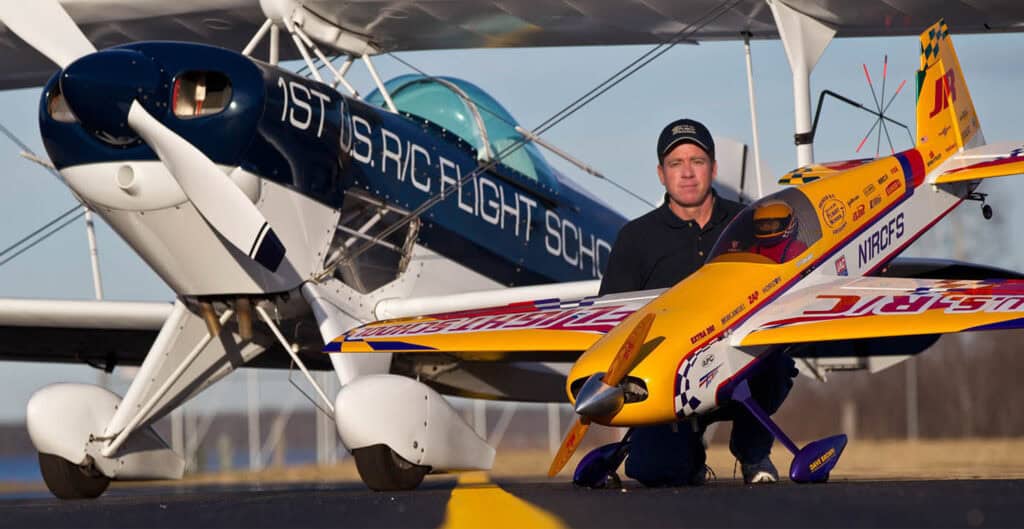
“Model aviation is the obvious way to keep that interest going,” he said. “I started talking with the EAA representative, and next thing I knew, the ‘EAA Sport Aviation’ magazine did a 10-page article called ‘Model for Success.’ The story was about how modeling led to my full-scale involvement, and they showed a photo of a model next to a full-scale.”
This article was published in February 2011, and Scott said between then and now, there is much more RC activity taking place at AirVenture.
According to Scott, model aviation is booming because technology has made it affordable, and the likes of EAA are “marrying itself” to modeling as a way to keep the interest going.
Fast forward to September of 2026, and the EAA Young Eagles program had Scott present on his experiences throughout his career.
Mathieu Labs, EAA Chapter 1710 president and Young Eagles program coordinator, had high praise to say about this.
“Having Dave share his experience with our EAA Chapter 1710 is valuable because it connects different parts of the aviation community,” Labs said. “EAA is about much more than just airplanes; it’s about people, education, building, learning and sharing the excitement of flight.”
Labs said he knows that whether someone is interested in RC aircraft, drones, building an airplane, becoming a pilot or simply fascinated by aviation, there is a place for them in the EAA community.
“Presentations like Scott’s help show people that their interest in aviation can start anywhere and potentially take them places they never imagined,” he said.
Scott’s impact on the community
Looking at the impact RC Flight School has had in the community, Scott said it’s a mix of economic impact over the years spanning far outside the Shawano area, noting that many of the younger kids have gone on to become military or commercial pilots.
Another impact, he said, comes from the plethora of content he’s written about during his career.
“By the time I was 15 or 20 years into this, I had 10 training manuals covering all skill levels, and I sell these worldwide,” Scott said. “People are looking for content online, whether that’s video or a book, and when they find my book, then they find my schooling.”
He said he looks at the impact the internet has had on the hobby and sport of RC model airplanes and sees a massive connection.
“Especially with the content I’ve got on YouTube,” Scott said, noting that in the past, he’d have to summon a video crew. “Now, I can do all of my videos in a short timeframe myself with screen recording. My schooling complements my books, my books complement the school and the videos complement both.”
With the world turning to RC via drones and models, Scott said, “the future is now.”
“Looking at the future of RC Flight School, I plan to streamline the training for recreational flyers and get more into the contract work with the Air Force, NASA and other businesses using drones in their work,” he said. “This field has huge potential to bring higher efficiency to the demands of business needs, and I’m ready for that.”
Learn more about RC Flight School at rcflightschool.com.