 A century of counsel – Menn Law Firm
 Fond du Lac Beer Company takes up residence in old Blakely Auto Parts building



October 19, 2026
SHEBOYGAN FALLS – Microchips (semiconductors) power devices we use every day, like smartphones, televisions, cars and even fitness trackers.
The chips themselves are created from components many of us will never see, but a Sheboygan Falls-area company, EMD Electronics, makes specialized materials used in those semiconductor chips and advanced displays.
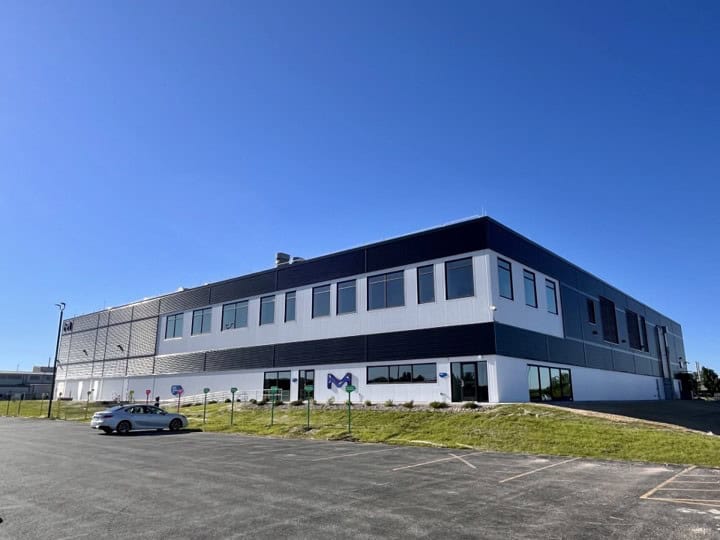
The company is preparing for its next era of manufacturing, following the opening of its new 38,000-square-foot research and development facility Oct. 2.
Company leadership said the facility will help expand EMD’s local capabilities to develop and scale advanced materials critical to next-generation semiconductor manufacturing.
“I think this team in Sheboygan has been really valuable, and they’ve been crowded for a while, but they’ve been making do,” Ron Pearlstein, EMD Electronics’ executive director, said. “So, we started seriously working on scouting this project/getting the funding about two years ago, but I think the need has been recognized longer than that. It took us a certain amount of time to really begin putting it into work.”
Company leadership said the new facility is part of EMD’s $200-million, multi-year investment in its U.S. electronics footprint and brings new advanced R&D capabilities to Wisconsin, with eight purpose-built laboratories supporting everything from materials discovery and development to qualification, scale-up and technology transfer.
“The semiconductor industry is entering a period where integrated workflow solutions play a defining role in enabling the next generation of devices, particularly as AI drives increasing complexity and performance requirements,” Bing Han, executive vice president and head of Thin Films at EMD Electronics, said.
Han said that materials innovation remains at the core of that transformation, but success increasingly depends on combining materials discovery, process expertise and scale-up capabilities.
“This new facility brings together the capabilities needed to work alongside our customers on their most complex materials challenges and accelerate innovation from the lab to commercial production,” he said.

Harnessing homegrown talent
According to emdgroup.com, EMD Electronics – the North American electronics business of Merck KGaA, which is located in Darmstadt, Germany – has a long history in Sheboygan Falls.
The more-than-350-year-old international company already had a large footprint, and Pearlstein pointed to its employees, educational institutions and the quality of life the Midwest region provides as factors supporting the expansion.
“It comes down to the people,” he said. “We have access to a really great workforce in the area, and we have great educational institutions in the local colleges, the universities in the area, as well as Wisconsin as a whole. The Midwest provides a great educational backdrop to find employees.”
When completed, the project is expected to create what EMD leadership considers 44 new high-paying, family-supporting jobs.
About 700 people total work at the campus now, Pearlstein said.
The Wisconsin Economic Development Corporation (WEDC) collaborated with EMD to support this expansion and advance investment and job creation in Wisconsin, with up to $4.5 million in performance-based tax credits.
The number of credits the company receives depends on the amount of capital invested and the number of jobs created.
Gov. Tony Evers said the investment in EMD’s efforts is a critical partnership in building the 21st-century jobs and infrastructure the state needs to support a 21st-century economy.
“Together with EMD Electronics, we’re expanding Wisconsin’s manufacturing capabilities and increasing economic opportunity for folks in Sheboygan Falls and throughout the region,” Evers said.
Driving sustainability across the product lifecycle
EMD Electronics leadership said the new facility contains eight purpose-built laboratories supporting the product development lifecycle, including discovery, development, qualification, analytical development, purification, packaging and hazard testing.
By bringing R&D, scale-up and technology transfer capabilities together at the Sheboygan Falls site, company leadership said it can collaborate more closely with customers and respond more quickly to evolving technology and local customer requirements.
They said the facility was also designed to expand EMD Electronics’ research capabilities while reducing its environmental footprint, aiming to meet LEED Gold certification.
The company’s focus on sustainability, Pearlstein said, extends beyond the campus of each of its locations and includes the materials produced for its customers.
“Sustainability has several different aspects,” he said. “For every project I run, we have to analyze the sustainability in the various scopes. So, the first most obvious scope is whether the work we’re doing – the actual physical work we do in our facility – is sustainable. Are we generating hazardous waste, and can we minimize that? Are we using the safest possible alternatives when we’re thinking about how to do it?”
Pearlstein said the second scope of focus is the product the customer receives and how they receive it, focusing on the sustainability impact in how the material moves from the company’s manufacturing sites to the customer.
The third scope of sustainability, he said, is where they address how the company’s end products can be improved to positively impact their end use.
“One of the things we often look to, and our customers want, is for us to provide them with materials that enable the chips to use less energy, or enable the chips to be made in a more environmentally sound way and produce less waste,” he said. “For instance, if we can allow a process to happen at lower temperature, then perhaps the customer will use less energy to make the chip.”
Pearlstein said EMD Electronics’ multi-year investment in its U.S. footprint also includes recent project completions in Carlsbad, California, and Catoosa, Oklahoma.
Overall, he said, the investment is part of the company’s $1-billion, five-year investment program to strengthen its innovation and manufacturing capabilities in the United States, which was announced in 2021.
Making an impact through innovation, every day
John W. Miller, secretary and CEO of the WEDC, said EMD Electronics’ continued investment in Sheboygan Falls demonstrates the important role Wisconsin’s skilled workforce and strong manufacturing foundation can play in the future of the semiconductor industry.
“This R&D facility brings advanced research and development capabilities to our state, creates opportunities for highly skilled jobs and strengthens Wisconsin’s position as a place where global companies can develop and scale the technologies of the future,” Miller said.
For Pearlstein, he said he’s excited to have a team that’s motivated to succeed, now in a larger space.
“We have lots of great opportunities for people to work on new things, to use science and technology to drive innovation, to drive new products…,” he said. “What really excites me is that the employees come in every day, and they understand what they do is impacting digital living every day.”