 Taking the road less traveled
 Former military dog trainer provides service dogs to veterans



November 2, 2026
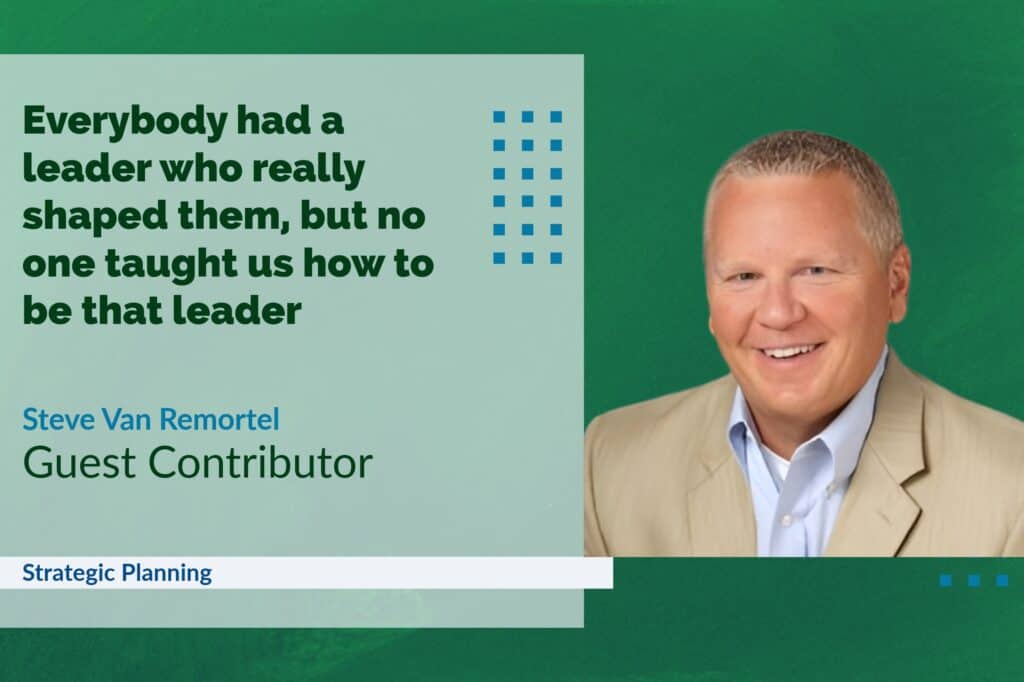
Early in my career, I worked for a leader who shaped me more than any other leader I ever had.
He taught me to think strategically, to be action-oriented, and to have the tough conversation when needed, and I still lean on those lessons today.
That same leader also showed me a few things I promised myself I would leave behind: a short fuse, a style that was too direct at times, and very little work-life balance.
Those lessons stuck.
Looking back, I don’t think there was ever a plan for developing me.
My boss was a strong performer who got promoted and did the best he could with what he had.
I know that feeling well, because years later, I did the very same thing with my own team.
I suspect you have your own version of this story.
Most of us learned to lead by watching whoever we happened to work for, but when it came time to build our own team members, we did what was done for us.

We promoted our strongest performers, handed them a team, and hoped for the best.
After 27 years of working with thousands of leaders, I’ve found that most people leaders are missing the same four things when it comes to developing the team and each team member to their full potential.
Early on, I missed all four myself.
1. The know-how
When I first led people, no one walked me through how to run a 1:1 meeting, build a development plan, or handle the 30-minute conversation that decides whether a great team member stays or starts looking.
I figured it out as I went, and my team helped pay for that learning.
The usual fix is a commitment to do better, then back to a full inbox.
What helps more is a standard: what to say, when and how to say it, and what to do afterward. We put so many processes in place, but we don’t have a defined process for 1:1 development meetings, leadership development plans, or talent plans.
2. Insight into the person across the table
Even with a process, it’s natural to lead others the way we are wired ourselves.
I’ve caught myself doing it more than once.
Moving fast and getting to the point came naturally to me, and I didn’t always provide the detail that people with other styles needed.
A fast-paced, results-driven leader can easily lead everyone as if they were fast-paced and results-driven, and the steady, detail-oriented team member hears pressure where we meant encouragement.
Behavioral science closes that gap with tools like DISC and Motivators, which show how each person works, communicates, and what truly motivates their actions and decisions.
Behavioral science helps you clearly understand the person sitting across from you and enables you to have conversations you normally would not be able to have – leading to breakthrough conversations regarding their professional and personal growth.
Many companies use these for the leadership team and stop there.
The real payoff comes when that insight reaches every team member, and when technology puts it in front of the leader at the moment of the conversation.
3. The confidence to have the conversation
Without knowing what to do and having never done it before, that uneasy feeling sets in.
So, the 1:1 meeting slides to next week, and then the week after.
My challenge was a little different.
Thanks to that leader mentioned earlier, I was comfortable having the tough conversation, but what I didn’t always get right was the timing or the approach.
Confidence comes from preparation, and AI has changed what’s possible.
Picture a supervisor prepping for a 1:1 meeting by asking, “How should I approach Maria about her missed deadlines?” – and getting a thoughtful answer grounded in your company’s vision, your talent plan, Maria’s behavioral science results, her development plan, and every past conversation they’ve had.
That’s a coach who knows your business and your people, available at 10 p.m. when the worry tends to show up.
The leader walks in prepared, and the conversation happens.
4. The time
Picture a manufacturing supervisor with 12 direct reports.
If every 1:1 needs prep before and follow-up after, the calendar simply doesn’t close.
That’s why so many good initiatives fade within six weeks; the intent is real, but the hours aren’t.
Technology can now carry that load.
A 1:1 meeting can be recorded and summarized automatically, with the action plan documented, the development plan updated, and a copy sent to everyone involved.
The leader focuses on the person, and the paperwork gets done.
Why the usual fixes fade
The companies I see winning the talent battle have shifted their approach.
Rather than trying to change their leaders, they give them a standard, put the science and a coach at their fingertips, and let technology handle the paperwork.
The human part stays human, and everything around it gets easier.
A simple next step
At your next leadership meeting, list everyone who leads people in your company.
Next to each name, note where they stand on the four: know-how, insight, confidence, and time.
Then talk through two questions together: Which of these have we given them, and where could technology lighten the load they’re carrying alone?
If your list looks like most I’ve seen, including my own early on, there’s plenty of room to grow. That’s good news, and it may be the biggest profit lever you have.
The leader who shaped me gave me some gifts I still use today, along with a few lessons in what not to do, all without consistent 1:1 meetings and a development plan.
Our leaders deserve more: the know-how, the insight, the confidence, and the time.
Give them all four, and they’ll become the leader everyone remembers.
Those who talent plan, profit.