Door County restaurant centered around farm-to-table ethics
 Shawano’s Wolf River Dental opens new, stand-alone location


September 21, 2026
NEENAH – One of the fastest-growing employment sectors in the United States, ThedaCare’s Troy Albrecht said, is a vital medical field many may not think about until they require care.
As health professional shortages have made headlines in recent years, Albrecht said radiologic technologists are often a forgotten but important part of the healthcare team.
“Most people probably think of us as the person who takes an X-ray when someone breaks a bone, but the profession goes far beyond that,” he said. “Radiologic technologists work in hospitals, clinics, emergency departments, surgery and other specialized areas.”
Overall employment of radiologic and MRI technologists is projected to grow 5% from 2025-35, faster than the average for all occupations, according to the U.S. Bureau of Labor Statistics.
About 15,300 openings for radiologic and MRI technologists are projected each year, on average, over the next decade.
Many of those openings, per the bureau, are expected to result from the need to replace workers who transfer to different occupations or exit the labor force.
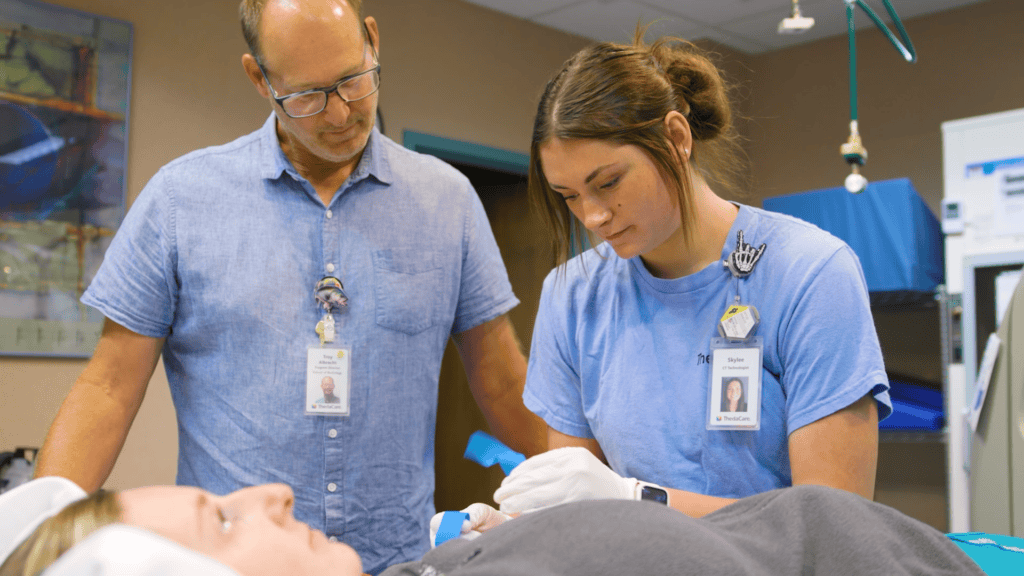
Albrecht, director of ThedaCare’s School of Radiologic Technology, said the accredited program has been educating radiologic technologists since 1965, enjoying more than 60 years of history in Northeast Wisconsin.
He said the hospital-based radiography programs have historically played an important role in educating technologists to meet the workforce needs of their hospitals and communities – and that mission continues today.
“Our goal is to educate highly qualified radiologic technologists who can serve patients throughout Northeast Wisconsin and beyond,” he said.
Preparing for the program
Albrecht said there are several factors playing a role in the increased need for radiologic technologists locally, including the aging population requiring more medical care and diagnostic imaging, and experienced technologists retiring or leaving the workforce.
The career path, he said, also allows employees the room for growth within the field.
“Radiography provides a great foundation for several advanced imaging careers,” he said. “Once students graduate and become registered radiologic technologists, they may have opportunities to cross-train into areas such as CT, MRI, mammography and interventional radiology.”
Albrecht said one of the things that makes radiologic technology a great career is the number of different directions you can take it.
“You can begin in general radiography and continue to grow and specialize throughout your career,” he said.
The ThedaCare School of Radiologic Technology, Albrecht said, is a 21-month hospital-based program affiliated with the University of Wisconsin-Oshkosh (UWO) created for students to earn a baccalaureate degree in radiologic science.
While attending the program, he said students receive a combination of classroom education and extensive hands-on clinical experience.
“Applicants need an associate degree or higher, and they also need prerequisite coursework in anatomy, physiology and medical terminology,” he said. “Those courses may already be incorporated into their degree, as they are through UWO, or they can be completed through another accredited college. We also look for applicants who have some type of healthcare experience, such as working as a CNA or imaging assistant.”
Though grades are important, Albrecht said they want students who communicate well, are dependable, have a strong work ethic and genuinely enjoy working with patients.
“Radiologic technology combines technical ability with patient care, so both sides are extremely important,” he said.
During the first year of their program, Albrecht said students build the foundation they need to become radiologic technologists.
Afterward, he said they learn radiographic positioning, anatomy and how to properly image the different parts of the body.
Albrecht said they also take patient-care courses that include monitoring vital signs, basic nursing skills, specialty tubes and equipment and caring for patients who have particular medical considerations.
“What really separates a hospital-based program is the amount of clinical experience students receive,” he said. “They’re not simply learning from a textbook or practicing in a lab. They are applying what they’ve learned while working alongside registered technologists and caring for actual patients.”
As students progress through the program, Albrecht said they become increasingly independent and are exposed to more complex exams and different areas of medical imaging.
“By the second year, we expect them to bring together their positioning skills, critical thinking, patient care and communication skills while learning to efficiently obtain diagnostic images, including in trauma situations, as they prepare to transition from student to registered technologist,” he said.
Building a long-term career path
After becoming a registered radiologic technologist, Albrecht said there are opportunities to advance into areas such as computed tomography (CT), magnetic resonance imaging (MRI), mammography and interventional radiology.
He said ThedaCare is fortunate to have a clinical coordinator – Miranda Parson – who is board-certified in mammography, so students receive “great exposure to that modality.”
“CT is another modality in which our program is particularly strong,” he said. “Although CT content is not required for the American Registry of Radiologic Technologists radiography certification examination, I am also board-certified in CT and incorporate CT education into our curriculum. This allows graduates to build a strong foundation for pursuing CT certification and working in multiple modalities.”
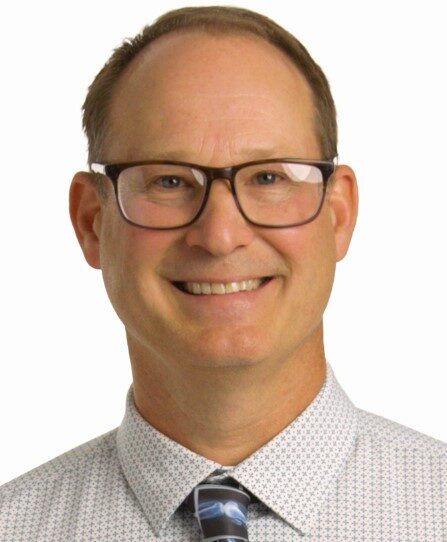
One of the things Albrecht said he likes about the profession is that graduating from a radiography program doesn’t mean the end to one’s education.
“It’s often just the beginning of the career path for students,” he said. “Someone may start in general X-ray, discover they really enjoy surgery or trauma and later decide they want to move into CT or another advanced modality. Having those opportunities within a health system also helps us retain talented employees by giving them ways to continue growing professionally.”
Retaining talent in Northeast Wisconsin
Albrecht said for healthcare organizations, developing a strong pipeline of qualified technologists is “extremely important.”
He said programs like ThedaCare’s allow them to educate students locally, provide their clinical education within the communities and hopefully retain many of those graduates in Northeast Wisconsin.
“The need for radiologic technologists exists in Northeast Wisconsin and beyond,” he said. “Healthcare organizations aren’t only competing for nurses and physicians, but there is also a strong demand for qualified imaging professionals. Our program provides an important workforce pipeline because students receive their education and clinical training right here in the communities we serve.”
During those 21 months, Albrecht said students develop relationships with ThedaCare’s technologists, departments and patients and become familiar with culture and expectations.
He said in recent years, ThedaCare has been fortunate to hire approximately 90-100% of its graduates who are seeking positions within the health system.
While many of the program’s graduates choose to remain with ThedaCare after graduation, Albrecht said others fill imaging positions throughout Northeast Wisconsin.
“Either way, we’re contributing qualified healthcare professionals to the region,” he said.
The AI effect
As the next era of AI begins to affect nearly every career path, Albrecht said technology has always been a major part of radiology, and AI will continue that evolution.
But while other professions may experience shifts in human employment due to advanced technologies, he said the personal touch and bedside component will remain a critical part of radiology.
“Our technologists work with people who may be injured, frightened, in pain or receiving some of the worst news of their lives,” he said. “A computer can’t replace the person who explains an exam, earns a patient’s trust, recognizes something isn’t right, adapts to a patient’s condition and safely gets the images needed for a diagnosis.”
Albrecht said he thinks AI will become another tool that helps technologists and radiologists work more efficiently and potentially improve patient care, but it won’t replace the human component.
That’s why he said the program doesn’t simply teach students which buttons to push.
“Radiology has changed tremendously since our program began in 1965, and it will continue to change,” he said. “Our responsibility as educators is to make sure our curriculum evolves with the profession and that our students are prepared for today’s equipment and the technology they will encounter throughout their careers.”
Defining success through service
When it comes to the standards of success for the program, Albrecht said it’s about more than graduating a certain number of students.
For him, he said success is graduating highly competent technologists who provide excellent patient care, pass their national certification examination, find employment and become professionals anybody would want caring for their own families.
“There is also a larger workforce component,” he said. “If the program can recruit talented people into radiologic technology, educate them here, give them a great clinical experience and encourage them to build their careers in Northeast Wisconsin, that’s a win for the students, ThedaCare and the communities they serve.”
During the next five to 10 years, Albrecht said he expects medical imaging to continue to grow and become even more technologically advanced.
He said that makes maintaining a strong educational program and developing their own workforce increasingly important.
“We’ve been educating radiologic technologists since 1965,” he said. “The technology looks completely different today than it did when the program began, but our basic mission really hasn’t changed: prepare skilled, compassionate technologists who can provide excellent care to the patients and communities we serve.”