 Amherst Marine keeps North Central Wisconsin riding the waves
 Badger Liquor: Where ‘good relationships’ fuel success


October 5, 2026
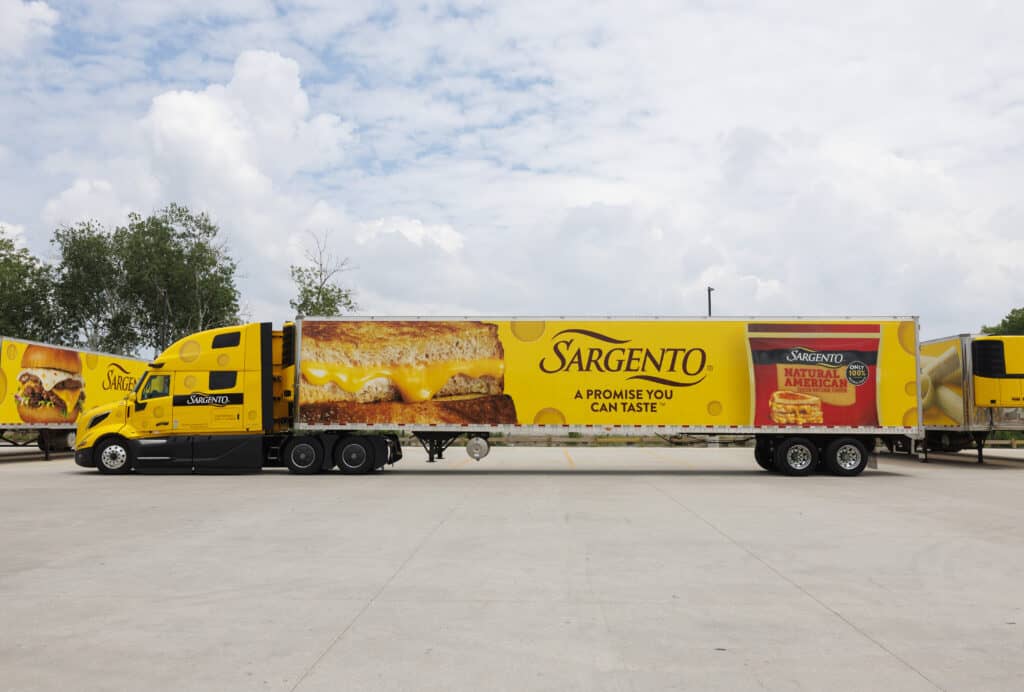
PLYMOUTH – Instead of waiting for experienced commercial drivers to come through its door, Sargento is helping create them.
Launched in 2023 in partnership with the Wisconsin Department of Workforce Development’s Bureau of Apprenticeship Standards and Fox Valley Technical College, Sargento’s CDL Truck Driving Apprenticeship Program provides existing employees a paid pathway from other areas of the company into professional truck driving.
Per sargentofoods.com, the roughly 12-month program combines approximately 200 hours of CDL education with more than 2,000 hours of hands-on driving and mentorship from veteran Sargento drivers.
The Plymouth-headquartered cheese company reports four employees have successfully completed the program, with a fifth expected to finish this year.
The company plans to bring at least one additional apprentice into the program annually.
Anne Troka, Sargento senior manager of community and workforce development, said for a company with just over 50 drivers – including 37 over-the-road drivers and 12 local drivers, along with part-time drivers – the program is creating a homegrown source of talent as retirements and workforce changes continue to challenge the trucking industry.
Looking down the road
The idea for the program, Troka said, dates back roughly three and a half years before the first apprentice climbed behind the wheel.
Exploration began, she said, as Sargento looked ahead at its transportation workforce, recognizing both an aging workforce and fewer people entering professional truck driving.

“It’s really about programs and partnerships and pathways for building career pathways for our current employees, and also for early and emerging talent as well as to bring [in] future talent,” she said.
Troka said new drivers can face a “catch-22” – employers often seek experienced drivers, but drivers cannot accumulate that experience until an employer gives them an opportunity.
Meanwhile, she said many Baby Boomers who have been career truck drivers are reaching retirement age.
That combination, Troka said, prompted Sargento to consider how it could develop its own pipeline rather than depend solely on the external labor market.
After all, she said, Sargento already had considerable experience with apprenticeships, including a maintenance apprenticeship program that has operated for more than 37 years.
Through its relationships with the Department of Workforce Development and Bureau of Apprenticeship Standards, Troka said the company learned more about Wisconsin’s professional truck driving apprenticeship model.
In 2023, Sargento launched its program with the Department of Workforce Development, Bureau of Apprenticeship Standards and Fox Valley Technical College (FVTC), which provides the formal CDL training portion.
The result, Troka said, takes a career pathway that had traditionally required external training and embeds it within Sargento’s workforce-development system.
Obtaining a CDL independently can present a significant barrier, she said, particularly for someone who already has a job and family obligations.
However, Sargento’s program allows employees to earn while they learn, Troka said, and covers their education costs.
She said Sargento’s investment helps meet a business need while providing employees access to careers they may not otherwise be able to pursue.
“Having Sargento invest in and believe in its employees to become who they want to become and the careers they want to pursue, and [providing] a team of people mentoring and supporting and believing in you – that makes a difference,” she said. “The people who go through an apprenticeship program, internships, youth apprenticeship and co-ops have a loyalty to the company, because there are no strings attached.”
From interest to career
For years, Aaron Luljak had been intrigued by the open road.
Road trips with friends during college took him to the East Coast and the South.
As he moved through different jobs, the vehicles he operated gradually got bigger.
Then, at one job, he was asked whether he wanted to try spotting trailers, moving them between a staging area and loading docks.
It was intimidating, Luljak said – but it also planted an idea: “If I can do it here, I might be able to do it on the road.”
Turning that thought into a career, he said, was another matter.
With a wife to support, rent to pay and student loans from a four-year degree, Luljak said walking away from a steady paycheck to pay for commercial driver’s license training – with no guarantee of where it would lead – made pursuing the career difficult.
Then, while working in production and material handling at Sargento Foods’ Hilbert facility, Luljak said he spotted something on the company’s intranet: an opportunity to become a professional truck driver without first leaving his job.
“It piqued my interest because it was something where I could change career paths and not have to take a financial hit by giving up pay and doing it on my own dime,” he said. “It was a transformative event.”
Still, Luljak said he learned quickly that earning a CDL and becoming a professional driver are not quite the same thing.
He began studying nearly three years ago, he said, obtaining his temporary permit and completing the required written tests before attending FVTC.
“The next week, I was local with a mentor and learning the Sargento way,” he said. “There’s passing the test, and then there’s real-world experience.”
Now, Luljak said, after spending time driving over-the-road for the company, he is a local driver for Sargento.
The distinction between qualifying for a license and learning the realities of the profession, Troka said, is where Sargento’s veteran drivers become central to the program.
She said after apprentices successfully complete college training and obtain a CDL, they return to Sargento for the next phase of development.
Chris Human, supervisor of over-the-road drivers at Sargento, said the new drivers begin with Sargento’s local fleet and an experienced mentor, focusing on skills including driving, backing, dropping trailers and hooking them up.
Repetition matters at this stage, Human said, as apprentices repeatedly shuttle between Sargento locations, familiarizing themselves with routes while veteran drivers observe their performance.
Eventually, when mentors and transportation leaders believe an apprentice is ready, he said the driver progresses to over-the-road training alongside veteran Sargento drivers.
“It’s been so huge to have these mentors who have a lot of experience and are happy to pass that [knowledge] on to the next generation of drivers,” he said. “They’re fully bought in on the process.”
The training, Human said, encompasses more than how to operate a truck.
“It’s a different lifestyle and not just a job, and those guys are helping apprentices to learn how to cope with lots of different challenges from family,” he said. “It’s a months-long process, learning from these folks who have been doing this for so long, and they’re vital to the success of this program.”
The timetable isn’t identical for every apprentice, Human said, but generally, drivers spend several months with local mentors before moving to over-the-road mentors.
Once they’re ready to drive independently, he said he and the transportation department manager initially select loads to ease the new driver into solo work.
“Each driver is a little different,” he said, “and some people may need more time in one area or another, and we let that play out.”
Learning the ‘Sargento way’
Luljak said working with multiple mentors allowed him to see how experienced drivers approached similar situations differently.
“I learned from each person and got to see how different people accomplish the same goal,” he said.
The consistent message among mentors, Luljak said, was safety.
“[As a driver], there is exposure to lots of things beyond your control, and you have to react to them sometimes in an almost instantaneous fashion,” he said. “Safety was the first thing that was drilled in and carried through by every one of my mentors.”
That emphasis accompanies a fleet that, per Sargento, logged more than 5 million miles in 2025.
Seventeen Sargento drivers reached some level of million-mile milestone during the year, while one longtime driver was approaching 5 million miles as of the company’s driver banquet in April.
Sargento also reported a 2025 Compliance, Safety, Accountability score of 1.95, placing it in the top 27% nationwide for safe driving.
The federal safety program considers areas including unsafe driving, crashes, hours-of-service compliance and vehicle maintenance.
Driving a tractor-trailer also requires a different level of attention, Luljak said, compared to driving a passenger vehicle.
Whereas a missed turn in a car can often be corrected relatively easily, he said in a tractor-trailer, it can become a significant problem.
“You need to be able to anticipate more,” he said.
Luljak said by having mentors in the passenger seat, he was able to develop those instincts with someone there to offer corrections, observations and practical tips.
“They give you ideas for things to work on,” he said. “It’s the little tips and insights; real-world things. They’re like a professional big brother.”
Known employees, new careers
For Sargento, Human said developing drivers internally also offers something that isn’t guaranteed when recruiting experienced drivers externally: the company already knows the employee.
Human said Sargento is unusual because transportation is a critical part of its operation, but trucking isn’t its primary business; it is a cheese company with its own fleet and a company culture its drivers represent when they are on the road and interacting with customers.
He said Sargento considers its drivers to be brand ambassadors.
“We have people like Aaron who already represent our culture well – a ‘known commodity’ who is going to represent us well,” he said.
Sargento’s local drivers generally move finished product from its production facilities to the company’s distribution center, Human said, whereas over-the-road drivers transport products to distribution centers across much of the country.
He said the company outsources transportation to the West Coast.
The fleet isn’t necessarily growing, Human said, but its workforce is constantly changing as drivers retire or leave, making a pipeline important.
For Troka, the apprenticeship also creates a cycle in which employees who develop their careers can eventually help develop others.
“Current employees can serve as mentors and leaders and help others develop, so there is [employee] engagement in their own growth, and the [mentors] pay it forward,” she said. “That is the Sargento family culture and part of who we are.”
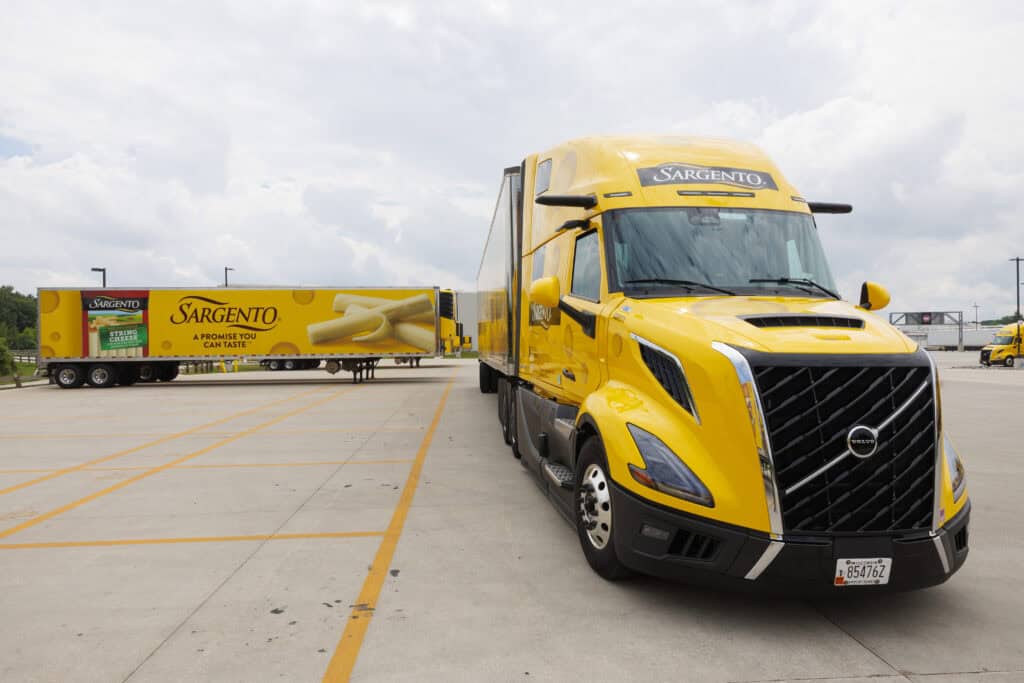
So far, Troka said the company has retained the employees who completed the CDL apprenticeship, with graduates presently working in both local and over-the-road roles.
She said Sargento’s first graduate, Amanda Lytle, logged more than 150,000 miles during her first 18 months after completing the apprenticeship.
More than one road into the cab
The apprenticeship isn’t Sargento’s only strategy for developing drivers.
The company continues to recruit experienced CDL drivers externally, Troka said, and has developed an associate truck driving opportunity for technical college graduates who don’t yet have the experience Sargento typically seeks.
Another pathway, she said, begins even earlier.
Troka said federal age requirements limit younger drivers’ ability to operate commercially across state lines.
However, she said Sargento developed a fleet utility truck washing pathway for workers ages 18-21 that allows them to become familiar with the transportation department while demonstrating their work ethic and building relationships with the team.
She said participants can progress toward obtaining a CDL and becoming a local driver, with the potential to transition to over-the-road driving when eligible at age 21.
So far, Troka said, one person has completed the pathway, and a second – an 18-year-old – is scheduled to begin in October.
“There are many plates spinning to create pipelines for talent to gain skills needed,” she said.
This philosophy extends beyond transportation, she said, as Sargento’s workforce development efforts include its long-running maintenance apprenticeship, youth apprenticeships, an advanced manufacturing scholarship and internships and co-ops across approximately 12 departments.
Together, Troka said these efforts reflect an approach built less around waiting for fully qualified applicants to arrive and more around creating ways for people to become qualified.
‘Winning the working lottery’
Luljak said for him, Sargento’s proactive approach has had consequences far beyond filling an open driver position.
After growing up hearing that a four-year degree was the route to a good-paying career, Luljak said he took that route, graduated into a difficult economy and spent years dealing with student debt.
Sargento’s apprenticeship, he said, offered him another route without requiring him to walk away from the income he already had.
“From a financial standpoint, career standpoint, I can’t overemphasize what a life-changer it is,” he said.
After completing the program, Luljak said he drove over-the-road – which allows drivers to return home each week – before transitioning to a local driving position about four months ago.
He said his path has made him someone other employees can approach when considering a change.
Luljak said he starts with practical advice: If someone wants to drive over-the-road, make sure the person at home understands what the lifestyle entails.
He said his wife’s previous military experience meant the couple was accustomed to periods apart.
Beyond that, Luljak said his advice is simple.
“I tell them to go for it,” he said. “There are challenges, but at the end of the day, it’s worth it. I can’t overemphasize how good of a program it is and how well worth it it is. If you can do it, do it.”