Verns Cheese under new ownership after 59 years
 Day’s Bowl-A-Dome rolls into a new era


July 27, 2026
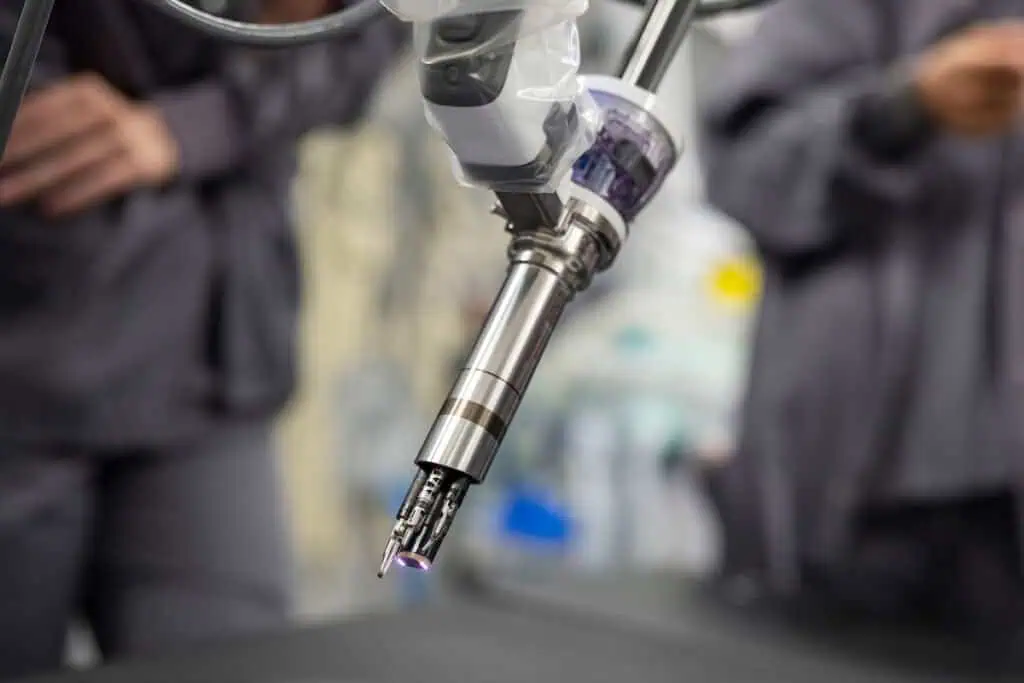
NEENAH – Neenah-based ThedaCare is the first health system in Northeast and Central Wisconsin to offer the da Vinci SP (Single Port) robotic surgery system, expanding its capabilities for minimally invasive procedures.
Named after Renaissance artist and innovator Leonardo da Vinci, ThedaCare Medical Director for Surgical Robotics Cynthia Geocaris said the advanced technology allows surgeons to perform complex operations through a single small incision.
“It’s definitely flattering and an honor to be able to have it,” she said, “I’m excited to be able to bring it to the community, and then start teaching my partners and other surgeons from around the country [how to use it].”
Kellie Diedrick, senior vice president of the ThedaCare South Market, said the minimally invasive surgical platform allows surgeons to perform complex procedures through a single small incision – particularly in breast, urologic and head and neck surgeries.
“Our investment in the da Vinci SP is ultimately about what matters most – our patients,” she said. “We are committed to bringing the latest advancements in care to the communities we serve. It’s one more way we are ensuring patients and families have access to advanced, high-quality care close to home, when they need it most.”
Per Intuitive – the company that developed the da Vinci SP – the platform can be used in colorectal, thoracic and prostatectomy surgeries, while also providing an opportunity for treating complex urology and cancer cases.
Geocaris said patients in the region will experience numerous benefits from the technology.
“For patients: faster recovery, faster return to their normal life and then the advantage of having only one scar that is potentially hidden, so cosmetically it has a big advantage as well,” she said.
Securing the da Vinci SP, Geocaris said, was possible thanks to the generosity of the ThedaCare Family of Foundations and the ThedaCare Foundation-Neenah.
“We were able to bring this to our community, and we’re excited to be able to offer that and be in this select group of 20 hospitals around the country,” she said.
Greater dexterity
Though ThedaCare only recently acquired the da Vinci SP system – which differs from the brand’s multi-port models – Geocaris said the single-port model has been available for about 10 years, having been “only applied in urology and some head and neck cancer.”
“It’s now approved for general surgery, which is what I do, so we are going to be using that in the general surgery field – basically, anything in the abdomen where we have to remove an organ, we now can do through a very small, single, two-centimeter incision,” she said. “Then, we are also going to be leading the way into breast surgery in the future, doing breast surgery from a small incision under the armpit.”
Despite advances in robotic technology, Geocaris said surgeons continue to train in open surgery.
“There are necessary times when we need to make a large incision, but over the years, surgery is evolving to being more and more minimally invasive,” she said. “I would say for myself and my group here at ThedaCare, we perform 98% of our cases on the robot, and only 2% of our cases in an open fashion.”
The gist for systems like the da Vinci SP, Geocaris said, is for a computer to interface between the surgeon and the patient.
“The surgeon does make the incision and place the instruments into the patient,” she said. “Then we sit at a console with a screen and controllers for the instruments. We actually control all of the instruments with our hands, and the robot has the advantage of mimicking our hand movements.”
A noteworthy advantage of the da Vinci SP, Geocaris said, is the robot is able to meticulously mimic not only the surgeon’s hand and wrist but also the elbow.
She said the system is also able to eliminate any natural tremor in the surgeon’s movements.
“Then, we’re able to get to places we couldn’t [otherwise] get to, because we’re using tiny, five-millimeter instruments,” she said.
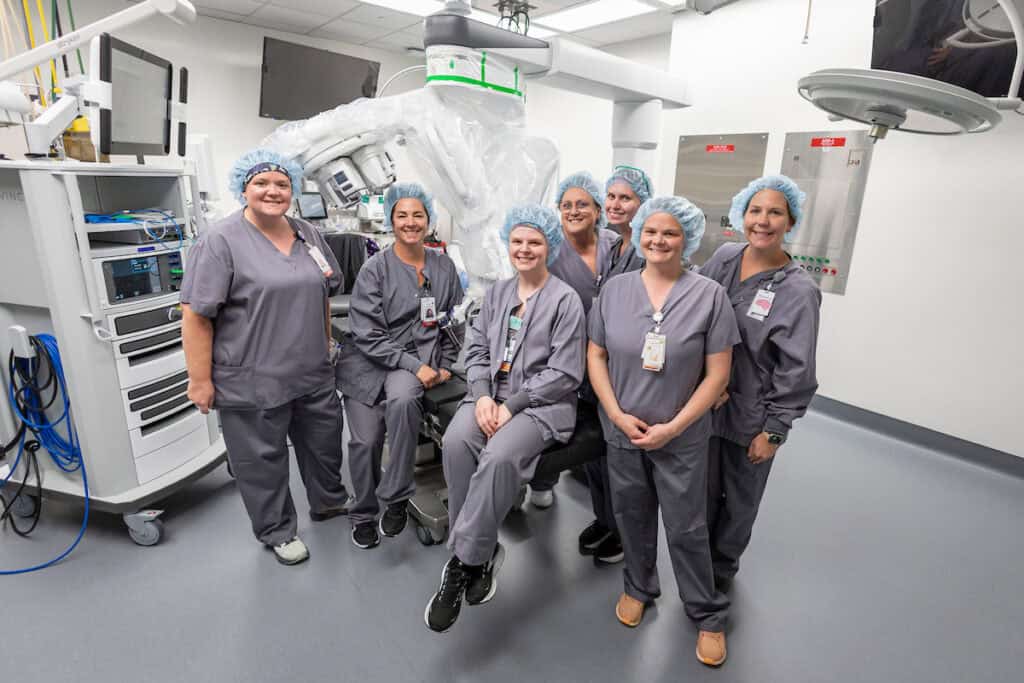
Geocaris said such technology requires extensive training.
Mastering the da Vinci SP, she said, required 16 hours of simulator training and two days of hands-on training at a laboratory in Chicago.
This, Geocaris said, was followed by a case observation with an experienced surgeon, also in Chicago.
“All of that comes into preparation,” she said. “And then, on the first few cases, another surgeon comes into the proctor to make sure you’re up to speed on the new technology. So, there is a pathway to success for this.”
Once mastered, Geocaris said this technology gives surgical teams another tool to elevate patient care.
“It allows us to deliver more innovative, precise treatments for our patients while ensuring we stay at the leading edge of medical progress,” she said.
The team at ThedaCare Regional Medical Center-Neenah, Diedrick said, has successfully utilized the da Vinci SP to perform surgeries for patients since June.
A regional leader in robotic surgery
Diedrick and Geocaris said the da Vinci SP is just the latest of ThedaCare’s long-established efforts as a national leader in robotic surgery.
“We are proud to be at the forefront of this innovation, ensuring we are providing more options for the communities in Northeast and Central Wisconsin,” Geocaris said.
She said a significant part of her role involves deciding which technology would be best for ThedaCare, and considers Intuitive to be a leader in the robotic surgery industry.
ThedaCare’s innovative reputation, Geocaris said, fosters a sense of confidence among patients, with many seeking out the hospital system specifically for the comparatively quick recovery time enabled by robotic surgery.
Given only about 2% of ThedaCare’s surgeries are performed openly, she said the health system is positioned to offer robotic-assisted procedures to more patients, along with the potential benefits of minimally invasive surgery.
“[Open surgery can be] necessary for whatever factor is going on with the patient…, but we are probably one of the more progressive and advanced groups in the country,” she said.
As more technological applications are approved by the FDA’s years-long processes, Geocaris said the capabilities continue to expand.
“Now, these systems are software-based, so, as with anything – just like your cars that are self-driving and automated – things with robotics are taking off more and more due to the ability to enhance software rather than replace an entire system,” she said.
Among the additional surgery options the da Vinci SP system creates at ThedaCare, Geocaris and Diedrick said, are new possibilities for those experiencing a breast cancer diagnosis.
With the FDA having recently approved the robotic nipple-sparing mastectomy, they said ThedaCare will be among the first healthcare systems to offer this advancement.
“By enabling nipple-sparing mastectomy through a hidden incision, the robotic system can help reduce visible scarring and support improved reconstructive outcomes, while still maintaining a strong focus on cancer treatment and safety,” Geocaris said.
Diedrick said the importance of this advancement centers on treatment that “is not only physical, it’s deeply emotional.”
“Robotic-assisted techniques may help preserve body image and reduce physical trauma during surgery,” she said.
Geocaris said she’s marveled at the progression of the technology since she began performing robotic surgery in 2004.
“Back then, it was kind of large robots, maybe more difficult to use – to now, smaller, easy-to-use robotic systems with applications to more and more surgeries, allowing us to perform our surgeries in a more minimally invasive fashion than ever before, and allowing us to work through these small incisions in spaces we were never able to do before because of the improved technology,” she said.
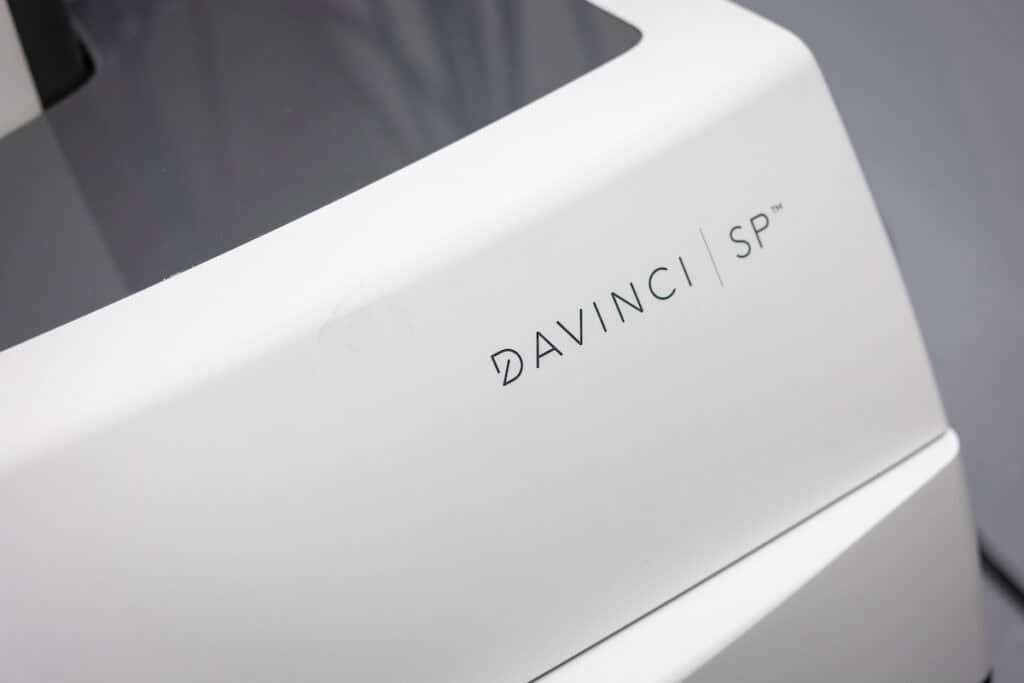
Not only does equipment like the da Vinci SP attract patients to ThedaCare, Diedrick and Geocaris said it also attracts surgeons to work for and learn from the healthcare system.
“Doctors from around the country come to ThedaCare to learn robotic surgery skills from our expert surgeons,” Diedrick said. “Additionally, both residents and physician’s assistant students study robotic surgery at ThedaCare. This is one way we are continuing to invest in the future of health care and meet the needs of our communities.”
Geocaris said her role involves launching a teaching site at ThedaCare – one of 20 teaching sites in the country for general surgery, single-port robotics.
As the industry evolves, Geocaris said greater competition among robotics companies could lead to more innovation and expanded options for health systems.
“As these new robots enter the market, it’s just going to enhance the pace of advancement of the technology,” she said. “It also might lower the cost of these things for hospitals. But competition always breeds excellence, so I’m excited to see the new ones as they roll out this year.”
For more information on the hospital system, visit thedacare.org.