 1000 Island Airboats named Coolest Thing Made in Wisconsin
 La Crosse chamber’s CEO, board chair positions held by women



November 2, 2026
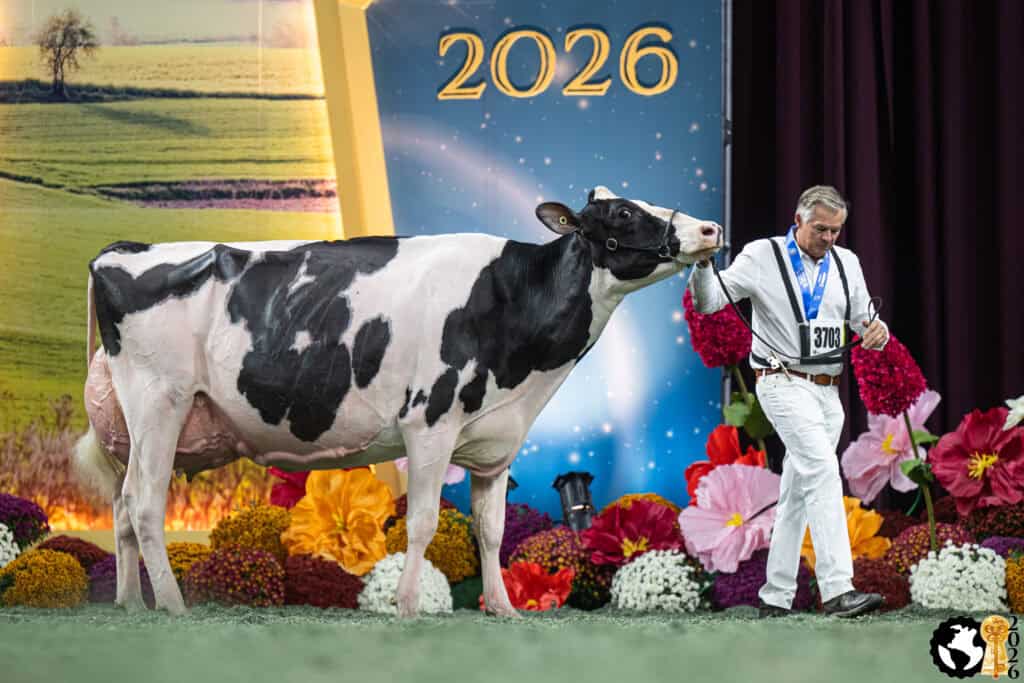
MADISON/APPLETON – Wisconsin may be America’s Dairyland, but for one week each fall, Madison becomes the world’s dairy capital.
From robotic milking systems and data-driven herd management to international commerce, elite cattle competitions, and award-winning dairy products, the World Dairy Expo brings the global dairy industry together in one space.
For 59 years, the event has transformed Madison’s Alliant Energy Center into a gathering place for an industry that reaches well beyond the farm, bringing together equipment manufacturers, technology companies, food processors, researchers, retailers, and other businesses.
This year’s expo, which concluded Friday, Oct. 2, attracted dairy professionals, exhibitors, and enthusiasts from across the United States and around the world to explore innovations, make business connections, exchange ideas, and celebrate the industry’s best.
General Manager Laura Herschleb said the World Dairy Expo is the premier forum for the global dairy community to learn, share, create commerce, and showcase competition.
Herschleb said the expo is like a competition, marketplace, classroom, and family reunion rolled into one.
“I think of the World Dairy Expo as the dairy industry’s premier global stage, whether you’re interested in the cattle show, the trade show, youth contests, or anything in between,” she said.
Few agricultural events bring so many aspects of an industry together in one place, Herschleb said, and that’s part of what makes the Expo special.
“It’s a one-stop shop and melting pot for all things dairy industry-related,” she added. “No matter if you want to see cattle genetics on display, talk to a company about what technological advancements could work for your operation, or are looking for your next career opportunity, you can find it at the World Dairy Expo.”

For Appleton-based Lamers Dairy, Mark Lamers, President of Lamers Dairy, said the World Dairy Expo offers another opportunity: seeing how its products stack up against the competition.
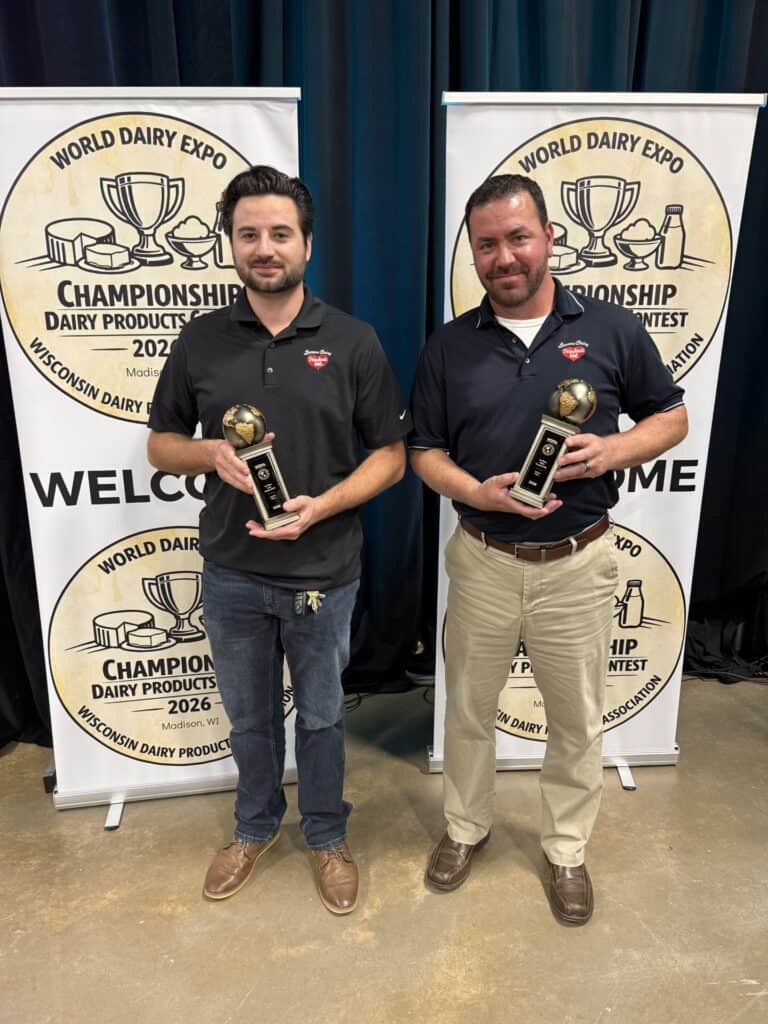
The family-owned processor, which dates to 1913, earned two first-place awards in the 2026 World Dairy Expo Championship Dairy Product Contest.
Sponsored by the Wisconsin Dairy Products Association, Herschleb said the competition drew 1,236 entries from 157 companies.
Lamers Dairy’s Dairyland’s Best Whole Chocolate Milk and Dairyland’s Best 1% Lowfat Chocolate Milk each earned first place in their respective categories, while the company’s half-and-half took second.
Lamers Dairy also recently earned recognition at the 2026 Wisconsin State Fair Dairy Products Contest, as its Dairyland’s Best Whole White Milk was named Grand Champion Fluid Milk with a score of 99.8 out of 100.
Its 1% Lowfat Chocolate Milk earned first place, as well, while its 2% Reduced Fat White Milk and Whole Chocolate Milk finished second and third in their respective categories.
Mark said competitions help the company measure its products against others while giving customers another reason to choose its milk.
“It’s a measure of how we stand up to the competition and is a marketing tool – you can’t deny it,” he said. “Consumers are always looking for the best.”
Global gathering, Wisconsin roots
Herschleb estimated this year’s event attracted 50,000 people, although not all attendees are registered, meaning the actual number could be higher.
The 2026 expo included:
- 468 trade show companies from 38 states and 18 countries
- Five acres of trade show exhibits
- 2,534 dairy cattle from 39 states and four Canadian provinces
- 98 hours of cattle judging
- Registered international guests from 75 countries
- 22 international delegations represented through the Wisconsin Department of Agriculture, Trade and Consumer Protection
The expo’s international registration is optional, Herschleb said, so participation from abroad extends beyond the official figures.
For many visitors, she said the event is just one stop on a larger Wisconsin trip that includes farm tours, meetings with suppliers, and opportunities to see American dairy operations firsthand.
The World Dairy Expo works closely with the Wisconsin Department of Agriculture, Trade and Consumer Protection to connect international delegations with businesses and resources that can help them develop their dairy industries, Herschleb said, and those visits also open doors for Wisconsin companies interested in expanding their international relationships.
She noted that achieving global reach hasn’t come without challenges.
International participation continues to recover from the pandemic, and she said visa requirements and travel restrictions can make planning more difficult than in years past.
Still, the relationships built through decades of gathering in Madison keep people coming back, Herschleb said, and visitors don’t necessarily need to come from a dairy farm or have been involved in the industry prior to attending the expo.
One international guest, she said, attended her 10th expo this year despite having no prior connection to the industry before attending her first World Dairy Expo.
“I always say, if you like milk or cheese or ice cream or want to see a cow up close and personal, it’s the one-stop shop.”
Where business gets done
While the cattle competitions draw plenty of attention, Herschleb said the trade show is where much of the expo’s business activity happens.
Many companies showcase the dairy industry’s latest advancements, including those regarding genetics, animal nutrition, and equipment designed to improve efficiency and animal care.
For exhibitors, some introduce new products or demonstrate equipment while others meet customers, build relationships, explore international markets, or recruit employees.
Herschleb said the value depends on what each participant hopes to accomplish, whether that’s making a sale, building brand awareness, or connecting with someone who could become a future business partner.
Informal conversations can help businesses make decisions and avoid costly mistakes, she said, such as a producer researching equipment who might learn as much from another farmer using that technology as from the company selling it.
“The peer-to-peer exchange that naturally happens at the expo also helps people make decisions.”
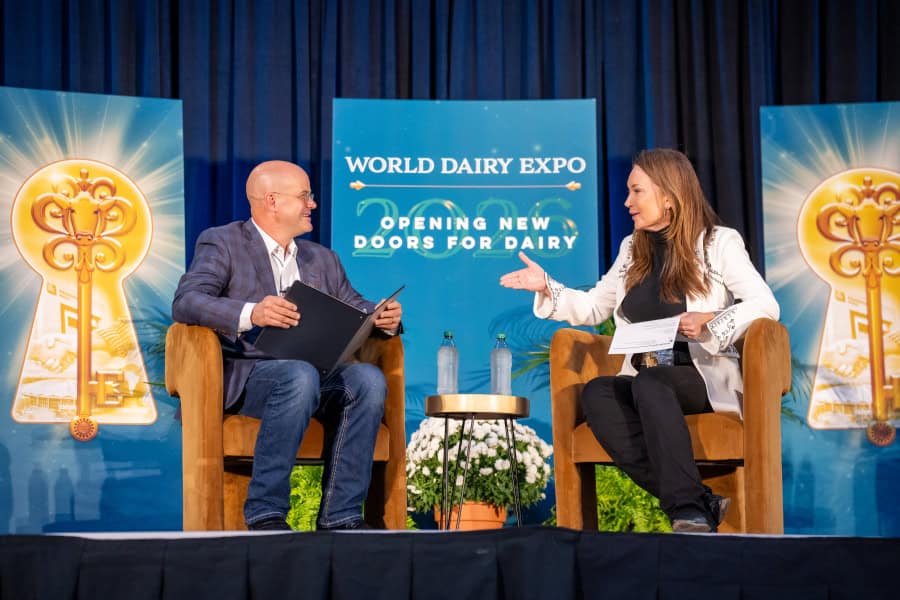
Some exhibitors, Herschleb said, have combined booths or reduced their footprints, reflecting a broader emphasis on efficiency and getting the most from their investments as the trade show adjusts for the changing market.
She said supporting those businesses, and the broader Wisconsin economy, is part of the expo’s mission.
“Our focus is on the dairy industry, and we want to see the Wisconsin economy – and the global dairy industry – be successful,” she said. “In whatever way the expo, as an event, can contribute to and support that, we want to do our part for the greater good of our state.”
Changing the dairy business
Wisconsin’s dairy industry operations increasingly rely on sophisticated technology, automation, and data, and with so much information available, Herschleb said the challenge isn’t always getting more of it, but figuring out what to do with what producers already have.
Data management was a recurring theme in this year’s educational programming, she said, particularly the importance of identifying which measurements actually help an operation make better decisions.
“It’s great if you have three data dashboards, but if you’re not using two of them, why do you have them?” she said.
Herschleb said the products on display reflect an industry looking for better ways to manage everything from herd health and production to labor and profitability as needs change for dairy producers.
“If someone were to walk our trade show floor and walk the barns, the sophistication on display that the companies are showcasing is a direct result of the needs and wants of their customers.”
Herschleb said Wisconsin has approximately 5,000 dairy farms remaining, most of which are family-owned.
As the industry continues to consolidate and evolve, she said running a dairy farm increasingly involves decisions about technology, data, finances, workforce needs, and global markets.
“Folks may be further removed from production agriculture than once was the case…,” Herschleb said. “Dairy farms continue to evolve and utilize technology that fits each farm’s operation. That same evolution is reflected in the way business is conducted and the products on display on the expo trade show floor and in the barns.”
Back to school
Beyond the trade show, Herschleb said the World Dairy Expo offers free educational programming on dairy economics, production, herd management, technology, and research through seminars, virtual farm tours, and presentations encouraging attendees to learn from researchers, industry leaders, and producers who are trying new approaches.
She said some of the most useful learning happens when attendees are networking, comparing experiences, and sharing how they have faced and dealt with similar changes.
Dairy can be a demanding business, with long hours, financial pressures, and plenty of uncertainty, but Herschleb said spending time with people who understand those challenges can help participants return home with renewed energy.
“Another [part of the expo] is to recharge,” she said. “[It’s important] knowing you have peers and resources to help when days are not sunny.”
Local excellence on a global stage
Mark Lamers said the processor’s recent awards recognize much more than what’s inside the bottle; they reflect the work of local farm families, employees, and generations of commitment to quality.
“I always tell people that for us, it all starts at the family farms, and without them and the quality of milk they produce for us, none of this would be possible.”
Mark said Lamers Dairy purchases milk from family farms within approximately 35 miles of its Appleton operation.
Those close relationships are important to the company, he said, which maintains quality standards that exceed basic Grade-A requirements.
Nurturing those relationships is particularly important in Wisconsin, where processors compete for milk, so Mark said the company must offer competitive payments while maintaining the standards customers expect.
For the farmers, Mark said there’s also pride in seeing the finished product on store shelves.
“It’s a true partnership,” he said. “Many take pride in knowing their milk is good enough to be put in the bottle.”
Quality assurance, Mark noted, begins long before bottling, and doesn’t stop when the milk leaves the farm.
He said that Lamers Dairy employees carefully manage processing, butterfat levels, pasteurization, cooling, and ingredients.
Thanks to modern equipment, Mark said operators are provided continuous butterfat readings, for example, which allows them to make adjustments and maintain consistency.
That attention to detail, he said, is especially important with chocolate milk, one of the company’s award-winning specialties.
Mark said the company uses higher-quality chocolate powders, despite the added expense, because the results speak for themselves.
“I’ve had people in the past call me [and ask], ‘Can we sell [you our company’s] chocolate powder?’” he said. “When you’re winning awards with what you have, why would you change?”
Navigating a changing milk market
Like other dairy processors, Mark said Lamers Dairy faces changing consumer preferences, regulations, and industry consolidation.
He said one notable shift is that whole milk sales have grown to nearly match those of 2% reduced-fat milk at his company, while skim milk demand has fallen considerably.
Meanwhile, federal milk pricing regulations and other requirements have added costs and complexity to the business.
He also pointed to a significant decline in the number of fluid milk processing plants operating within the federal milk marketing region that includes Wisconsin, Minnesota, and Illinois.
For independent processors, that changing landscape makes differentiation especially important, and Mark said that Lamers Dairy has leaned on its local roots, longstanding relationships, and commitment to quality rather than pursuing rapid expansion.
He noted this approach reflects a philosophy passed down from his father, who believed in growing at a pace the company could manage without sacrificing its standards.
“It’s staying true to who you are and what you do.”
Cultivating the next generation
The World Dairy Expo isn’t just about today’s dairy industry, Herschleb said; it’s also about introducing young people to tomorrow’s opportunities through FFA, 4-H, and collegiate programs in which students participate in judging competitions, educational activities, and other events that offer a firsthand look at the industry.
Herschleb said she sees that firsthand through her own daughter, a high school freshman involved in FFA and 4-H.
Although the family no longer operates a dairy farm, she said her daughter has developed an interest in an agricultural career through the relationships and experiences she’s gained.
Dairy careers extend well beyond the farm, as well, Herschleb said; as technology becomes more important, the industry needs people with skills in engineering, data analytics, animal science, finance, marketing, and business management.
“My daughter is a freshman in high school and in FFA, and while we don’t currently live on a dairy farm, I wouldn’t be surprised to see her pursue a career in agriculture and the dairy industry due in large part to the relationships, friends, experience, and exposure she can see firsthand at the expo.”
Nearly six decades – and looking ahead
Herschleb said that for an event that takes over the Alliant Energy Center each fall, World Dairy Expo operates with a surprisingly small year-round staff of 10 – along with its board, committees and more than 400 volunteers involved in planning – yet it coordinates an event that brings together thousands of animals, hundreds of exhibitors, and visitors from around the world.
Preparations continue throughout the year, she explained, with staff moving on site in late September as cattle exhibitors begin arriving, and by the time the trade show opens, competitions and other activities are already underway.
The expo will celebrate its 60th show in 2027, and Herschleb said the milestone is an opportunity to appreciate how far the event has come while recognizing that the dairy industry, and the expo itself, will continue to change.
However, she said, whether the conversation centers on cattle genetics, technology, international trade, or the next generation of dairy professionals, the event’s purpose remains the same: bringing people together to strengthen the global dairy industry.
“We are so grateful and humbled to have the opportunity to nurture and support the expo and never take it for granted,” Herschleb said. “It is a true privilege to play a small part in supporting this remarkable global dairy industry.”