Pondview Lavender Farm: A budding business
 U.S. Women’s Disc Golf Championship coming to Manitowoc County



December 8, 2025
WAUSAU – Northcentral Technical College’s (NTC) Workforce Training + Professional Development division has been awarded a federal grant from the U.S. Department of Labor, making more than $450,000 available for refresher courses and new miner training.
Brad Gast – dean of workforce training, professional development and apprenticeship at NTC – said the grant, awarded by the U.S. Department of Labor, focuses on improving safety in mines.
From a percentage standpoint, Gast said the mining industry has a higher injury rate compared to many other sectors nationwide.
“What [NTC] does is address safety concerns, seeing what we can do from a training and education standpoint to ensure that all miners receive this training, continue to have a safe working environment and return home to their families every day,” he said.
Though each state is awarded a grant with a different value, Gast said the training topics remain consistent across all states, with Mine Safety and Health Administration-approved content.
In Wisconsin, Gast said NTC will emphasize core safety training principles, covering topics like confined spaces, overhead power lines, electrical hazards and OSHA standards.
“Our training is refreshed every year, and they use the latest data from across the nation to see where trends are,“ he said. “Unfortunately, we see continued deaths in the industry. Fortunately, however, in Wisconsin, we only had 129 non-fatal injuries in the last year.”
This year, Gast said silica sand dust has become a key issue that NTC is addressing.
Wisconsin, he said, is home to more than 125 silica mines – though the number of active mines can vary annually.

Gast said many of these mines are located in the western and southwestern parts of the state.
“Interestingly, in the state, most of our mines are not underground – they’re surface mines,” he said. “When you look at the sand and gravel pits, those are huge operations. Addressing their needs is crucial.”
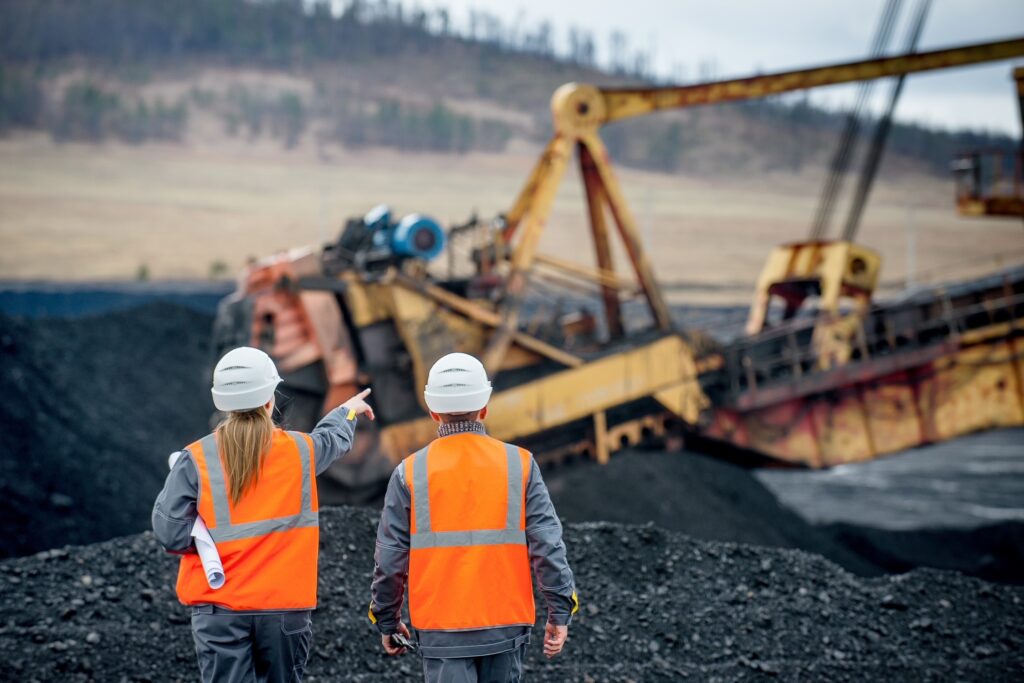
Those “needs,” Gast said, come down to safety of the site, overhead wires, moving machinery throughout the area and shoring up areas that are being dug up, so the site doesn’t collapse.
The training, he said, isn’t just for miners, but rather it’s designed to improve operations across the board.
Gast said NTC’s goal is to ensure its education and training programs are hitting the mark.
“We’re all in this together,” he said. “Safety has no finish line.”
Gast said NTC has served as the primary provider of mine safety training since 2021.
He said the college nearly doubled its impact from 2023 to 2024 – increasing the number of trained miners from 1,000 to nearly 2,000.
“Our outreach efforts have really paid off, and the mines and miners are coming back to us to continue to get their refreshers, and new miners trained through NTC,” he said.
Safety first
Gast said the $450,000 in grant funds significantly reduce training costs, providing up to 80% savings.
NTC, he said, offers a one-day refresher course for $500 per session, with up to 20 participants, and a three-day New Miner training course for the same price.
Gast said NTC’s training crews contract directly with individual miners or associations and conduct training on site.
Though participants have the option to attend training at the college, he said on-site training is often the most effective and convenient option.
“Our theme and our training is that of proactive safety culture,” he said. “We emphasize prevention, situational awareness of unsafe situations and not being afraid to report something. We’ve also emphasized individual leadership – everyone is responsible for safety from the bottom rung to the site supervisor.”
From a training perspective, Gast said the next major focus for him and his team is stress management within the job.
“Mining can be very stressful – it’s mentally fatiguing,” he said. “Generally speaking, the demographic of these folks doesn’t like to talk about their feelings, but that sentiment is changing. It’s something that’s changed in the last five to 10 years, and it’s been, and is being very well received.”
Gast said change involves becoming comfortable with uncomfortable conversations.
Though he acknowledges that NTC’s training won’t immediately change everyone or shift the course dramatically, Gast said he believes it plays a key role in sparking important conversations.
“We’ve had companies come back to us and thank us for being able to have that conversation, that it encouraged employees to access their Employee Assistance Programs,” he said. “Offering and opening that door is all we can do, and awareness through education and training is essential.”
NTC’s role in all of this, Gast said, is the state provider for the services, with the college initiating contact with locals, advertising and most importantly, offering a reduced cost for the training through the federal grant.
He said there are two different pockets of training they do with their partners: the annual mining refresher and new employee training.
“The new employee training is much more in depth,” he said. “As they bring on new employees who have not been exposed to any mine safety training, this is where we build up their repertoire of safety knowledge.”
Leveraging technology
Gast said one key insight NTC has gained over the years, particularly in mine safety training, is that lengthy lectures are ineffective.
Not only do they fail to teach the material effectively, he said, but the content is often quickly forgotten.
“We incorporate hands-on and skill demonstrations,” he said. “We even incorporate emergency pieces like CPR in that. We [also] have samples of equipment that has broken down that once caused a dangerous situation in the past, really giving a chance to see what danger actually can look like. It may not always be totally obvious.”
Another growing trend in mining training, Gast said, is the use of AI and virtual reality, which NTC is closely monitoring.
“It’s not quite taken off entirely in Wisconsin,” he said. “We’ve done a couple of demos where you can literally ‘walk’ into a virtual world, into a mining situation and identify hazards – which is the point of the training. It’s not been fully received yet, but as you look into the future, it’s about leveraging technology to build muscle memory.”
Gast said this is a tool he looks forward to using and utilizing.
As safety training continues to evolve, he said he anticipates it will become an essential, rather than supplementary, part of the process.
“You don’t want those lessons to be hard,” he said. “You would rather have them make that error/fail in a safe way and learn from it at the same time.”
Gast said he commends NTC’s instructors for their expertise, noting that they hold national certifications and bring more than 25 years of experience working in or with mines.
Additionally, he said most instructors have more than 10 years of experience in teaching.
“I think from an educational institution, obviously, we’re about high-quality education and delivering teaching methods that learners can understand and get more from training sessions than previously,” he said. “Incorporating our teaching methods and tools from our academics has been a really nice benefit.”
Winter, Gast said, is NTC’s peak training season – typically running from December to March – as most mines shut down once the snow falls and remain inactive until the weather improves.
More information on the grant and the mine safety training options at NTC are available at ntc.edu.