 Celebrating 20 years of ‘growth, talent and impact
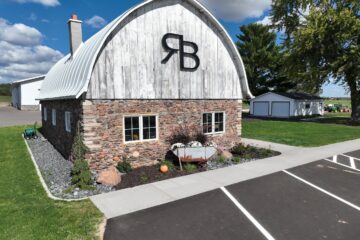 From ranching to retail, Ranch Brand Meat Company controls entire process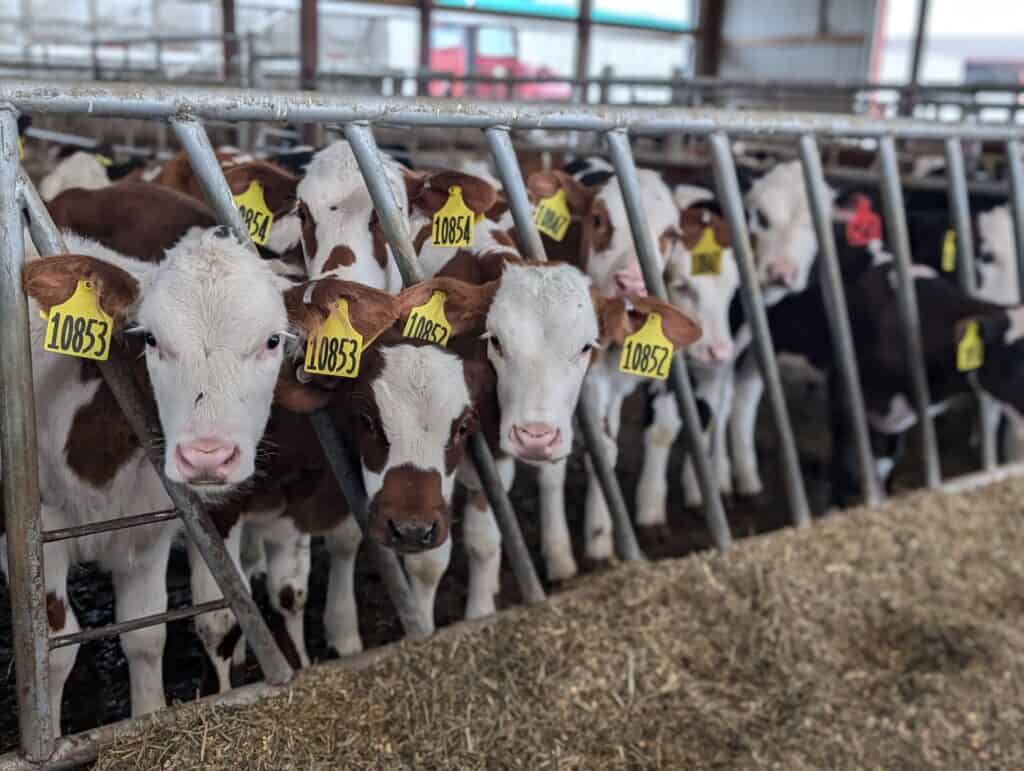


July 13, 2026
FOND DU LAC COUNTY – Fifth-generation Owner Brett Bonlender said his family’s farm near Campbellsport has evolved for more than a century by embracing change.
Today, Brett said this evolution includes sustainable farming practices, a diversified business model and, most recently, the addition of a golf course and restaurant.
A bit of history
Nestled in the Kettle Moraine region of southeastern Fond du Lac County, Brett said the farm entered the dairy business in the early 1900s when Ervin and Margaret Bonlender purchased the property from her parents.
In 1967, Brett said Ervin and Margaret sold the farm to their son Joe Sr. and his wife Louise.
Having grown up on the farm, Brett said Joe Jr. and Gary later joined the operation, and the family formalized Clover Hill Dairy in 1978.
Brett said the farm’s first major expansion came in 1979 with the construction of a milking parlor, replacing more labor-intensive stanchion barns.
At the time, he said Clover Hill milked about 140 cows.
By 1998, when his parents – Joe and Chris – became sole owners, Brett said the herd had grown to 500 cows, each milked three times a day.

He said they added another milking parlor and a freestall barn, and in 2006, a methane digester – setting the stage for continued expansion.
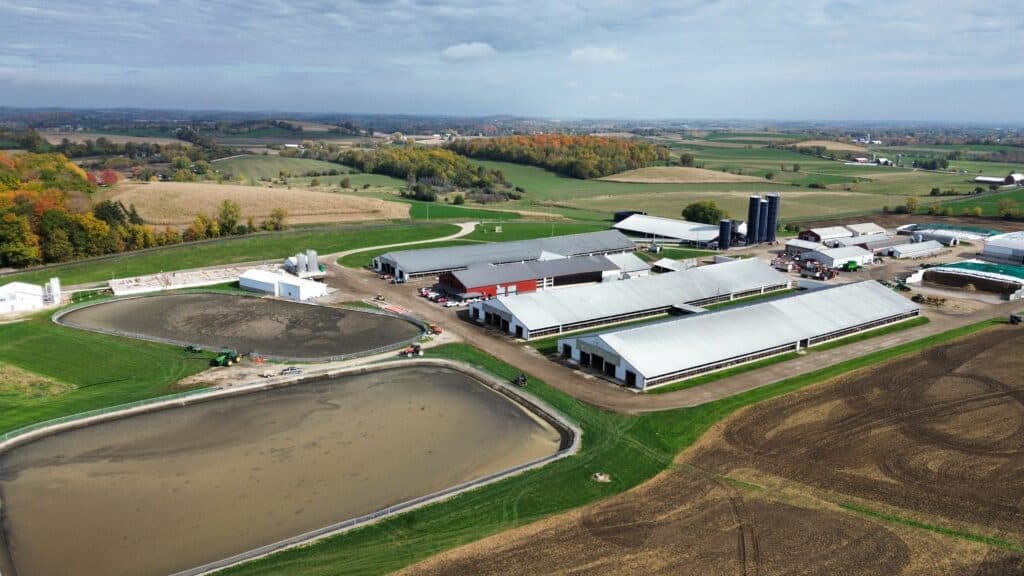
Today, Brett – who officially became a partner in the farm business with his sister, Sara, in 2011 – said the operation includes about 2,400 dairy cows, multiple calf barns and 3,500 acres of cropland and employs roughly 40 people.
“We would be nowhere without the employees that we have,” he said. “We have a lot of people, married couples, who have been with us for 25 years.”
Around 2010, Brett said the farm expanded again by adding a beef cattle operation at a facility in nearby Ashford.
He said the farm’s self-sustaining system now feeds about 7,000 head of cattle each day.
“We have about 1,200 beef cattle in addition to the dairy,” he said. “We raise all of our own replacement animals, all our own heifers, all of the calves. We have six calf barns.”
‘Against the grain’
Brett said he credits his father’s foresight for Clover Hill’s ability to grow so successfully over the years.
“About 20 years ago, he decided to totally switch up our breeding program to a crossbred herd,” he said. “He didn’t like where the industry was going with strictly Holstein herds, so we started crossbreeding for different traits, better health and better feed efficiency. And that has been a big part of our identity.”
Brett said the farm’s focus on efficiency and quality has also improved crop performance, boosting bushels per acre and feed nutritional density.
He said a shift to non-GMO crops about a decade ago has helped the farm meet changing market demand and secure a higher milk price.
“We have gone against the grain of the traditional practices found at most farms,” he said. “Our milk plant came to us looking for a non-GMO milk producer. We were already producing about half of our milk non-GMO, and were able to shift to almost fully non-GMO with little effort.”
Though that contract has expired, Brett said a new opportunity emerged when Chipotle sought a non-GMO cheese supplier.
“I’d say our ability to be flexible, to change without a blink of an eye and to give the consumer what they want … helps us be more profitable,” he said.
Brett said the farm’s “treats its cows like royalty” approach stems from its attention to details such as stall care, cooling systems and nutrition.
“A couple of our pens have access to pasture land, so the cows can come and go as they please,” he said.
Brett said Clover Hill Dairy also prioritizes sustainability by forgoing traditional crop practices, such as leaving the land fallow after harvest.
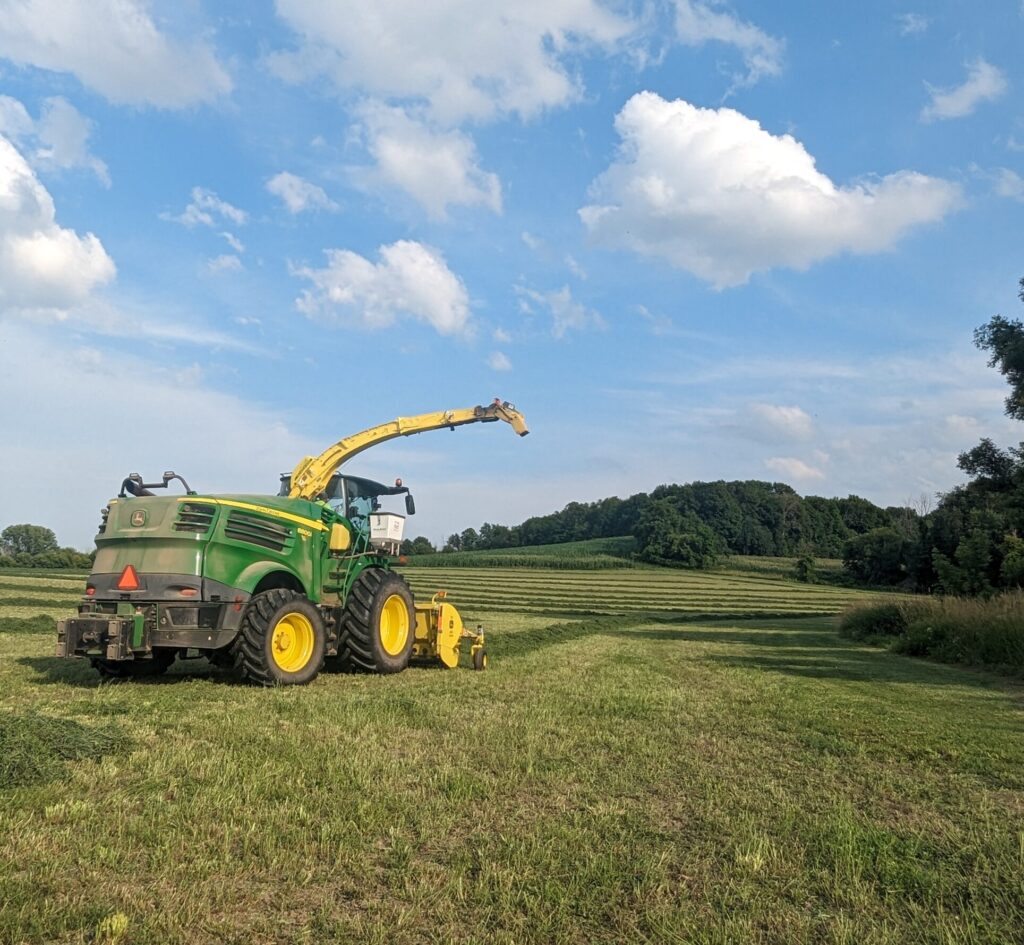
“It really bothers me when there’s open ground everywhere in the spring, and the ditches are full of dirt after a storm,” he said. “We decided we were going to plant cover crops to avoid leaving the ground exposed. As soon as we chop corn, we go back that day and seed the field in rye to protect the ground.”
Brett said the Kettle Moraine region’s hilly topography makes the area especially susceptible to erosion.
“I am proud of our approach to sustainability with cover crops, regenerative farming and the no-till or minimum-till practices we use,” he said. “I have not taken a plow or basically any heavy tillage tool to our soil in the last 10-12 years.”
Brett said Clover Hill Dairy also demonstrates a commitment to renewable energy but in a somewhat unusual way.
“We have a manure methane digester,” he said. “It was built in the late 2000’s, but we have since doubled its size. Originally, we captured the gas off of the digester, turning it into electricity. At our peak, we were supplying power for 400 homes a day.”
Brett said the digester now converts methane into natural gas, which is processed at an on-site plant and fed into a pipeline connected to the City of Fond du Lac.
Brett said the farm continues its upcycling process by using a separator to handle the solid portion remaining after the digester.
“It’s a sterile, pathogen-free product that separates the solids from the liquids, and then we reuse the solid material for our bedding,” he said. “So, it’s a huge process. It’s just one big circle.”
According to the American Biogas Council, Clover Hill is one of only 54 farms in Wisconsin using the relatively new renewable energy technology.
Fifth generation, and then some
Brett said the Bonlender family farm’s fifth generation includes him and his sister Sara, with their parents still actively involved in day-to-day operations.
He said a sixth generation appears likely, as younger family members have already displayed a growing interest in the farm.
Brett said one would think running a 3,500-acre farm with up to 7,000 cattle on-site would be enough to fill their plates, but not for his family.
“We bought a golf course,” he said.
Earlier this year, Brett said the family purchased The Golf Club at Camelot and its bar and restaurant.
The course, he said, is located about three miles from the farm and borders it on two sides.
“It was a completely turnkey operation, which helped with the transition,” he said. “It has staff who have been there for years continuing on.”
Agritourism growth
Brett said the course has been renamed The Fields at Clover Hill, with plans to open a fully dedicated restaurant on-site this winter called The Forager.
“All the beef we sell at our restaurant and bar comes from our beef farm,” he said. “I’ve been trying to find a way to get our beef into the wholesale and retail markets, and this will help with that.”
Brett said the business also includes event space for weddings and other gatherings, and the family is considering adding golf simulators for year-round access.
He said the new venture also offers a way to showcase the farm’s 130-year history.
“We’re telling our story with pictures of the farm and our animals across the walls,” he said.
Another addition at the golf course, Brett said, will put a new spin on the “farm-to-table” concept.
“This fall, we’re going to build a pen for a couple of Angus cow-calf pairs right there at the course for public viewing,” he said.
More details will be released as the plan takes shape.
For more information on Clover Hill Dairy, move over to cloverhilldairy.com.