 NE Wisconsin gets first dual-branded ARCpoint Labs, Any Lab Test Now
 Lawrence University to add Data Science & Statistics major



July 6, 2026
NORTH CENTRAL WISCONSIN – When asked to describe North Central Wisconsin tourism in 2025, Collette Sorgel said she only needed only one word: “booming.”
The tourism and publicity director for Vilas County said the term captures both the sentiment and the numbers behind another record-setting year for Wisconsin’s visitor economy.
Vilas County generated a record $402 million in tourism-related economic impact in 2025, according to the Wisconsin Department of Tourism (WDT), helping drive Wisconsin’s statewide total to $27 billion and a fourth straight year of record growth.
The growth is not limited to one destination.
From the lakes and forests of Vilas County to the trail systems of Langlade County and the Chain O’ Lakes region of Waupaca County, WDT data shows tourism is serving as a major economic engine for communities across Wisconsin.
That engine, the report notes, is supporting jobs, generating tax revenue, attracting private investment and sustaining local businesses.
Visitors are making their mark in the money they spend in communities statewide.
Per the report, Wisconsin visitors spent $17 billion in 2025 – producing a total economic impact of $27 billion.
Wisconsin welcomed a record 117.9 million visits, while tourism generated more than $1.7 billion in state and local revenue.

Tourism’s economic impact grew 4.4% year over year, significantly exceeding the inflation rate of 2.7%.
For communities that depend on visitor spending, WDT Secretary Anne Sayers said those statewide numbers are translating into measurable local benefits.
“Tourism’s impact is wide-reaching and significant,” she said. “The industry powers local economies throughout the state. Visitors sustain jobs and create livelihoods. Wisconsinites save money because of the tax dollars tourism brings in. Tourism is essential for Wisconsin and all its communities.”
Vilas County builds on Northwoods’ appeal
Vilas County’s tourism economy continued its upward trajectory in 2025 – per the report – outpacing both the state average and inflation with a total economic impact of $402 million, up 5.2% from 2024.
Direct visitor spending reached $318.4 million, while tourism supported 2,147 jobs and generated $27 million in state and local tax revenue.
Sorgel said the area’s natural beauty remains one of its greatest competitive advantages.
“People come to Vilas County and Oneida County, the Northwoods, for the same reason my husband and I moved here when he took early retirement,” she said. “It’s beautiful. With so many trees, lakes, hiking trails, ATV trails, walks in pristine forests…, it’s a beautiful place to live.”
Equally important, Sorgel said, is the sense of community visitors encounter.
“The people are so friendly,” she said. “When you go back to an establishment you’ve been to before, 90% of them remember your name. It has that hometown feel from when I was a kid.”
After two winters that brought limited snowfall and reduced snowmobiling activity, Sorgel said conditions improved in 2025, helping restore winter tourism activity.
At the same time, she said changing travel habits continues benefiting destinations within driving distance.
“It’s so hard to travel and fly now – you never know if your flight will be there on time,” she said. “More people are choosing to [travel] within a reasonable driving distance.”
Sorgel said the region’s success also reflects local stewardship.
Lake associations, forestry professionals, snowmobile clubs and ATV clubs, she said, invest significant time maintaining trails, protecting natural resources and improving visitor experiences.
One increasingly important tourism tool for Vilas County, Sorgel said, is the county’s Map It trails application, which allows users to access trail maps, nearby amenities and navigation assistance, even in areas with limited cellular coverage.
“The app is the No. 1 thing I get questions about,” she said.
Sorgel said the app continues to evolve with updated trail information and has become a popular resource among visitors exploring the region’s outdoor recreation assets.
She said Vilas County also benefits from a strong base of repeat visitors, many of whom have longstanding family connections to the area.
“I’ve met people who are third- or fourth-generation [visitors], and those people have such fond memories,” she said. “It’s wonderful to hear.”
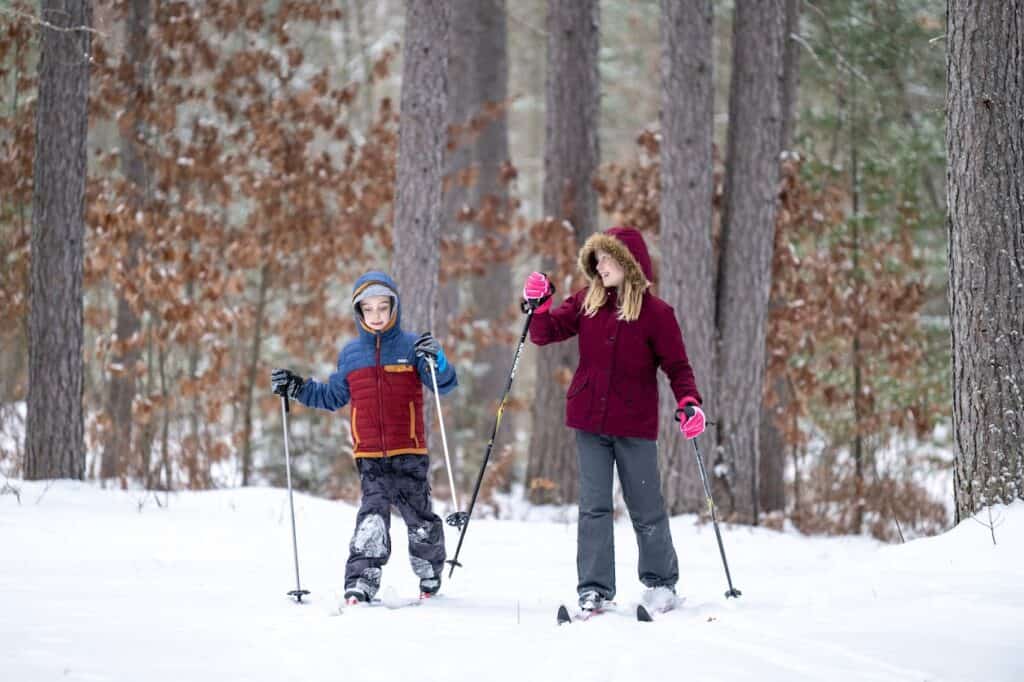
Sorgel said those traditions often create deep emotional ties to the community, whether it’s a favorite hiking or fishing spot or returning to the same campgrounds year after year.
“They make friends, even if they’re here six to eight weeks a year, who are lifetime friends,” she said. “They visit restaurants or family gathering places and are familiar with the people there, [so much so] that it’s like a second home.”
Though repeat visitors remain critical, Sorgel said attracting younger travelers is increasingly important and a key focus of the county’s advertising.
“We’re working on getting younger generations in, and once they’re here, they’re hooked,” she said. “They love our parks, love our events and it’s great to appeal to a big audience of diverse backgrounds… that play together well.”
Trails, recreation drive Langlade County growth
Tourism – Keri Beck, assistant director of the Langlade County Economic Development Corp. – said, is also generating record results in Langlade County.
Beck said 2025 marked the county’s fourth consecutive year of record-setting tourism activity.
Per the WDT report, that marked a 3.5% increase over 2024 and $60.3 million in direct visitor spending, as well as business sales of $87 million, up 2.8% from 2024.
Those expenditures supported 439 jobs, generated $12.9 million in labor income and produced $4.6 million in tax revenue.
Beck said outdoor recreation remains the foundation of the county’s tourism strategy.
“The county trademark is trails and [other] outdoor recreation access,” she said.
Beck said Langlade County offers more than 130,000 acres of county-owned land, more than 100 miles of off-road ATV and UTV trails, extensive hiking opportunities and a growing network of Ice Age Trail segments.
In addition, she said one of the county’s most significant tourism developments in 2025 was the launch of Wisconsin’s first public off-highway motor vehicle trail.
Beck said the West Evergreen Off Highway Motor Vehicle Trail opened in June and offers highly technical terrain, including rock-crawling opportunities.
On the flip side of the motor recreation enthusiasts, she said, are visitors seeking quieter outdoor experiences.
“Tourism here is a half-and-half of motorized versus silent,” she said.
Beck said social media has become a key tool for highlighting destinations throughout the county, with monthly features showcasing recreation assets and helping drive visitor engagement.
Events, she said, remain another important tourism driver.
Beck said the Antigo Off-Road Races – which are part of the AMSOIL Championship Off-Road series – have become one of the county’s largest visitor attractions.
Additional draws, she said, include the county fair, MC Fest in Gleason and the Wolfman Triathlon, which brings participants into the area multiple times for training and familiarization before race day.
Beck said a joint effort between park and recreation departments, similar entities and volunteers plays a critical role in maintaining and expanding recreation opportunities.
A new mountain-bike trail, she said, is also being developed with involvement from the Antigo Bike & Ski Club.
Beck said the area’s locally owned business community further strengthens its appeal.
“We are family-owned businesses,” she said.
Outside Antigo, Beck said visitors will find family-owned restaurants, motels and lodging properties that contribute to what she described as an “up-north vibe of welcoming people in.”
Private investment helps fuel Waupaca tourism
In the Waupaca area, Jeff Anderson – president and CEO of the Waupaca Area Chamber & Visitor Bureau – said tourism growth is increasingly tied to investments by local businesses and entrepreneurs.
The Wisconsin Department of Tourism reported that visitor activity connected to the Waupaca Chain O’ Lakes area generated $180 million in economic impact during 2025, supported 1,182 jobs and produced more than $11.1 million in state and local taxes.
Anderson said private-sector investment is helping create new visitor experiences while strengthening the area’s economy.
Among the most visible examples, he said, are new downtown retailers, expanded hospitality offerings and enhanced attractions throughout the region.
Anderson said downtown Waupaca is nearly fully occupied with businesses such as Country Chic Boutique and April & Mae’s on Main, adding to an increasingly diverse retail environment in the downtown.
Around the Chain O’ Lakes, Anderson said investments include continued improvements at Indian Crossing Casino, a new tour boat introduced by Clear Water Harbor and the expansion of Barnwood Blooms and Brews.
“Tourism in the Chain O’ Lakes area continues to grow because of the people and businesses that make this community special,” he said. “These investments create the kind of authentic, high-quality experiences today’s travelers are looking for. When our business community grows, tourism grows with it.”
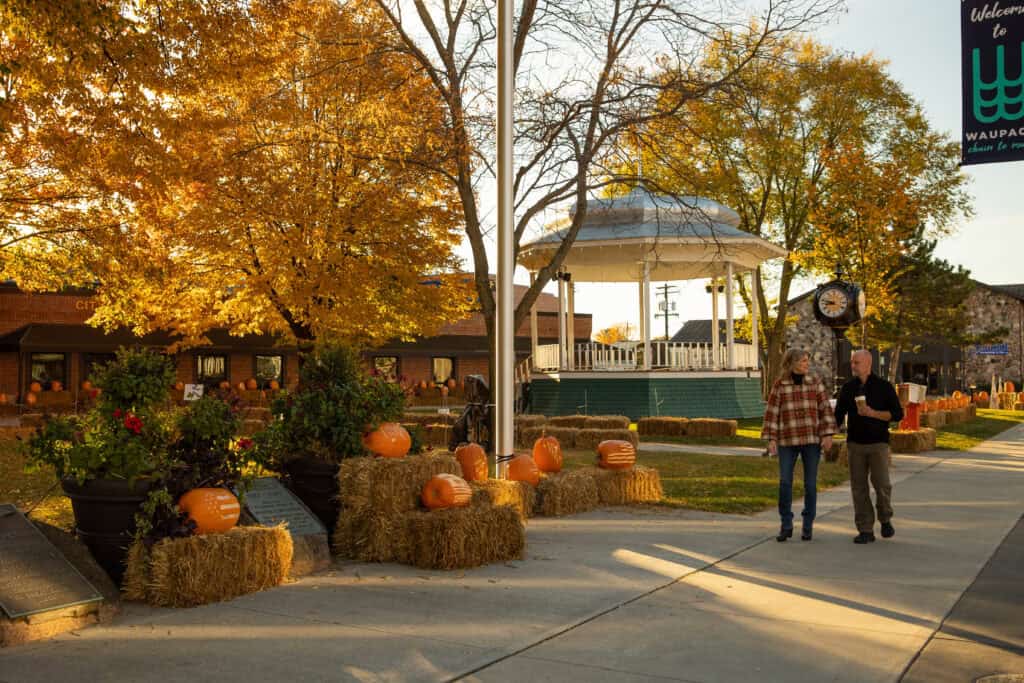
Anderson said tourism promotion increasingly extends beyond the summer recreation that’s typically top of mind.
Though the Chain O’ Lakes remains the region’s primary draw, he said the chamber is placing greater emphasis on year-round attractions, including retail, dining, arts and entertainment experiences.
“We want to look harder at winter opportunities as that continues to be a [tourism] challenge with sporadic snowfall,” he said.
Anderson said that includes exploring partnerships and projects that could expand winter recreation offerings, such as proposed snowmaking capabilities at the Iola Sports Complex.
The area, he said, has also seen significant growth in event venues during the past decade.
Facilities such as Par 4 Resort, Danes Hall, The 810 and Indian Crossing Casino, Anderson said, have expanded the community’s ability to attract meetings, celebrations and group events.
At the same time, he said local businesses continue creating experiences that encourage visitors to spend more time in the area.
“We have such a great atmosphere for events that it seems like most weekends, it’s hard to wrap [our heads] around all the activities in our community,” he said.
Anderson said the area’s tourism appeal ultimately rests on a combination of outdoor recreation and a vibrant downtown business district.
“What we hang our hat on is to focus on the ‘Chain to Main’ perspective,” he said. “We have the lakes, and we have the strong downtown and all the authentic, small-town amenities that come to mind.”
Anderson said tourism also complements the area’s manufacturing sector, creating a diversified local economy that supports both residents and visitors.
“We love visitors but also want to extend opportunities for visitors to spend more time here and live and work here as well as to be a visitor,” he said.
For a complete look at tourism economic impact data for all North Central Wisconsin counties, visit industry.travelwisconsin.com.